Wide Reads
Literature MattersLife IndexEducators
Sign in
Where to Begin

The Power of Community Celebration — Noli Me Tángere

Noli Me Tángere - The Power of Community Celebration

José Rizal

Noli Me Tángere

The Power of Community Celebration

Home›Books›Noli Me Tángere›Chapter 26: The Power of Community Celebration
Previous
26 of 63
Next

Analysis by the Wide Reads editorial team·Reviewed against the source text·Updated January 6, 2026

Summary

The Power of Community Celebration

Noli Me Tángere by José Rizal

0:000:00
Listen to Next Chapter

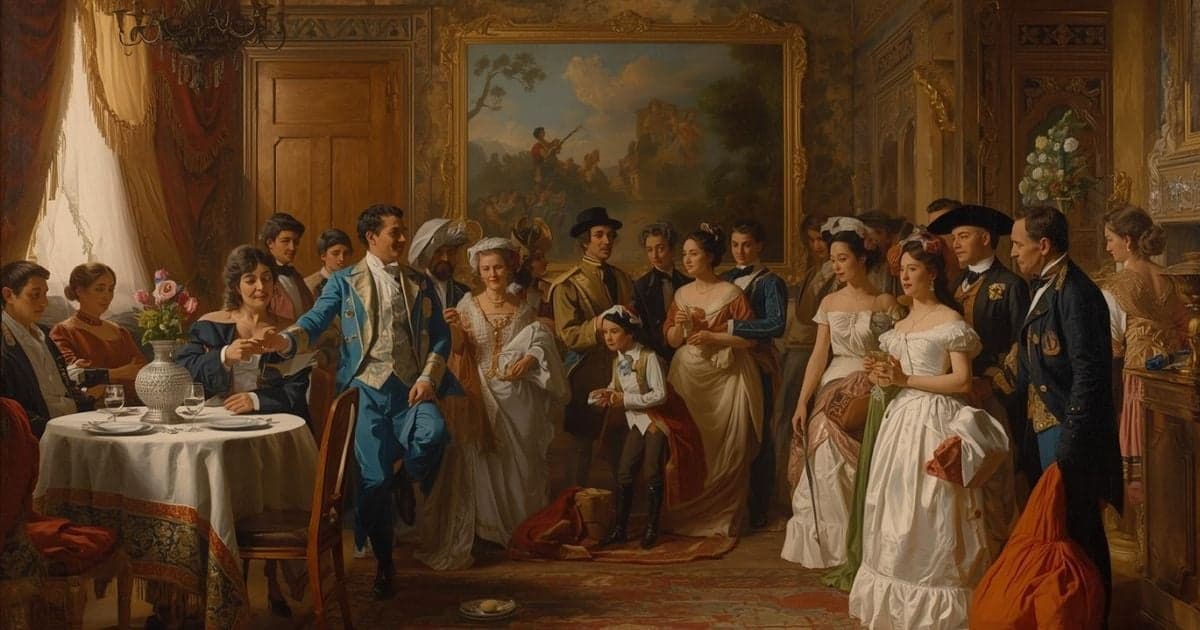
On the eve of the fiesta San Diego erupts in hospitality: banners, bands, gambling talk, and tables laden with food few hosts will taste. Rizal notes that all this toil entertains stranger and enemy alike without expecting gratitude. Meanwhile Ñor Juan races to finish Ibarra's school foundations before the cornerstone ceremony, describing German-style wings, gardens, and even dungeons for lazy pupils. The curate will bless the stone; students weave crowns; Sister Rufa offers to beg alms. Young men copy Ibarra's collar and buttons more than his ideals. A yellowish laborer insists on extra timber so the derrick looks impressive. Tasio alone quotes Baltazar: beware smiling faces that hide secret enemies. The chapter intoxicates with communal momentum while hinting that public enthusiasm may be borrowed, performative, and fragile.

In this chapter: Terms Characters Key Quotes Themes Modern Story

Why This Matters

Connect literature to life

Skill: Spotting Borrowed Enthusiasm

Public support can surge when a project looks successful, even from people serving themselves. Everyone rallies around Ibarra's school while copying his fashion. Ask what allies gain before you trust the crowd.

Coming Up in Chapter 27

As twilight falls over the bustling preparations, the mood begins to shift. Hidden tensions that the daylight festivities have masked start to emerge, and Ibarra will discover that not everyone celebrates his success. The opening of In the Twilight will tighten the family's position faster than anyone at Norland expected, and the next scene will test whether good intentions survive polite pressure.

Share it with friends

PreviousPrevious ChapterNextNext Chapter
Original text
2,644 wordscomplete

Chapter 26

The Power of Community Celebration

The Eve of the Fiesta It is now the tenth of November, the eve of the fiesta. Emerging from its habitual monotony, the town has given itself over to unwonted activity in house, church, cockpit, and field. Windows are covered with banners and many-hued draperies. All space is filled with noise and music, and the air is saturated with rejoicings. On little tables with embroidered covers the dalagas arrange in bright-hued glass dishes different kinds of sweetmeats made from native fruits. In the yard the hens cackle, the cocks crow, and the hogs grunt, all terrified by this merriment of…

Public-domain chapter text, formatted for reading.

Master this chapter. Complete your experience

Purchase the complete book to access all chapters and support classic literature

Buy at Powell'sBuy on Amazon

Available in paperback, hardcover, and e-book formats

Now let's explore the literary elements.

Key Quotes & Analysis

"All this effort and all this toil are for the stranger as well as the acquaintance"

— Narrator

Context: Describing fiesta hospitality across San Diego

Rizal praises and indicts Filipino generosity: everyone must be fed, even enemies, often at ruinous cost.

In Today's Words:

Families exhaust themselves cooking and decorating so every guest leaves happy whether friend or stranger. The same pattern still appears when corrupt institutions punish honesty, reward flattery, and teach people to mistake cruelty for order or tradition. The same pattern still appears when corrupt institutions punish honesty, reward flattery, and teach people to mistake cruelty

"Within that our names will be preserved."

— Ñor Juan

Context: Showing masons the cornerstone cavity

The foreman imagines immortality in stone while the school becomes a monument to collective hope.

In Today's Words:

He tells workers their names will live inside the foundation block of Ibarra's new building. The same pattern still appears when corrupt institutions punish honesty, reward flattery, and teach people to mistake cruelty for order or tradition. The same pattern still appears when corrupt institutions punish honesty, reward flattery, and teach people to mistake cruelty

"Lalong pag-iñgata't kaaway na lihim"

— Tasio

Context: Quoting Baltazar to caution Ibarra

A Tagalog warning cuts through fiesta cheer: smiling welcomes may hide secret enemies.

In Today's Words:

The sage recites poetry that says beware when greeting faces are cheerful because foes may be concealed. The same pattern still appears when corrupt institutions punish honesty, reward flattery, and teach people to mistake cruelty for order or tradition. The same pattern still appears when corrupt institutions punish honesty, reward flattery, and teach people to

"We aren't going to have anything very great, since I am not rich"

— Ibarra

Context: Thanking offers of help for the school

He refuses to pretend the project is charity from others; modesty frames reform as personal duty.

In Today's Words:

Ibarra tells supporters the school will not be grand because he is funding it himself without exploiting neighbors. The same pattern still appears when corrupt institutions punish honesty, reward flattery, and teach people to mistake cruelty for order or tradition. The same pattern still appears when corrupt institutions punish honesty, reward flattery, and teach people

Thematic Threads

Performance

In This Chapter

People perform their support for Ibarra's school project, copying his style and offering resources publicly

Development

Builds on earlier themes of social theater, showing how even positive movements become performances

In Your Life:

You might see this when colleagues suddenly champion your project after it gains management attention

Class

In This Chapter

Families stretch budgets for European delicacies they won't eat, just to maintain social appearances during fiesta

Development

Continues exploring how class expectations force people into financial strain for social acceptance

In Your Life:

You might recognize this when spending beyond your means to keep up appearances at social events

Community

In This Chapter

The fiesta temporarily erases social boundaries, welcoming everyone regardless of status or past conflicts

Development

Shows community's potential for unity while questioning whether it's genuine or ceremonial

In Your Life:

You might see this in how workplace holiday parties temporarily mask ongoing tensions and hierarchies

Deception

In This Chapter

Tasio warns Ibarra about smiling faces hiding secret enemies among his apparent supporters

Development

Introduces the idea that opposition can disguise itself as support, adding complexity to earlier trust themes

In Your Life:

You might encounter this when someone offers enthusiastic help while secretly undermining your efforts

Progress

In This Chapter

The modern German-style school represents revolutionary educational ideas taking root in traditional society

Development

Continues exploring tension between innovation and tradition, showing how change requires community buy-in

In Your Life:

You might recognize this when trying to implement new ideas at work or in your family dynamics

You now have the context. Time to form your own thoughts.

Discussion Questions

This is not a test. Five prompts guide you through the chapter, from how it opens to how it closes, so you notice context and rhythm rather than facts to memorize. Sit with each question in your own words. When you see "One way to read it," treat it as a starting point, not the only answer.

  1. 1

    Why does Rizal describe fiesta hospitality as toil for strangers and enemies alike?

    ▶One way to read it

    It shows Filipino generosity and its economic burden. Hosts exhaust themselves without expecting gratitude while the town performs unity.

    analysis • surface
  2. 2

    How does Ñor Juan's pride in the school contrast with Tasio's Baltazar warning?

    ▶One way to read it

    Construction embodies hope while poetry warns of hidden enemies. Rizal pairs momentum with foreshadowed betrayal.

    analysis • medium
  3. 3

    What does the laborer's insistence on extra timber for the derrick suggest?

    ▶One way to read it

    Some supporters care about visible effort more than efficiency. Appearance of work can matter as much as the building itself.

    application • medium
  4. 4

    Why do young men copy Ibarra's collar and buttons instead of his school plans?

    ▶One way to read it

    Social mimicry copies surface status markers. Rizal satirizes admirers who miss reform's substance.

    application • deep
  5. 5

    When have you seen public enthusiasm for a project that later proved shallow?

    ▶One way to read it

    Campaigns, fundraisers, or workplace initiatives often attract bandwagon allies who vanish when costs appear. Tasio's warning names that risk.

    reflection • deep

Critical Thinking Exercise

10 minutes

Map Your Support Network

Think of a recent goal or project you've shared with others. Make two lists: people who offered immediate enthusiasm versus those who offered practical help or asked thoughtful questions. Notice the difference between cheerleaders and true allies. Which group would still be there if your project faced serious obstacles?

Consider:

  • •Enthusiastic supporters often have their own agenda or social positioning needs
  • •Quiet supporters who ask hard questions may be more valuable long-term
  • •True allies care about your success even when it's not trendy or beneficial to them

Journaling Prompt

Write about a time when you got caught up in supporting something popular that you later realized didn't align with your values. What drove your initial enthusiasm, and what made you recognize the disconnect?

Coming Up Next...

Chapter 27: The Weight of Social Expectations

As twilight falls over the bustling preparations, the mood begins to shift. Hidden tensions that the daylight festivities have masked start to emerge, and Ibarra will discover that not everyone celebrates his success. The opening of In the Twilight will tighten the family's position faster than anyone at Norland expected, and the next scene will test whether good intentions survive polite pressure.

Continue to Chapter 27
Previous
Wisdom from the Hermit Philosopher
Contents
Next
The Weight of Social Expectations
Keep exploring

Continue Exploring

Study guides, teaching tools, themes, and the full library.More ways to read Noli Me Tángere: study guides, teaching tools, and the wider library.

  • Noli Me Tángere Study Guide
  • Teaching Resources
  • Essential Life Index
  • Browse by Theme
  • All Books

What this chapter teaches

Theme analyses that draw on this chapter and apply it to modern life.

  • Protecting Dignity Under OppressionExplore the key chapters in Noli Me Tángere that teach us how to maintain self-worth and humanity when systems are designed to dehumanize.
Social Class & StatusPower & CorruptionMoral Dilemmas & Ethics

You Might Also Like

Mi Último Adiós cover

Mi Último Adiós

José Rizal

Also by José Rizal

Heart of Darkness cover

Heart of Darkness

Joseph Conrad

Explores power & authority

Hard Times cover

Hard Times

Charles Dickens

Explores justice & fairness

A Tale of Two Cities cover

A Tale of Two Cities

Charles Dickens

Explores justice & fairness

Browse all 106+ books

Share This Chapter

Know someone who'd enjoy this? Spread the wisdom!

TwitterFacebookLinkedInEmail

Go further with Prestige

Unlock study guides and downloads, early access, and exclusive content — and support free access for everyone.

Subscribe to PrestigeCreate free account
Intelligence Amplifier
Intelligence Amplifier™Powering Wide Reads

Exploring human-AI collaboration through books, essays, and philosophical dialogues. Classic literature transformed into navigational maps for modern life.

2025 Books

→ The Amplified Human Spirit→ The Alarming Rise of Stupidity Amplified→ San Francisco: The AI Capital of the World
Visit intelligenceamplifier.org
hello@widereads.com

WideReads Originals

→ You Are Not Lost→ The Last Chapter First→ The Lit of Love→ Wealth and Poverty→ Wisdom for the Wounded
Arvintech
arvintechAmplify your Mind
Visit at arvintech.com

Navigate

  • Home
  • Library
  • Essential Life Index
  • How It Works
  • Subscribe
  • Account
  • About
  • Contact
  • Authors
  • Suggest a Book
  • Landings

Made For You

  • Trending
  • Students
  • Educators
  • Families
  • Readers
  • Literary Analysis
  • Finding Purpose
  • Letting Go
  • Recovering from a Breakup
  • Corruption
  • Gaslighting in the Classics

Newsletter

Weekly insights from the classics. Amplify Your Mind.

Legal

  • Privacy Policy
  • Terms of Service
  • Editorial Standards
  • Cookie Policy
  • Accessibility

Why Public Domain?

We focus on public domain classics because these timeless works belong to everyone. No paywalls, no restrictions—just wisdom that has stood the test of centuries, freely accessible to all readers.

Public domain books have shaped humanity's understanding of love, justice, ambition, and the human condition. By amplifying these works, we help preserve and share literature that truly belongs to the world.

A Pilgrimage

Powell's City of Books

Portland, Oregon

If you ever find yourself in Portland, walk to the corner of Burnside and 10th. The building takes up an entire city block. Inside is over a million books, new and used on the same shelf, organized by color-coded rooms with names like the Rose Room and the Pearl Room. You can lose an afternoon. You can lose a weekend. You will find a book you have been looking for your whole life, and three you did not know existed.

It is a pilgrimage. We cannot find a bookstore like it anywhere on earth. If you read the classics, and you ever get the chance, go. It belongs on every reader's bucket list.

Visit powells.com

We are not in any way affiliated with Powell's. We are just a very big fan.

© 2026 Wide Reads™. All Rights Reserved.

Intelligence Amplifier™ and Wide Reads™ are proprietary trademarks of Arvin Lioanag.

Copyright Protection: All original content, analyses, discussion questions, pedagogical frameworks, and methodology are protected by U.S. and international copyright law. Unauthorized reproduction, distribution, web scraping, or use for AI training is strictly prohibited. See our Copyright Notice for details.

Disclaimer: The information provided on this website is for general informational and educational purposes only and does not constitute professional, legal, financial, or technical advice. While we strive to ensure accuracy and relevance, we make no warranties regarding completeness, reliability, or suitability. Any reliance on such information is at your own risk. We are not liable for any losses or damages arising from use of this site. By using this site, you agree to these terms.