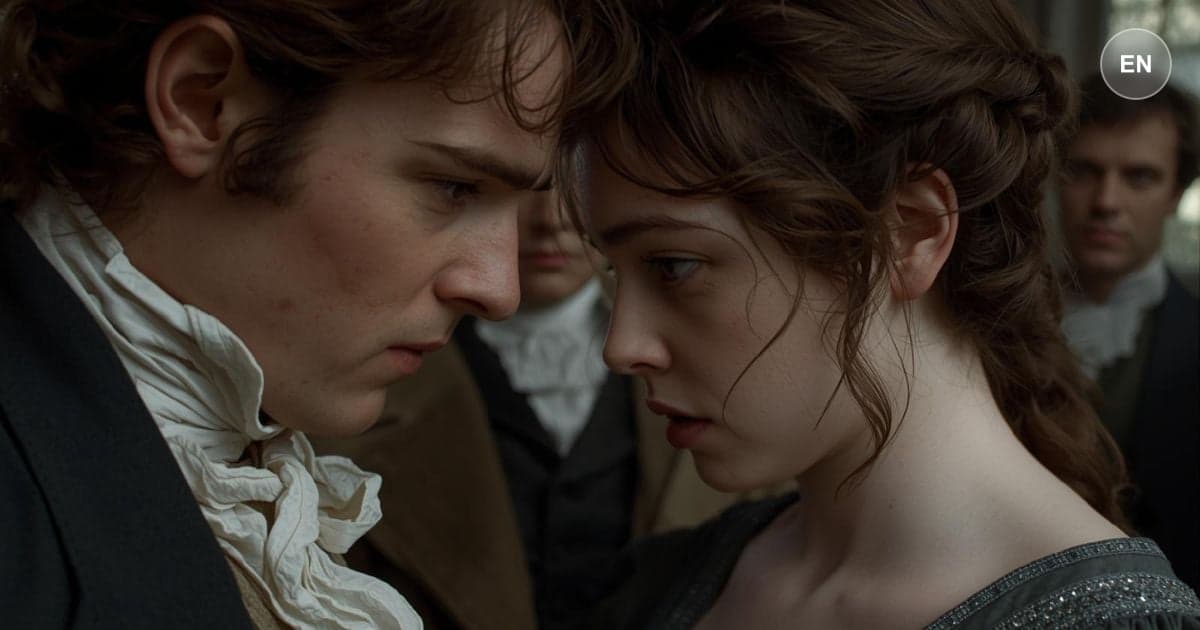
Chapter 73
When Honor Becomes a Trap
CHAPTER LXXIII. Pity the laden one; this wandering woe May visit you and me. When Lydgate had allayed Mrs. Bulstrode’s anxiety by telling her that her husband had been seized with faintness at the meeting, but that he trusted soon to see him better and would call again the next day, unless she sent for him earlier, he went directly home, got on his horse, and rode three miles out of the town for the sake of being out of reach. He felt himself becoming violent and unreasonable as if raging under the pain of stings: he was ready to…
Public-domain chapter text, formatted for reading.
Master this chapter. Complete your experience
Purchase the complete book to access all chapters and support classic literature

Available in paperback, hardcover, and e-book formats
Now let's explore the literary elements.
Key Quotes & Analysis
"Everything that had happened to him there seemed a mere preparation for this hateful fatality, which had come as a blight on his honorable ambition"
Context: Lydgate's bitter ride after the meeting while scandal closes in
Catastrophe rewrites memory. Lydgate reads Middlemarch as a long setup for ruin, which makes retreat feel like confirming guilt even when he is not sure of all facts.
In Today's Words:
The narrator says Lydgate felt his whole time in Middlemarch had only prepared him for this ruinous blow to his honorable ambition. When disaster lands, the mind often turns past choices into a trail that seemed to lead here all along. If you are replaying every step as proof you were doomed, check whether hindsight is forcing a guilty story before facts are sorted.
"Alas! the scientific conscience had got into the debasing company of money obligation and selfish respects."
Context: Lydgate asks whether he would have investigated Raffles's death without Bulstrode's loan
Eliot names the inner corruption: not villainy but compromised clarity. Need makes him treat medical duty as etiquette instead of the sturdiest rule he once preached.
In Today's Words:
The narrator laments that Lydgate's scientific conscience had fallen in with money debts and selfish regard for patrons. Principles do not always vanish; they get crowded by who paid you and what you cannot afford to lose. When you audit a hard call, ask whether independence is still speaking or whether obligation is whispering the answer.
"I have been set down as tainted and should be cheapened to them all the same."
Context: His rebellion against Middlemarch opinion after patients leave him
Even valid evidence would not restore standing in a town that judges by association. The line is social death: reputation fixed by suspicion, not trial.
In Today's Words:
Lydgate said the town had marked him tainted and would cheapen him even if he could prove innocence. In tight communities, association often stains longer than any document you could produce. If you are clearing facts while everyone has already decided, plan for repair of trust, not only proof of conduct.
"I shall do as I think right, and explain to nobody. They will try to starve me out, but, "
Context: Resolving to remain in Middlemarch and not betray Bulstrode for self-acquittal
Pride and honor fuse in reticence. He will stand by a crushed patron rather than bargain with gossip, yet the unfinished sentence shows Rosamond breaking through.
In Today's Words:
Lydgate resolved to act as he thought right and explain to no one, though the town might try to starve him out. Silence can be integrity or isolation depending on who needs the truth inside your house. Before you refuse all explanation, name who deserves your account besides the public jury.
Thematic Threads
Integrity
In This Chapter
Lydgate realizes his debt to Bulstrode may have compromised his medical judgment regarding Raffles's death
Development
Evolved from earlier focus on professional ambition to the tragic cost of financial dependence
In Your Life:
You might face this when accepting help from someone who could later expect professional favors in return
Pride
In This Chapter
Lydgate chooses to stay and fight rather than flee, even when retreat might be wiser
Development
Consistent thread showing how pride prevents practical decision-making throughout the novel
In Your Life:
You might recognize this when your ego prevents you from taking the smart but humbling path
Class
In This Chapter
The scandal destroys Lydgate's carefully built professional reputation and social standing
Development
Continues exploring how quickly social position can be lost and how reputation depends on perception
In Your Life:
You might see this when workplace gossip threatens your professional standing regardless of the truth
Justice
In This Chapter
Lydgate faces punishment for a crime he may not have committed but cannot prove his innocence
Development
Builds on earlier themes about how truth and justice often diverge in social systems
In Your Life:
You might experience this when you're blamed for something at work that you can't definitively prove you didn't do
Isolation
In This Chapter
Lydgate dreads facing Rosamond with news that will further strain their marriage
Development
Deepens the exploration of how external crises compound relationship problems
In Your Life:
You might face this when professional troubles make you afraid to confide in your partner
You now have the context. Time to form your own thoughts.
Discussion Questions
This is not a test. Five prompts guide you through the chapter, from how it opens to how it closes, so you notice context and rhythm rather than facts to memorize. Sit with each question in your own words. When you see "One way to read it," treat it as a starting point, not the only answer.
- 1
Why does Lydgate ride three miles out of town after leaving the Bulstrodes, and what does his need to be 'out of reach' reveal about his mental state?
analysis • surfaceOne way to read it
Lydgate needs physical distance to process his rage without hurting anyone. He recognizes he's becoming 'violent and unreasonable' and fears taking out his fury on innocent people like Rosamond.
- 2
What makes Lydgate's reflection that 'the scientific conscience had got into the debasing company of money obligation' so devastating to his sense of self?
analysis • mediumOne way to read it
Science was Lydgate's moral anchor, representing pure pursuit of truth. When financial desperation corrupted his medical judgment, he lost the very thing that defined his integrity and purpose.
- 3
How does Lydgate's dilemma mirror modern professionals who face conflicts between financial pressures and ethical standards in their work?
application • mediumOne way to read it
Like doctors pressured by insurance companies or journalists dependent on corporate sponsors, Lydgate shows how economic vulnerability can compromise professional judgment even in well-meaning people.
- 4
If you were advising Lydgate, would you recommend he stay in Middlemarch to fight the scandal or leave town to start fresh elsewhere?
application • deepOne way to read it
Staying feeds his pride but likely destroys his career and marriage. Leaving looks guilty but offers genuine escape. The trap is that both choices feel like moral failures to someone of his character.
- 5
Why does Eliot suggest that 'episodes in most men's lives' exist where 'their highest qualities can only cast a deterring shadow'?
reflection • deepOne way to read it
Our best traits can become liabilities under extreme stress. Lydgate's tenderness makes him fear hurting others, his integrity makes compromise unbearable. Virtue itself can paralyze us when circumstances turn cruel.
Critical Thinking Exercise
Map Your Professional Pressure Points
Think about your current job or a job you've had. List three people or organizations who have helped you financially or professionally (bosses, clients, companies that trained you, etc.). For each one, write down what they might ask of you that would create a conflict between loyalty and doing the right thing. This isn't about paranoia—it's about recognizing potential pressure points before they become problems.
Consider:
- •Consider both obvious conflicts (like covering up mistakes) and subtle ones (like not reporting safety issues)
- •Think about how gratitude and fear of losing support might influence your judgment
- •Remember that most people who help you aren't trying to corrupt you—the pressure often comes from wanting to please them
Journaling Prompt
Write about a time when you felt caught between doing what someone expected of you and doing what felt right. How did you handle it, and what would you do differently now?
Coming Up Next...
Chapter 74: When the Town Turns Against You
Middlemarch tea tables will dissect Harriet's marriage while she hunts the truth in visits that end at Walter Vincy's blunt revelation.