Wide Reads
Literature MattersLife IndexEducators
Sign in
Where to Begin
Middlemarch - The Weight of Unspoken Promises

George Eliot

Middlemarch

The Weight of Unspoken Promises

Home›Books›Middlemarch›Chapter 48
Previous
48 of 86
Next

Summary

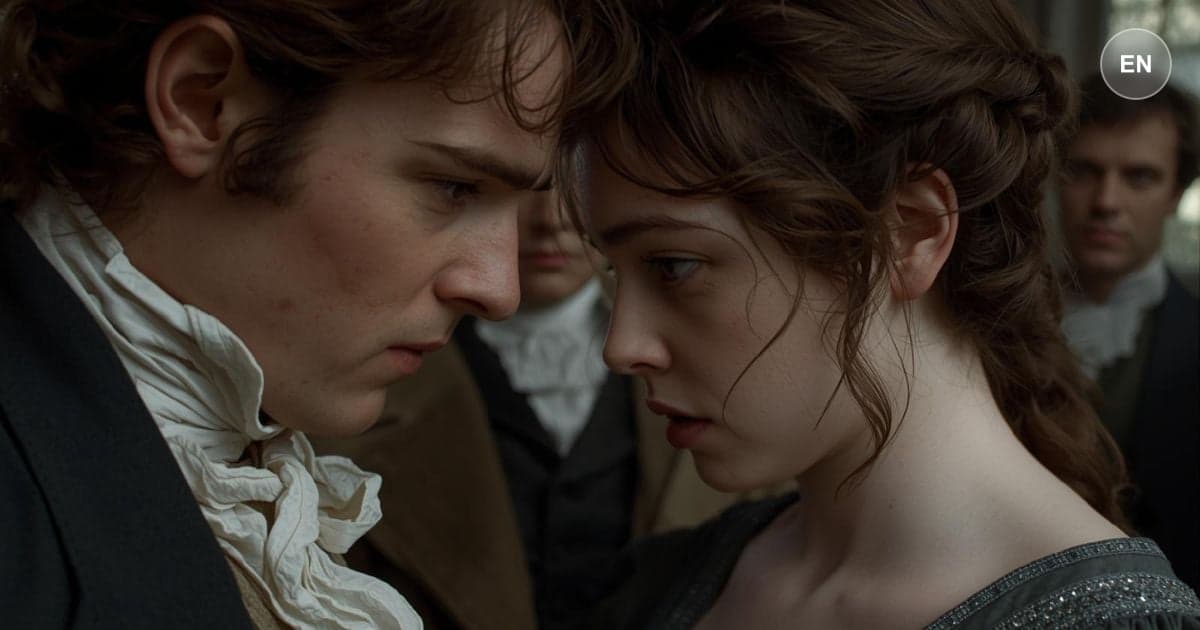
Dorothea's distress on leaving the church came from seeing that Casaubon was determined not to speak to his cousin — Will's visit had only deepened the alienation. Casaubon was unwell that morning (some difficulty in breathing) and had not preached. The Sunday afternoon is desolate. She opens one book after another from her little heap on the window-table — Herodotus, Pascal, Keble's Christian Year — and can read none of them. "All alike were as flat as tunes beaten on wood." Even the spring flowers have a dull shiver under the afternoon clouds. It was not books she needed: "It was another or rather a fuller sort of companionship that poor Dorothea was hungering for, and the hunger had grown from the perpetual effort demanded by her married life." She thought of Will, "turning his face towards her as he went" — the figure standing at the entrance to the warm world of activity from which she was shut. After dinner, Casaubon takes her to the library, where he has ordered fire and lights and newly arranged a row of notebooks on the table. He puts into her hand the table of contents to all of them, and asks her to read it through aloud, penciling a cross at each point he says "mark" — "the first step in a sifting process which I have long had in view." Since Lydgate's diagnosis, his original reluctance to let Dorothea work with him has given place to a contrary disposition: to demand much interest and labor from her. He has "begun to feel that these qualities were a peculiar possession for himself, and he wanted to engross them." At midnight, Dorothea wakes to find Casaubon seated in the armchair, having lit two candles. He is wakeful; "my mind is remarkably lucid." She reads for another hour while he directs her with bird-like speed — "That will do — mark that. Pass on to the next head — I omit the second excursus on Crete." She is amazed at the speed with which his mind is now surveying ground it had been creeping over for years. Then, in darkness by the dying fire, he makes his request: "It is that you will let me know, deliberately, whether, in case of my death, you will carry out my wishes: whether you will avoid doing what I should deprecate, and apply yourself to do what I should desire." Dorothea asks to be granted until tomorrow. "Till to-morrow then," says Casaubon. He sleeps. Dorothea lies still for four hours in conflict. She sees clearly that the work would mean sifting "shattered mummies, and fragments of a tradition which was itself a mosaic wrought from crushed ruins" for a theory "already withered in the birth like an elfin child." And yet — could she deny him? Could she refuse to do for him dead what she was almost sure to do for him living? "There was a deep difference between that devotion to the living and that indefinite promise of devotion to the dead. While he lived, he could claim nothing that she would not still be free to remonstrate against, and even to refuse." At last, helpless as a child which has sobbed and sought too long, she falls into a late morning sleep. She wakes to find Casaubon already up and in the library. "I never saw you look so pale, madam," says Tantripp. Dorothea goes down having decided she will say yes — but "not yet." Casaubon tells her he is going to the Yew-tree Walk and would fain have her answer. "May I come out to you in the garden presently?" She sits passively while Tantripp puts on her bonnet and shawl — passive, which is unusual with her, for she likes to wait on herself. Tantripp says "God bless you, madam!" — and Dorothea bursts into tears. Then she dries her eyes and goes. She is "going to say 'Yes' to her own doom" — too weak, too full of dread of inflicting pain on a stricken soul, to do anything but submit. She goes to the Yew-tree Walk; he is not visible; she turns towards the summer-house. She can see him seated on the bench close to the stone table, his arms resting on it, his brow bowed down on them, the blue cloak draped forward, screening his face on each side. She thinks he is asleep. She goes in and says, "I am come, Edward; I am ready." He takes no notice. She says it again. She lays her hand on his shoulder. She leans down, takes off his velvet cap, leans her cheek close to his head, crying in a distressed tone, "Wake, dear, wake! Listen to me. I am come to answer." But Dorothea never gave her answer. Later in the day, Lydgate is seated by her bedside while she talks deliriously: "Tell him I shall go to him soon: I am ready to promise. Only, thinking about it was so dreadful — it has made me ill. Not very ill. I shall soon be better. Go and tell him. But the silence in her husband's ear was never more to be broken."

Coming Up in Chapter 49

The day after Casaubon is buried, Sir James and Mr. Brooke face each other in the library at Lowick Grange. Sir James says: 'I wish to God we could hinder Dorothea from knowing this.'

Share it with friends

Previous ChapterNext Chapter
GO ADS FREE — JOIN US
Original text
complete·3,574 words
L

VIII.

Surely the golden hours are turning gray
And dance no more, and vainly strive to run:
I see their white locks streaming in the wind—
Each face is haggard as it looks at me,
Slow turning in the constant clasping round
Storm-driven.

Dorothea’s distress when she was leaving the church came chiefly from the perception that Mr. Casaubon was determined not to speak to his cousin, and that Will’s presence at church had served to mark more strongly the alienation between them. Will’s coming seemed to her quite excusable, nay, she thought it an amiable movement in him towards a reconciliation which she herself had been constantly wishing for. He had probably imagined, as she had, that if Mr. Casaubon and he could meet easily, they would shake hands and friendly intercourse might return. But now Dorothea felt quite robbed of that hope. Will was banished further than ever, for Mr. Casaubon must have been newly embittered by this thrusting upon him of a presence which he refused to recognize.

1 / 18

Master this chapter. Complete your experience

Purchase the complete book to access all chapters and support classic literature

Read Free on GutenbergBuy at Powell'sBuy on Amazon

As an Amazon Associate, we earn a small commission from qualifying purchases at no additional cost to you.

Available in paperback, hardcover, and e-book formats

GO ADS FREE — JOIN US

Why This Matters

Connect literature to life

Skill: Detecting Deathbed Manipulation

This chapter teaches how dying people sometimes weaponize guilt to control the living through impossible promises.

Practice This Today

This week, notice when someone uses their vulnerability to pressure you into commitments—ask yourself if you'd agree under normal circumstances.

GO ADS FREE — JOIN US

Now let's explore the literary elements.

Key Quotes & Analysis

"He had probably imagined, as she had, that if Mr. Casaubon and he could meet easily, they would shake hands and friendly intercourse might return."

— Narrator

Context: Dorothea hoping that Will's presence at church might lead to reconciliation

This shows Dorothea's naive optimism about human nature. She believes people naturally want to get along, but Casaubon's pride and jealousy run too deep for simple reconciliation.

In Today's Words:

She thought maybe if they just ran into each other, they'd work things out like adults.

"Will was banished further than ever, for Mr. Casaubon must have been newly embittered by this thrusting upon him of a presence which he refused to recognize."

— Narrator

Context: Dorothea realizing that Will's attempt at reconciliation has backfired completely

This reveals how pride can make situations worse rather than better. Casaubon's refusal to acknowledge Will only deepens the conflict and hurts Dorothea in the process.

In Today's Words:

Now her husband was even more determined to shut Will out completely.

"For her own part she felt that she could never again introduce that subject."

— Narrator

Context: Dorothea realizing she can no longer even mention Will's name to her husband

This shows how conflict creates silence and isolation within marriage. Important topics become forbidden, making honest communication impossible.

In Today's Words:

She knew she could never bring up Will's name again without causing a fight.

Thematic Threads

Marriage as Prison

In This Chapter

Casaubon tries to extend his control over Dorothea beyond death through a binding promise

Development

Evolved from earlier hints of marital discord to explicit emotional imprisonment

In Your Life:

You might feel trapped by commitments that seemed loving but now feel suffocating

Duty vs. Authenticity

In This Chapter

Dorothea struggles between her duty to comfort her dying husband and her need for personal freedom

Development

Deepened from her initial idealistic notions of duty to recognition of its potential toxicity

In Your Life:

You face moments when being 'good' requires sacrificing your genuine self

Timing and Fate

In This Chapter

Casaubon dies just as Dorothea arrives to give her answer, preventing the promise

Development

Introduced here as a theme about how crucial moments hinge on perfect timing

In Your Life:

You've experienced how life-changing conversations can be prevented by unexpected events

Meaningless Work

In This Chapter

Dorothea recognizes Casaubon's scholarly work as 'shattered mummies' and failed theories

Development

Culmination of growing awareness that prestigious work can be fundamentally empty

In Your Life:

You might stay in jobs or relationships that look important but feel hollow

Compassionate Manipulation

In This Chapter

Casaubon uses his vulnerability and approaching death to extract controlling promises

Development

Evolution from subtle control to explicit emotional blackmail

In Your Life:

You've seen people use their pain or weakness to control others' choices

GO ADS FREE — JOIN US

You now have the context. Time to form your own thoughts.

Discussion Questions

  1. 1

    What specific promise does Casaubon want Dorothea to make, and why is she torn about agreeing?

    analysis • surface
  2. 2

    Why does Casaubon wait until he's dying to ask for this promise? What does the timing reveal about his motives?

    analysis • medium
  3. 3

    Where have you seen dying people use guilt to control family decisions? What promises get extracted in hospital rooms or deathbeds?

    application • medium
  4. 4

    If you were Dorothea's friend, how would you advise her to respond to Casaubon's request without being cruel?

    application • deep
  5. 5

    What's the difference between honoring someone's memory and being chained by their dying wishes? How do you know which is which?

    reflection • deep

Critical Thinking Exercise

10 minutes

Decode the Guilt Trap

Think of a time when someone used their vulnerability (illness, age, emotional pain) to pressure you into a commitment you didn't want to make. Write down exactly what they said and what you felt. Then rewrite their request in honest language—what were they really asking for beneath the emotional manipulation?

Consider:

  • •Notice how guilt-based requests often come with tight deadlines or emotional urgency
  • •Pay attention to how the request is framed—as love, duty, or 'what any good person would do'
  • •Consider whether you'd make the same commitment if the person were healthy and happy

Journaling Prompt

Write about a promise you made out of guilt that you later regretted. What would you do differently now, and how would you handle similar pressure in the future?

GO ADS FREE — JOIN US

Coming Up Next...

Chapter 49: The Codicil's Cruel Trap

The day after Casaubon is buried, Sir James and Mr. Brooke face each other in the library at Lowick Grange. Sir James says: 'I wish to God we could hinder Dorothea from knowing this.'

Continue to Chapter 49
Previous
When Friends Won't Intervene
Contents
Next
The Codicil's Cruel Trap

Continue Exploring

Middlemarch Study GuideTeaching ResourcesEssential Life IndexBrowse by ThemeAll Books
Social Class & StatusLove & RelationshipsMoral Dilemmas & Ethics

You Might Also Like

Jane Eyre cover

Jane Eyre

Charlotte Brontë

Explores personal growth

Great Expectations cover

Great Expectations

Charles Dickens

Explores personal growth

The Strange Case of Dr Jekyll and Mr Hyde cover

The Strange Case of Dr Jekyll and Mr Hyde

Robert Louis Stevenson

Explores personal growth

Don Quixote cover

Don Quixote

Miguel de Cervantes Saavedra

Explores personal growth

Browse all 47+ books
GO ADS FREE — JOIN US

Share This Chapter

Know someone who'd enjoy this? Spread the wisdom!

TwitterFacebookLinkedInEmail

Read ad-free with Prestige

Get rid of ads, unlock study guides and downloads, and support free access for everyone.

Subscribe to PrestigeCreate free account
Intelligence Amplifier
Intelligence Amplifier™Powering Wide Reads

Exploring human-AI collaboration through books, essays, and philosophical dialogues. Classic literature transformed into navigational maps for modern life.

2025 Books

→ The Amplified Human Spirit→ The Alarming Rise of Stupidity Amplified→ San Francisco: The AI Capital of the World
Visit intelligenceamplifier.org
hello@widereads.com

WideReads Originals

→ You Are Not Lost→ The Last Chapter First→ The Lit of Love→ Wealth and Poverty→ 10 Paradoxes in the Classics · coming soon
Arvintech
arvintechAmplify your Mind
Visit at arvintech.com

Navigate

  • Home
  • Library
  • Essential Life Index
  • How It Works
  • Subscribe
  • Account
  • About
  • Contact
  • Authors
  • Suggest a Book
  • Landings

Made For You

  • Students
  • Educators
  • Families
  • Readers
  • Literary Analysis
  • Finding Purpose
  • Letting Go
  • Recovering from a Breakup
  • Corruption
  • Gaslighting in the Classics

Newsletter

Weekly insights from the classics. Amplify Your Mind.

Legal

  • Privacy Policy
  • Terms of Service
  • Cookie Policy
  • Accessibility

Why Public Domain?

We focus on public domain classics because these timeless works belong to everyone. No paywalls, no restrictions—just wisdom that has stood the test of centuries, freely accessible to all readers.

Public domain books have shaped humanity's understanding of love, justice, ambition, and the human condition. By amplifying these works, we help preserve and share literature that truly belongs to the world.

A Pilgrimage

Powell's City of Books

Portland, Oregon

If you ever find yourself in Portland, walk to the corner of Burnside and 10th. The building takes up an entire city block. Inside is over a million books, new and used on the same shelf, organized by color-coded rooms with names like the Rose Room and the Pearl Room. You can lose an afternoon. You can lose a weekend. You will find a book you have been looking for your whole life, and three you did not know existed.

It is a pilgrimage. We cannot find a bookstore like it anywhere on earth. If you read the classics, and you ever get the chance, go. It belongs on every reader's bucket list.

Visit powells.com

We are not in any way affiliated with Powell's. We are just a very big fan.

© 2026 Wide Reads™. All Rights Reserved.

Intelligence Amplifier™ and Wide Reads™ are proprietary trademarks of Arvin Lioanag.

Copyright Protection: All original content, analyses, discussion questions, pedagogical frameworks, and methodology are protected by U.S. and international copyright law. Unauthorized reproduction, distribution, web scraping, or use for AI training is strictly prohibited. See our Copyright Notice for details.

Disclaimer: The information provided on this website is for general informational and educational purposes only and does not constitute professional, legal, financial, or technical advice. While we strive to ensure accuracy and relevance, we make no warranties regarding completeness, reliability, or suitability. Any reliance on such information is at your own risk. We are not liable for any losses or damages arising from use of this site. By using this site, you agree to these terms.