Wide Reads
Literature MattersLife IndexEducators
Sign in
Where to Begin
Middlemarch - When Friends Won't Intervene

George Eliot

Middlemarch

When Friends Won't Intervene

Home›Books›Middlemarch›Chapter 47
Previous
47 of 86
Next

Summary

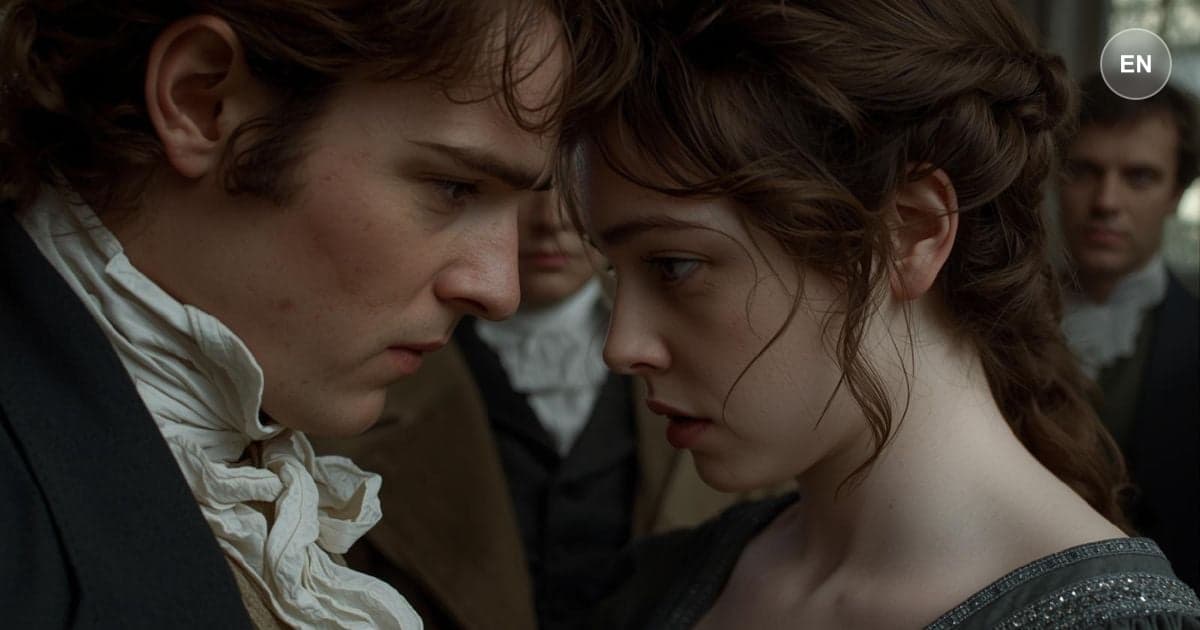
After the argument with Lydgate, Will sits up half the night reviewing his position in Middlemarch under a new irritation. He asks himself whether he is making a fool of himself — "and at a time when he was more than ever conscious of being something better than a fool? And for what end?" For no definite end. Eliot makes a striking declaration: the "ordinary vulgar vision" which Mr. Casaubon suspected Will of — that Dorothea might become a widow and he might marry her — "had no tempting, arresting power over him; he did not live in the scenery of such an event." He was unwilling to entertain thoughts that could be accused of baseness. But more than that: he could not long for any change in Dorothea that must somehow change her. "He was at once exasperated and delighted by the calm freedom with which Dorothea looked at him and spoke to him, and there was something so exquisite in thinking of her just as she was, that he could not long for a change which must somehow change her." His feeling for Dorothea was "like the inheritance of a fortune." He thinks, after Drayton, that queens hereafter might be glad to live upon the alms of her superfluous praise — "Dorothea was forever enthroned in his soul: no other woman could sit higher than her footstool." He concludes as he always does: he will not go out of her reach. She had once said she would like him to stay; and stay he would, whatever fire-breathing dragons might hiss around her. But this resolve is complicated by the fact that he can hardly ever see her. He decides to go to Lowick Church on Sunday. An internal debate follows: "Objection: That will be a virtual defiance of Mr. Casaubon's prohibition to visit Lowick, and Dorothea will be displeased. Inclination: It would be too monstrous for him to hinder me from going out to a pretty country church on a spring morning. And Dorothea will be glad. Objection: It will be clear to Mr. Casaubon that you have come either to annoy him or to see Dorothea. Inclination: I have always liked the quaintness of the church and congregation; besides, I know the Tuckers." Having silenced Objection by force of unreason, Will walks to Lowick on a spring morning — crossing Halsell Common, skirting the wood where sunlight falls under budding boughs bringing out the beauties of moss and lichen. He goes along chanting a little poem of his own making, trying it to various melodies: "O me, O me, what frugal cheer / My love doth feed upon! / A touch, a ray, that is not here, / A shadow that is gone." At the church he goes into the curate's pew — and discovers that the Tuckers have departed from Lowick altogether, leaving him in it alone and exposed. Dorothea appears at last in her white beaver bonnet and gray cloak — the same she wore in the Vatican. She bows at him with a slight paleness and a grave bow. Two minutes later, Casaubon enters the pew from the vestry and seats himself in face of Dorothea — and Will feels his paralysis complete. He can look nowhere except at the choir. Casaubon does not preach (he is not well), and the service lasts immeasurably long. When the blessing is pronounced and "the betters" go out first, Will looks straight at Casaubon — but that gentleman's eyes are on the button of the pew-door. Dorothea's glance catches Will's as she turns out, and she bows again — this time with a look of agitation, as if repressing tears. Will walks out after them, but they go towards the churchyard gate into the shrubbery, never looking round. He can only walk back sadly at midday along the same road he had trodden hopefully in the morning. "The lights were all changed for him both without and within."

Coming Up in Chapter 48

Dorothea spends a desolate Sunday afternoon in her boudoir, unable to read, longing for fellowship and meaningful work. After dinner, Casaubon takes her to the library with a newly arranged row of notebooks — and a request that has been forming for some time.

Share it with friends

Previous ChapterNext Chapter
GO ADS FREE — JOIN US
Original text
complete·2,193 words
L

VII.

Was never true love loved in vain,
For truest love is highest gain.
No art can make it: it must spring
Where elements are fostering.
So in heaven’s spot and hour
Springs the little native flower,
Downward root and upward eye,
Shapen by the earth and sky.

It happened to be on a Saturday evening that Will Ladislaw had that little discussion with Lydgate. Its effect when he went to his own rooms was to make him sit up half the night, thinking over again, under a new irritation, all that he had before thought of his having settled in Middlemarch and harnessed himself with Mr. Brooke. Hesitations before he had taken the step had since turned into susceptibility to every hint that he would have been wiser not to take it; and hence came his heat towards Lydgate—a heat which still kept him restless. Was he not making a fool of himself?—and at a time when he was more than ever conscious of being something better than a fool? And for what end?

1 / 9

Master this chapter. Complete your experience

Purchase the complete book to access all chapters and support classic literature

Read Free on GutenbergBuy at Powell'sBuy on Amazon

As an Amazon Associate, we earn a small commission from qualifying purchases at no additional cost to you.

Available in paperback, hardcover, and e-book formats

GO ADS FREE — JOIN US

Why This Matters

Connect literature to life

Skill: Recognizing Diffusion of Responsibility

This chapter teaches how to identify when groups collectively avoid action by spreading responsibility so thin that no one feels obligated to intervene.

Practice This Today

This week, notice when you hear phrases like 'someone should do something' or 'it's not really my place'—these often signal diffusion of responsibility in action.

GO ADS FREE — JOIN US

Now let's explore the literary elements.

Key Quotes & Analysis

"his blood is all semicolons and parentheses"

— Mrs. Cadwallader

Context: She's describing Casaubon's dry, academic nature to explain why he's unsuitable for Dorothea

This brilliant metaphor captures how Casaubon thinks in careful, measured academic language rather than with passion or feeling. It shows Mrs. Cadwallader sees the problem clearly but won't act on it.

In Today's Words:

He's all technical and no heart

"I should feel just the same if she were my own daughter"

— Mr. Cadwallader

Context: The rector claims he'd have the same hands-off approach even if Dorothea were his own child

This reveals the lie in his rationalization. He's admitting he wouldn't actually intervene even for his own daughter, showing how his principles are really just excuses for inaction.

In Today's Words:

I'd stay out of it even if it were my own kid

"Brooke was really culpable; he ought to have hindered it"

— Narrator

Context: Sir James's thoughts about how Dorothea's guardian has failed her

This shows how Sir James is looking for someone to blame and someone to fix the situation. He recognizes that guardians have a responsibility to protect those in their care.

In Today's Words:

Her uncle really screwed up - he should have stopped this

"with the perversity of a Desdemona she had not affected a proposed match that was clearly suitable"

— Narrator

Context: Describing Sir James's view of Dorothea's rejection of him in favor of Casaubon

The Desdemona reference suggests Dorothea is being willfully contrary in choosing an inappropriate match over a suitable one. It reveals Sir James's wounded pride disguised as concern for propriety.

In Today's Words:

She's being stubborn and choosing the wrong guy just to be difficult

Thematic Threads

Community Responsibility

In This Chapter

Cadwallader sees Dorothea's mistake but refuses to intervene, claiming it's not his place while admitting he'd act if she were his own daughter

Development

Introduced here as a counterpoint to Sir James's active concern

In Your Life:

You might recognize this when you see someone making a harmful choice but tell yourself it's 'not your business' to speak up.

Rationalization

In This Chapter

Cadwallader builds elaborate justifications for Casaubon being 'good enough' despite seeing his obvious flaws

Development

Introduced here

In Your Life:

You might catch yourself making similar excuses when you want to avoid difficult conversations or confrontations.

Class Privilege

In This Chapter

Cadwallader's casual dismissal of Dorothea's future happiness shows how the comfortable can afford to be philosophical about others' suffering

Development

Continues the theme of how social position affects responsibility

In Your Life:

You might notice how easier it is to give advice about situations you'll never face yourself.

Genuine Care

In This Chapter

Sir James continues improving cottages for Dorothea's tenants, showing care through action rather than just words

Development

Contrasts with the passive concern shown by others

In Your Life:

You can measure your own care by whether it translates into concrete actions or just worried conversations.

Moral Cowardice

In This Chapter

Characters who see clearly but choose comfort over courage, using principles to justify inaction

Development

Introduced here

In Your Life:

You might recognize moments when you use high-minded reasons to avoid taking stands that might cost you something.

GO ADS FREE — JOIN US

You now have the context. Time to form your own thoughts.

Discussion Questions

  1. 1

    What specific reasons does Mr. Cadwallader give for refusing to intervene in Dorothea's engagement, and how does his wife respond differently?

    analysis • surface
  2. 2

    Why does Cadwallader admit he would feel differently if Dorothea were his own daughter? What does this reveal about how we decide when to act?

    analysis • medium
  3. 3

    Where have you seen this pattern of 'diffusion of responsibility' in your workplace, family, or community—where everyone sees a problem but no one acts?

    application • medium
  4. 4

    If you were in Sir James's position, seeing someone you cared about making what you believe is a serious mistake, how would you decide whether and how to intervene?

    application • deep
  5. 5

    What does this chapter suggest about the difference between caring about someone and actually protecting them? How do we tell the difference in our own lives?

    reflection • deep

Critical Thinking Exercise

10 minutes

Map Your Circle of Influence

Think of a current situation where you see someone heading toward potential harm or making what you believe is a mistake. Draw three circles: people you feel responsible for (inner circle), people you care about but feel less responsible for (middle circle), and people you notice but don't feel responsible for (outer circle). Place the person you're thinking about in one of these circles, then honestly examine what factors determine which circle they're in.

Consider:

  • •Notice how proximity, relationship type, and social expectations affect your sense of responsibility
  • •Consider whether your circle boundaries are based on genuine limitations or convenient excuses
  • •Think about times when someone outside your inner circle still needed your specific help or voice

Journaling Prompt

Write about a time when someone intervened in your life when they didn't have to. What made them act when others might have stayed silent? How did their action affect you, and what does this teach you about when to speak up for others?

GO ADS FREE — JOIN US

Coming Up Next...

Chapter 48: The Weight of Unspoken Promises

Dorothea spends a desolate Sunday afternoon in her boudoir, unable to read, longing for fellowship and meaningful work. After dinner, Casaubon takes her to the library with a newly arranged row of notebooks — and a request that has been forming for some time.

Continue to Chapter 48
Previous
The Shallow Stream of Feeling
Contents
Next
The Weight of Unspoken Promises

Continue Exploring

Middlemarch Study GuideTeaching ResourcesEssential Life IndexBrowse by ThemeAll Books
Social Class & StatusLove & RelationshipsMoral Dilemmas & Ethics

You Might Also Like

Jane Eyre cover

Jane Eyre

Charlotte Brontë

Explores personal growth

Great Expectations cover

Great Expectations

Charles Dickens

Explores personal growth

The Strange Case of Dr Jekyll and Mr Hyde cover

The Strange Case of Dr Jekyll and Mr Hyde

Robert Louis Stevenson

Explores personal growth

Don Quixote cover

Don Quixote

Miguel de Cervantes Saavedra

Explores personal growth

Browse all 47+ books
GO ADS FREE — JOIN US

Share This Chapter

Know someone who'd enjoy this? Spread the wisdom!

TwitterFacebookLinkedInEmail

Read ad-free with Prestige

Get rid of ads, unlock study guides and downloads, and support free access for everyone.

Subscribe to PrestigeCreate free account
Intelligence Amplifier
Intelligence Amplifier™Powering Wide Reads

Exploring human-AI collaboration through books, essays, and philosophical dialogues. Classic literature transformed into navigational maps for modern life.

2025 Books

→ The Amplified Human Spirit→ The Alarming Rise of Stupidity Amplified→ San Francisco: The AI Capital of the World
Visit intelligenceamplifier.org
hello@widereads.com

WideReads Originals

→ You Are Not Lost→ The Last Chapter First→ The Lit of Love→ Wealth and Poverty→ 10 Paradoxes in the Classics · coming soon
Arvintech
arvintechAmplify your Mind
Visit at arvintech.com

Navigate

  • Home
  • Library
  • Essential Life Index
  • How It Works
  • Subscribe
  • Account
  • About
  • Contact
  • Authors
  • Suggest a Book
  • Landings

Made For You

  • Students
  • Educators
  • Families
  • Readers
  • Literary Analysis
  • Finding Purpose
  • Letting Go
  • Recovering from a Breakup
  • Corruption
  • Gaslighting in the Classics

Newsletter

Weekly insights from the classics. Amplify Your Mind.

Legal

  • Privacy Policy
  • Terms of Service
  • Cookie Policy
  • Accessibility

Why Public Domain?

We focus on public domain classics because these timeless works belong to everyone. No paywalls, no restrictions—just wisdom that has stood the test of centuries, freely accessible to all readers.

Public domain books have shaped humanity's understanding of love, justice, ambition, and the human condition. By amplifying these works, we help preserve and share literature that truly belongs to the world.

A Pilgrimage

Powell's City of Books

Portland, Oregon

If you ever find yourself in Portland, walk to the corner of Burnside and 10th. The building takes up an entire city block. Inside is over a million books, new and used on the same shelf, organized by color-coded rooms with names like the Rose Room and the Pearl Room. You can lose an afternoon. You can lose a weekend. You will find a book you have been looking for your whole life, and three you did not know existed.

It is a pilgrimage. We cannot find a bookstore like it anywhere on earth. If you read the classics, and you ever get the chance, go. It belongs on every reader's bucket list.

Visit powells.com

We are not in any way affiliated with Powell's. We are just a very big fan.

© 2026 Wide Reads™. All Rights Reserved.

Intelligence Amplifier™ and Wide Reads™ are proprietary trademarks of Arvin Lioanag.

Copyright Protection: All original content, analyses, discussion questions, pedagogical frameworks, and methodology are protected by U.S. and international copyright law. Unauthorized reproduction, distribution, web scraping, or use for AI training is strictly prohibited. See our Copyright Notice for details.

Disclaimer: The information provided on this website is for general informational and educational purposes only and does not constitute professional, legal, financial, or technical advice. While we strive to ensure accuracy and relevance, we make no warranties regarding completeness, reliability, or suitability. Any reliance on such information is at your own risk. We are not liable for any losses or damages arising from use of this site. By using this site, you agree to these terms.