
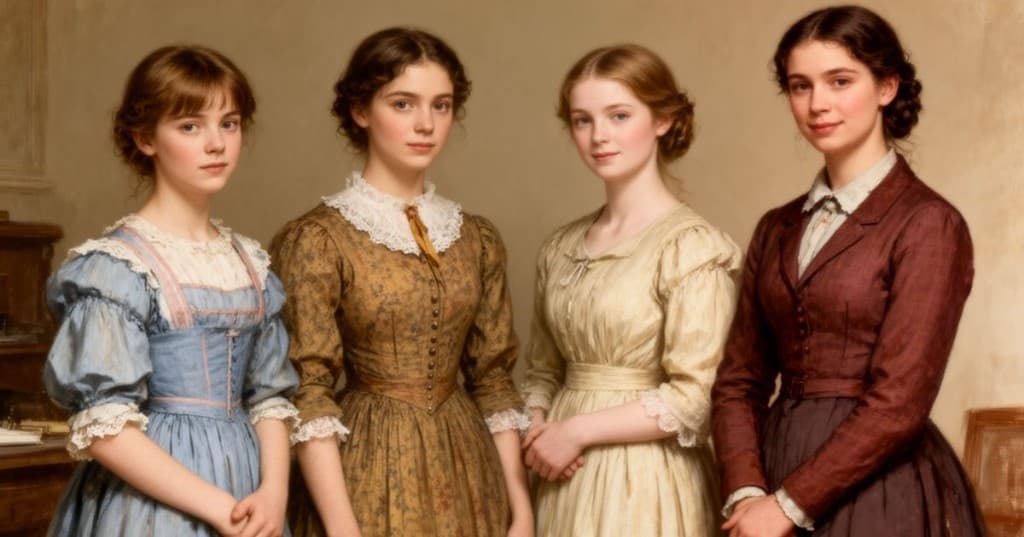
Chapter 10
The Pickwick Club and Post Office
CHAPTER TEN THE P.C. AND P.O. As spring came on, a new set of amusements became the fashion, and the lengthening days gave long afternoons for work and play of all sorts. The garden had to be put in order, and each sister had a quarter of the little plot to do what she liked with. Hannah used to say, “I’d know which each of them gardings belonged to, ef I see ’em in Chiny,” and so she might, for the girls’ tastes differed as much as their characters. Meg’s had roses and heliotrope, myrtle, and a little orange tree…
Public-domain chapter text, formatted for reading.
Critical Thinking Exercise
Map Your Circle's Boundaries
Think of a group you belong to - your work team, friend circle, family traditions, or hobby community. Draw or list the 'inner circle' and identify who's on the outside wanting in. For each outsider, write whether your group's resistance comes from protecting quality/values or protecting status/comfort. Then brainstorm one small way you could create a 'post office' - a low-pressure way for newcomers to connect.
Consider:
- •Consider whether your group's exclusivity actually makes it stronger or just makes you feel special
- •Think about what you might gain from fresh perspectives rather than what you might lose
- •Notice if you're more like Jo (advocating for inclusion) or initially resistant like her sisters
Journaling Prompt
Write about a time when you were the outsider wanting into an established group. What did the insiders do that made you feel welcome or unwelcome? How can you use that experience to guide your own choices about inclusion?
Master this chapter. Complete your experience
Purchase the complete book to access all chapters and support classic literature

Available in paperback, hardcover, and e-book formats
You Might Also Like




Lessons from Little Women
Theme-by-theme analyses that connect this book to modern life skills.
The Gap Between Dreams and the Work They Demand
Follow the hilltop castles to the harvest at Plumfield: ambition is easy to name and hard to feed with daily pages.
6 chapters·Explore AnalysisHow Anger Destroys What You Love
Name the burned manuscript and the ice as the same temper: Jo almost loses Amy, then spends the book learning what change actually costs.
5 chapters·Explore AnalysisThe Person Nobody Sees Until They're Gone
See Beth at the piano doing the quiet labor that holds the house until the room is empty.
6 chapters·Explore AnalysisHow to Let Go of What You Expected
Release Jo's script when Meg marries, Laurie is refused, Beth dies, and a different life arrives anyway.
6 chapters·Explore AnalysisWhat Love Actually Requires
Cross the hedge for Laurie, live Meg's poor marriage, and stand under Bhaer's umbrella after the easy match is gone.
6 chapters·Explore AnalysisHow Social Pressure Turns You Into a Stranger
Watch Amy buy pickled limes, Meg borrow a dress at the Moffats, and Jo write sensation stories for a check until the person they were starts to disappear.
6 chapters·Explore Analysis
Deep diving the literary elements.