Chapter 09
Meg Goes to Vanity Fair
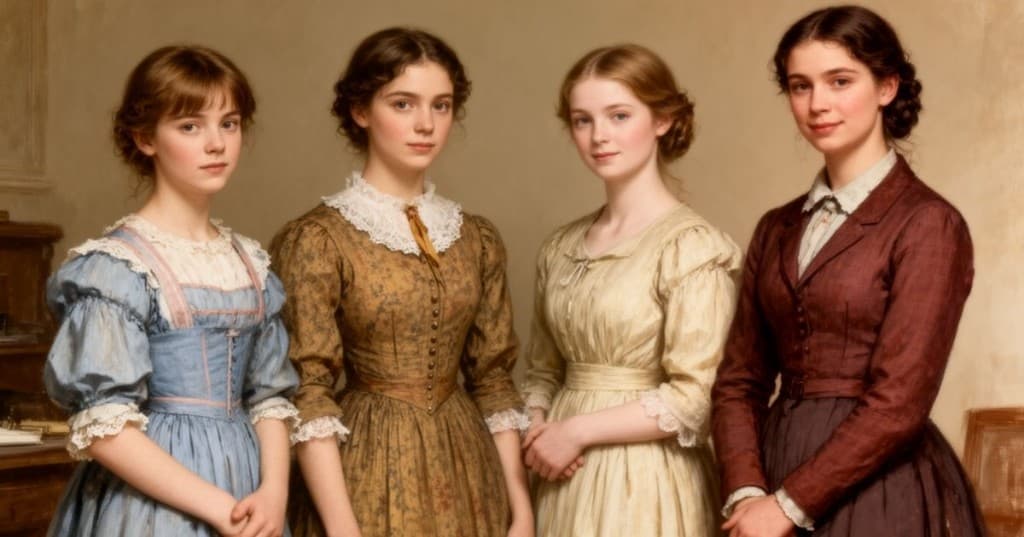
CHAPTER NINE MEG GOES TO VANITY FAIR “I do think it was the most fortunate thing in the world that those children should have the measles just now,” said Meg, one April day, as she stood packing the ‘go abroady’ trunk in her room, surrounded by her sisters. “And so nice of Annie Moffat not to forget her promise. A whole fortnight of fun will be regularly splendid,” replied Jo, looking like a windmill as she folded skirts with her long arms. “And such lovely weather, I’m so glad of that,” added Beth, tidily sorting neck and hair ribbons in…
Public-domain chapter text, formatted for reading.
Master this chapter. Complete your experience
Purchase the complete book to access all chapters and support classic literature
Available in paperback, hardcover, and e-book formats
Now let's explore the literary elements.
Key Quotes & Analysis
"A whole fortnight of fun will be regularly splendid"
Context: Sisters react as Meg packs for the Moffat visit
Jo's excitement frames the trip as innocent pleasure before social pressure rewrites Meg's sense of self.
In Today's Words:
Two whole weeks of fun will be amazing. We still treat short visits to wealthier friends as harmless holidays until comparison starts rewriting what normal feels like. The invitation is joyful before it becomes a test. The same pressure appears today when people perform a version of themselves that looks impressive on paper but drains the energy needed
"feel ashamed of it beside Annie’s silk one with a gold"
Context: Meg compares her umbrella to Annie's finer one
A trivial object becomes evidence of class shame, showing how envy starts with small visible details.
In Today's Words:
She feels embarrassed carrying her plain version next to the expensive one. People still feel that pinch beside designer bags, newer cars, or vacation photos. Shame often begins with an object small enough to hide in your hand. The same pressure appears today when people perform a version of themselves that looks impressive on paper but drains the
"Mrs. M. has made her plans, I dare say, and will play her cards well,"
Context: Meg overhears speculation about her family
Others narrate Meg's future as a transaction, turning her into a pawn in a story she never chose.
In Today's Words:
People assume her mother is scheming a rich marriage for her. Offices, neighborhoods, and group chats still invent motives when someone rises in visibility. Gossip fills silence with strategy that was never real. The same pressure appears today when people perform a version of themselves that looks impressive on paper but drains the energy needed for real competence
"Mother, do you have ‘plans’, as Mrs. Moffat said?"
Context: Meg confesses the gossip after returning home
Meg finally asks the question shame prevented at the Moffats', opening space for Marmee's real answer.
In Today's Words:
Mom, are you really plotting my future the way they said? Direct questions still clear poison faster than replaying rumors alone. Asking the person involved beats believing the room's version of your family. The same pressure appears today when people perform a version of themselves that looks impressive on paper but drains the energy needed for real competence
Thematic Threads
Class Pressure
In This Chapter
Meg feels ashamed of her simple clothes when surrounded by the Moffats' wealth and begins to see her family's modest means as embarrassing
Development
Building from earlier hints about the March family's reduced circumstances
In Your Life:
You might feel this when you're the only one in your friend group who can't afford certain activities or purchases
Authentic Identity
In This Chapter
Meg loses herself in borrowed finery and artificial behavior, becoming uncomfortable in her own skin
Development
Contrasts with earlier chapters showing the sisters' genuine personalities
In Your Life:
You might recognize this when you catch yourself acting completely different around certain people or in specific situations
Social Performance
In This Chapter
Meg becomes a spectacle at the party, playing a role rather than being herself, leading to gossip and misunderstanding
Development
New theme introduced here
In Your Life:
You might experience this when you feel like you're constantly 'on stage' in social situations rather than just being yourself
Parental Wisdom
In This Chapter
Mrs. March responds to Meg's confession with understanding rather than judgment, offering perspective on true values versus social expectations
Development
Continues the theme of Mrs. March as moral compass established in earlier chapters
In Your Life:
You might need this when you're struggling with decisions about what others expect versus what feels right to you
External Validation
In This Chapter
Meg craves the attention and compliments that come with her makeover but finds them ultimately hollow and exhausting
Development
Introduced here as counterpoint to the family's emphasis on internal worth
In Your Life:
You might notice this when you find yourself constantly seeking approval or feeling empty after receiving praise for things that aren't really 'you'
You now have the context. Time to form your own thoughts.
Discussion Questions
This is not a test. Five prompts guide you through the chapter, from how it opens to how it closes, so you notice context and rhythm rather than facts to memorize. Sit with each question in your own words. When you see "One way to read it," treat it as a starting point, not the only answer.
- 1
What changes in Meg during the first days at the Moffats'?
analysis • surfaceOne way to read it
Gratitude gives way to comparison; she starts feeling ashamed of modest clothes and envious of wealth she does not own.
- 2
Why does Laurie's reaction at the party matter more than the Moffats' compliments?
analysis • mediumOne way to read it
He knew Meg before the makeover, so his dismay names the real problem: she looks like someone performing rather than someone he trusts.
- 3
How does the gossip about Mrs. M.'s plans hurt even though it is false?
application • mediumOne way to read it
It recasts Meg's visit as scheming, insults her mother's motives, and makes Meg feel like a spectacle instead of a guest with her own desires.
- 4
What is Marmee's real answer to Meg's question about plans?
application • deepOne way to read it
She has many hopes for her daughters, but the favorite is genuine happiness, not marrying for money or performing status to please gossips.
- 5
When have you felt yourself changing to fit a room that had more money or polish than you?
reflection • deepOne way to read it
Strong answers describe specific wardrobe, speech, or behavior shifts and the moment they realized the performance was draining rather than elevating.
Critical Thinking Exercise
Track Your Identity Compass
Think of a time when you felt pressure to change who you are to fit in somewhere new - a job, school, social group, or relationship. Write down three specific things you changed about yourself and how each change made you feel. Then identify which changes helped you grow versus which ones made you feel like you were performing.
Consider:
- •Notice the difference between adapting your behavior and abandoning your values
- •Pay attention to whether the changes energized you or drained you over time
- •Consider whether the people around you liked the real you or just the performance
Journaling Prompt
Write about a relationship or environment where you feel most authentically yourself. What makes that space safe for you to be genuine, and how can you create more of that in your life?
Coming Up Next...
Chapter 10: The Pickwick Club and Post Office
Back home, the March sisters are about to discover that their own small world has its share of drama and secrets. Jo's literary ambitions are about to take an unexpected turn that will test her principles and her pride.