
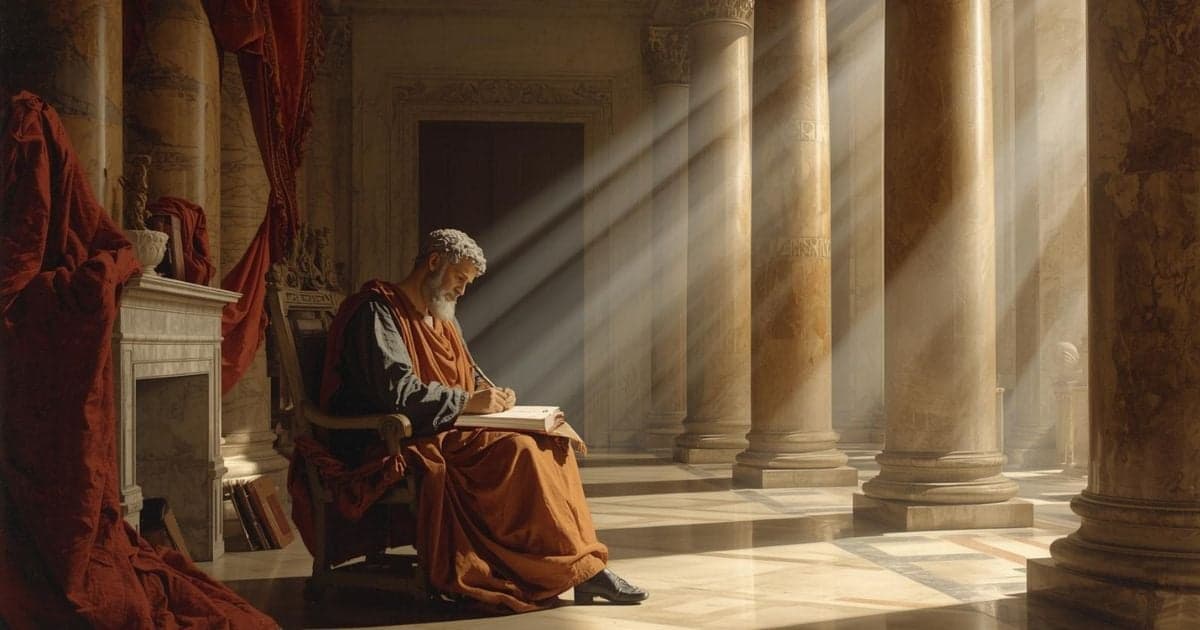
Chapter 68
The Art of Strategic Withdrawal
1.I fall in with your plan; retire and conceal yourself in repose. But at the same time conceal your retirement also. In doing this, you may be sure that you will be following the example of the Stoics, if not their precept. But you will be acting according to their precept also; you will thus satisfy both yourself and any Stoic you please. 2. We Stoics[1] do not urge men to take up public life in every case, or at all times, or without any qualification. Besides, when we have assigned to our wise man that field of public…
Public-domain chapter text, formatted for reading.
Critical Thinking Exercise
Design Your Cover Story
Think of a change you want to make in your life - career shift, health improvement, relationship work, or personal growth. Write down three different 'cover stories' you could use to protect this change from interference while it's fragile. Practice explaining your absence or new habits without revealing your real transformation work.
Consider:
- •Your cover story should be boring enough that people lose interest quickly
- •Choose explanations that don't invite advice or opinions from others
- •Consider what you'll say when people notice you're different but can't pinpoint how
Journaling Prompt
Write about a time when announcing a goal or change too early actually hurt your progress. What happened when other people got involved? How might things have gone differently if you'd kept it private longer?
Master this chapter. Complete your experience
Purchase the complete book to access all chapters and support classic literature

Available in paperback, hardcover, and e-book formats
You Might Also Like



Lessons from Letters from a Stoic
Theme-by-theme analyses that connect this book to modern life skills.
Dealing with Adversity
Pay the tax of life the way Letter 96 names it: illness, loss, and the father Seneca stayed alive for.
6 chapters·Explore AnalysisLiving According to Values
Match deed to word the way Letter 20 demands, and refuse Vatia's villa: hiding is not living.
6 chapters·Explore AnalysisEmotional Regulation
Stop paying twice for a fear that has not arrived, as Letter 13 warns, and notice when you are Harpaste asking for a brighter room.
6 chapters·Explore AnalysisManaging Time and Priorities
Take back the hour Letter 1 says you are giving away, and remember Senecio: healthy at dinner, gone by morning.
6 chapters·Explore AnalysisChoosing Friendships Wisely
Do not call a courier a friend if you will not trust him, and stay out of the noon games that send you home worse.
6 chapters·Explore AnalysisFacing Mortality with Courage
Sit with Bassus on the leaking ship, the asthma that is practice, and Senecio's unfinished plan.
6 chapters·Explore Analysis
Deep diving the literary elements.