Master this chapter. Complete your experience
Purchase the complete book to access all chapters and support classic literature
As an Amazon Associate, we earn a small commission from qualifying purchases at no additional cost to you.
Available in paperback, hardcover, and e-book formats
Why This Matters
Connect literature to life
This chapter teaches how to identify which struggles are worth engaging and which are worth avoiding—the difference between necessary resistance and pointless suffering.
Practice This Today
This week, notice when you're facing a difficult situation and ask: 'Is this something I can avoid, or something I need to meet with strength?' Practice choosing your battles wisely.
Now let's explore the literary elements.
Key Quotes & Analysis
"That which I ought not to wish to do, I lack the ability to do."
Context: Reflecting on how his old age and frailty keep him from activities he shouldn't want anyway
This shows Seneca's genius for reframing limitation as liberation. Instead of mourning what he's lost, he sees how physical constraints align with philosophical wisdom about not chasing unnecessary pleasures.
In Today's Words:
My body won't let me do the stupid stuff I shouldn't want to do anyway.
"Why should I not thank old age for keeping me fastened to my bed?"
Context: Explaining how physical limitation has brought him closer to philosophical contemplation
Rather than fighting his circumstances, Seneca finds genuine gratitude for how they've simplified his life and focused his priorities. It's not fake positivity - it's practical wisdom.
In Today's Words:
Maybe being stuck at home is actually protecting me from all the drama I used to get caught up in.
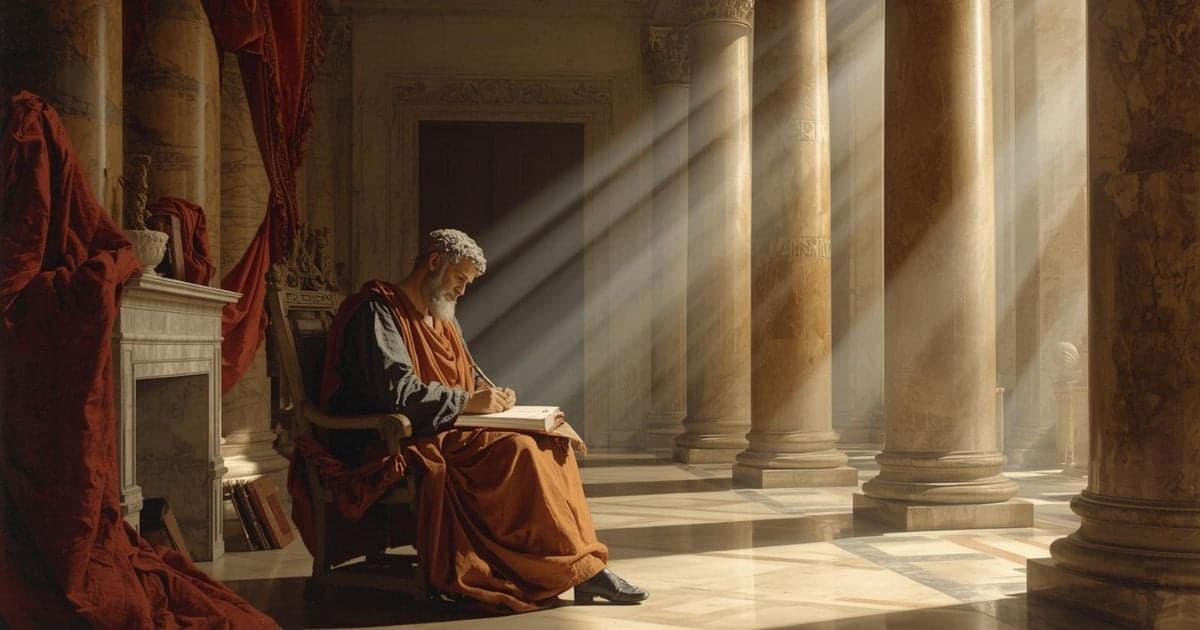
"Most of my converse is with books."
Context: Describing how his physical isolation has deepened his intellectual life
This reveals how Seneca has found richness in solitude, turning limitation into opportunity for growth. He's not just making the best of a bad situation - he's discovered genuine value.
In Today's Words:
These days I mostly hang out with books, and honestly, they're better company than most people.
Thematic Threads
Personal Growth
In This Chapter
Seneca argues that virtue requires resistance to grow stronger, like muscle under stress
Development
Builds on earlier letters about self-improvement, now showing growth requires challenge
In Your Life:
Your biggest growth often comes from your hardest periods, not your easiest ones.
Class
In This Chapter
Uses examples of noble Romans choosing honor over comfort, showing virtue transcends social status
Development
Continues theme that true nobility comes from character, not birth or wealth
In Your Life:
You can choose dignity and principle regardless of your economic situation or background.
Identity
In This Chapter
Defines identity through how one faces adversity rather than what one possesses or achieves
Development
Deepens earlier discussions of authentic self by showing it's revealed through trial
In Your Life:
Who you are is most clearly shown by how you handle your worst days, not your best ones.
Social Expectations
In This Chapter
Challenges expectation that good life means easy life, arguing struggle can be meaningful
Development
Continues rejection of conventional success metrics in favor of philosophical ones
In Your Life:
Society tells you to avoid all discomfort, but some struggles make you stronger and more complete.
Human Relationships
In This Chapter
Shows how facing hardship with dignity inspires others and builds deeper connections
Development
Builds on friendship themes by showing how shared struggle creates bonds
In Your Life:
The people who matter most will respect you more for handling crisis well than for avoiding it entirely.
You now have the context. Time to form your own thoughts.
Discussion Questions
- 1
What distinction does Seneca make between wanting suffering and wanting the strength to handle suffering well?
analysis • surface - 2
Why does Seneca use examples of Cato, Regulus, and Socrates? What do these historical figures demonstrate about choosing virtue over comfort?
analysis • medium - 3
Where do you see people today building resilience before they need it? Think about healthcare workers, parents, or people in recovery.
application • medium - 4
How would you apply Seneca's framework to a current challenge in your life? What would 'handling it with dignity' look like?
application • deep - 5
What does this chapter reveal about the difference between strength and avoidance? Why might an 'easy' life actually make us weaker?
reflection • deep
Critical Thinking Exercise
Build Your Resilience Training Plan
Create a personal 'resilience training' program by identifying three small discomforts you could practice regularly to build your capacity for handling bigger challenges. Think of this like going to the gym for your emotional and mental strength—what are the 'exercises' that would prepare you for real-world hardship?
Consider:
- •Start with manageable challenges that push your comfort zone without overwhelming you
- •Consider different types of strength: physical endurance, emotional regulation, social courage
- •Think about what specific hardships you're most likely to face based on your life circumstances
Journaling Prompt
Write about a time when you surprised yourself with how well you handled a difficult situation. What internal resources did you draw on? How could you strengthen those same resources now?
Coming Up Next...
Chapter 68: The Art of Strategic Withdrawal
Having explored how to face suffering with courage, Seneca next turns to a different challenge: how to handle success and comfort. He'll examine the wisdom of strategic retirement and the art of knowing when to step back from public life.