Wide Reads
Literature MattersLife IndexEducators
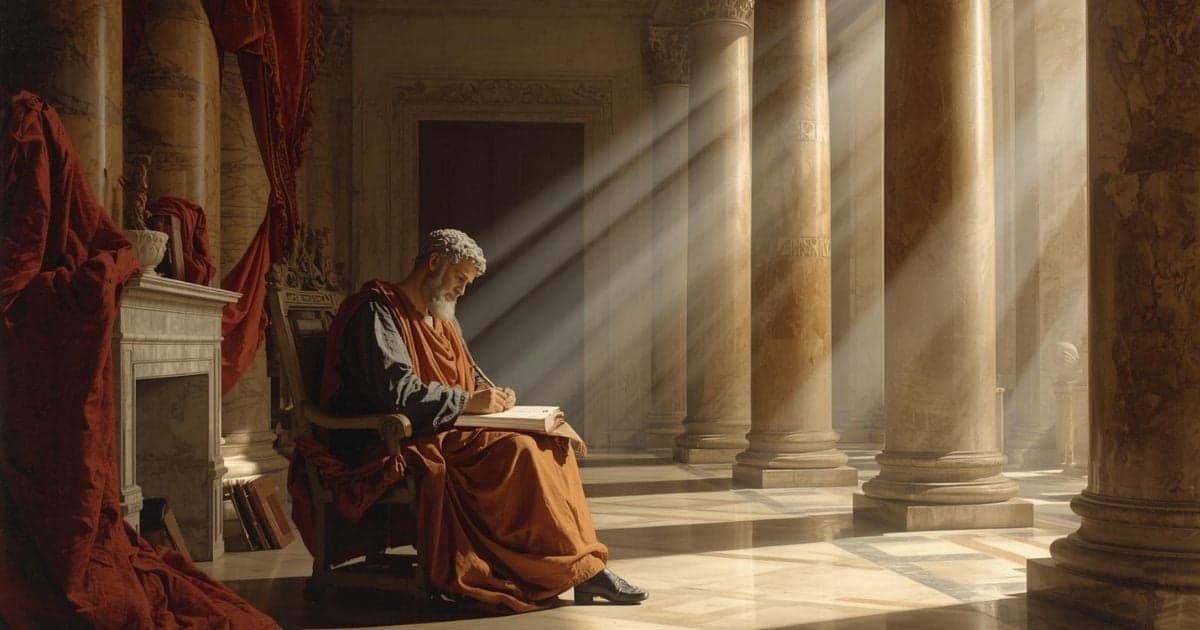
Sign in
Where to Begin
Letters from a Stoic - Finding Your Philosophical Heroes

Seneca

Letters from a Stoic

Finding Your Philosophical Heroes

Home›Books›Letters from a Stoic›Chapter 64
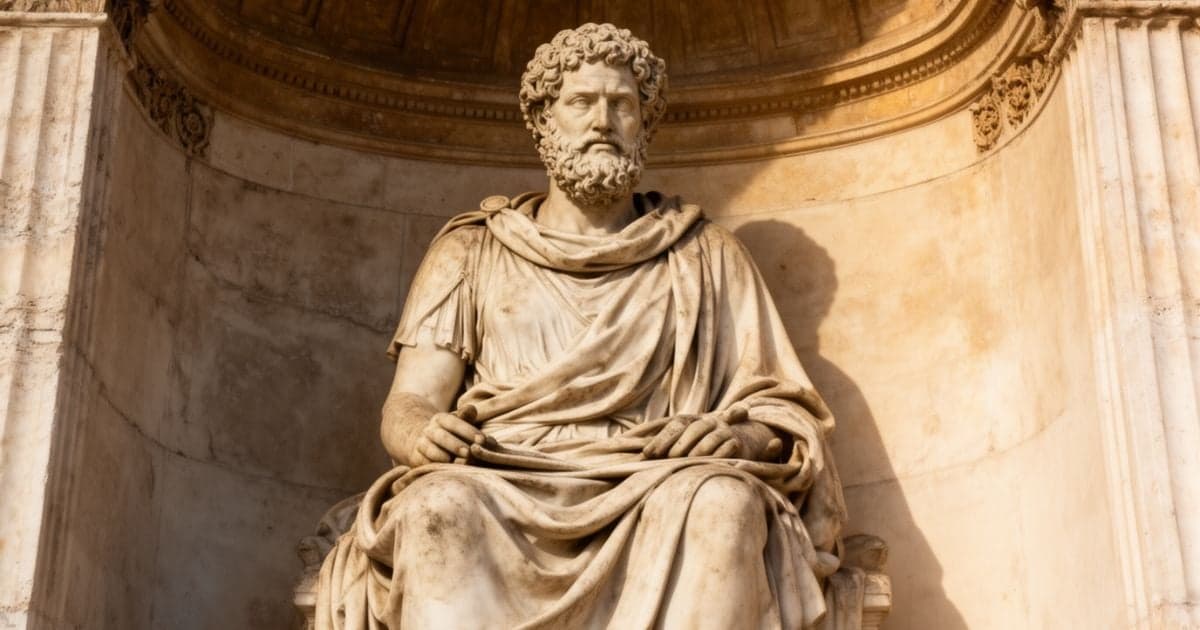
Previous
64 of 124
Next

Summary

Finding Your Philosophical Heroes

Letters from a Stoic by Seneca

0:000:00
Listen to Next Chapter

A dinner with friends and a book read aloud changes everything—at least for that evening. Letter 64 opens with Quintus Sextius the Elder being read aloud after a meal. Sextius was a Stoic in everything but name, and what Seneca finds in him is rarer than philosophical correctness: spirit. Reading him, Seneca says, he feels ready to challenge Fortune: 'Enter the lists—behold, I am ready for you!' The letter turns into a meditation on what the great teachers of wisdom have given us, and what we owe them. Not merely respect, but active inheritance—taking what they discovered, applying it, and passing it on larger than we found it. Philosophy has not been finished. The cures for the spirit have been discovered by the ancients; our task is to learn the method and the time of treatment. And the reverence Seneca owes his own teachers he owes equally to those earlier teachers of the human race—Cato, Laelius, Socrates, Plato, Zeno, Cleanthes. When he meets a consul or praetor, he dismounts. Should he welcome Marcus Cato into his soul with any less ceremony?

Coming Up in Chapter 65

Seneca splits his day between illness and philosophy, using his recovery time to test both his physical and mental resilience. He'll explore the fundamental question that drives all philosophical inquiry.

Share it with friends

Previous ChapterNext Chapter
GO ADS FREE — JOIN US
Original text
complete·871 words
Y

esterday you were with us. You might complain if I said “yesterday” merely. This is why I have added “with us.” For, so far as I am concerned, you are always with me. Certain friends had happened in, on whose account a somewhat brighter fire was laid,—not the kind that generally bursts from the kitchen chimneys of the rich and scares the watch, but the moderate blaze which means that guests have come. 2. Our talk ran on various themes, as is natural at a dinner; it pursued no chain of thought to the end, but jumped from one topic to another. We then had read to us a book by Quintus Sextius the Elder.[1] He is a great man, if you have any confidence in my opinion, and a real Stoic, though he himself denies it. 3. Ye Gods, what strength and spirit one finds in him! This is not the case with all philosophers; there are some men of illustrious name whose writings are sapless. They lay down rules, they argue, and they quibble; they do not infuse spirit simply because they have no spirit. But when you come to read Sextius, you will say: “He is alive; he is strong; he is free; he is more than a man; he fills me with a mighty confidence before I close his book.” 4. I shall acknowledge to you the state of mind I am in when I read his works: I want to challenge every hazard; I want to cry: “Why keep me waiting, Fortune? Enter the lists! Behold, I am ready for you!” I assume the spirit of a man who seeks where he may make trial of himself, where he may show his worth: And fretting ’mid the unwarlike flocks he prays Some foam-flecked boar may cross his path, or else A tawny lion stalking down the hills.[2] 5. I want something to overcome, something on which I may test my endurance. For this is another remarkable quality that Sextius possesses: he will show you the grandeur of the happy life and yet will not make you despair of attaining it; you will understand that it is on high, but that it is accessible to him who has the will to seek it. 6. And virtue herself will have the same effect upon you, of making you admire her and yet hope to attain her. In my own case, at any rate the very contemplation of wisdom takes much of my time; I gaze upon her with bewilderment, just as I sometimes gaze upon the firmament itself, which I often behold as if I saw it for the first time. 7. Hence I worship the discoveries of wisdom and their discoverers; to enter, as it were, into the inheritance of many predecessors is a delight. It was for me that they laid up this treasure; it was for me that they toiled. But we should play the part of a careful householder; we should increase what we have inherited. This inheritance shall pass from me to my descendants larger than before. Much still remains to do, and much will always remain, and he who shall be born a thousand ages hence will not be barred from his opportunity of adding something further. 8. But even if the old masters have discovered everything, one thing will be always new,—the application and the scientific study and classification of the discoveries made by others. Assume that prescriptions have been handed down to us for the healing of the eyes; there is no need of my searching for others in addition; but for all that, these prescriptions must be adapted to the particular disease and to the particular stage of the disease. Use this prescription to relieve granulation of the eyelids, that to reduce the swelling of the lids, this to prevent sudden pain or a rush of tears, that to sharpen the vision. Then compound these several prescriptions, watch for the right time of their application, and apply the proper treatment in each case. The cures for the spirit also have been discovered by the ancients; but it is our task to learn the method and the time of treatment. 9. Our predecessors have worked much improvement, but have not worked out the problem. They deserve respect, however, and should be worshipped with a divine ritual. Why should I not keep statues of great men to kindle my enthusiasm, and celebrate their birthdays? Why should I not continually greet them with respect and honour? The reverence which I owe to my own teachers I owe in like measure to those teachers of the human race, the source from which the beginnings of such great blessings have flowed. 10. If I meet a consul or a praetor, I shall pay him all the honour which his post of honour is wont to receive: I shall dismount, uncover, and yield the road. What, then? Shall I admit into my soul with less than the highest marks of respect Marcus Cato, the Elder and the Younger, Laelius the Wise, Socrates and Plato, Zeno and Cleanthes? I worship them in very truth, and always rise to do honour to such noble names. Farewell.

1 / 1

Master this chapter. Complete your experience

Purchase the complete book to access all chapters and support classic literature

Read Free on GutenbergBuy at Powell'sBuy on Amazon

As an Amazon Associate, we earn a small commission from qualifying purchases at no additional cost to you.

Available in paperback, hardcover, and e-book formats

GO ADS FREE — JOIN US

Why This Matters

Connect literature to life

Skill: Identifying Intellectual Fuel

This chapter teaches how to recognize ideas that don't just educate but energize you to take action on real problems.

Practice This Today

This week, notice when reading or listening makes you want to act rather than just understand - that's your intellectual fuel to collect and revisit.

GO ADS FREE — JOIN US

Now let's explore the literary elements.

Key Quotes & Analysis

"He is alive; he is strong; he is free"

— Seneca

Context: Describing the energy he finds in Quintus Sextius's philosophical writing

This shows what Seneca values in philosophy - not dry academic theory, but wisdom that pulses with life and gives you strength to act. True philosophy should liberate you and make you feel powerful.

In Today's Words:

This guy's writing has real energy - it makes you feel like you can handle anything

"Come now, Fortune, I am ready for you! Bring on whatever you will"

— Seneca

Context: After reading Sextius, feeling inspired and ready to face any challenge

This captures the confidence that comes from good philosophical training. Instead of fearing life's problems, Seneca feels equipped to handle whatever comes his way.

In Today's Words:

Bring it on, life - I'm ready for whatever you throw at me

"They lay down rules, they argue, and they quibble; they do not infuse spirit simply because they have no spirit"

— Seneca

Context: Contrasting lifeless philosophers with the energizing Sextius

Seneca criticizes philosophers who get lost in technical debates instead of inspiring people to live better. Real wisdom should motivate action, not just intellectual gymnastics.

In Today's Words:

They just argue about details and miss the point - you can't inspire people if you're not inspired yourself

Thematic Threads

Personal Growth

In This Chapter

Seneca experiences transformative reading that makes him feel ready for any challenge

Development

Evolved from earlier focus on gradual improvement to finding sources of sudden empowerment

In Your Life:

You might recognize this when certain books, conversations, or ideas suddenly make you feel capable of tackling problems you've been avoiding.

Class

In This Chapter

Seneca honors intellectual mentors with the same respect given to political officials

Development

Continued theme of recognizing different forms of authority and worth beyond traditional power

In Your Life:

You might find yourself valuing teachers, authors, or thinkers more than celebrities or politicians.

Social Expectations

In This Chapter

Breaking from convention by finding inspiration in ancient philosophers rather than contemporary figures

Development

Ongoing pattern of Seneca choosing wisdom over social conformity

In Your Life:

You might draw strength from unexpected sources that others don't understand or value.

Human Relationships

In This Chapter

Seneca's relationship with past thinkers as living mentors rather than dead authors

Development

Expanded understanding of meaningful connections beyond immediate social circle

In Your Life:

You might find that books, podcasts, or online communities provide mentorship that your immediate environment lacks.

Identity

In This Chapter

Discovering intellectual heroes helps Seneca define who he wants to become

Development

Continued exploration of self-definition through chosen influences rather than inherited expectations

In Your Life:

You might realize your identity is shaped more by what you choose to read and study than where you come from.

You now have the context. Time to form your own thoughts.

Discussion Questions

  1. 1

    What specific effect did reading Quintus Sextius have on Seneca, and how did it differ from just learning information?

    analysis • surface
  2. 2

    Why does Seneca say that wisdom must be both 'magnificent and achievable'? What happens when it's only one or the other?

    analysis • medium
  3. 3

    Think about content you consume - books, podcasts, videos, conversations. Which sources make you want to take action rather than just understand concepts?

    application • medium
  4. 4

    Seneca treats past philosophers as living teachers whose wisdom applies to current problems. How could you build your own 'advisory board' of thinkers or mentors to guide daily decisions?

    application • deep
  5. 5

    What does Seneca's response to Sextius reveal about how we can identify ideas that will actually change our behavior versus those that just satisfy our curiosity?

    reflection • deep

Critical Thinking Exercise

10 minutes

Map Your Intellectual Fuel Sources

Create a personal inventory of content that energizes rather than just informs you. List books, articles, podcasts, or conversations that made you want to take action or try something new. Next to each source, write what specific action or change it inspired. Look for patterns in what types of ideas serve as your intellectual fuel.

Consider:

  • •Notice the difference between content that makes you feel smart versus content that makes you feel capable
  • •Pay attention to ideas that felt both challenging and achievable when you first encountered them
  • •Consider how you could strategically return to these fuel sources when you need motivation for difficult situations

Journaling Prompt

Write about a time when reading or learning something specific gave you the courage to handle a real-life challenge. What made that particular wisdom feel actionable rather than just interesting?

Coming Up Next...

Chapter 65: What Really Causes Everything to Exist

Seneca splits his day between illness and philosophy, using his recovery time to test both his physical and mental resilience. He'll explore the fundamental question that drives all philosophical inquiry.

Continue to Chapter 65
Previous
Grieving Without Losing Yourself
Contents
Next
What Really Causes Everything to Exist

Continue Exploring

Letters from a Stoic Study GuideTeaching ResourcesEssential Life IndexBrowse by ThemeAll Books

You Might Also Like

Meditations cover

Meditations

Marcus Aurelius

Explores personal growth

The Dhammapada cover

The Dhammapada

Buddha

Explores suffering & resilience

The Consolation of Philosophy cover

The Consolation of Philosophy

Boethius

Explores suffering & resilience

The Enchiridion cover

The Enchiridion

Epictetus

Explores suffering & resilience

Browse all 47+ books

Share This Chapter

Know someone who'd enjoy this? Spread the wisdom!

TwitterFacebookLinkedInEmail

Read ad-free with Prestige

Get rid of ads, unlock study guides and downloads, and support free access for everyone.

Subscribe to PrestigeCreate free account
Intelligence Amplifier
Intelligence Amplifier™Powering Wide Reads

Exploring human-AI collaboration through books, essays, and philosophical dialogues. Classic literature transformed into navigational maps for modern life.

2025 Books

→ The Amplified Human Spirit→ The Alarming Rise of Stupidity Amplified→ San Francisco: The AI Capital of the World
Visit intelligenceamplifier.org
hello@widereads.com

WideReads Originals

→ You Are Not Lost→ The Last Chapter First→ The Lit of Love→ Wealth and Poverty→ 10 Paradoxes in the Classics · coming soon
Arvintech
arvintechAmplify your Mind
Visit at arvintech.com

Navigate

  • Home
  • Library
  • Essential Life Index
  • How It Works
  • Subscribe
  • Account
  • About
  • Contact
  • Authors
  • Suggest a Book
  • Landings

Made For You

  • Students
  • Educators
  • Families
  • Readers
  • Literary Analysis
  • Finding Purpose
  • Letting Go
  • Recovering from a Breakup
  • Corruption
  • Gaslighting in the Classics

Newsletter

Weekly insights from the classics. Amplify Your Mind.

Legal

  • Privacy Policy
  • Terms of Service
  • Cookie Policy
  • Accessibility

Why Public Domain?

We focus on public domain classics because these timeless works belong to everyone. No paywalls, no restrictions—just wisdom that has stood the test of centuries, freely accessible to all readers.

Public domain books have shaped humanity's understanding of love, justice, ambition, and the human condition. By amplifying these works, we help preserve and share literature that truly belongs to the world.

A Pilgrimage

Powell's City of Books

Portland, Oregon

If you ever find yourself in Portland, walk to the corner of Burnside and 10th. The building takes up an entire city block. Inside is over a million books, new and used on the same shelf, organized by color-coded rooms with names like the Rose Room and the Pearl Room. You can lose an afternoon. You can lose a weekend. You will find a book you have been looking for your whole life, and three you did not know existed.

It is a pilgrimage. We cannot find a bookstore like it anywhere on earth. If you read the classics, and you ever get the chance, go. It belongs on every reader's bucket list.

Visit powells.com

We are not in any way affiliated with Powell's. We are just a very big fan.

© 2026 Wide Reads™. All Rights Reserved.

Intelligence Amplifier™ and Wide Reads™ are proprietary trademarks of Arvin Lioanag.

Copyright Protection: All original content, analyses, discussion questions, pedagogical frameworks, and methodology are protected by U.S. and international copyright law. Unauthorized reproduction, distribution, web scraping, or use for AI training is strictly prohibited. See our Copyright Notice for details.

Disclaimer: The information provided on this website is for general informational and educational purposes only and does not constitute professional, legal, financial, or technical advice. While we strive to ensure accuracy and relevance, we make no warranties regarding completeness, reliability, or suitability. Any reliance on such information is at your own risk. We are not liable for any losses or damages arising from use of this site. By using this site, you agree to these terms.