Wide Reads
Literature MattersLife IndexEducators
Sign in
Where to Begin

What Really Causes Everything to Exist — Letters from a Stoic

Letters from a Stoic - What Really Causes Everything to Exist

Seneca

Letters from a Stoic

What Really Causes Everything to Exist

Home›Books›Letters from a Stoic›Chapter 65: What Really Causes Everything to Exist
Previous
65 of 124
Next

Analysis by the Wide Reads editorial team·Reviewed against the source text·Updated December 11, 2025

Summary

What Really Causes Everything to Exist

Letters from a Stoic by Seneca

0:000:00
Listen to Next Chapter

What causes everything that exists? Letter 65 is Seneca doing philosophy with full concentration, starting with a Stoic, Aristotelian, Platonic dispute about causation. The Stoics say two things account for everything: matter and reason. Aristotle identifies four causes, material, efficient, formal, and final. Plato adds a fifth: the ideal pattern, the model the craftsman gazes upon when creating.

God, on Plato's account, made the universe by looking at ideas within himself, ideas that are imperishable and unchangeable. Seneca works through all of this with care and then presses past it toward what he calls the first, general cause, Creative Reason, which is God. The letter's deeper argument, however, is about why this kind of thinking matters. Contemplating the universe lightens the soul weighted down by the body. The body is a chain.

Philosophy bids the soul look up and, in looking up, experience something of freedom. The wise man regards the body as a buffer against Fortune. Whatever can be wounded belongs to the body. The soul lives free within it, or can, if it chooses.

The letter closes with a line that doubles as Seneca's summary of everything: God is good, and no good person is grudging of anything that is good. Therefore God made it the best world possible.

In this chapter: Terms Characters Key Quotes Themes Modern Story

Why This Matters

Connect literature to life

Skill: Looking Up From the Immediate Problem

Hard questions can lighten a burdened mind. Seneca debates Stoic, Aristotelian, and Platonic causes while ill, then asks whether friends may forbid him to contemplate the universe when philosophy bids the soul roam abroad and despise the body as a chain. When pressure narrows your view, lift one question above the task in front of you.

Coming Up in Chapter 66

Seneca reunites with an old school friend after many years apart, leading to reflections on how people change over time and what it means to truly know someone. The encounter reveals surprising truths about virtue and character development.

Share it with friends

PreviousPrevious ChapterNextNext Chapter
Original text
2,302 wordscomplete

Chapter 65

What Really Causes Everything to Exist

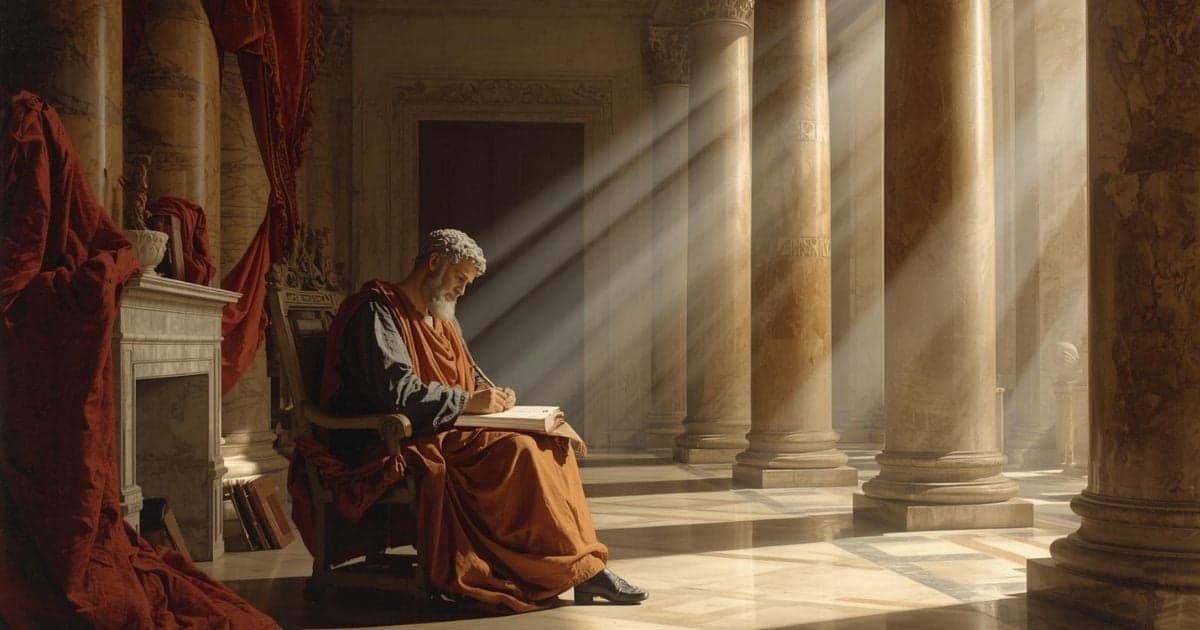
1.I shared my time yesterday with ill health;[1] it claimed for itself all the period before noon; in the afternoon, however, it yielded to me. And so I first tested my spirit by reading; then, when reading was found to be possible, I dared to make more demands upon the spirit, or perhaps I should say, to make more concessions to it. I wrote a little, and indeed with more concentration than usual, for I am struggling with a difficult subject and do not wish to be downed. In the midst of this, some friends visited me, with the…

Public-domain chapter text, formatted for reading.

Master this chapter. Complete your experience

Purchase the complete book to access all chapters and support classic literature

Buy at Powell'sBuy on Amazon

Available in paperback, hardcover, and e-book formats

Now let's explore the literary elements.

Key Quotes & Analysis

"Matter lies sluggish, a substance ready for any use, but sure to remain unemployed if no one sets it in motion"

— Seneca

Context: On Stoic matter and cause

Potential waits for reason.

In Today's Words:

Seneca says matter lies sluggish, ready for any use but unemployed if nothing sets it in motion. Raw material needs direction. Ask what agent must move the inert parts of your problem. Apply that test to one real decision you face in the next few days.

"All art is but imitation of nature; therefore, let me apply these statements of general principles to the things which have to be made by man."

— Seneca

Context: Applying causes to human making

Craft mirrors cosmic order.

In Today's Words:

Seneca says all art is but imitation of nature, then applies general principles to things man must make. Every statue needs material and maker. Separate what you are shaping from who must shape it. Apply that test to one real decision you face in the next few days.

"Do you ask what God’s purpose is? It is goodness"

— Seneca (quoting Plato)

Context: On divine purpose

Creation aims at good.

In Today's Words:

Seneca asks what God's purpose is and answers: goodness. Plato says the good God made the best world possible. When motives blur, return to whether the aim serves good. Apply that test to one real decision you face in the next few days. Apply that test to one real decision you face in the next

"It is surely Creative Reason,[9]—in other words, God"

— Seneca

Context: On the first cause

One cause rules the many.

In Today's Words:

Seneca says the first general cause is surely Creative Reason, in other words God. Listed causes hinge on one maker. Find the single principle behind many explanations. Apply that test to one real decision you face in the next few days. Apply that test to one real decision you face in the next few days.

Thematic Threads

Mental Freedom

In This Chapter

Seneca demonstrates how philosophical thinking liberates the mind from physical and circumstantial limitations

Development

Introduced here as core Stoic practice

In Your Life:

You might find this when studying something complex helps you feel less trapped by your current situation

Root Causes

In This Chapter

The debate over what truly causes things to exist—material, maker, form, purpose, or divine reason

Development

Introduced here as framework for understanding

In Your Life:

You might see this when trying to understand why problems keep recurring in your workplace or relationships

Perspective

In This Chapter

Physical illness becomes secondary when the mind engages with larger philosophical questions

Development

Introduced here as coping mechanism

In Your Life:

You might experience this when learning something new makes your daily stresses feel more manageable

Knowledge as Power

In This Chapter

Understanding fundamental forces gives strength that circumstances cannot diminish

Development

Introduced here as Stoic principle

In Your Life:

You might notice this when understanding your rights at work makes you feel less vulnerable to unfair treatment

Mind-Body Split

In This Chapter

The soul can roam free through contemplation even when the body is constrained by illness

Development

Introduced here as liberation technique

In Your Life:

You might find this when reading or learning helps you mentally escape physical discomfort or boring situations

You now have the context. Time to form your own thoughts.

Discussion Questions

This is not a test. Five prompts guide you through the chapter, from how it opens to how it closes, so you notice context and rhythm rather than facts to memorize. Sit with each question in your own words. When you see "One way to read it," treat it as a starting point, not the only answer.

  1. 1

    Seneca spends a morning claimed by ill health, then tests and concedes to the spirit by writing on difficult causes: matter, reason, and God as creative cause. Why begin with sickness?

    ▶One way to read it

    Body sets limits; mind negotiates what remains. Philosophy proceeds when reading is possible, then demands more when spirit allows.

    analysis • surface
  2. 2

    Seneca sorts Stoic, Aristotelian, and Platonic accounts of cause and says pattern and purpose are tools or accessories, not the one creative cause. What is he trying to clarify?

    ▶One way to read it

    Many labels circle one source. Matter needs reason or God as general cause; forms and patterns serve creation but do not replace it.

    analysis • medium
  3. 3

    Seneca compares world-matter to our mortal body and says let the lower serve the higher. How does that analogy guide conduct under hazard?

    ▶One way to read it

    Body and externals should obey mind and virtue. Do not fear wrongs, wounds, bonds, or poverty as masters of the higher part.

    application • medium
  4. 4

    Seneca says he has no fear of ceasing to exist because it equals not having begun, and no fear of change because he will not be as cramped as now. How does causation talk lead to death calm?

    ▶One way to read it

    Seeing self as part of ordered nature shrinks death to either rest or transformation. Non-being is already known; change promises less confinement.

    application • deep
  5. 5

    Seneca wrestled a hard subject while ill. When is abstract inquiry medicine rather than escape?

    ▶One way to read it

    When it steels the spirit against fear and orders life under reason. Escape uses ideas to avoid action; medicine uses them to endure and serve the higher.

    reflection • deep

Critical Thinking Exercise

10 minutes

Map Your Stress to Its Root System

Think of a current stressor in your life - money troubles, difficult relationships, work pressure, health concerns. Instead of focusing on how it makes you feel, spend time identifying the deeper forces at work. What systems, patterns, or root causes are creating this situation? Draw or write out the connections you discover, like mapping a family tree of your problem.

Consider:

  • •Look for patterns that repeat across different areas of your life
  • •Consider what forces are outside your control versus what you can influence
  • •Ask yourself what knowledge or perspective might change how you approach this situation

Journaling Prompt

Write about a time when understanding the 'why' behind a difficult situation changed how you handled it. What knowledge gave you that shift in perspective, and how did it affect your emotional response?

Coming Up Next...

Chapter 66: Why All Good Things Are Equal

Seneca reunites with an old school friend after many years apart, leading to reflections on how people change over time and what it means to truly know someone. The encounter reveals surprising truths about virtue and character development.

Continue to Chapter 66
Previous
Finding Your Philosophical Heroes
Contents
Next
Why All Good Things Are Equal
Keep exploring

Continue Exploring

Study guides, teaching tools, themes, and the full library.More ways to read Letters from a Stoic: study guides, teaching tools, and the wider library.

  • Letters from a Stoic Study Guide
  • Teaching Resources
  • Essential Life Index
  • Browse by Theme
  • All Books

Life-skill deep dives in Letters from a Stoic

  • Choosing Friendships WiselySeneca on true friendship, toxic company, and the inner circle: how the people you keep either improve you or slowly become you.
  • Dealing with AdversitySeneca on illness, exile, loss, and hardship: how to endure what you cannot remove without surrendering your judgment or dignity.
  • Emotional RegulationSeneca on anger, fear, and grief: how to feel without being ruled, and how emotional storms pass through those who train the mind.
  • Facing Mortality with CourageSeneca on memento mori without morbidity: prepare for death early, drain its terror, and let mortality clarify how you live now.
  • Living According to ValuesSeneca on integrity, virtue, and the gap between what we praise and what we do: close it before wealth, crowds, or comfort make hypocrisy normal.
  • Managing Time and PrioritiesSeneca on guarding your hours: reclaim time from distraction, busywork, and other people

You Might Also Like

Meditations cover

Meditations

Marcus Aurelius

Explores personal growth

The Dhammapada cover

The Dhammapada

Buddha

Explores suffering & resilience

The Enchiridion cover

The Enchiridion

Epictetus

Explores suffering & resilience

The Consolation of Philosophy cover

The Consolation of Philosophy

Boethius

Explores suffering & resilience

Browse all 106+ books

Share This Chapter

Know someone who'd enjoy this? Spread the wisdom!

TwitterFacebookLinkedInEmail

Go further with Prestige

Unlock study guides and downloads, early access, and exclusive content — and support free access for everyone.

Subscribe to PrestigeCreate free account
Intelligence Amplifier
Intelligence Amplifier™Powering Wide Reads

Exploring human-AI collaboration through books, essays, and philosophical dialogues. Classic literature transformed into navigational maps for modern life.

2025 Books

→ The Amplified Human Spirit→ The Alarming Rise of Stupidity Amplified→ San Francisco: The AI Capital of the World
Visit intelligenceamplifier.org
hello@widereads.com

WideReads Originals

→ You Are Not Lost→ The Last Chapter First→ The Lit of Love→ Wealth and Poverty→ Wisdom for the Wounded
Arvintech
arvintechAmplify your Mind
Visit at arvintech.com

Navigate

  • Home
  • Library
  • Essential Life Index
  • How It Works
  • Subscribe
  • Account
  • About
  • Contact
  • Authors
  • Suggest a Book
  • Landings

Made For You

  • Trending
  • Students
  • Educators
  • Families
  • Readers
  • Literary Analysis
  • Finding Purpose
  • Letting Go
  • Recovering from a Breakup
  • Corruption
  • Gaslighting in the Classics

Newsletter

Weekly insights from the classics. Amplify Your Mind.

Legal

  • Privacy Policy
  • Terms of Service
  • Editorial Standards
  • Cookie Policy
  • Accessibility

Why Public Domain?

We focus on public domain classics because these timeless works belong to everyone. No paywalls, no restrictions—just wisdom that has stood the test of centuries, freely accessible to all readers.

Public domain books have shaped humanity's understanding of love, justice, ambition, and the human condition. By amplifying these works, we help preserve and share literature that truly belongs to the world.

A Pilgrimage

Powell's City of Books

Portland, Oregon

If you ever find yourself in Portland, walk to the corner of Burnside and 10th. The building takes up an entire city block. Inside is over a million books, new and used on the same shelf, organized by color-coded rooms with names like the Rose Room and the Pearl Room. You can lose an afternoon. You can lose a weekend. You will find a book you have been looking for your whole life, and three you did not know existed.

It is a pilgrimage. We cannot find a bookstore like it anywhere on earth. If you read the classics, and you ever get the chance, go. It belongs on every reader's bucket list.

Visit powells.com

We are not in any way affiliated with Powell's. We are just a very big fan.

© 2026 Wide Reads™. All Rights Reserved.

Intelligence Amplifier™ and Wide Reads™ are proprietary trademarks of Arvin Lioanag.

Copyright Protection: All original content, analyses, discussion questions, pedagogical frameworks, and methodology are protected by U.S. and international copyright law. Unauthorized reproduction, distribution, web scraping, or use for AI training is strictly prohibited. See our Copyright Notice for details.

Disclaimer: The information provided on this website is for general informational and educational purposes only and does not constitute professional, legal, financial, or technical advice. While we strive to ensure accuracy and relevance, we make no warranties regarding completeness, reliability, or suitability. Any reliance on such information is at your own risk. We are not liable for any losses or damages arising from use of this site. By using this site, you agree to these terms.