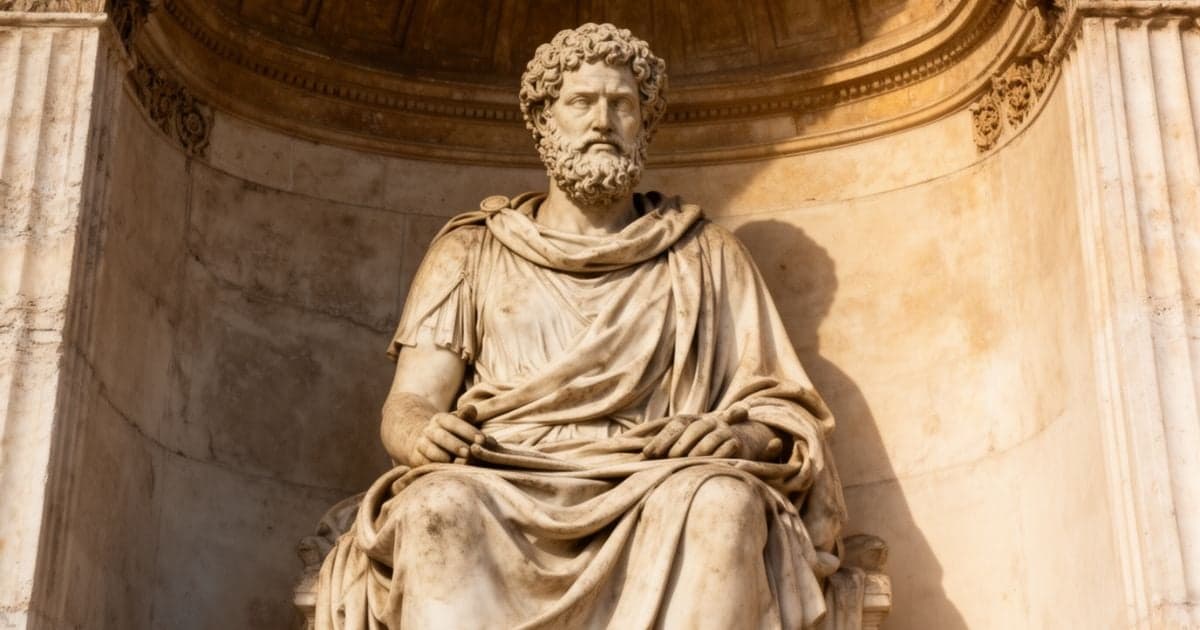
Chapter 29
When Friends Won't Listen to Truth
1.You have been inquiring about our friend Marcellinus and you desire to know how he is getting along. He seldom comes to see me, for no other reason than that he is afraid to hear the truth, and at present he is removed from any danger of hearing it; for one must not talk to a man unless he is willing to listen. That is why it is often doubted whether Diogenes and the other Cynics, who employed an undiscriminating freedom of speech and offered advice to any who came in their way, ought to have pursued such a plan.…
Public-domain chapter text, formatted for reading.
Master this chapter. Complete your experience
Purchase the complete book to access all chapters and support classic literature
Available in paperback, hardcover, and e-book formats
Now let's explore the literary elements.
Key Quotes & Analysis
"afraid to hear the truth, and at present he is removed from any danger of hearing it; for one must not talk to a man unless he is willing to listen."
Context: Why Marcellinus avoids visits
Avoidance signals known need.
In Today's Words:
Seneca says Marcellinus seldom comes because he is afraid to hear the truth. Distance from honest friends is often self-protection. Notice who you avoid when you already know what they would say. Apply that test to one real decision you face in the next few days.
"one must not talk to a man unless he is willing to listen."
Context: Principle for effective counsel
Unreadiness wastes wisdom and breeds resentment.
In Today's Words:
Seneca says one must not talk to a man unless he is willing to listen. Forced advice hardens rather than heals. Save your honest words for the moment readiness appears, not for the performance of helping. Apply that test to one real decision you face in the next few days.
"scatter this advice by the handful."
Context: Critiquing indiscriminate preaching
Volume is not strategy.
In Today's Words:
Seneca quotes the Cynic boast that he must scatter advice by the handful because trying often must sometime succeed. Spray counsel everywhere and it loses force where it could matter. Choose your shots instead of congratulating yourself for noise. Apply that test to one real decision you face in the next few days.
"his influence is weakened; it has too little effect upon those whom it might have set right if it had not grown so stale"
Context: Against scatter-shot moralizing
Aimed counsel preserves power.
In Today's Words:
Seneca says the great-souled man's influence is weakened and grows stale on those he might have set right. Random preaching trains people to ignore you. Protect your credibility by intervening where listening is still possible. Apply that test to one real decision you face in the next few days.
Thematic Threads
Pride
In This Chapter
Marcellinus uses his intelligence as a shield, preferring to appear clever rather than admit he needs guidance
Development
Builds on earlier themes about ego blocking wisdom
In Your Life:
You might recognize this when you find yourself making jokes instead of having serious conversations about problems you know you need to address.
Social Expectations
In This Chapter
Seneca notes that trying to please everyone often requires compromising your principles
Development
Continues exploration of authentic living versus social performance
In Your Life:
You see this when you water down your honest opinions to avoid conflict or maintain popularity.
Human Relationships
In This Chapter
The dilemma of whether to offer help to someone who isn't ready to receive it
Development
Deepens understanding of when to persist and when to step back in relationships
In Your Life:
This shows up when you're trying to help a family member or friend who keeps pushing you away.
Personal Growth
In This Chapter
The recognition that some people use their strengths (like wit) to avoid necessary development
Development
Expands on how our talents can become obstacles to growth
In Your Life:
You might see this when you realize you're using your skills to avoid dealing with deeper issues.
Class
In This Chapter
Seneca's critique of philosophers who give unsolicited advice to anyone suggests wisdom requires discernment about audience
Development
Introduced here - the idea that effective communication requires understanding your audience
In Your Life:
This appears when you need to adjust how you communicate based on who you're talking to and what they're ready to hear.
You now have the context. Time to form your own thoughts.
Discussion Questions
This is not a test. Five prompts guide you through the chapter, from how it opens to how it closes, so you notice context and rhythm rather than facts to memorize. Sit with each question in your own words. When you see "One way to read it," treat it as a starting point, not the only answer.
- 1
Marcellinus avoids Seneca because he fears hearing the truth, and Seneca refuses to advise an unwilling listener. Why is silence sometimes the only honest response?
analysis • surfaceOne way to read it
Forced counsel breeds resentment, not change. Until someone will listen, speech becomes violence disguised as help.
- 2
Seneca questions whether Diogenes and the Cynics were right to offer indiscriminate frankness to everyone they met. When does blunt truth help, and when does it harden the hearer?
analysis • mediumOne way to read it
Seed needs receptive soil. Freedom of speech without regard for readiness scatters advice where it cannot root and may only provoke retreat.
- 3
Seneca plans to approach Marcellinus by showing him his former greater worth and putting a check on faults even if he cannot root them out. Where might gradual restraint beat immediate overhaul in a friend?
application • mediumOne way to read it
A habit that pauses is already relief for a serious wound. Stopping for a time can become the path to stopping altogether.
- 4
Seneca says philosophy should make you weigh men's judgments, live without fear of gods or men, and either overcome evils or end them. How is that different from chasing applause?
application • deepOne way to read it
Applause flatters the actor; philosophy trains judgment and courage. Popularity's pathway, Seneca warns, deserves pity once you see where it leads.
- 5
Seneca pities Lucilius if the whole state, even women and children, roars approval at his entrance. Why treat widespread praise as a warning rather than a goal?
reflection • deepOne way to read it
Mass acclamation usually marks performance, not virtue. When everyone cheers, ask what was sacrificed to earn the noise.
Critical Thinking Exercise
Map Your Defense Mechanisms
Think of the last three times someone tried to give you advice or feedback that made you uncomfortable. Write down how you responded in each situation. Did you deflect with humor? Change the subject? Point out their flaws? Get defensive? Now imagine you're Seneca observing these interactions—what pattern would he see in your responses?
Consider:
- •Notice the difference between legitimate criticism of bad advice versus deflecting good advice you don't want to hear
- •Consider whether your response helped you grow or helped you avoid growth
- •Think about what you might have been protecting yourself from in each situation
Journaling Prompt
Write about a time when you avoided someone's advice and later realized they were right. What were you really afraid of hearing, and how did avoiding it affect your life?
Coming Up Next...
Chapter 30: Facing Death with Grace
Next, Seneca visits Aufidius Bassus, whose body is failing but whose mind meets death with composure. Through that bedside conversation he shows why proximity teaches what distant theory cannot Letter 30 is a visit to a dying man who is handling it better than most people handle inconvenience. Aufidius Bassus, old and physically collapsed, described as a ship with too many leaks to bail.