Wide Reads
Literature MattersLife IndexEducators
Sign in
Where to Begin
Letters from a Stoic - Real Wisdom vs Mental Gymnastics

Seneca

Letters from a Stoic

Real Wisdom vs Mental Gymnastics

Home›Books›Letters from a Stoic›Chapter 111
Previous
111 of 124
Next

Summary

Real Wisdom vs Mental Gymnastics

Letters from a Stoic by Seneca

0:000:00
Listen to Next Chapter

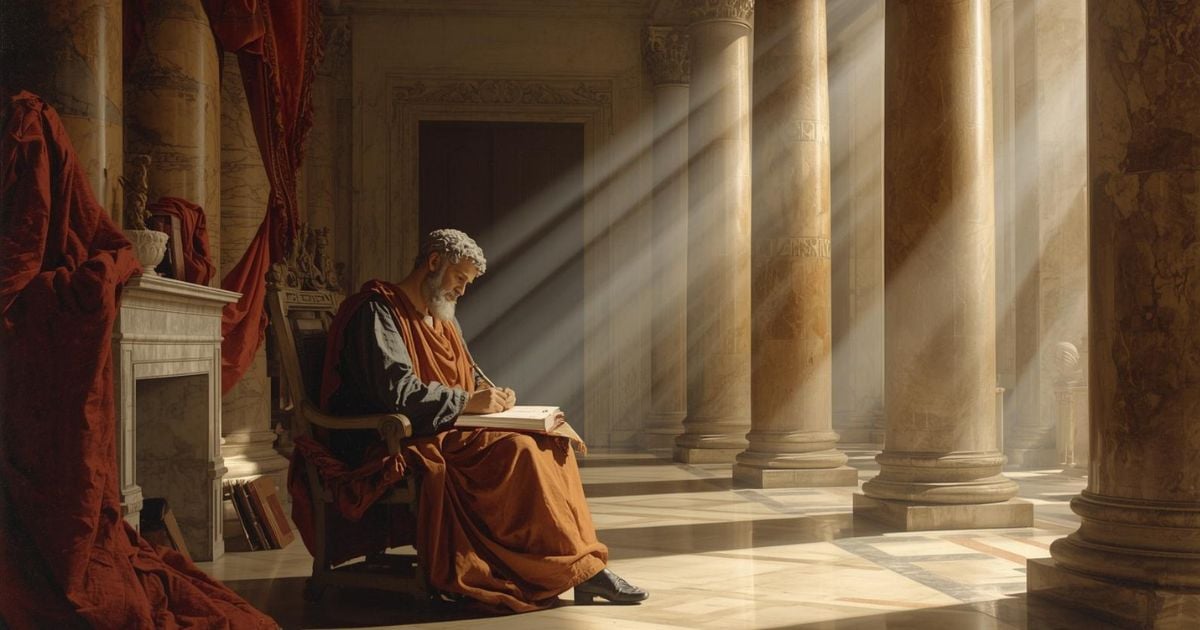
The Greek word sophismata—clever logical tricks—has no satisfying Latin equivalent, and that's fitting. Letter 111 opens with that observation and uses it to make a larger point about the difference between a man who has surrendered to logical puzzles and a man who has practiced philosophy to actually cure himself. The first becomes nimble and tricky; he weaves subtle arguments but grows no braver, no more restrained, no loftier. The second becomes something else—high-souled, invincible, greater the closer you get to him. Seneca uses the image of high mountains: from a distance they look modest, but up close you see how high they actually are. The true philosopher is like this. He does not walk on tiptoe or stretch himself to seem taller. He is content with his actual height—which Fortune cannot reach. The letter closes with a sharp warning about logical exercises: they acquire a self-made charm, occupy and hold the soul with a show of subtlety, and meanwhile the real work goes undone. The whole of life is barely enough to learn the single principle of despising life—or rather, of controlling it. No, he corrects himself: despising first. No one has controlled his life aright unless he has first learned to despise it.

Coming Up in Chapter 112

Next, Seneca faces a tough question about whether it's even possible to reform someone who's already set in their ways. Can you really teach an old dog new tricks, or are some people beyond help?

Share it with friends

Previous ChapterNext Chapter
GO ADS FREE — JOIN US
Original text
complete·421 words
Y

ou have asked me to give you a Latin word for the Greek sophismata. Many have tried to define the term, but no name has stuck. This is natural, inasmuch as the thing itself has not been admitted to general use by us; the name, too, has met with opposition. But the word which Cicero used seems to me most suitable: he calls them cavillationes. 2. If a man has surrendered himself to them, he weaves many a tricky subtlety, but makes no progress toward real living; he does not thereby become braver, or more restrained, or loftier of spirit. He, however, who has practised philosophy to effect his own cure, becomes high-souled, full of confidence, invincible, and greater as you draw near him. 3. This phenomenon is seen in the case of high mountains, which appear less lofty when beheld from afar, but which prove clearly how high the peaks are when you come near them; such, my dear Lucilius, is our true philosopher, true by his acts and not by his tricks. He stands in a high place, worthy of admiration, lofty, and really great. He does not stretch himself or walk on tiptoe like those who seek to improve their height by deceit, wishing to seem taller than they really are; he is content with his own greatness. 4. And why should he not be content with having grown to such a height that Fortune cannot reach her hands to it? He is therefore above earthly things, equal to himself under all conditions,—whether the current of life runs free, or whether he is tossed and travels on troubled and desperate seas; but this steadfastness cannot be gained through such hair-splittings as I have just mentioned. The mind plays with them, but profits not a whit; the mind in such cases is simply dragging philosophy down from her heights to the level ground. 5. I would not forbid you to practise such exercises occasionally; but let it be at a time when you wish to do nothing. The worst feature, however, that these indulgences present is that they acquire a sort of self-made charm, occupying and holding the soul by a show of subtlety; although such weighty matters claim our attention, and a whole life seems scarcely sufficient to learn the single principle of despising life. “What? Did you not mean ‘control’ instead of ‘despise’”? No; “controlling” is the second task; for no one has controlled his life aright unless he has first learned to despise it. Farewell.

1 / 1

Master this chapter. Complete your experience

Purchase the complete book to access all chapters and support classic literature

Read Free on GutenbergBuy at Powell'sBuy on Amazon

As an Amazon Associate, we earn a small commission from qualifying purchases at no additional cost to you.

Available in paperback, hardcover, and e-book formats

GO ADS FREE — JOIN US

Why This Matters

Connect literature to life

Skill: Distinguishing Performance from Substance

This chapter teaches how to recognize when you're choosing to look smart over being effective.

Practice This Today

This week, notice when you're tempted to use complex language or show off knowledge—ask yourself if it serves the other person or just your ego.

Now let's explore the literary elements.

Key Quotes & Analysis

"If a man has surrendered himself to them, he weaves many a tricky subtlety, but makes no progress toward real living; he does not thereby become braver, or more restrained, or loftier of spirit."

— Seneca

Context: Warning Lucilius about getting addicted to clever philosophical arguments

This captures the core problem with intellectual games - they feel productive but don't actually make you stronger or better at handling life's challenges. Seneca focuses on the practical test: does this make you braver?

In Today's Words:

You can get really good at winning arguments, but that doesn't make you any better at dealing with real problems or being a stronger person.

"He stands in a high place, worthy of admiration, lofty, and really great. He does not stretch himself or walk on tiptoe like those who seek to make themselves appear taller."

— Seneca

Context: Describing what a true philosopher looks like compared to someone just showing off

True greatness doesn't need to fake it or use tricks to seem impressive. Like a mountain that reveals its true height when you get close, genuine wisdom speaks for itself through actions, not words.

In Today's Words:

Really wise people don't need to prove how smart they are - their character does the talking, and they don't have to fake being bigger than they are.

"Before you can control your life, you must first learn to despise it."

— Seneca

Context: Explaining the paradox of how to gain true freedom

This isn't about being negative - it's about not being so desperate to keep everything perfect that you become enslaved by fear. When you stop clinging so tightly to outcomes, you gain the freedom to act wisely.

In Today's Words:

You can't really live freely until you stop being so afraid of losing what you have that it controls all your decisions.

Thematic Threads

Authenticity vs Performance

In This Chapter

Seneca contrasts clever philosophical tricks with genuine character transformation

Development

Deepens earlier themes about true versus false wisdom

In Your Life:

You might catch yourself choosing to look smart in meetings rather than asking the questions that would actually help you learn.

Inner Work

In This Chapter

Real philosophy transforms you from the inside out, making you braver and calmer

Development

Continues emphasis on internal change over external validation

In Your Life:

The daily choice between doing the unglamorous work that builds character versus seeking quick wins that boost your ego.

Detachment

In This Chapter

Learning to 'despise life' means not being enslaved by desperate attachment to outcomes

Development

Advanced application of Stoic detachment principles

In Your Life:

You might recognize how your fear of losing something actually controls your decisions more than your values do.

True Strength

In This Chapter

A true philosopher grows so tall spiritually that Fortune cannot reach them

Development

Builds on themes of resilience and inner fortitude

In Your Life:

Real power comes from who you become, not what you accumulate or how others perceive you.

You now have the context. Time to form your own thoughts.

Discussion Questions

  1. 1

    What's the difference between the intellectual word games Seneca warns against and real philosophical wisdom?

    analysis • surface
  2. 2

    Why does Seneca say that clever arguments can become 'addictive' but don't make you braver or stronger?

    analysis • medium
  3. 3

    Where do you see people today choosing to appear smart over actually becoming wise - in your workplace, social media, or personal relationships?

    application • medium
  4. 4

    When you catch yourself trying to win an argument rather than solve a problem, what would Seneca suggest you do instead?

    application • deep
  5. 5

    What does Seneca's advice to 'despise life' reveal about the relationship between attachment and freedom?

    reflection • deep

Critical Thinking Exercise

10 minutes

Smart vs. Wise Audit

Think of three recent situations where you had a choice between appearing smart or becoming wiser. For each situation, write down what you actually did and what the 'wise' choice would have looked like. Then identify one pattern you notice about when you default to performing intelligence rather than practicing wisdom.

Consider:

  • •Look for moments when you corrected someone unnecessarily or dominated a conversation
  • •Notice times you chose being right over being helpful or connected
  • •Pay attention to situations where you avoided admitting you didn't know something

Journaling Prompt

Write about a time when someone's character impressed you more than their cleverness. What did they do differently that made such an impact on you?

Coming Up Next...

Chapter 112: When People Can't Change

Next, Seneca faces a tough question about whether it's even possible to reform someone who's already set in their ways. Can you really teach an old dog new tricks, or are some people beyond help?

Continue to Chapter 112
Previous
True Wealth vs. False Riches
Contents
Next
When People Can't Change

Continue Exploring

Letters from a Stoic Study GuideTeaching ResourcesEssential Life IndexBrowse by ThemeAll Books

You Might Also Like

Meditations cover

Meditations

Marcus Aurelius

Explores personal growth

The Dhammapada cover

The Dhammapada

Buddha

Explores suffering & resilience

The Consolation of Philosophy cover

The Consolation of Philosophy

Boethius

Explores suffering & resilience

The Enchiridion cover

The Enchiridion

Epictetus

Explores suffering & resilience

Browse all 47+ books

Share This Chapter

Know someone who'd enjoy this? Spread the wisdom!

TwitterFacebookLinkedInEmail

Read ad-free with Prestige

Get rid of ads, unlock study guides and downloads, and support free access for everyone.

Subscribe to PrestigeCreate free account
Intelligence Amplifier
Intelligence Amplifier™Powering Wide Reads

Exploring human-AI collaboration through books, essays, and philosophical dialogues. Classic literature transformed into navigational maps for modern life.

2025 Books

→ The Amplified Human Spirit→ The Alarming Rise of Stupidity Amplified→ San Francisco: The AI Capital of the World
Visit intelligenceamplifier.org
hello@widereads.com

WideReads Originals

→ You Are Not Lost→ The Last Chapter First→ The Lit of Love→ Wealth and Poverty→ 10 Paradoxes in the Classics · coming soon
Arvintech
arvintechAmplify your Mind
Visit at arvintech.com

Navigate

  • Home
  • Library
  • Essential Life Index
  • How It Works
  • Subscribe
  • Account
  • About
  • Contact
  • Authors
  • Suggest a Book
  • Landings

Made For You

  • Students
  • Educators
  • Families
  • Readers
  • Literary Analysis
  • Finding Purpose
  • Letting Go
  • Recovering from a Breakup
  • Corruption
  • Gaslighting in the Classics

Newsletter

Weekly insights from the classics. Amplify Your Mind.

Legal

  • Privacy Policy
  • Terms of Service
  • Cookie Policy
  • Accessibility

Why Public Domain?

We focus on public domain classics because these timeless works belong to everyone. No paywalls, no restrictions—just wisdom that has stood the test of centuries, freely accessible to all readers.

Public domain books have shaped humanity's understanding of love, justice, ambition, and the human condition. By amplifying these works, we help preserve and share literature that truly belongs to the world.

A Pilgrimage

Powell's City of Books

Portland, Oregon

If you ever find yourself in Portland, walk to the corner of Burnside and 10th. The building takes up an entire city block. Inside is over a million books, new and used on the same shelf, organized by color-coded rooms with names like the Rose Room and the Pearl Room. You can lose an afternoon. You can lose a weekend. You will find a book you have been looking for your whole life, and three you did not know existed.

It is a pilgrimage. We cannot find a bookstore like it anywhere on earth. If you read the classics, and you ever get the chance, go. It belongs on every reader's bucket list.

Visit powells.com

We are not in any way affiliated with Powell's. We are just a very big fan.

© 2026 Wide Reads™. All Rights Reserved.

Intelligence Amplifier™ and Wide Reads™ are proprietary trademarks of Arvin Lioanag.

Copyright Protection: All original content, analyses, discussion questions, pedagogical frameworks, and methodology are protected by U.S. and international copyright law. Unauthorized reproduction, distribution, web scraping, or use for AI training is strictly prohibited. See our Copyright Notice for details.

Disclaimer: The information provided on this website is for general informational and educational purposes only and does not constitute professional, legal, financial, or technical advice. While we strive to ensure accuracy and relevance, we make no warranties regarding completeness, reliability, or suitability. Any reliance on such information is at your own risk. We are not liable for any losses or damages arising from use of this site. By using this site, you agree to these terms.