Master this chapter. Complete your experience
Purchase the complete book to access all chapters and support classic literature
As an Amazon Associate, we earn a small commission from qualifying purchases at no additional cost to you.
Available in paperback, hardcover, and e-book formats
Why This Matters
Connect literature to life
This chapter teaches how privilege and comfort can blind us to others' real struggles and needs.
Practice This Today
This week, notice when you catch yourself thinking 'they should just...' and instead ask 'what does your situation actually look like?'
Now let's explore the literary elements.
Key Quotes & Analysis
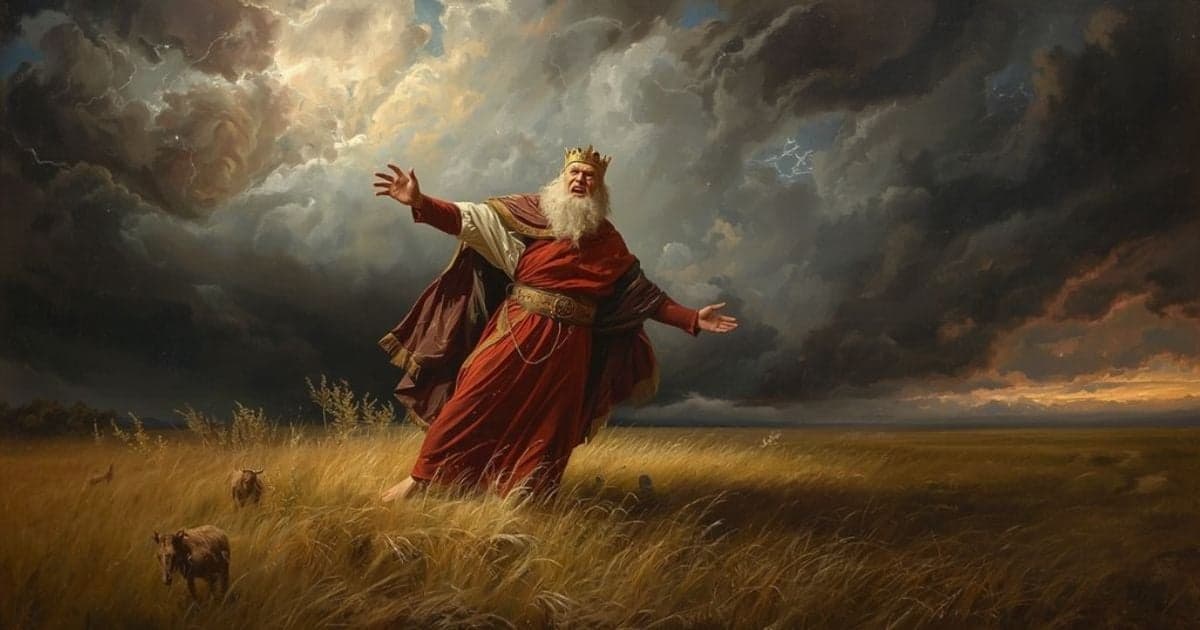
"Blow, winds, and crack your cheeks! Rage! blow!"
Context: Lear commands the storm to destroy everything as he stands exposed on the heath
This shows Lear still thinks he can command nature like he once commanded people. His royal delusion remains intact even as he's stripped of power. The violent language reveals his inner fury at being betrayed.
In Today's Words:
Go ahead, world, give me your worst shot!
"I tax not you, you elements, with unkindness. I never gave you kingdom, call'd you children"
Context: Lear realizes the storm doesn't owe him anything, unlike his daughters
This is Lear's first moment of clarity about relationships and obligations. He's beginning to understand that love and loyalty must be earned, not commanded. The storm becomes his teacher about the difference between natural forces and human bonds.
In Today's Words:
At least you're not being ungrateful since I never gave you anything in the first place
"Poor fool and knave, I have one part in my heart that's sorry yet for thee"
Context: Lear notices the Fool is cold and feels compassion for someone else's suffering
This marks Lear's transformation from complete self-absorption to recognizing others' pain. It's a tiny moment but huge for his character development. For the first time, he puts someone else's needs alongside his own.
In Today's Words:
I'm actually worried about you being cold out here
"The codpiece that will house before the head has any, the head and he shall louse"
Context: The Fool warns about putting sexual desires before basic needs like shelter
The Fool uses crude humor to teach about priorities and consequences. People who chase pleasure while ignoring practical needs end up with problems. This applies to Lear's poor judgment about his daughters.
In Today's Words:
If you think with what's between your legs instead of what's between your ears, you'll end up with nothing
Thematic Threads
Class
In This Chapter
Lear experiences what it's like to be powerless and exposed, finally understanding common human needs
Development
Evolved from his royal blindness to growing awareness of shared humanity
In Your Life:
You might notice this when your own struggles suddenly make you understand what others have been going through.
Identity
In This Chapter
The storm strips away Lear's royal identity, revealing his basic humanity underneath
Development
Continued from his loss of kingdom, now reaching the core of who he is
In Your Life:
You see this when a job loss or crisis forces you to question who you are beyond your roles.
Personal Growth
In This Chapter
Lear's first moment of caring about someone else's comfort marks the beginning of wisdom
Development
First real growth after chapters of decline and rage
In Your Life:
You experience this when hardship teaches you empathy you didn't have before.
Human Relationships
In This Chapter
The storm creates genuine connection between Lear, the Fool, and Kent through shared suffering
Development
Builds on Kent's loyalty theme, now showing how adversity can deepen bonds
In Your Life:
You might find this in how crisis brings you closer to people who stick around when things get tough.
Social Expectations
In This Chapter
Natural forces don't care about royal status, teaching Lear that some things matter more than rank
Development
Continues the theme of artificial social structures crumbling under pressure
In Your Life:
You see this when emergency situations reveal that titles and status mean nothing compared to basic human decency.
You now have the context. Time to form your own thoughts.
Discussion Questions
- 1
What changes in Lear's behavior when he notices the Fool is cold and wet in the storm?
analysis • surface - 2
Why does it take losing everything for Lear to finally see other people's suffering?
analysis • medium - 3
Where do you see people today who can't understand problems they haven't experienced themselves?
application • medium - 4
How would you help someone recognize they're in an 'empathy bubble' without making them defensive?
application • deep - 5
What does this chapter suggest about the relationship between privilege and understanding?
reflection • deep
Critical Thinking Exercise
Map Your Blind Spots
Think of an area where you have advantages others don't (steady income, good health, reliable transportation, family support). Write down three assumptions you might make about people without those advantages. Then flip it: identify one area where you lack experience and list what people with that experience might see that you miss.
Consider:
- •Focus on specific situations, not general categories
- •Consider both obvious advantages (money) and invisible ones (energy, time, connections)
- •Notice when you catch yourself thinking 'they should just...' about someone else's situation
Journaling Prompt
Write about a time when you gained understanding about someone else's reality only after experiencing something similar yourself. What did you miss before, and what would you do differently now?
Coming Up Next...
Chapter 11: The Son's Betrayal Unfolds
While Lear discovers compassion in the storm, other family dramas unfold behind castle walls. Edmund continues weaving his web of lies, and Gloucester faces a terrible choice about his sons.