
Frankenstein
Mary Shelley
0:00 / 0:00
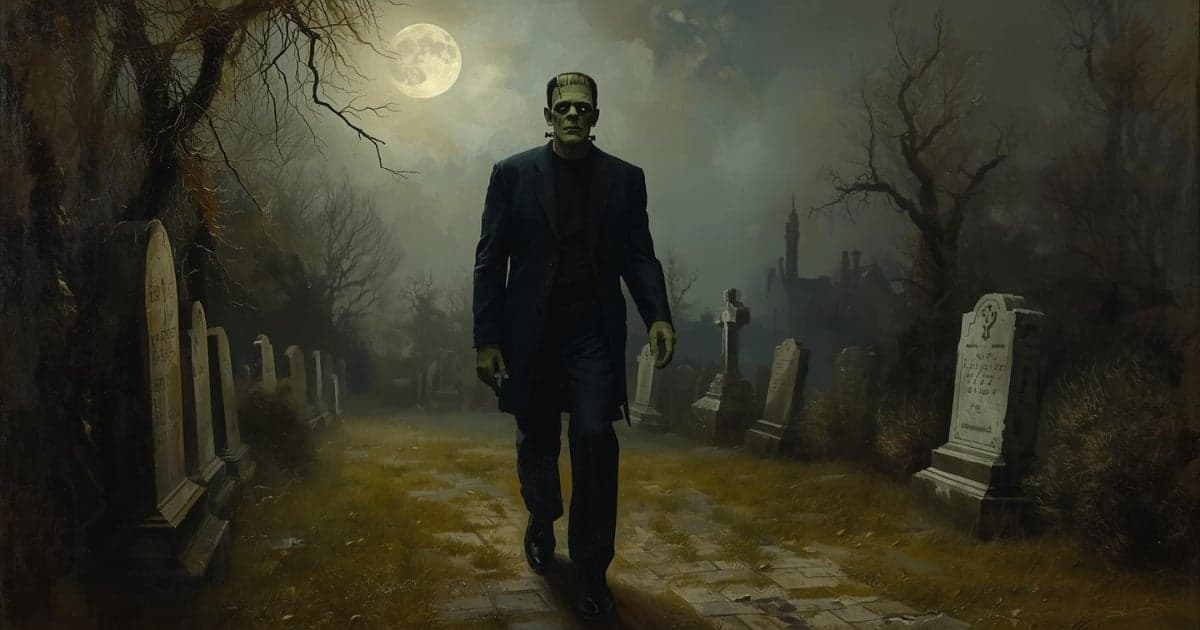
A yellow eye opens on a dreary November night in Ingolstadt, and the man who assembled the body is already gone. Victor Frankenstein has spent two years stealing parts, denying sleep, and calling the work holy. The moment the creature breathes, he runs. Shelley published the book in 1818. The monster everyone remembers is not the one with yellow eyes. It is the student who would not stay.
Victor is a privileged student: brilliant, secretive, and so sure that making life will make him a god that he never plans for the morning after. The creature wakes with no name, no language, and a face the world will not forgive. Captain Walton, locked in Arctic ice, writes home about glory while a dying stranger on his deck tries to warn him off the same hunger. Elizabeth Lavenza waits in Geneva with a love Victor keeps postponing. Henry Clerval brings warmth Victor cannot use. Justine Moritz, the family's servant, will hang for a crime she did not commit. A father cannot get the truth out of his son. A little brother is murdered in the woods. A blind cottager is the only person kind enough to listen before sight ruins it.
Victor flees the workshop and spends months in fever while the creature learns hunger, cold, and why every human who sees him screams. Hidden in a hovel beside the De Lacey cottage, he teaches himself speech, fire, and Paradise Lost, then offers friendship to the blind father and is beaten for it. He finds Victor's journal, learns who made him, and kills William in the woods. Justine is tried and executed while Victor stays silent. On the Mer de Glace the creature demands a companion. Victor agrees, then destroys the female on the Orkney table. Clerval is murdered. Elizabeth is murdered on her wedding night. Alphonse dies of the shock. Victor chases the creature to the ice, tells Walton the whole story, and dies. The creature comes aboard, weeps over the body, and vanishes toward the pole.
Shelley wrote the book at eighteen, after a ghost-story night with Byron and Percy on Lake Geneva, and refused to make it a simple warning label. The novel never treats the creation as a trick you should skip. Ambition fails. Secrecy fails. Even pity, when it arrives too late and without a home, fails. What remains is not a debate about whether science is allowed. It is a picture of what happens when a maker will not stay in the room with what he made, and when a person who needed care is taught, by every face he meets, that violence is the only language anyone answers.
The first pressure is two sleepless years that felt holy until a yellow eye opened and Victor left the room. That flight is the creator's first refusal: the being has not yet done anything but live, and the maker is already gone. Walton is already writing home about the same hunger from a ship locked in ice. Every face after that finishes what the workshop began. The creature learns speech from Paradise Lost, reads Victor's journal, and finds a maker who already fled. The De Laceys, the village, and the woods teach him that cruelty answers a face, and Justine hangs while Victor stays silent. Isolation is the method and the cost: the hovel, the glacier, the Orkney table where he destroys the female, the Arctic sled where no one has to answer. William, Clerval, Elizabeth on her wedding night, then a chase that has no finish except two deaths that look like one.
On the Mer de Glace the creature asks for a companion and is answered, later, on an Orkney table. He weeps over Victor on Walton's deck and vanishes toward the pole. The ice breaks and Walton turns for home, carrying the only full account of a maker who would not stay. Wide Reads supplies summaries, quotes, and audio for all twenty-eight chapters.
Lessons from Frankenstein
Six lessons from this classic novel.
Lessons from Frankenstein
Six lessons from this classic novel.Deep dives
Chapter-by-chapter breakdowns
Recognizing Dangerous Ambition
Name the two sleepless years in the workshop when progress felt holy and no one else was allowed in.
nothing contributes so much to tranquillise the mind as a steady purpose—a point on which the soul may fix its intellectual eye.
Taking Responsibility for Harm
Speak before Justine hangs, instead of letting silence do the damage Victor will not own.
My tale was not one to announce publicly; its astounding horror would be looked upon as madness by the vulgar.
Table of Contents
Arctic Dreams and Dangerous Ambitions
Captain Robert Walton writes to his sister Margaret from Petersburg, where he's preparing for his lo...
The Loneliness of Command
Walton's second letter to Margaret reveals the emotional cost beneath his Arctic ambition. He's made...
Confident at Sea
Walton sends a brief, upbeat letter to his sister from the Arctic Ocean in early July. The voyage is...
The Stranger on the Ice
Walton's fourth letter marks the novel's major turning point. His ship is trapped in ice near the No...
Common Questions About Frankenstein
Trending search questions mapped to the six lessons in this novel: what readers actually ask Google about who the real monster is, Victor's abandonment of his creation, dangerous ambition, revenge, and responsibility for harm.
Who is the real monster in Frankenstein?
Mary Shelley never calls Victor's creation a monster; the world does, starting with Victor himself the moment the yellow eye opens and he runs from the room. The creature spends the whole novel asking for basic kindness and gets a stick from the De Laceys and a scream from every village he enters. By the time he kills William, the villagers, not the workshop, have already taught him what violence answers a face.
Explore Seeing How Rejection Creates MonstersWhy does Victor Frankenstein abandon his creation?
He flees the instant the being opens its eyes, unable to endure a face he spent two sleepless years imagining only as a gift. The abandonment happens before the creature has done anything but live; Victor names the claim on him a catastrophe rather than admit the maker's job was never finished at the moment of animation. Every later scene, the hearing on the glacier, the bargain for a companion, is a cheaper substitute for the room he should have stayed in first.
Explore Understanding Creator ResponsibilityWhy does Victor want to create life in Frankenstein?
Two sleepless years alone in an Ingolstadt workshop convince him that assembling life will make him the object of a new species' gratitude, a want he never separates from the actual costs: stolen parts, denied sleep, and no plan for what the morning after requires. Captain Walton, stuck in Arctic ice chasing his own undiscovered glory, hears the whole confession as a warning he very nearly fails to take.
Explore Recognizing Dangerous AmbitionWhy does the creature kill William, Clerval, and Elizabeth in Frankenstein?
Each murder answers a specific refusal: William dies once the creature learns that children scream at his face on sight, and Clerval and Elizabeth die after Victor destroys the promised companion on the Orkney table. The creature turns Victor's chase into the only relationship left available to him. Shelley stages revenge as escalation with no finish, not justice, since both sides lose everything before the ice closes over the story.
Explore Breaking Cycles of RevengeWhy does Justine get executed for William's murder in Frankenstein?
Victor already suspects the creature killed his brother, but a scarred confession and a stolen locket convict Justine first, and Victor's fear of sounding insane keeps him silent through the entire trial. Silence, in this novel, does the same damage a lie would. Justine hangs for a crime her own maker's guilt could have stopped.
Explore Taking Responsibility for HarmWhat life lessons does Frankenstein teach?
Six lessons run through the novel: stay in the room once your creation can look back and needs you, since that is creator responsibility; watch how repeated rejection, not birth, manufactures a monster; recognize dangerous ambition before two sleepless years start costing health and company; take responsibility for harm before silence lets someone else pay for it; see isolation as a method that becomes its own sentence, from the workshop to the Arctic sled; and notice how revenge escalates until neither side has anything left to lose. Those skills, not the mad-scientist poster, are why the book still answers modern searches.
About Mary Shelley
Published 1818
Mary Shelley (1797-1851) wrote Frankenstein at eighteen, in a rented house on Lake Geneva, after Byron challenged the company to write a ghost story and a waking dream gave her a pale student kneeling beside the thing he had just made. She was the daughter of Mary Wollstonecraft, who died giving birth to her, and William Godwin, the radical philosopher. She eloped with Percy Bysshe Shelley, buried children, and kept writing through losses that never became mere biography.
Frankenstein, published in 1818, came out of that summer and a long argument with the science and politics she had grown up hearing. She read them the way a person reads a warning that might already be too late. The book later became the template for every story about a maker who will not stay with what he made.
Shelley's gift was making the laboratory intimate without turning it into a sermon. The horror, in her telling, is not that life can be assembled. It is the hard work of remaining responsible after the assembly is finished, when the thing you wanted to disown starts speaking in a voice you recognize.
Why Mary Shelley Matters Today
Mary Shelley speaks to the moment ambition outruns the plan for what happens next: the deadline you hit without working out who is waiting on the other side of it, the launch you celebrate before you have decided who stays to look after what you built. Frankenstein names that gap through a student who spends two years chasing a discovery and never once asks who feeds, teaches, or loves the thing once it opens its eyes.
What makes her indispensable is that she wrote the warning before most of the science she feared even existed. She was eighteen, already the daughter of a philosopher and a mother she never met, already used to loss, when a wet Geneva summer and a dare from Byron gave her the dream of a student kneeling beside the thing he had just made. She built Victor's failure out of a question she already lived with: what do you owe a life you brought into being and then found too hard to love.
Two centuries of scientists, doctors, and engineers have borrowed her monster to warn against exactly the mistake Victor makes: building the thing without staying for what comes after. Readers still call the wrong character the monster. Shelley's real subject was always the maker who walked out of the room.
Wide Reads is different.
Plot, characters, and themes — plus audio, source text, and patterns you can use after class
Two ways in
Read & listen to the summary
Chapter by chapter, with audio. The meaning arrives because you experienced it — not because someone listed bullet points.
Start with this.
Read the original text
The actual words the author wrote, alongside every summary. Use the guide, then step into the source.
Then step into the source.
Either way, the door opens inward.
— and most of all, Why does this matter?
Get the Full Book
Purchase the complete book to access all chapters and support classic literature

Available in paperback, hardcover, and e-book formats
You Might Also Like


Free to read • No account required