Chapter 24
The Duel and Its Aftermath
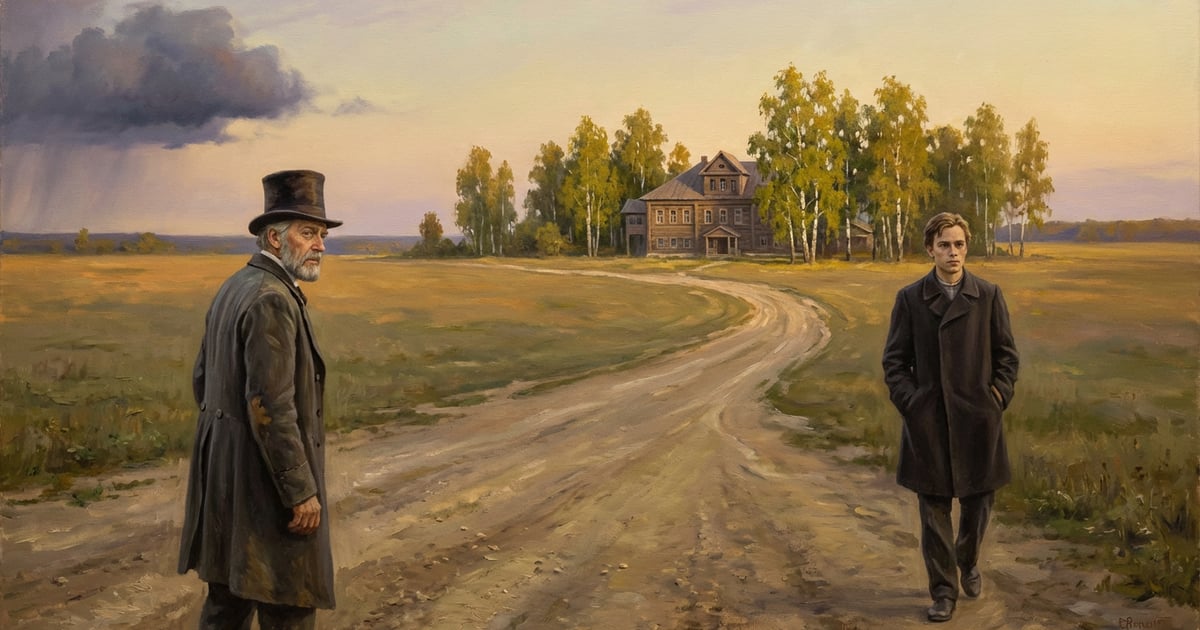
Two hours later he knocked at Bazarov's door. "I feel that I must apologise for disturbing you in your pursuits," he said as he seated himself near the window and rested both hands upon a fine ivory-headed cane which he had brought with him (as a rule he did not carry one). "But the fact is that circumstances compel me to request five minutes of your time." "The whole of my time is at your disposal," replied Bazarov, across whose features, as Paul Petrovitch had crossed the threshold, there had flitted a curious expression. "No; five minutes will be sufficient.…
Public-domain chapter text, formatted for reading.
Master this chapter. Complete your experience
Purchase the complete book to access all chapters and support classic literature
Available in paperback, hardcover, and e-book formats
Now let's explore the literary elements.
Key Quotes & Analysis
"From the theoretical standpoint, the duel is a sheer absurdity"
Context: When Paul asks his views on dueling before challenging him
Shows how both men know they're about to do something stupid but can't back down. Bazarov's scientific rationality clashes with social pressure to defend his honor.
In Today's Words:
When love makes you perform instead of connect, Shows how both men know they're about to do something stupid but can't back down. Bazarov's scientific rationality clashes with social pressure to defend his honor. Real connection rarely arrives without naming what changed between you. Ask whether the fight is about truth or about who gets.
"Two hours later he knocked at Bazarov's door."
Context: From The Duel and Its Aftermath
In The Duel and Its Aftermath, Turgenev uses this line to anchor the chapter's argument: "Two hours later he knocked at Bazarov's door."
In Today's Words:
In a family or team split by ideology, when someone you love comes home changed, In The Duel and Its Aftermath, Turgenev uses this line to anchor the chapter's argument: "Two hours later he knocked at Bazarov's door.". The scene is small, but the relational stakes are not.
"I feel that I must apologise for disturbing you in your pursuits," he said as he seated himself near the window and rested both hands upon a fine ivory-headed cane which he had brought with him (as a rule he did not carry one"
Context: From The Duel and Its Aftermath
In The Duel and Its Aftermath, Turgenev uses this line to anchor the chapter's argument: ""I feel that I must apologise for disturbing you in your pursuits," he said..."
In Today's Words:
At work or at the dinner table, when a younger voice treats your experience as obsolete, In The Duel and Its Aftermath, Turgenev uses this line to anchor the chapter's argument: ""I feel that I must apologise for disturbing you in your pursuits," he said...". Borrowed certainty travels fast; you can refuse to let it.
"But the fact is that circumstances compel me to request five minutes of your time." "The _whole_ of my time is at your disposal," replied Bazarov, across whose features, as Paul Petrovitch had crossed the threshold, there had flitted a curious expression"
Context: From The Duel and Its Aftermath
In The Duel and Its Aftermath, Turgenev uses this line to anchor the chapter's argument: ""But the fact is that circumstances compel me to request five minutes of your..."
In Today's Words:
When you believe you are right and still cannot reach the person across from you, In The Duel and Its Aftermath, Turgenev uses this line to anchor the chapter's argument: ""But the fact is that circumstances compel me to request five minutes of your...". That is the pressure Turgenev tracks in Fathers and Sons.
Thematic Threads
Pride
In This Chapter
Paul's aristocratic pride drives him to a pointless duel, but his wound forces him to abandon pride for genuine care
Development
Evolved from Paul's constant class superiority to his complete emotional breakdown and transformation
In Your Life:
You might cling to being 'right' in arguments when admitting fault would actually strengthen relationships
Class
In This Chapter
Paul abandons his class prejudices and actively encourages Nikolai to marry below his station
Development
Transformed from rigid class barriers to recognition that love transcends social categories
In Your Life:
You might judge people by their job titles or education rather than their character and actions
Vulnerability
In This Chapter
Paul's complete emotional breakdown with Thenichka reveals the pain beneath his polished exterior
Development
Breakthrough moment where Paul finally shows authentic emotion instead of aristocratic control
In Your Life:
You might maintain a tough exterior at work while struggling internally with stress or personal problems
Family
In This Chapter
The brothers achieve genuine reconciliation as Paul prioritizes Nikolai's happiness over social conventions
Development
Evolved from tension and competition to authentic support and understanding
In Your Life:
You might let old family grudges or different life choices create distance when love should come first
Transformation
In This Chapter
Paul's near-death experience catalyzes complete personality change from rigid aristocrat to caring brother
Development
Culmination of Paul's character arc from antagonist to someone capable of growth and sacrifice
In Your Life:
You might resist changing your opinions or behavior even when you know it would improve your relationships
You now have the context. Time to form your own thoughts.
Discussion Questions
This is not a test. Five prompts guide you through the chapter, from how it opens to how it closes, so you notice context and rhythm rather than facts to memorize. Sit with each question in your own words. When you see "One way to read it," treat it as a starting point, not the only answer.
- 1
What reason does Pavel Petrovitch give Bazarov for challenging him to a duel at dawn?
analysis • surfaceOne way to read it
He claims Bazarov's presence offends him, hiding the real motive of the garden kiss he witnessed. Both men understand the pretext is thin, yet formal honor demands they proceed.
- 2
How does terrified Peter as witness expose the duel as performance rather than heroic justice?
analysis • mediumOne way to read it
The servant's fear and incompetence underline the absurdity of two educated men risking death over wounded pride. The scene is dignified on the surface and nearly farcical in execution.
- 3
How does Paul's breakdown with Fenichka after his leg wound differ from his usual aristocratic manner?
application • mediumOne way to read it
He weeps and begs her to remain faithful to Nikolai instead of punishing her. Near death strips away pose and reveals loneliness plus genuine care for his brother's happiness.
- 4
When have you seen two people escalate a conflict they both knew was foolish because neither would yield?
application • deepOne way to read it
The duel fits workplace or family fights where backing down feels like humiliation. Strong answers should note the moment each party could have stopped and why pride kept them walking forward.
- 5
How does Paul's urging that Nikolai marry Fenichka rewrite his earlier class contempt?
reflection • deepOne way to read it
Survival and love matter more to him now than pedigree. Bazarov's disruption forces the household toward honesty about relationships Paul once would have judged beneath the family name.
Critical Thinking Exercise
Create Your Crisis Prevention Audit
Paul's near-death experience forces him to prioritize love over pride and family over social status. Create a personal 'crisis prevention audit' by listing three important relationships or situations you've been avoiding addressing. For each one, write what you know needs to happen and what you're actually waiting for before taking action.
Consider:
- •Focus on situations where you already know what's right but haven't acted yet
- •Consider what you'd regret not saying or doing if you only had six months
- •Think about patterns where you wait for external pressure instead of creating internal motivation
Journaling Prompt
Write about a time when crisis or shock made you suddenly see a situation clearly. What had you been avoiding before that moment, and what would have happened if you'd acted on that clarity earlier?
Coming Up Next...
Chapter 25: Declarations Under the Ash Tree
As the dust settles at Marino, we shift to a very different scene at Nikolsköe, where Arkady and Katia sit quietly together in the garden. Their peaceful moment suggests important conversations are about to unfold, conversations that will determine the direction of both their futures..