Chapter 16
First Impressions at the Estate
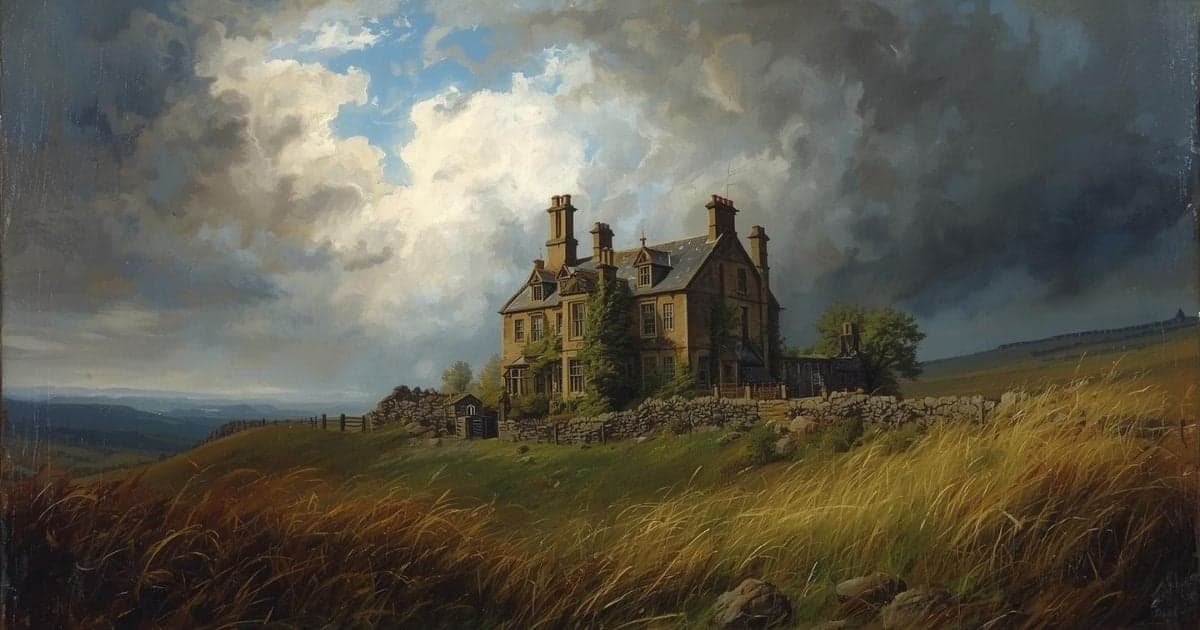
The manor-house in which Anna Sergievna resided stood on an open hillock, and close to a yellow stone church with a green roof, white columns, and an entrance surmounted by a fresco representative of Our Lord's Resurrection--the latter executed in the "Italian" style, and having as its most noticeable feature the figure of a swarthy warrior whose rounded contours filled the entire foreground. Behind the church, the village extended into two long wings, and had thatched roofs surmounted by a medley of chimneys; while the manor-house itself was built in a style homogeneous with the design of the church--that is…
Public-domain chapter text, formatted for reading.
Master this chapter. Complete your experience
Purchase the complete book to access all chapters and support classic literature
Available in paperback, hardcover, and e-book formats
Now let's explore the literary elements.
Key Quotes & Analysis
"The manor-house in which Anna Sergievna resided stood on an open hillock, and close to a yellow stone church with a green roof, white columns, and an entrance surmounted by a fresco representative of Our Lord's Resurrection--the latter executed in the "Italian" style, and having as its most noticeable feature the figure of a swarthy warrior whose rounded contours filled the entire foreground"
Context: From First Impressions at the Estate
In First Impressions at the Estate, Turgenev uses this line to anchor the chapter's argument: "The manor-house in which Anna Sergievna resided stood on an open hillock, and close..."
In Today's Words:
At work or at the dinner table, when a younger voice treats your experience as obsolete, In First Impressions at the Estate, Turgenev uses this line to anchor the chapter's argument: "The manor-house in which Anna Sergievna resided stood on an open hillock, and close...". The scene is small, but the relational stakes are not.
"Behind the church, the village extended into two long wings, and had thatched roofs surmounted by a medley of chimneys; while the manor-house itself was built in a style homogeneous with the design of the church--that is to say, in the style commonly known as "Alexandrine," and embracing yellow-painted walls, a green roof, white columns, and a front adorned with a coat-of-arms"
Context: From First Impressions at the Estate
In First Impressions at the Estate, Turgenev uses this line to anchor the chapter's argument: "Behind the church, the village extended into two long wings, and had thatched roofs..."
In Today's Words:
When you believe you are right and still cannot reach the person across from you, In First Impressions at the Estate, Turgenev uses this line to anchor the chapter's argument: "Behind the church, the village extended into two long wings, and had thatched roofs...". Borrowed certainty travels fast; you can refuse to let it replace.
"In fact, both buildings had been erected by a provincial architect to the order of the late Odintsov, a man impatient (so he himself always expressed it) of "vain and arbitrary innovations." Lastly, to right and left of the house there showed the trees of an antique garden, while an avenue of clipped firs led the way to the principal entrance"
Context: From First Impressions at the Estate
In First Impressions at the Estate, Turgenev uses this line to anchor the chapter's argument: "In fact, both buildings had been erected by a provincial architect to the order..."
In Today's Words:
After a fight about principles that was really about pride, In First Impressions at the Estate, Turgenev uses this line to anchor the chapter's argument: "In fact, both buildings had been erected by a provincial architect to the order...". That is the pressure Turgenev tracks in Fathers and Sons.
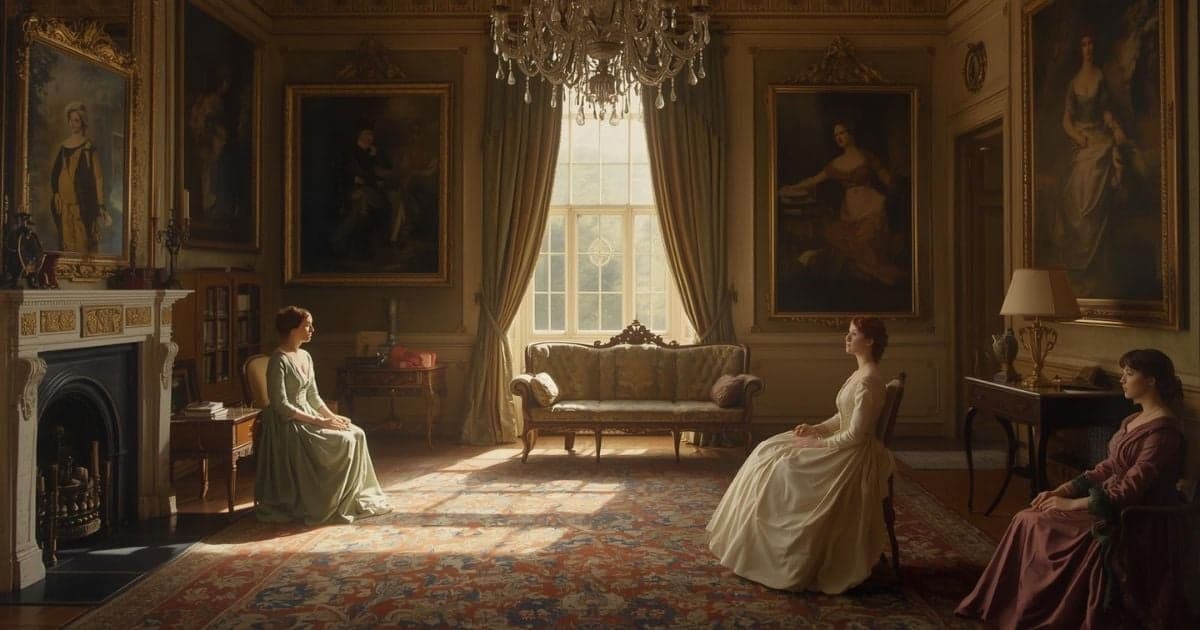
"the way to the principal entrance. The friends having been met in the hall by two strapping lacqueys in livery, one of the latter immediately ran for the butler; who (a stout man in a black tail-coat) proceeded to usher the guests up a carpeted staircase, and into a room which contained a couple of beds and the usual appurtenances of the toilet"
Context: From First Impressions at the Estate
In First Impressions at the Estate, Turgenev uses this line to anchor the chapter's argument: "The friends having been met in the hall by two strapping lacqueys in livery,..."
In Today's Words:
When love makes you perform instead of connect, In First Impressions at the Estate, Turgenev uses this line to anchor the chapter's argument: "The friends having been met in the hall by two strapping lacqueys in livery,...". Notice whether you are defending an idea or protecting your place in the relationship.
Thematic Threads
Class
In This Chapter
Bazarov's discomfort in Anna's wealthy estate drives him to assert intellectual superiority over material privilege
Development
Building from earlier chapters where class differences created tension with Pavel
In Your Life:
You might feel the need to prove your worth through what you know when you're in spaces where others have more money or status
Identity
In This Chapter
Bazarov maintains his nihilist identity by dismissing individual differences, even when evidence contradicts his position
Development
His rigid self-concept is becoming more defensive as he encounters challenges to his worldview
In Your Life:
You might cling to old versions of yourself even when growth requires letting go of familiar but limiting beliefs
Attraction
In This Chapter
Both Anna and Bazarov are intrigued by each other despite their different social positions and philosophies
Development
Introduced here as a new dynamic that will challenge both characters' assumptions
In Your Life:
You might find yourself drawn to people who challenge your thinking, even when it makes you uncomfortable
Loneliness
In This Chapter
Anna's wealth and status create isolation, while Bazarov's intellectual superiority serves the same function
Development
Emerging theme showing how different forms of armor create similar isolation
In Your Life:
You might discover that the very things you use to protect yourself also keep others at a distance
Performance
In This Chapter
Everyone is playing roles—Bazarov the nihilist, Anna the sophisticated hostess, Arkady the loyal friend
Development
Continuing pattern of characters struggling between authentic selves and social expectations
In Your Life:
You might exhaust yourself maintaining different versions of who you think you should be in different settings
You now have the context. Time to form your own thoughts.
Discussion Questions
This is not a test. Five prompts guide you through the chapter, from how it opens to how it closes, so you notice context and rhythm rather than facts to memorize. Sit with each question in your own words. When you see "One way to read it," treat it as a starting point, not the only answer.
- 1
Why does Anna pull Bazarov away from the photograph albums and invite him to argue while Arkady is sent to Katia's piano?
analysis • surfaceOne way to read it
She wants direct intellectual contact with Bazarov and treats the albums as a polite distraction. Arkady feels deliberately sidelined, which foreshadows his growing sense that Anna's interest centers on his friend.
- 2
How does Bazarov's trees-in-a-forest speech about identical human nature clash with Anna's question about wise and foolish men?
analysis • mediumOne way to read it
He reduces moral difference to sound versus ailing specimens of the same species, while Anna tests whether his system can account for individuality. Their exchange is flirtation disguised as doctrine, with Katia blushing at his contemptuous glance.
- 3
What role does the Princess aunt play in the household, and how does Bazarov read her treatment?
application • mediumOne way to read it
She is a relic of rank kept for show, fussed over but not truly listened to, even by Katia. Bazarov decides she exists because she comes of a princely house, which mirrors his suspicion that Nikolskoe runs on performance as much as feeling.
- 4
Where do you see someone arranging conversation partners to pursue the person who actually interests them?
application • deepOne way to read it
Answers should describe a social host steering one guest toward music or busywork while keeping another for debate. The pattern matters because polite logistics often reveal who holds real attention in a room.
- 5
Why does Anna repeat that Bazarov is a strange man in bed after the botany walk, and what does that night thought reveal about her?
reflection • deepOne way to read it
She is wealthy, self-contained, and rarely stirred, yet he combines bluntness with something outside her experience. The repetition marks curiosity turning into private fascination she does not yet know how to act on.
Critical Thinking Exercise
Decode the Intellectual Power Play
Think of a recent conversation where someone used their knowledge or expertise in a way that made you feel small or shut down. Write down what they said, then rewrite how they could have shared the same information in a way that invited discussion rather than ended it. Notice the difference between building bridges and building walls with intelligence.
Consider:
- •Pay attention to tone and word choice - how did they package their knowledge?
- •Consider their body language and timing - were they teaching or performing?
- •Think about the outcome - did the conversation move forward or shut down?
Journaling Prompt
Write about a time when you caught yourself using your knowledge or skills to make someone else feel inferior. What were you actually feeling in that moment, and how might you handle it differently now?
Coming Up Next...
Chapter 17: The Confession of Desire
As the days pass at the estate, routines develop that will either deepen these new relationships or expose their fundamental incompatibilities. The structured life Anna has created begins to work its influence on her guests..