Master this chapter. Complete your experience
Purchase the complete book to access all chapters and support classic literature

As an Amazon Associate, we earn a small commission from qualifying purchases at no additional cost to you.
Available in paperback, hardcover, and e-book formats
Why This Matters
Connect literature to life
This chapter teaches how to recognize when love creates performance pressure between people at different life stages.
Practice This Today
This week, notice when you feel like you need to prove your worth to someone you care about—that's the generational anxiety trap in action.
Now let's explore the literary elements.
Key Quotes & Analysis
"Everything, from the turquoise ear-ring to the dyed, pomaded hair and the mincing gait, revealed the modern, the rising generation"
Context: Describing Peter the servant's appearance and attitude
This shows how social change affects everyone, even servants. Peter's fancy appearance and attitude signal that old hierarchies are breaking down. The narrator's tone suggests both fascination and concern about these changes.
In Today's Words:
Everything about him screamed 'young person trying too hard to be trendy and important'
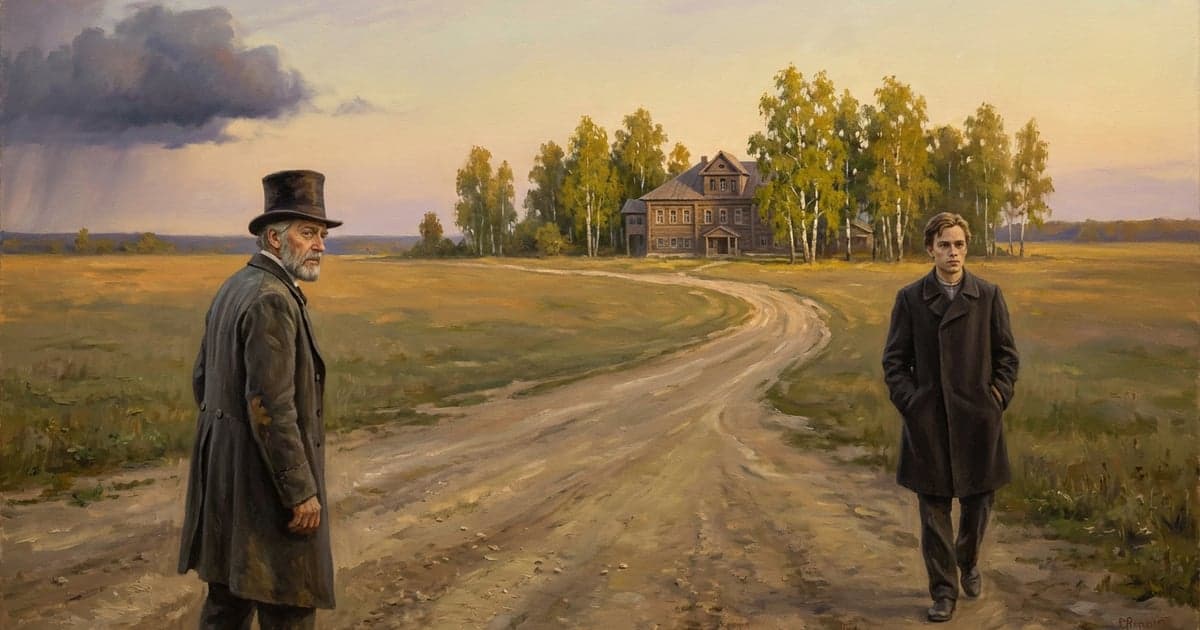
"His father, one of the generals of 1812, had spent his life exclusively in military service"
Context: Explaining Nikolai's family background and military tradition
This establishes the family's proud military heritage and shows how Nikolai broke from tradition. The reference to 1812 (Napoleon's invasion) connects the family to Russian national glory, making Nikolai's civilian life seem like a departure from duty.
In Today's Words:
His dad was a war hero who made the military his whole life
"He had married her for love—a thing which, in his day, was seldom done"
Context: Describing Nikolai's marriage to his deceased wife
This reveals Nikolai as someone who chose personal happiness over social expectations. Marrying for love rather than social advantage was revolutionary, showing he was progressive for his time but may now seem old-fashioned to his son.
In Today's Words:
He married her because he actually loved her, which was pretty radical back then
Thematic Threads
Class
In This Chapter
Nikolai's anxiety about his son's university education reflects class mobility fears—will Arkady's new learning make him look down on his father?
Development
Introduced here
In Your Life:
You might feel this when your kids get opportunities you never had, or when you advance beyond your family's expectations.
Identity
In This Chapter
Nikolai defines himself through his roles as father and widower, but his son's return forces him to question who he is beyond those identities.
Development
Introduced here
In Your Life:
You might recognize this when your primary identity (parent, caregiver, worker) gets challenged by life changes.
Social Expectations
In This Chapter
The pressure for Arkady to succeed at university and for Nikolai to be a proper father creates performance anxiety for both.
Development
Introduced here
In Your Life:
You might feel this pressure when family milestones approach—graduations, weddings, promotions—and everyone expects you to play your role perfectly.
Personal Growth
In This Chapter
Arkady's education represents growth that creates distance from his origins, a common tension in personal development.
Development
Introduced here
In Your Life:
You might experience this when therapy, education, or new experiences change how you see the world, making old relationships feel strained.
Human Relationships
In This Chapter
The love between father and son is complicated by time, change, and unspoken expectations about who they should be to each other.
Development
Introduced here
In Your Life:
You might see this in any relationship where both people have grown but haven't talked about how that growth affects their connection.
You now have the context. Time to form your own thoughts.
Discussion Questions
- 1
Why is Nikolai so nervous about his son coming home from university? What specific fears does his waiting reveal?
analysis • surface - 2
How does Nikolai's broken leg early in life actually shape his entire future? What does this tell us about how unexpected setbacks can redirect our paths?
analysis • medium - 3
Think about someone in your life who's gone through major education or career changes. How did that change the dynamic between you? Did love make the transition harder or easier?
application • medium - 4
Nikolai wants to share his pride with his deceased wife but can't. How do you handle celebrating achievements when the people who would be proudest aren't there to see them?
application • deep - 5
What does this chapter suggest about the relationship between love and fear? Why might caring deeply about someone actually make relationships more fragile during transitions?
reflection • deep
Critical Thinking Exercise
Map Your Own Generational Anxiety
Think of a relationship where education, career changes, or life transitions created distance between you and someone you care about. Draw two columns: 'What I was afraid of' and 'What they might have been afraid of.' Fill in both sides, then identify which fears were spoken out loud and which ones stayed hidden.
Consider:
- •Consider how assumptions about what the other person was thinking might have been wrong
- •Notice whether the fear of disappointing each other prevented honest conversation
- •Think about whether the distance was temporary growing pains or permanent change
Journaling Prompt
Write about a time when you felt like you had outgrown someone or they had outgrown you. What would you say to them now if you could have that conversation over again?
Coming Up Next...
Chapter 2: First Impressions and Social Masks
Father and son reunite after months apart, but Arkady isn't traveling alone. The mysterious companion he's brought home will soon shake up the quiet country estate in ways Nikolai never expected.