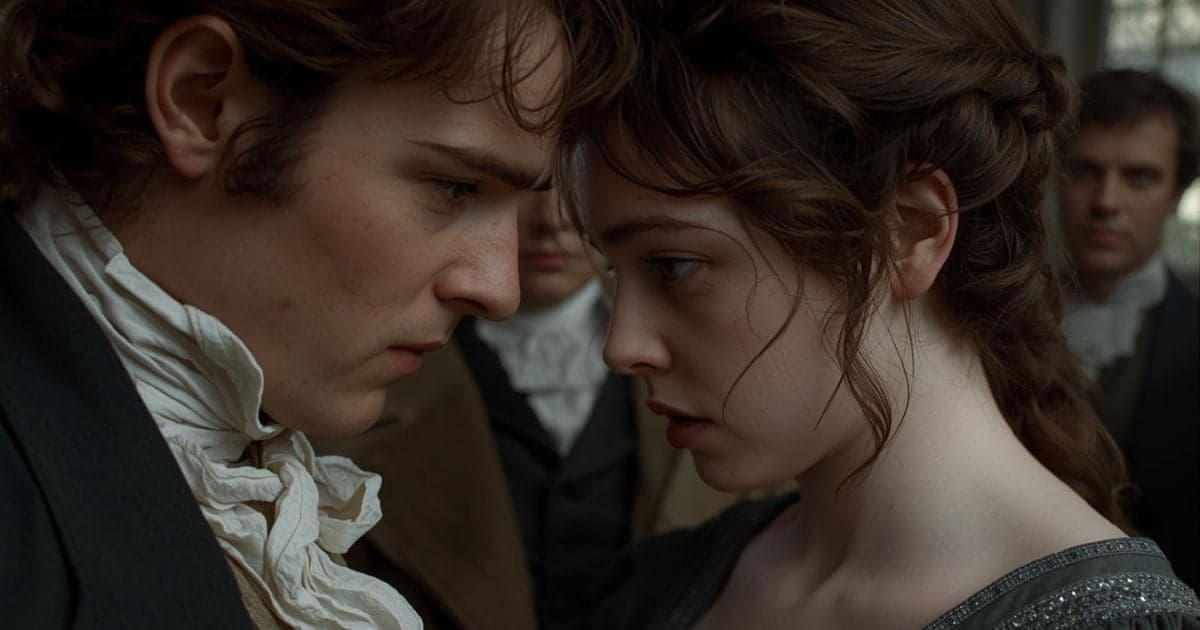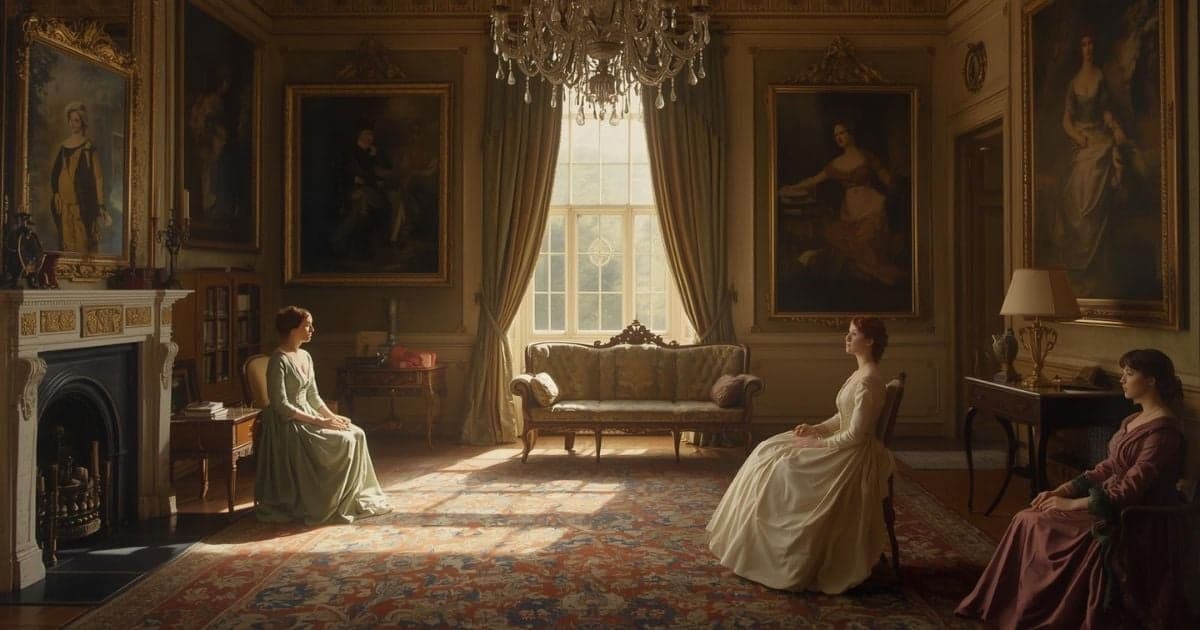
Chapter 19
Avoiding Uncomfortable Conversations
Emma and Harriet had been walking together one morning, and, in Emma’s opinion, had been talking enough of Mr. Elton for that day. She could not think that Harriet’s solace or her own sins required more; and she was therefore industriously getting rid of the subject as they returned;—but it burst out again when she thought she had succeeded, and after speaking some time of what the poor must suffer in winter, and receiving no other answer than a very plaintive—“Mr. Elton is so good to the poor!” she found something else must be done. They were just approaching the…
Public-domain chapter text, formatted for reading.
Master this chapter. Complete your experience
Purchase the complete book to access all chapters and support classic literature
Available in paperback, hardcover, and e-book formats
Now let's explore the literary elements.
Key Quotes & Analysis
"Mr. Elton is so good to the poor!”"
Context: When Emma discusses winter hardship on their walk
Harriet turns every topic back to Mr Elton. Emma's Bates visit is partly escape from that single-track grief.
In Today's Words:
Even while Emma tries to talk about what poor people suffer in winter, Harriet answers only that Mr Elton is so good to the poor. That plaintive praise tells Emma the walk will stay trapped on Mr Elton until she changes the scene entirely. She needs a new room and new talk.
"a waste of time—tiresome women—and all the horror of being in danger of falling in with the second-rate and third-rate of Highbury"
Context: Why Emma seldom visits the Bates women
Emma knows Knightley expects better of her, yet class snobbery and boredom outweigh obligation until she needs cover.
In Today's Words:
Emma usually skips the Bates calls because they feel like wasted time with tiresome women and because she dreads running into Highbury's second-rate and third-rate visitors who are always there. Knightley's hints have not outweighed that disgust until today she needs cover. She knows others judge her negligent in that respect.
"At this moment, an ingenious and animating suspicion entering Emma’s brain with regard to Jane Fairfax, this charming Mr. Dixon, and the not going to Ireland"
Context: Emma listens to Miss Bates on Mr Dixon
Emma's social radar switches on. What Miss Bates tells as fond anecdote Emma reads as possible romantic concealment.
In Today's Words:
While Miss Bates praises Mr Dixon for saving Jane at Weymouth, Emma suddenly suspects a hidden story linking Jane Fairfax, Mr Dixon, and Jane's choice not to go to Ireland with the Campbells. She begins probing with careful questions meant to draw out more. Her curiosity is sharper than her sympathy.
"though much had been forced on her against her will, though she had in fact heard the whole substance of Jane Fairfax’s letter, she had been able to escape the letter itself."
Context: Emma leaves the Bates house
Emma counts the visit a tactical success: gossip gained, performance endured, monologue avoided.
In Today's Words:
Emma walks away satisfied because, although Miss Bates forced news on her against her will, she learned the whole substance of Jane Fairfax's letter without having to sit through Miss Bates reading every word aloud. That escape is what she counts as success. She has performed duty without paying the full social tax.
Thematic Threads
Class Consciousness
In This Chapter
Emma openly admits avoiding the Bates family partly to escape Highbury's 'second-rate' society
Development
Evolved from subtle snobbery to explicit class calculation
In Your Life:
You might catch yourself being friendlier to customers who look wealthy or educated
Social Obligation
In This Chapter
Emma forces herself to visit despite finding it tedious, trapped between duty and personal comfort
Development
Building from earlier chapters showing Emma's struggle with social expectations
In Your Life:
You probably maintain relationships that drain you because you feel you 'should'
Hidden Information
In This Chapter
Emma detects romantic secrets about Jane Fairfax through what's not said about Mr. Dixon
Development
Emma's pattern of reading between lines continues to sharpen
In Your Life:
You might notice family drama through what relatives avoid mentioning at gatherings
Emotional Efficiency
In This Chapter
Emma strategically manages her attention, staying alert for useful gossip while tuning out boring details
Development
New theme showing Emma's calculated approach to social interaction
In Your Life:
You probably give different levels of listening to different people based on their importance to you
You now have the context. Time to form your own thoughts.
Discussion Questions
This is not a test. Five prompts guide you through the chapter, from how it opens to how it closes, so you notice context and rhythm rather than facts to memorize. Sit with each question in your own words. When you see "One way to read it," treat it as a starting point, not the only answer.
- 1
Why does Emma call on the Bates women this morning?
analysis • surfaceOne way to read it
Harriet keeps turning talk back to Mr Elton, so Emma seeks safety in numbers at a visit she usually avoids as tiresome.
- 2
What does Miss Bates reveal about Jane Fairfax's plans?
analysis • mediumOne way to read it
Jane comes to Highbury for at least three months while the Campbells go to Ireland; she has been unwell since November and may arrive Friday or Saturday.
- 3
When have you used a social visit to avoid another conversation?
application • mediumOne way to read it
One honest answer might recall redirecting attention the way Emma does when Harriet's Mr Elton praise will not stop on their walk.
- 4
What suspicion does Emma form about Jane, Mr Dixon, and Ireland?
application • deepOne way to read it
Hearing Miss Bates praise Mr Dixon at Weymouth, Emma wonders whether Jane's refusal to accompany the Campbells hides something about him and the Ireland trip.
- 5
Why is Emma satisfied as she leaves the Bates house?
reflection • deepOne way to read it
She got the substance of Jane's letter without enduring Miss Bates reading the whole thing aloud, which was her main fear at the end.
Critical Thinking Exercise
Map Your Emotional Investment Portfolio
List the last 10 people you interacted with this week. Next to each name, rate how much energy and attention you gave them (1-5 scale). Then note what each person can potentially do for your goals, status, or comfort. Look for patterns in who gets your best versus who gets your leftovers.
Consider:
- •Notice if your energy investment correlates with what people can offer you
- •Consider whether duty visits feel different from chosen interactions
- •Identify people you might be overlooking who deserve genuine attention
Journaling Prompt
Write about a time when you realized you were treating someone poorly because they couldn't advance your interests. How did that recognition change your behavior, and what would you do differently now?
Coming Up Next...
Chapter 20: Jane Fairfax's Hidden Story
Chapter II steps back to Jane Fairfax's history: Colonel Campbell's rescue, her excellent education, and the governess fate she faces at one-and-twenty, while Emma prepares to receive the accomplished visitor she already dislikes Jane Fairfax is an orphan whose father died abroad and whose mother soon followed. Colonel Campbell, indebted to her father, takes charge of her education in London, but her small inheritance.