Wide Reads
Literature MattersLife IndexEducators
Sign in
Where to Begin
Don Quixote - The Manuscript Trick

Miguel de Cervantes Saavedra

Don Quixote

The Manuscript Trick

Home›Books›Don Quixote›Chapter 9
Previous
9 of 126
Next

Summary

The Manuscript Trick

Don Quixote by Miguel de Cervantes Saavedra

0:000:00
Listen to Next Chapter

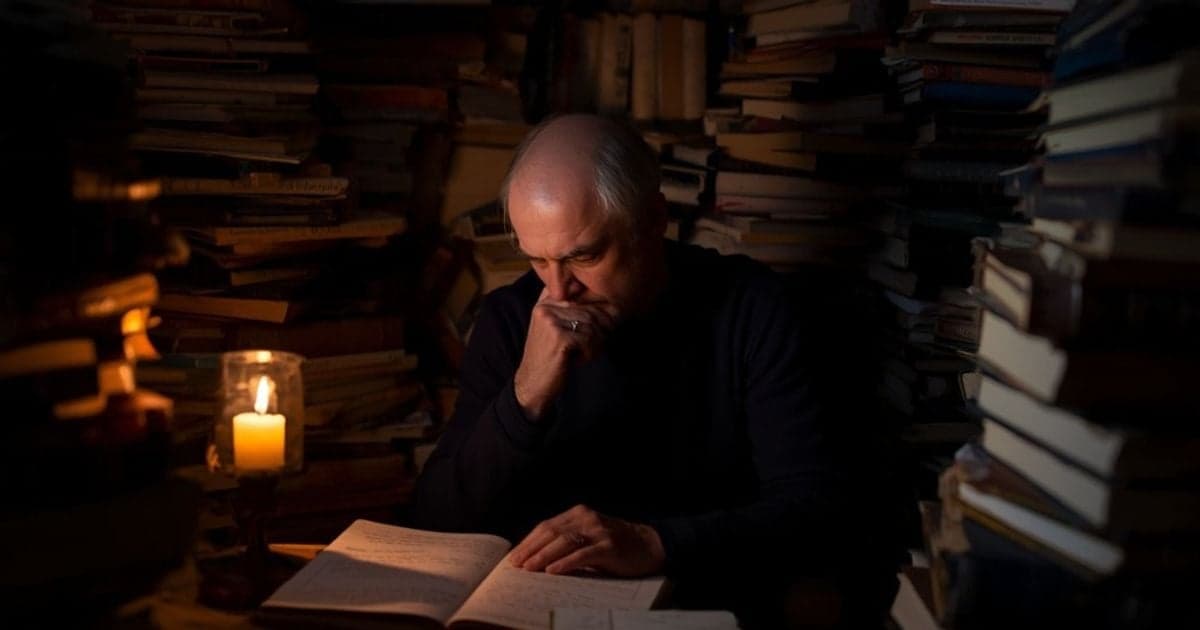
This chapter does something revolutionary: it breaks the fourth wall to reveal the story itself is a found manuscript. Cervantes interrupts the battle cliffhanger to explain that the original manuscript ended mid-combat, leaving him frustrated. Then he describes 'finding' the continuation—Arabic manuscripts in Toledo written by a Moorish historian named Cid Hamete Benengeli. This is metafiction centuries before the term existed: the author pretending he's not the author, just the translator/compiler of someone else's work. Why this matters: it adds a layer of unreliability. If the 'true' history was written by an Arab (Spain's historical enemy), and Arabs are known for lying (Cervantes' narrator says this explicitly), can we trust what we're reading? The answer is intentionally unclear. The manuscript includes a margin note mocking Dulcinea: she was best in La Mancha at salting pigs. So much for the perfect princess—she was a skilled pork processor. This deflates Quixote's romantic fantasy with mundane detail. When the battle finally resumes, it's brutal and quick. The Biscayan's blow nearly kills Quixote, cutting off half his ear. Quixote's counterblow smashes the Biscayan's head so badly blood pours from every opening. Quixote puts sword to his throat demanding death or surrender. The ladies beg for mercy. Quixote grants it only if the Biscayan goes to El Toboso to tell Dulcinea about this victory—he wants his fantasy lady to hear about his triumph, through a messenger who doesn't know she's imaginary. Meanwhile Sancho, trying to claim the friar's robes as "spoils," got beaten unconscious by muleteers who had zero patience for that nonsense. Quixote decides they should flee before the Holy Brotherhood (religious police) gets involved. So his second sally's first real combat: he attacked a friar for no reason, nearly killed a man's servant, got half his ear cut off, and had to run away. But in his mind, he rescued a princess and won a battle. The gap between what happened and what he believes happened is now enormous. The manuscript device reinforces this—we're not getting objective reality, we're getting an Arab historian's version filtered through a Spanish translator filtered through Cervantes. Layer on layer of unreliable narration, which is exactly the point.

Coming Up in Chapter 10

Bruised and fleeing the scene, Don Quixote and Sancho finally have time to talk about what they've just experienced. Their different interpretations of the same events will reveal the fundamental gap between idealism and pragmatism.

Share it with friends

Previous ChapterNext Chapter
GO ADS FREE — JOIN US
Original text
complete·2,120 words

IN WHICH IS CONCLUDED AND FINISHED THE TERRIFIC BATTLE BETWEEN THE GALLANT BISCAYAN AND THE VALIANT MANCHEGAN In the First Part of this history we left the valiant Biscayan and the renowned Don Quixote with drawn swords uplifted, ready to deliver two such furious slashing blows that if they had fallen full and fair they would at least have split and cleft them asunder from top to toe and laid them open like a pomegranate; and at this so critical point the delightful history came to a stop and stood cut short without any intimation from the author where what was missing was to be found.

1 / 10

Master this chapter. Complete your experience

Purchase the complete book to access all chapters and support classic literature

Read Free on GutenbergBuy at Powell'sBuy on Amazon

As an Amazon Associate, we earn a small commission from qualifying purchases at no additional cost to you.

Available in paperback, hardcover, and e-book formats

GO ADS FREE — JOIN US

Why This Matters

Connect literature to life

Skill: Questioning Source Reliability

This chapter teaches you to ask who's telling the story and what their angle might be. No narrative is purely objective—all come through someone's perspective with their biases and goals.

Practice This Today

This week, when you encounter a compelling story (news, social media, someone's account of an argument), ask: Who's telling this? What perspective am I not hearing? What might the other parties say happened?

GO ADS FREE — JOIN US

Now let's explore the literary elements.

Key Quotes & Analysis

"At this so critical point the delightful history came to a stop and stood cut short without any intimation from the author where what was missing was to be found."

— Narrator

Context: Breaking the story at the cliffhanger

Cervantes inventing the literary cliffhanger, then immediately making you aware he's doing it deliberately. It's both genuine suspense and commentary on suspense as a technique. He's showing you how stories manipulate you while manipulating you.

In Today's Words:

And right at the most exciting part, the story just... stopped. No warning. No hint where the rest was.

"This Dulcinea del Toboso, so often mentioned in this history, had, they say, the best hand of any woman in all La Mancha for salting pigs."

— Arabic manuscript margin note

Context: What makes the translator laugh

The perfect princess, the lady whose beauty requires no proof, the muse of Quixote's devotion... was really good at salting pork. The manuscript undercuts the romance with practical detail. This is truth interrupting fantasy.

In Today's Words:

That Dulcinea everyone keeps talking about? Apparently she was really skilled at preserving pork.

"If against the present one any objection be raised on the score of its truth, it can only be that its author was an Arab, as lying is a very common propensity with those of that nation."

— Narrator

Context: Discussing the manuscript's reliability

Cervantes satirizing Spanish prejudice while using it as narrative device. He's saying 'Arabs lie' while entrusting his whole story to an Arab historian—forcing readers to question both their prejudices and the text's reliability.

In Today's Words:

The only reason to doubt this story is that it was written by an Arab, and everyone knows Arabs are liars. (But also, I'm using this Arab's manuscript as my source, so...?)

"Good God! Who is there that could properly describe the rage that filled the heart of our Manchegan when he saw himself dealt with in this fashion?"

— Narrator (via Cid Hamete's manuscript)

Context: After the Biscayan's first blow

The narrator/historian claiming the rage is indescribable, then describing it in detail. It's a rhetorical device that draws attention to itself—making you aware you're reading crafted prose, not witnessing reality.

In Today's Words:

There are no words to describe his rage! (Here, let me spend several sentences describing his rage.)

Thematic Threads

Identity

In This Chapter

The manuscript device creates identity questions: Is Quixote who Cid Hamete says he is? Who Cervantes says he is? Who he thinks he is? All three versions exist simultaneously.

Development

Adding the layer that identity is always filtered through whoever's telling the story

In Your Life:

You might realize that who you are depends partly on who's narrating your story—your version, others' versions, all different

Class

In This Chapter

The Biscayan squire fights to protect his lady's honor against a madman, showing how class loyalty creates real violence based on fantasy grievances

Development

Demonstrating how class conflicts can be deadly when filtered through delusion

In Your Life:

You might notice how class assumptions can escalate minor situations into serious conflicts

Social Expectations

In This Chapter

Sancho tries to claim spoils because that's what squires do, but the muleteers beat him for it—showing the gap between storybook rules and real-world consequences

Development

Expanding: following fantasy rules in reality gets you hurt

In Your Life:

You might recognize times when you followed social rules from one context and got punished because you were in a different context

Personal Growth

In This Chapter

Quixote's 'victory' requires fleeing before authorities arrive—suggesting some awareness of consequences, but still no recognition of wrongdoing

Development

Slight movement: he knows to run, even if he won't admit why

In Your Life:

You might notice times when you knew on some level you were wrong but couldn't consciously admit it

GO ADS FREE — JOIN US

You now have the context. Time to form your own thoughts.

Discussion Questions

  1. 1

    Why does Cervantes interrupt the battle to tell us about finding the manuscript?

    analysis • surface
  2. 2

    What effect does making the historian an Arab have on how we read the story?

    analysis • medium
  3. 3

    How does the margin note about Dulcinea salting pigs undercut Don Quixote's romantic fantasy?

    analysis • medium
  4. 4

    When you hear a story about a conflict or controversy, do you usually assume you're getting the objective truth or one person's version? Why?

    reflection • deep
  5. 5

    How can you tell when you're reading someone's narrative versus objective facts? What signals should you look for?

    application • deep

Critical Thinking Exercise

15 minutes

Narrative Layer Analysis

Take a news story or viral social media post about something controversial. Map the layers: 1) What actually happened (if knowable), 2) Who witnessed it and what their perspective/bias might be, 3) Who reported it and what they selected/emphasized, 4) Who amplified it and why, 5) How it reached you and through what filters. For each layer, note what might have been added, omitted, or transformed. Then ask: What would this story look like from the other side?

Consider:

  • •Notice how much interpretation happens between events and your awareness of them
  • •Consider what makes you trust certain sources more than others
  • •Ask whether you're accepting this version because it confirms what you already believe

Journaling Prompt

Write about a time when you heard a story, believed it completely, then later discovered it was significantly different from another perspective. What layers of interpretation had distorted it? How did discovering the other version change your understanding?

GO ADS FREE — JOIN US

Coming Up Next...

Chapter 10: The First Real Conversation

Bruised and fleeing the scene, Don Quixote and Sancho finally have time to talk about what they've just experienced. Their different interpretations of the same events will reveal the fundamental gap between idealism and pragmatism.

Continue to Chapter 10
Previous
Tilting at Windmills
Contents
Next
The First Real Conversation

Continue Exploring

Don Quixote Study GuideTeaching ResourcesEssential Life IndexBrowse by ThemeAll Books
Identity & Self-DiscoveryMoral Dilemmas & EthicsLove & Relationships

You Might Also Like

Jane Eyre cover

Jane Eyre

Charlotte Brontë

Explores identity & self

Great Expectations cover

Great Expectations

Charles Dickens

Explores identity & self

The Strange Case of Dr Jekyll and Mr Hyde cover

The Strange Case of Dr Jekyll and Mr Hyde

Robert Louis Stevenson

Explores identity & self

The Odyssey cover

The Odyssey

Homer

Explores identity & self

Browse all 47+ books

Share This Chapter

Know someone who'd enjoy this? Spread the wisdom!

TwitterFacebookLinkedInEmail

Read ad-free with Prestige

Get rid of ads, unlock study guides and downloads, and support free access for everyone.

Subscribe to PrestigeCreate free account
Intelligence Amplifier
Intelligence Amplifier™Powering Wide Reads

Exploring human-AI collaboration through books, essays, and philosophical dialogues. Classic literature transformed into navigational maps for modern life.

2025 Books

→ The Amplified Human Spirit→ The Alarming Rise of Stupidity Amplified→ San Francisco: The AI Capital of the World
Visit intelligenceamplifier.org
hello@widereads.com

WideReads Originals

→ You Are Not Lost→ The Last Chapter First→ The Lit of Love→ Wealth and Poverty→ 10 Paradoxes in the Classics · coming soon
Arvintech
arvintechAmplify your Mind
Visit at arvintech.com

Navigate

  • Home
  • Library
  • Essential Life Index
  • How It Works
  • Subscribe
  • Account
  • About
  • Contact
  • Authors
  • Suggest a Book
  • Landings

Made For You

  • Students
  • Educators
  • Families
  • Readers
  • Literary Analysis
  • Finding Purpose
  • Letting Go
  • Recovering from a Breakup
  • Corruption
  • Gaslighting in the Classics

Newsletter

Weekly insights from the classics. Amplify Your Mind.

Legal

  • Privacy Policy
  • Terms of Service
  • Cookie Policy
  • Accessibility

Why Public Domain?

We focus on public domain classics because these timeless works belong to everyone. No paywalls, no restrictions—just wisdom that has stood the test of centuries, freely accessible to all readers.

Public domain books have shaped humanity's understanding of love, justice, ambition, and the human condition. By amplifying these works, we help preserve and share literature that truly belongs to the world.

A Pilgrimage

Powell's City of Books

Portland, Oregon

If you ever find yourself in Portland, walk to the corner of Burnside and 10th. The building takes up an entire city block. Inside is over a million books, new and used on the same shelf, organized by color-coded rooms with names like the Rose Room and the Pearl Room. You can lose an afternoon. You can lose a weekend. You will find a book you have been looking for your whole life, and three you did not know existed.

It is a pilgrimage. We cannot find a bookstore like it anywhere on earth. If you read the classics, and you ever get the chance, go. It belongs on every reader's bucket list.

Visit powells.com

We are not in any way affiliated with Powell's. We are just a very big fan.

© 2026 Wide Reads™. All Rights Reserved.

Intelligence Amplifier™ and Wide Reads™ are proprietary trademarks of Arvin Lioanag.

Copyright Protection: All original content, analyses, discussion questions, pedagogical frameworks, and methodology are protected by U.S. and international copyright law. Unauthorized reproduction, distribution, web scraping, or use for AI training is strictly prohibited. See our Copyright Notice for details.

Disclaimer: The information provided on this website is for general informational and educational purposes only and does not constitute professional, legal, financial, or technical advice. While we strive to ensure accuracy and relevance, we make no warranties regarding completeness, reliability, or suitability. Any reliance on such information is at your own risk. We are not liable for any losses or damages arising from use of this site. By using this site, you agree to these terms.