Chapter 30
Dorothea's Address and Pandafilando
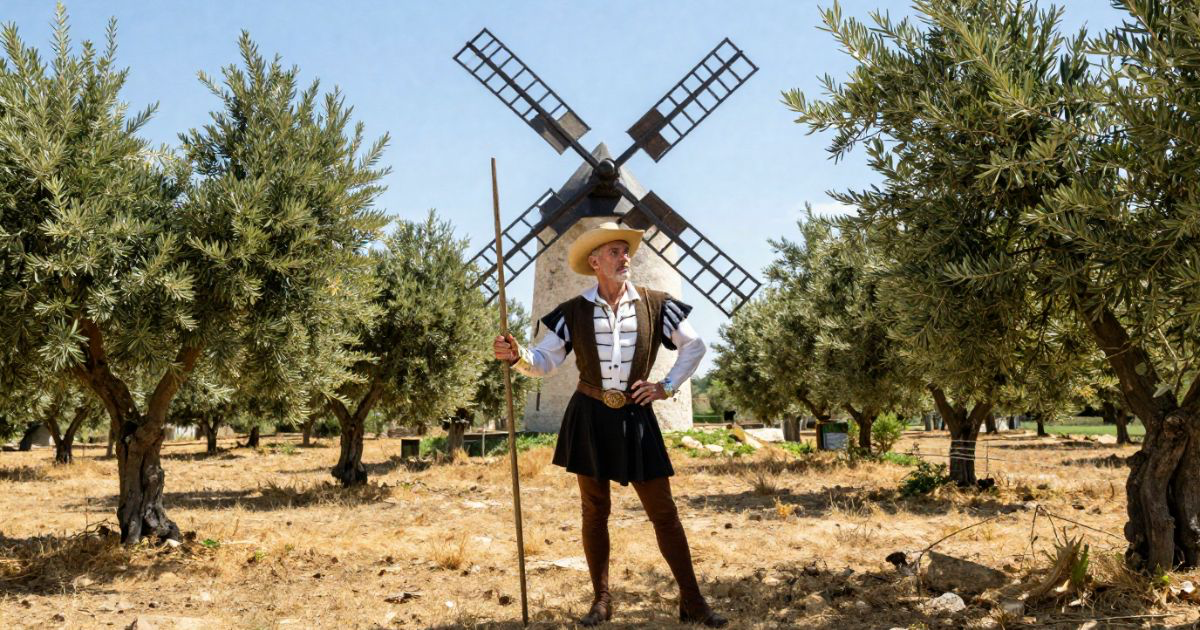
WHICH TREATS OF ADDRESS DISPLAYED BY THE FAIR DOROTHEA, WITH OTHER MATTERS PLEASANT AND AMUSING The curate had hardly ceased speaking, when Sancho said, “In faith, then, señor licentiate, he who did that deed was my master; and it was not for want of my telling him beforehand and warning him to mind what he was about, and that it was a sin to set them at liberty, as they were all on the march there because they were special scoundrels.” “Blockhead!” said Don Quixote at this, “it is no business or concern of knights-errant to inquire whether any persons…
Public-domain chapter text, formatted for reading.
Master this chapter. Complete your experience
Purchase the complete book to access all chapters and support classic literature
Available in paperback, hardcover, and e-book formats
Now let's explore the literary elements.
Key Quotes & Analysis
"Blockhead!” said Don Quixote at this, “it is no business or concern of knights-errant to inquire whether any persons in affliction, in chains, or oppressed that they may meet on the high roads go that way and suffer as they do because of their faults or because of their misfortunes."
Context: After Sancho admits Quixote freed the galley slaves
Quixote reframes crime as suffering knights must aid. Rescue logic overrides law every time.
In Today's Words:
Fool, a knight helps people in chains without asking whether they deserve it The same dynamic turns up in offices, relationships, and public life today, wherever someone bends circumstances to fit a story they cannot put down The same dynamic turns up in offices, relationships, and public life today, wherever someone bends circumstances to fit
"First of all, I would have you know, sirs, that my name is—” and here she stopped for a moment, for she forgot the name the curate had given her;"
Context: Beginning her princess speech to Don Quixote
The performance nearly breaks on the first line. Even the best actress needs the prompter.
In Today's Words:
First, you should know my name is... and then she blanked on the name the curate gave her The same dynamic turns up in offices, relationships, and public life today, wherever someone bends circumstances to fit a story they cannot put down The same dynamic turns up in offices, relationships, and public life today, wherever
"Hearest thou that? Did I not tell thee so? See how we have already got a kingdom to govern and a queen to marry!”"
Context: After Dorothea promises reward once the giant falls
Sancho hears salary before the battle exists. The promise is already spent in imagination.
In Today's Words:
Did you hear that? We already have a kingdom and a queen lined up The same dynamic turns up in offices, relationships, and public life today, wherever someone bends circumstances to fit a story they cannot put down The same dynamic turns up in offices, relationships, and public life today, wherever someone bends circumstances to
"but the might of Dulcinea, employing my arm as the instrument of her achievements? She fights in me and conquers in me, and I live and breathe in her,"
Context: Defending Dulcinea's power against Sancho's mockery
He swaps princess quest back to Dulcinea as source of strength. Both fantasies run at once.
In Today's Words:
Who will win this fight but Dulcinea, using my arm as her weapon The same dynamic turns up in offices, relationships, and public life today, wherever someone bends circumstances to fit a story they cannot put down The same dynamic turns up in offices, relationships, and public life today, wherever someone bends circumstances to fit
Thematic Threads
Keeping the Rescue Script Alive
In This Chapter
The curate's probe about the galley slaves makes Sancho confess and Quixote defend freeing criminals as knightly mercy.
Development
This chapter pushes the pattern into visible action and consequence.
In Your Life:
You may recognize this pattern when stress removes the polite version of a situation.
Identity
In This Chapter
Characters defend who they are or who they pretend to be when challenged.
Development
Fantasy and reality collide around name, rank, and role.
In Your Life:
You might cling to a version of yourself that no longer matches your choices.
Class
In This Chapter
Rank, money, and reputation decide who is heard, protected, or punished.
Development
Social order shapes every rescue, betrayal, and humiliation here.
In Your Life:
You see this when status decides whose account of events becomes official.
You now have the context. Time to form your own thoughts.
Discussion Questions
This is not a test. Five prompts guide you through the chapter, from how it opens to how it closes, so you notice context and rhythm rather than facts to memorize. Sit with each question in your own words. When you see "One way to read it," treat it as a starting point, not the only answer.
- 1
When Dorothea forgets her fake name mid-story, how does the curate help her recover without breaking the illusion?
analysis • surfaceOne way to read it
The curate smoothly explains that grief often makes people forget their own names, then supplies 'Princess Micomicona' as if reminding her of what she already knew.
- 2
Why does Cervantes have Dorothea admit she learned about chivalry stories from reading books, not living them?
analysis • mediumOne way to read it
It reveals that even the 'princess' gets her script from the same fantasy literature that drives Quixote's delusions, showing how these stories shape everyone's performance.
- 3
Where do you see people today using shared fictional references to connect with someone who seems disconnected from reality?
application • mediumOne way to read it
Therapists might use a patient's favorite movie characters to build trust, or family members might reference shared TV shows to reach someone struggling with mental health.
- 4
If you had to keep someone's harmful delusion going to protect them from a worse outcome, how would you handle the moral tension?
application • deepOne way to read it
Like Dorothea's careful performance, you'd need to balance immediate kindness against long-term honesty, perhaps seeking professional help while maintaining the person's dignity.
- 5
What does Sancho's confession about padding the love letter with extra 'my souls' and 'my eyes' reveal about how stories grow in the telling?
reflection • deepOne way to read it
It shows how even well-meaning people embellish stories to match expectations, suggesting that all our cherished narratives may be partly performance and partly genuine feeling.
Critical Thinking Exercise
Name the Keeping the Rescue Script Alive Move
Re-read the chapter summary and write down where keeping the rescue script alive first appears, who pays for it, and who benefits from keeping it going. Then write one sentence you could say to interrupt the pattern without shaming the person caught in it.
Consider:
- •Separate the person's worth from the pattern's cost
- •Notice who has power to stop or fuel the scene
- •Ask what truth would require someone to give up
Journaling Prompt
Write about a time when you saw keeping the rescue script alive in your own life. What finally made the pattern impossible to ignore?
Coming Up Next...
Chapter 31: Sancho's Dulcinea Report and Andres Returns
Don Quixote presses Sancho to describe his visit to Dulcinea and cannot resist coaching the account he wants to hear long before Sancho admits he never reached El Toboso Quixote presses Sancho for every detail of the visit to Dulcinea, and Sancho keeps spinning a lie he is terrified of breaking. She was winnowing red wheat, not stringing pearls; she smelled goaty from sweat.