Chapter 125
Omens, Homecoming, and Shepherd Quixotize
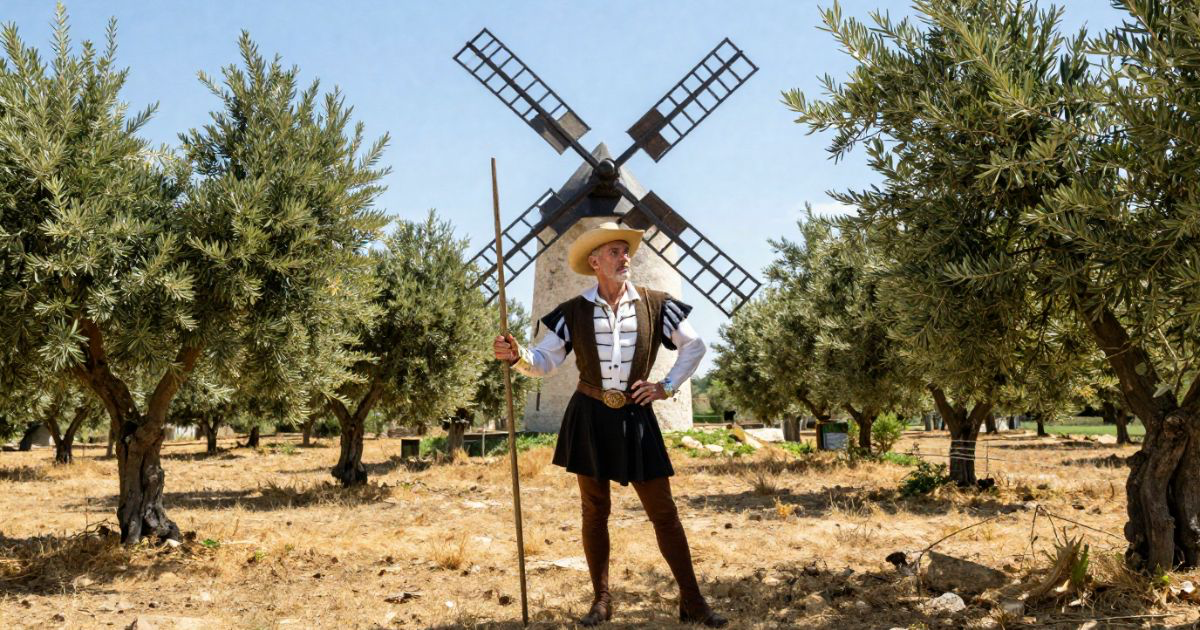
CHAPTER LXXIII. OF THE OMENS DON QUIXOTE HAD AS HE ENTERED HIS OWN VILLAGE, AND OTHER INCIDENTS THAT EMBELLISH AND GIVE A COLOUR TO THIS GREAT HISTORY At the entrance of the village, so says Cide Hamete, Don Quixote saw two boys quarrelling on the village threshing-floor, one of whom said to the other, “Take it easy, Periquillo; thou shalt never see it again as long as thou livest.” Don Quixote heard this, and said he to Sancho, “Dost thou not mark, friend, what that boy said, ‘Thou shalt never see it again as long as thou livest’?” “Well,” said…
Public-domain chapter text, formatted for reading.
Master this chapter. Complete your experience
Purchase the complete book to access all chapters and support classic literature
Available in paperback, hardcover, and e-book formats
Now let's explore the literary elements.
Key Quotes & Analysis
"Thou shalt never see it again as long as thou livest"
Context: Threshing-floor quarrel
Quixote misreads childhood speech as prophecy about Dulcinea.
In Today's Words:
You'll never see it again as long as you live The same dynamic turns up in offices, relationships, and public life today, wherever someone bends circumstances to fit a story they cannot put down The same dynamic turns up in offices, relationships, and public life today, wherever someone bends circumstances to fit a story they
"the omens broken and destroyed"
Context: Cricket cage bought
Sancho replaces superstition with cash and plain sense.
In Today's Words:
The omens are broken and destroyed The same dynamic turns up in offices, relationships, and public life today, wherever someone bends circumstances to fit a story they cannot put down The same dynamic turns up in offices, relationships, and public life today, wherever someone bends circumstances to fit a story they cannot put down.
"Sancho Panza’s ass figged out finer than Mingo"
Context: Flame robe and mitre on Dapple
Castle costume survives the homecoming as farce.
In Today's Words:
Sancho's ass dressed finer than Mingo The same dynamic turns up in offices, relationships, and public life today, wherever someone bends circumstances to fit a story they cannot put down The same dynamic turns up in offices, relationships, and public life today, wherever someone bends circumstances to fit a story they cannot put down.
"the straw is too hard now to make pipes of"
Context: Overhearing shepherd plan
Family begs for quiet respectability after the road.
In Today's Words:
The straw is too hard now to make pipes of The same dynamic turns up in offices, relationships, and public life today, wherever someone bends circumstances to fit a story they cannot put down The same dynamic turns up in offices, relationships, and public life today, wherever someone bends circumstances to fit a story they
Thematic Threads
When Omens and Homecoming Collide With a New Craze
In This Chapter
At the village entrance Don Quixote hears a boy say Periquillo will never see something again as long as he lives and reads the words as proof he will never...
Development
This chapter pushes the pattern into visible action and consequence.
In Your Life:
You may recognize this pattern when stress removes the polite version of a situation.
Identity
In This Chapter
Characters defend who they are or who they pretend to be when challenged.
Development
Fantasy and reality collide around name, rank, and role.
In Your Life:
You might cling to a version of yourself that no longer matches your choices.
Class
In This Chapter
Rank, money, and reputation decide who is heard, protected, or punished.
Development
Social order shapes every rescue, betrayal, and humiliation here.
In Your Life:
You see this when status decides whose account of events becomes official.
You now have the context. Time to form your own thoughts.
Discussion Questions
This is not a test. Five prompts guide you through the chapter, from how it opens to how it closes, so you notice context and rhythm rather than facts to memorize. Sit with each question in your own words. When you see "One way to read it," treat it as a starting point, not the only answer.
- 1
Why does Don Quixote interpret the boy's words about Periquillo never seeing something again as a prophecy about Dulcinea?
analysis • surfaceOne way to read it
Quixote sees omens everywhere because his mind constantly relates random events to his obsession with Dulcinea and knight-errantry.
- 2
Why does Cervantes have Sancho buy the cricket cage and declare the omens broken while Quixote still believes in signs?
analysis • mediumOne way to read it
It shows Sancho's practical wisdom defeating superstition through simple action, while Quixote remains trapped by his need to find meaning in everything.
- 3
Where do you see people today reading too much into coincidences or random events like Quixote does with the boys' quarrel?
application • mediumOne way to read it
Social media posts about seeing repeated numbers, sports fans blaming losses on unlucky jerseys, or people avoiding certain routes after bad experiences.
- 4
When someone you care about keeps chasing unrealistic dreams, should you humor them like the curate and Samson do with the shepherd plan?
application • deepOne way to read it
Sometimes temporary agreement prevents worse choices, like when family agrees to let someone try a risky business venture for a limited time rather than fight.
- 5
What does Quixote's instant shift from knight-errant to shepherd reveal about how people handle failure and identity?
reflection • deepOne way to read it
People often replace one fantasy with another rather than face reality, showing how hard it is to abandon the stories we tell ourselves about who we are.
Critical Thinking Exercise
Name the When Omens and Homecoming Collide With a New Craze Move
Re-read the chapter summary and write down where when omens and homecoming collide with a new craze first appears, who pays for it, and who benefits from keeping it going. Then write one sentence you could say to interrupt the pattern without shaming the person caught in it.
Consider:
- •Separate the person's worth from the pattern's cost
- •Notice who has power to stop or fuel the scene
- •Ask what truth would require someone to give up
Journaling Prompt
Write about a time when you saw when omens and homecoming collide with a new craze in your own life. What finally made the pattern impossible to ignore?
Coming Up Next...
Chapter 126: Death of Don Quixote and Hamete's Farewell
As nothing that is man's can last for ever, but all tends ever downwards from its beginning to its end, and above all man's life, and as Don Quixote's enjoyed no special dispensation from heaven to stay its course, its end and close came when he least looked for it..