
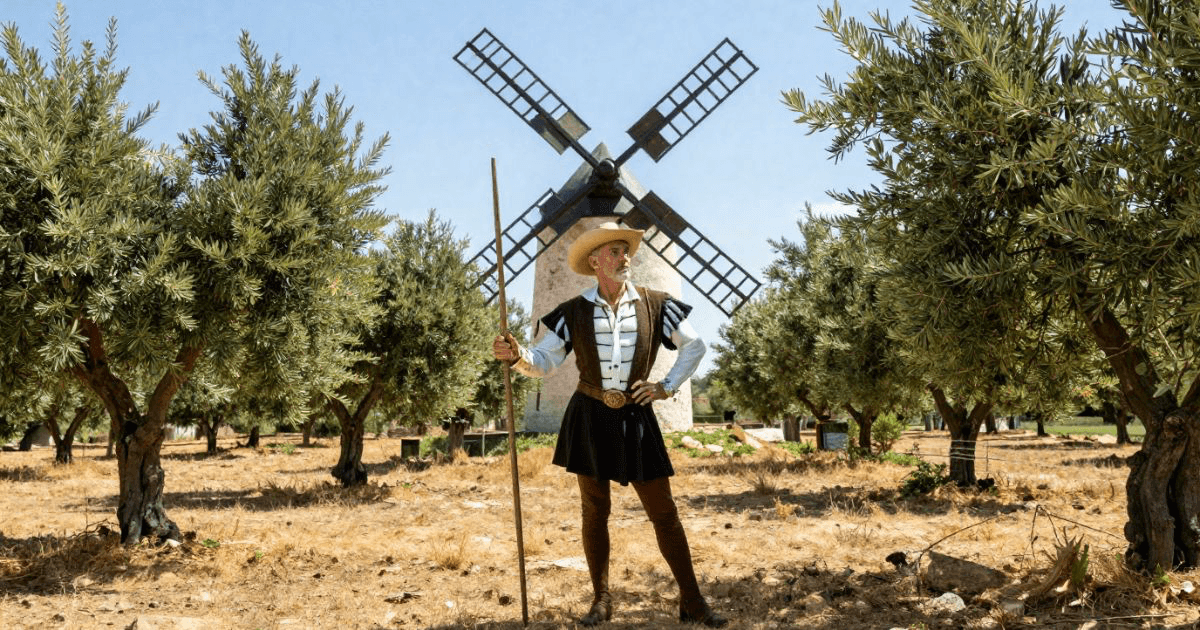
Chapter 117
Samson Carrasco Unmasked and Don Gregorio's Return
CHAPTER LXV. WHEREIN IS MADE KNOWN WHO THE KNIGHT OF THE WHITE MOON WAS; LIKEWISE DON GREGORIO’S RELEASE, AND OTHER EVENTS Don Antonio Moreno followed the Knight of the White Moon, and a number of boys followed him too, nay pursued him, until they had him fairly housed in a hostel in the heart of the city. Don Antonio, eager to make his acquaintance, entered also; a squire came out to meet him and remove his armour, and he shut himself into a lower room, still attended by Don Antonio, whose bread would not bake until he had found out…
Public-domain chapter text, formatted for reading.
Critical Thinking Exercise
Name the When Samson Carrasco's Cure Defeats the Knight and Gregorio Returns Move
Re-read the chapter summary and write down where when samson carrasco's cure defeats the knight and gregorio returns first appears, who pays for it, and who benefits from keeping it going. Then write one sentence you could say to interrupt the pattern without shaming the person caught in it.
Consider:
- •Separate the person's worth from the pattern's cost
- •Notice who has power to stop or fuel the scene
- •Ask what truth would require someone to give up
Journaling Prompt
Write about a time when you saw when samson carrasco's cure defeats the knight and gregorio returns in your own life. What finally made the pattern impossible to ignore?
Master this chapter. Complete your experience
Purchase the complete book to access all chapters and support classic literature

Available in paperback, hardcover, and e-book formats
You Might Also Like

Lessons from Don Quixote
Theme-by-theme analyses that connect this book to modern life skills.
Balancing Idealism and Pragmatism
Hold Quixote's vision and Sancho's earthiness in tension instead of choosing one as the only sane option.
5 chapters·Explore AnalysisDetecting Story-Driven Delusion
Notice when deep narrative immersion starts rewriting what you treat as real, as Quixote does from his first night of chivalry reading.
5 chapters·Explore AnalysisLiving Inside a Narrative
Follow Part II's metafiction as Quixote becomes famous for a story others have already read, and ask when your own role is performance.
5 chapters·Explore AnalysisLoyal Friendship Under Absurdity
Learn from Sancho's willingness to stay with Quixote through ridicule, beatings, and promises that never arrive on schedule.
5 chapters·Explore AnalysisReading Appearance vs Reality
Track how Quixote turns inns into castles and ordinary life into enchantment, and ask what your own filters add.
5 chapters·Explore AnalysisWhen Noble Intentions Miss the Target
See how Quixote's hunger to right wrongs can still leave real people hurt when the script matters more than the scene.
5 chapters·Explore Analysis
Deep diving the literary elements.