Wide Reads
Literature MattersLife IndexEducators
Sign in
Where to Begin

The Bear-Like Landowner's Hard Bargain — Dead Souls

Dead Souls - The Bear-Like Landowner's Hard Bargain

Nikolai Gogol

Dead Souls

The Bear-Like Landowner's Hard Bargain

Home›Books›Dead Souls›Chapter 5: The Bear-Like Landowner's Hard Bargain
Previous
5 of 15
Next

Analysis by the Wide Reads editorial team·Reviewed against the source text·Updated December 11, 2025

Summary

The Bear-Like Landowner's Hard Bargain

Dead Souls by Nikolai Gogol

0:000:00
Listen to Next Chapter

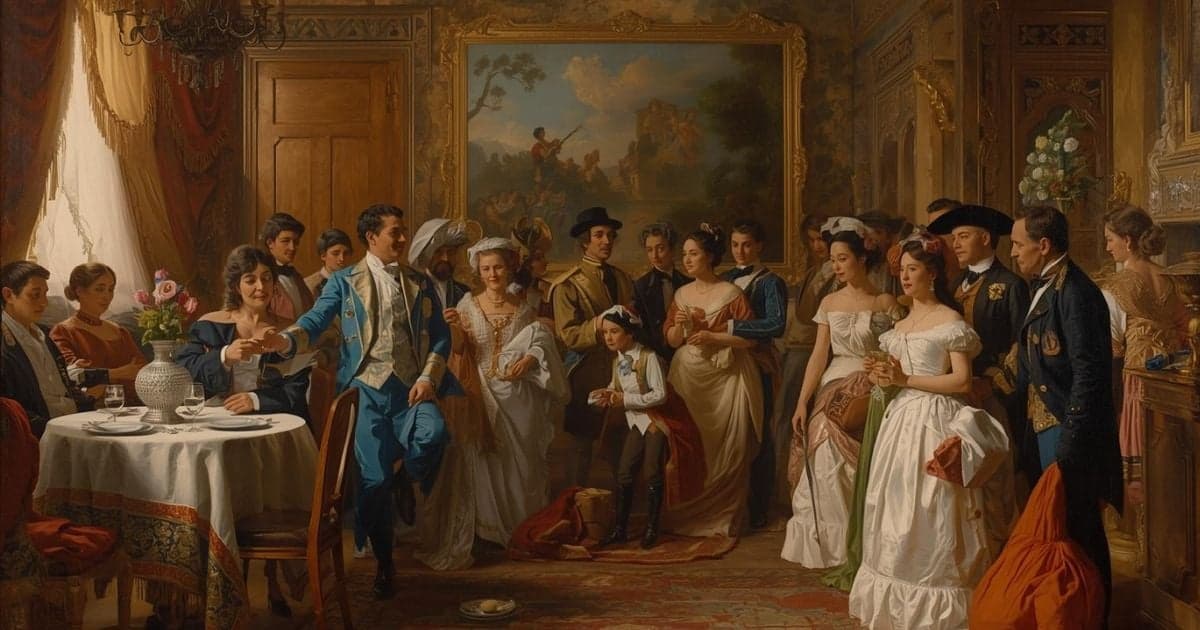
Fleeing Nozdrev's estate, Chichikov trembles like a quail in a net and curses under his breath while Selifan curses Nozdrev for starving the horses. In the chaos Chichikov glimpses a golden-haired girl of sixteen on a balcony, eyes clear as a new-laid egg, then returns to ledgers as though beauty were another distraction. The host is bear-like, heavy and blunt, moving with slow certainty. The dining room contains a grand piano used as a sideboard and sheets that suggest hospitality without refinement. He reports more than thirty-five dead since the revision and fugitives still counted as present. He describes craftsmen with grotesque pride: Probka Stepan the carpenter, Michiev the chest maker, each biography listing father, mother, and trade as if the census were a family album. Sobakevitch calls Manilov a fool who would give away his nose if flattered; he treats souls as merchandise whose only question is rate per head. Where Manilov gave souls away in tears and Korobotchka played confusion until fifteen roubles seemed official, Sobakevitch conducts corruption as trade between equals who despise one another politely. Gogol's point is plain: the scam needs men who know exactly what they sell. The chapter opens with Chichikov still shaking from Nozdrev's pipe-stem and chessboard, reflecting that but for the Superintendent he might have vanished like a bubble on a pool. Sobakevitch's house interior matches the man: heavy furniture, a grand piano piled with dishes, sheets on the table, everything designed to feed rather than impress. He is not shocked; he names a price per soul as if selling cabbage.

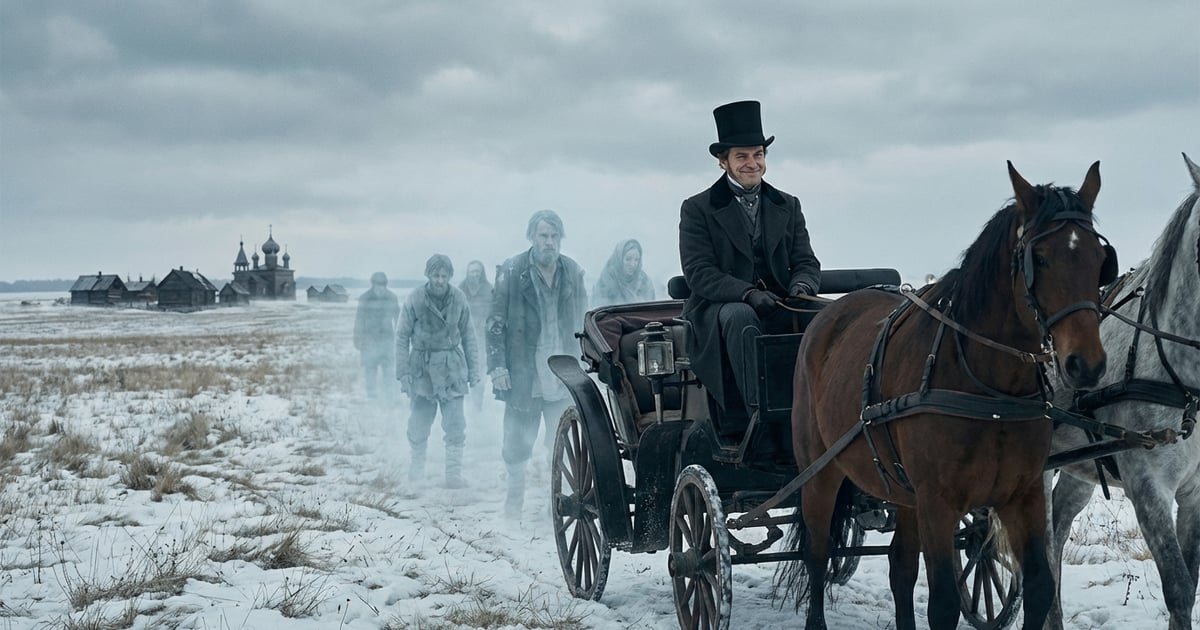
He has confided the dead-souls project to the province's loudest gossip; every mile feels borrowed. On the road a six-horse carriage collides with the britchka; harnesses tangle; villagers including Uncles Mitai and Minai swarm the wheels, arguing over rights, repairs, and who may pass first. Sobakevitch's estate looks like a well-built brick bear: solid, square, indifferent to charm. He receives Chichikov with abundant food and almost no compliment. When dead souls are mentioned, Sobakevitch is not surprised; he has heard stranger things from officials he calls scoundrels while selling fraud himself. Chichikov wants the dead; Sobakevitch praises them as though they still swung axes. Then he prices them like turnips, opening with fantasy figures Chichikov must beat down through patient haggling. The negotiation is ugly because it is clear. Chichikov bargains from roubles toward kopecks, pays two and a half roubles each for the dead and a separate sum for runaways, and secures another thick list. Paper and payment end the visit. Chichikov leaves sobered by cost and enlarged by the haul. Sobakevitch returns to bear-like pacing; Selifan drives on; the girl remains a flash above the road. Sobakevitch's blunt greed completes the triad of landowners: sentiment, confusion, and commerce without disguise. Selifan mutters that Nozdrev starved the horses; the road offers no rest. After the collision the girl on the balcony becomes a brief vision of innocence above the business of buying the dead. At table Sobakevitch eats with concentration and speaks in monosyllables until the census is named. Chichikov must talk him down from absurd sums by appealing to friendship and the burden of poll-tax on names that no longer breathe.

Sobakevitch praises Michiev the chest maker and Probka Stepan with biographies listing parents and trades, then assigns each a rouble value as if craftsmanship survived death on the revision lists. He throws in a dead woman or two without embarrassment, inflating the list because volume strengthens mortgage. When ink dries and money changes hands, Chichikov possesses another bundle of names to join Manilov's gift and Korobotchka's fifteen-rouble souls. The total grows toward the hundreds he needs for his Kherson fiction. Sobakevitch watches him leave without sentiment. The road turns toward Plushkin, where decay rather than appetite will set the price. For now the bear-like landowner has shown that in Russia even fraud has a market rate, and the cleverest buyer is the one who lets the seller feel he has won. Sobakevitch eats cabbage soup with the gravity of ritual and answers questions as if each word cost him effort. He calls local tchinovniks scoundrels with relish because honesty about others frees him to cheat openly. Chichikov flatters the craftsmanship of dead men who will never plane another board, then watches the price fall to two and a half roubles as friendship and tax burden are invoked. The scene is comic and cold at once: biographies of carpenters read like eulogies, then numbers like a ledger. When the britchka departs, Chichikov counts gains and losses while Selifan curses the road. Nozdrev's violence still echoes; Plushkin's misery waits ahead. Between them Sobakevitch stands as the normal face of corruption, neither dreamy nor confused, only heavy, hungry, and sure that everything has a price if you hold the line long enough.

In this chapter: Terms Characters Key Quotes Themes Modern Story

Why This Matters

Connect literature to life

Skill: Negotiating With Blunt Self-Interest

People who admit greed outright can be easier to bargain with than sentimental flatterers. At Sobakevitch's table Chichikov haggles over roubles while his host praises dead carpenters like inventory with biography. Name your maximum price before nostalgia or intimidation enters the room.

Coming Up in Chapter 6

Armed with directions from a colorfully profane peasant, Chichikov sets off to find the legendary miser Plushkin, whose estate promises to be a goldmine of dead souls. But what he discovers there will surpass even his wildest expectations of human degradation.

Share it with friends

PreviousPrevious ChapterNextNext Chapter
Original text
8,033 wordscomplete

Chapter 05

The Bear-Like Landowner's Hard Bargain

Certainly Chichikov was a thorough coward, for, although the britchka pursued its headlong course until Nozdrev’s establishment had disappeared behind hillocks and hedgerows, our hero continued to glance nervously behind him, as though every moment expecting to see a stern chase begin. His breath came with difficulty, and when he tried his heart with his hands he could feel it fluttering like a quail caught in a net. “What a sweat the fellow has thrown me into!” he thought to himself, while many a dire and forceful aspiration passed through his mind. Indeed, the expressions to which he gave vent…

Public-domain chapter text, formatted for reading.

Master this chapter. Complete your experience

Purchase the complete book to access all chapters and support classic literature

Buy at Powell'sBuy on Amazon

Available in paperback, hardcover, and e-book formats

Now let's explore the literary elements.

Key Quotes & Analysis

"What a sweat the fellow has thrown me into!"

— Chichikov

Context: Chichikov reacts while fleeing Nozdrev's estate

Beneath the schemer's composure is cowardly panic. Chaos threatens the ledger project.

In Today's Words:

He is not coolly in control; he is sweating and swearing because Nozdrev could have destroyed him. When someone who usually performs confidence suddenly shakes, you are seeing the cost of betting on unstable allies. The same pattern appears wherever people mistake performance for power or let urgency and manners silence warnings they already sense.

"Never have I seen such a barin. I should like to spit in his face."

— Selifan

Context: Selifan judges Nozdrev after the visit

Servants measure masters by how they treat horses and labor, not titles.

In Today's Words:

The coachman despises Nozdrev for neglecting the horses while gentry praised his hospitality. Working people often see cruelty faster than guests sipping champagne because they live in the stable, not the salon. The same pattern appears wherever people mistake performance for power or let urgency and manners silence warnings they already sense.

"A miser," replied Sobakevitch."

— Sobakevitch

Context: He describes the landowner Plushkin to Chichikov

Sobakevitch names greed plainly. The coming chapter's extreme miser is introduced as folklore before fact.

In Today's Words:

He answers with one word, miser, and lets the horror fill itself in. That blunt label tells Pavel what kind of economy awaits: one where even convicts eat better than the owner of hundreds of souls. The same pattern appears wherever people mistake performance for power or let urgency and manners silence warnings they already

"And look, too, at Probka Stepan, the carpenter,"

— Sobakevitch

Context: Sobakevitch markets a dead serf's skill during the sale

He sells human beings while describing craftsmanship with love. The grotesque and the sincere collide.

In Today's Words:

He talks about a dead carpenter the way a coach brags about a star player, then puts a price on the name. That is how systems dehumanize while still borrowing human pride to inflate value. The same pattern appears wherever people mistake performance for power or let urgency and manners silence warnings they already sense.

Thematic Threads

Corruption

In This Chapter

Sobakevitch openly participates in Chichikov's illegal scheme while calling everyone else thieves, showing how corruption becomes normalized when acknowledged openly

Development

Evolved from Manilov's naive participation and Nozdrev's chaotic dishonesty to calculated, transparent corruption

In Your Life:

You might recognize this when someone at work openly admits they're cutting corners while criticizing others for the same behavior.

Class

In This Chapter

Sobakevitch's wealth and status allow him to be brutally honest about others' failings while engaging in the same corrupt practices

Development

Continues the pattern of each landowner's class position shaping how they approach corruption

In Your Life:

You see this when wealthy people criticize welfare recipients while openly using tax loopholes and subsidies.

Negotiation

In This Chapter

Sobakevitch immediately understands Chichikov's scheme and negotiates aggressively, treating dead souls as valuable commodities

Development

Introduced here as a contrast to previous landowners' approaches to the deal

In Your Life:

You encounter this when dealing with contractors, lawyers, or salespeople who are completely upfront about maximizing their profit.

Identity

In This Chapter

Sobakevitch's bear-like appearance matches his blunt personality, showing alignment between physical presence and character

Development

Continues Gogol's pattern of matching character to physical description, but more directly than with previous landowners

In Your Life:

You might notice how people's appearance often reflects their approach to life—the overly groomed person who's controlling, the deliberately casual person who's rejecting formality.

Pragmatism

In This Chapter

Chichikov abandons romantic fantasies about the beautiful woman to focus on his business with Sobakevitch, showing his practical nature reasserting itself

Development

Reinforces Chichikov's character established in earlier chapters—opportunistic but ultimately focused on his scheme

In Your Life:

You see this in yourself when you get distracted by attractive possibilities but ultimately return to your practical goals and responsibilities.

You now have the context. Time to form your own thoughts.

Discussion Questions

This is not a test. Five prompts guide you through the chapter, from how it opens to how it closes, so you notice context and rhythm rather than facts to memorize. Sit with each question in your own words. When you see "One way to read it," treat it as a starting point, not the only answer.

  1. 1

    Why is Selifan angrier at Nozdrev than Chichikov is?

    ▶One way to read it

    Nozdrev mistreated the horses, and Selifan judges masters by how they handle animals and labor.

    analysis • surface
  2. 2

    How does Sobakevitch's negotiation differ from Manilov's and Korobotchka's?

    ▶One way to read it

    He understands the scheme immediately, sets a cash price, and haggles without sentiment or confusion.

    analysis • medium
  3. 3

    Why describe dead serfs with pride while selling them?

    ▶One way to read it

    Praising skill inflates value and lets Sobakevitch feel honest while treating people as commodities.

    application • medium
  4. 4

    When has blunt self-interest been easier to handle than fake kindness?

    ▶One way to read it

    Recall a deal where someone admitted their motive and you preferred that to polite manipulation.

    application • deep
  5. 5

    Does Sobakevitch's honesty make him morally better than Manilov?

    ▶One way to read it

    No. Clarity can make exploitation efficient; ethics still require refusing the trade, not admiring the style.

    reflection • deep

Critical Thinking Exercise

10 minutes

Map Your Own Honest Thieves

Think of three people in your life who are brutally honest about what they want from you - whether it's your time, money, favors, or attention. Write down their names and what they typically want. Then rate each one: Are they easier or harder to deal with than people who hide their motives? What strategies work best with each person?

Consider:

  • •Consider why their honesty might actually make relationships clearer
  • •Think about whether you trust their word more because they admit their self-interest
  • •Notice if you respect their directness even when you don't like what they're asking for

Journaling Prompt

Write about a time when someone's brutal honesty about wanting something from you actually made you more willing to help them than if they had made up a noble excuse.

Coming Up Next...

Chapter 6: The Miser's Mansion of Decay

Armed with directions from a colorfully profane peasant, Chichikov sets off to find the legendary miser Plushkin, whose estate promises to be a goldmine of dead souls. But what he discovers there will surpass even his wildest expectations of human degradation.

Continue to Chapter 6
Previous
When Hospitality Turns Dangerous
Contents
Next
The Miser's Mansion of Decay
Keep exploring

Continue Exploring

Study guides, teaching tools, themes, and the full library.More ways to read Dead Souls: study guides, teaching tools, and the wider library.

  • Dead Souls Study Guide
  • Teaching Resources
  • Essential Life Index
  • Browse by Theme
  • All Books

What this chapter teaches

Theme analyses that draw on this chapter and apply it to modern life.

  • Detecting Con ArtistsUnderstand how Chichikov reads people, flatters vanities, and gathers leverage before you see the angle—lessons for deals, politics, and everyday charm offensives.
Power & CorruptionIdentity & Self-DiscoveryMoral Dilemmas & Ethics

You Might Also Like

Heart of Darkness cover

Heart of Darkness

Joseph Conrad

Explores morality & ethics

Noli Me Tángere cover

Noli Me Tángere

José Rizal

Explores morality & ethics

The Idiot cover

The Idiot

Fyodor Dostoevsky

Explores morality & ethics

The Strange Case of Dr Jekyll and Mr Hyde cover

The Strange Case of Dr Jekyll and Mr Hyde

Robert Louis Stevenson

Explores morality & ethics

Browse all 106+ books

Share This Chapter

Know someone who'd enjoy this? Spread the wisdom!

TwitterFacebookLinkedInEmail

Go further with Prestige

Unlock study guides and downloads, early access, and exclusive content — and support free access for everyone.

Subscribe to PrestigeCreate free account
Intelligence Amplifier
Intelligence Amplifier™Powering Wide Reads

Exploring human-AI collaboration through books, essays, and philosophical dialogues. Classic literature transformed into navigational maps for modern life.

2025 Books

→ The Amplified Human Spirit→ The Alarming Rise of Stupidity Amplified→ San Francisco: The AI Capital of the World
Visit intelligenceamplifier.org
hello@widereads.com

WideReads Originals

→ You Are Not Lost→ The Last Chapter First→ The Lit of Love→ Wealth and Poverty→ Wisdom for the Wounded
Arvintech
arvintechAmplify your Mind
Visit at arvintech.com

Navigate

  • Home
  • Library
  • Essential Life Index
  • How It Works
  • Subscribe
  • Account
  • About
  • Contact
  • Authors
  • Suggest a Book
  • Landings

Made For You

  • Trending
  • Students
  • Educators
  • Families
  • Readers
  • Literary Analysis
  • Finding Purpose
  • Letting Go
  • Recovering from a Breakup
  • Corruption
  • Gaslighting in the Classics

Newsletter

Weekly insights from the classics. Amplify Your Mind.

Legal

  • Privacy Policy
  • Terms of Service
  • Editorial Standards
  • Cookie Policy
  • Accessibility

Why Public Domain?

We focus on public domain classics because these timeless works belong to everyone. No paywalls, no restrictions—just wisdom that has stood the test of centuries, freely accessible to all readers.

Public domain books have shaped humanity's understanding of love, justice, ambition, and the human condition. By amplifying these works, we help preserve and share literature that truly belongs to the world.

A Pilgrimage

Powell's City of Books

Portland, Oregon

If you ever find yourself in Portland, walk to the corner of Burnside and 10th. The building takes up an entire city block. Inside is over a million books, new and used on the same shelf, organized by color-coded rooms with names like the Rose Room and the Pearl Room. You can lose an afternoon. You can lose a weekend. You will find a book you have been looking for your whole life, and three you did not know existed.

It is a pilgrimage. We cannot find a bookstore like it anywhere on earth. If you read the classics, and you ever get the chance, go. It belongs on every reader's bucket list.

Visit powells.com

We are not in any way affiliated with Powell's. We are just a very big fan.

© 2026 Wide Reads™. All Rights Reserved.

Intelligence Amplifier™ and Wide Reads™ are proprietary trademarks of Arvin Lioanag.

Copyright Protection: All original content, analyses, discussion questions, pedagogical frameworks, and methodology are protected by U.S. and international copyright law. Unauthorized reproduction, distribution, web scraping, or use for AI training is strictly prohibited. See our Copyright Notice for details.

Disclaimer: The information provided on this website is for general informational and educational purposes only and does not constitute professional, legal, financial, or technical advice. While we strive to ensure accuracy and relevance, we make no warranties regarding completeness, reliability, or suitability. Any reliance on such information is at your own risk. We are not liable for any losses or damages arising from use of this site. By using this site, you agree to these terms.