Chapter 06
The Miser's Mansion of Decay
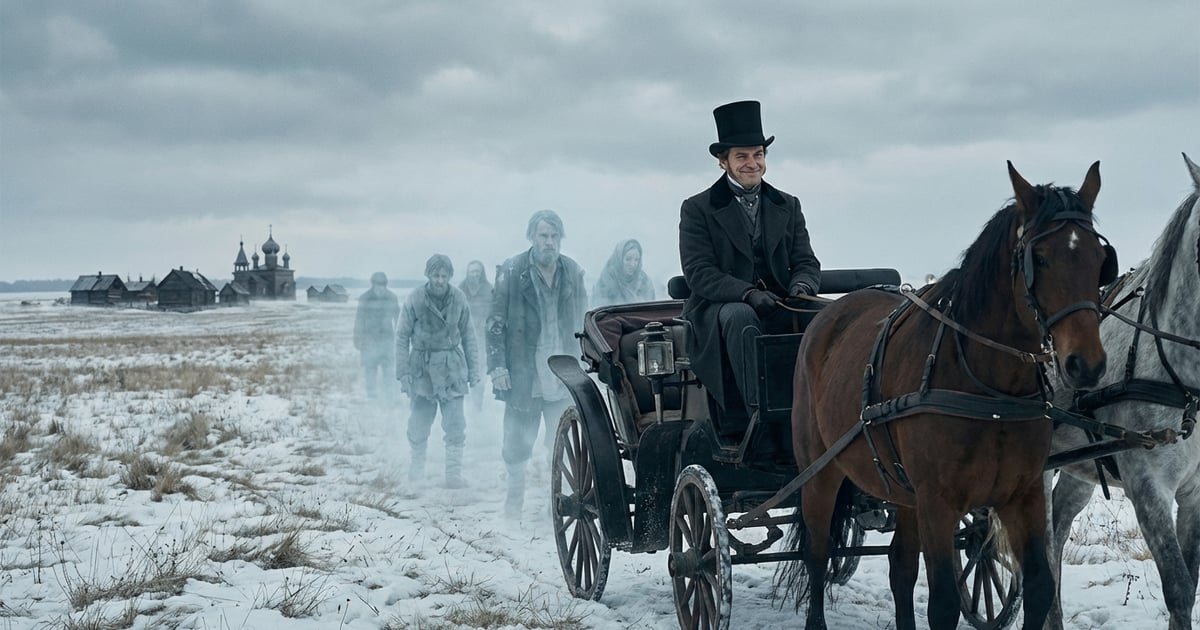
Chichikov’s amusement at the peasant’s outburst prevented him from noticing that he had reached the centre of a large and populous village; but, presently, a violent jolt aroused him to the fact that he was driving over wooden pavements of a kind compared with which the cobblestones of the town had been as nothing. Like the keys of a piano, the planks kept rising and falling, and unguarded passage over them entailed either a bump on the back of the neck or a bruise on the forehead or a bite on the tip of one’s tongue. At the same time…
Public-domain chapter text, formatted for reading.
Master this chapter. Complete your experience
Purchase the complete book to access all chapters and support classic literature
Available in paperback, hardcover, and e-book formats
Now let's explore the literary elements.
Key Quotes & Analysis
"Are you blind, my good sir?"
Context: Plushkin answers Chichikov's question about where the master is
He treats the visitor's confusion as stupidity while standing before him in rags.
In Today's Words:
He snaps that you should see who owns the room when the owner is right in front of you. That is how hoarders speak: they make your need for clarity sound like insult while they control every kopeck. Watch who controls the room, who needs the deal, and whether politeness is being used to keep
"_I_ am the master."
Context: Plushkin reveals his identity to the confused guest
The wealthiest landowner in the district looks like a mendicant.
In Today's Words:
The richest man in the county answers the door dressed like a scavenger and still claims authority without embarrassment. When appearance and account books diverge this wildly, ask which story the paperwork tells. Watch who controls the room, who needs the deal, and whether politeness is being used to keep you from asking the obvious
"sympathy does not put anything into one's pocket"
Context: Plushkin rejects Chichikov's polite condolences about dead serfs
He hears only tax liability, not human loss.
In Today's Words:
He waves away grief talk because feeling does not reduce his bill. In negotiations with a miser, moral language is noise until you translate the offer into coins he can count and keep. Watch who controls the room, who needs the deal, and whether politeness is being used to keep you from asking the obvious
"Twenty-five kopecks per soul."
Context: Chichikov opens the bid for Plushkin's runaway serfs
He names a low price because Plushkin's need for cash outweighs his pride.
In Today's Words:
He starts with a number so small it sounds like an insult, knowing the seller will haggle upward anyway. Opening low with a desperate hoarder can still win if they fear losing even a few kopecks more. Watch who controls the room, who needs the deal, and whether politeness is being used to keep you
Thematic Threads
Wealth
In This Chapter
Plushkin's vast riches become meaningless because his miserliness prevents him from using or enjoying them
Development
Contrasts with earlier landowners who at least lived comfortably—Plushkin shows wealth's ultimate corruption
In Your Life:
You might recognize this in yourself when you have money saved but feel guilty spending it on anything beyond necessities.
Isolation
In This Chapter
Plushkin's penny-pinching has driven away his children and friends, leaving him completely alone
Development
Builds on the theme of social disconnection seen in previous landowners
In Your Life:
You see this when someone's extreme frugality or controlling behavior pushes away the people they care about.
Decay
In This Chapter
Despite his wealth, Plushkin's estate is crumbling because he won't spend money on maintenance
Development
Physical decay mirrors the moral decay of previous characters
In Your Life:
This appears when you defer maintenance on your car, home, or health to save money, only to face bigger costs later.
Deception
In This Chapter
Plushkin appears to be a beggar but is actually one of the wealthiest landowners in the region
Development
Continues the theme of appearances versus reality throughout the novel
In Your Life:
You encounter this when someone's lifestyle doesn't match their actual financial situation—either direction.
Paranoia
In This Chapter
Plushkin suspects everyone of theft and can't trust his own servants or family
Development
Introduced here as the extreme endpoint of self-protective behavior
In Your Life:
You might see this in yourself when financial anxiety makes you suspicious of everyone's motives around money.
You now have the context. Time to form your own thoughts.
Discussion Questions
This is not a test. Five prompts guide you through the chapter, from how it opens to how it closes, so you notice context and rhythm rather than facts to memorize. Sit with each question in your own words. When you see "One way to read it," treat it as a starting point, not the only answer.
- 1
What details in the village and house show Plushkin's wealth and neglect at once?
analysis • surfaceOne way to read it
Roofs collapse while storehouses stay full; the master dresses like a beggar yet owns a thousand souls.
- 2
Why does Plushkin sell dead and runaway souls so cheaply?
analysis • mediumOne way to read it
Taxes and cash panic matter more than pride; Chichikov offers to lift a burden Plushkin cannot fix alone.
- 3
How does Gogol's backstory change your view of Plushkin?
application • mediumOne way to read it
He was once competent and kind; grief and isolation turned thrift into the man Chichikov meets.
- 4
Where have you seen someone rich on paper but poor in daily life?
application • deepOne way to read it
Name a person or business that hoards while basics decay, and what fear seemed to drive it.
- 5
Is Chichikov helping Plushkin or exploiting him?
reflection • deepOne way to read it
Both: he relieves a tax burden while profiting from a man too frightened to negotiate well.
Critical Thinking Exercise
Audit Your Own Scarcity Patterns
Make three lists: things you're hoarding 'for later' (money, clothes, opportunities), things you won't spend on because they feel 'wasteful,' and relationships you've neglected while focusing on security. Look for patterns where fear of loss is actually preventing you from living well.
Consider:
- •Notice the difference between smart saving and fear-based hoarding
- •Consider what you're sacrificing today for a 'someday' that might never come
- •Think about whether your money fears match your actual financial reality
Journaling Prompt
Write about a time when being too careful with money or resources actually cost you something more valuable - an experience, relationship, or opportunity. What would you do differently now?
Coming Up Next...
Chapter 7: The Bureaucratic Dance
Back in town, Chichikov wakes owning nearly four hundred paper souls and dances in his slippers before drafting deeds himself. Manilov decorates the lists while clerks and the President toast the new Kherson landowner at the Chief of Police's table..