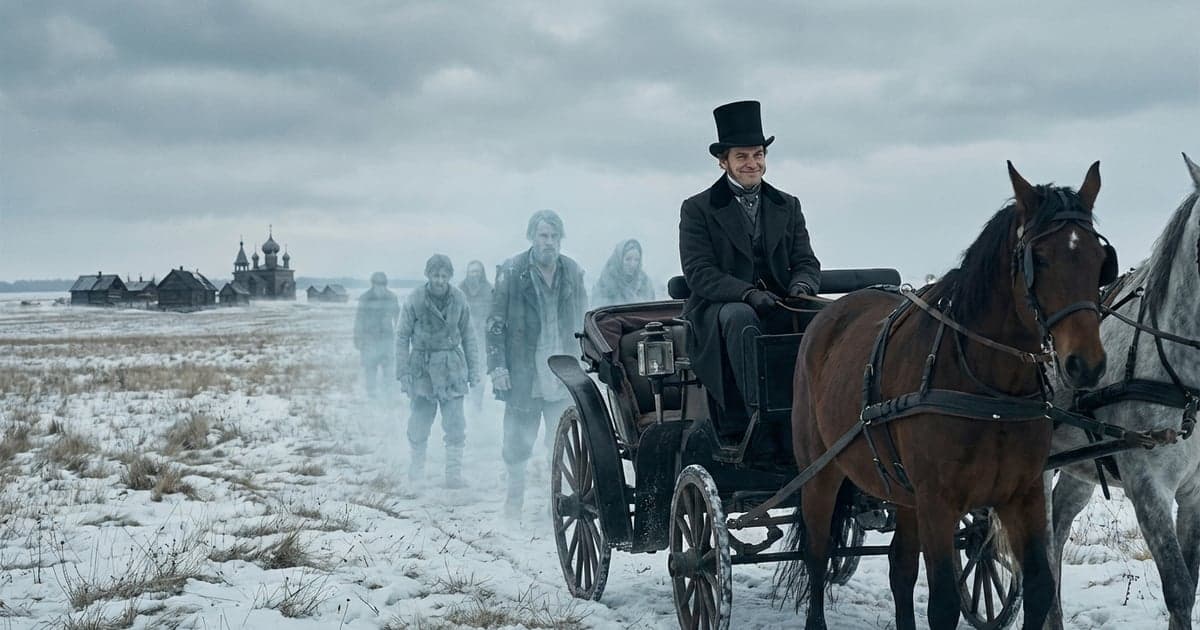
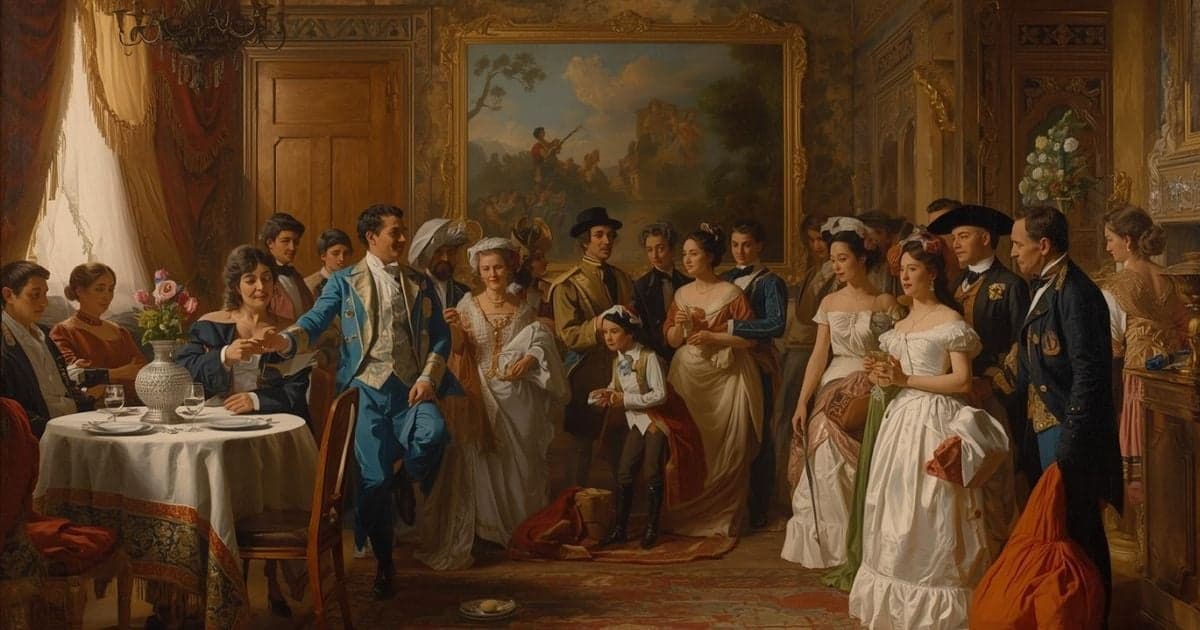
Fleeing Nozdrev's estate, Chichikov trembles like a quail in a net and curses under his breath while Selifan curses Nozdrev for starving the horses. In the chaos Chichikov glimpses a golden-haired girl of sixteen on a balcony, eyes clear as a new-laid egg, then returns to ledgers as though beauty were another distraction. The host is bear-like, heavy and blunt, moving with slow certainty. The dining room contains a grand piano used as a sideboard and sheets that suggest hospitality without refinement. He reports more than thirty-five dead since the revision and fugitives still counted as present. He describes craftsmen with grotesque pride: Probka Stepan the carpenter, Michiev the chest maker, each biography listing father, mother, and trade as if the census were a family album. Sobakevitch calls Manilov a fool who would give away his nose if flattered; he treats souls as merchandise whose only question is rate per head. Where Manilov gave souls away in tears and Korobotchka played confusion until fifteen roubles seemed official, Sobakevitch conducts corruption as trade between equals who despise one another politely. Gogol's point is plain: the scam needs men who know exactly what they sell. The chapter opens with Chichikov still shaking from Nozdrev's pipe-stem and chessboard, reflecting that but for the Superintendent he might have vanished like a bubble on a pool. Sobakevitch's house interior matches the man: heavy furniture, a grand piano piled with dishes, sheets on the table, everything designed to feed rather than impress. He is not shocked; he names a price per soul as if selling cabbage.
He has confided the dead-souls project to the province's loudest gossip; every mile feels borrowed. On the road a six-horse carriage collides with the britchka; harnesses tangle; villagers including Uncles Mitai and Minai swarm the wheels, arguing over rights, repairs, and who may pass first. Sobakevitch's estate looks like a well-built brick bear: solid, square, indifferent to charm. He receives Chichikov with abundant food and almost no compliment. When dead souls are mentioned, Sobakevitch is not surprised; he has heard stranger things from officials he calls scoundrels while selling fraud himself. Chichikov wants the dead; Sobakevitch praises them as though they still swung axes. Then he prices them like turnips, opening with fantasy figures Chichikov must beat down through patient haggling. The negotiation is ugly because it is clear. Chichikov bargains from roubles toward kopecks, pays two and a half roubles each for the dead and a separate sum for runaways, and secures another thick list. Paper and payment end the visit. Chichikov leaves sobered by cost and enlarged by the haul. Sobakevitch returns to bear-like pacing; Selifan drives on; the girl remains a flash above the road. Sobakevitch's blunt greed completes the triad of landowners: sentiment, confusion, and commerce without disguise. Selifan mutters that Nozdrev starved the horses; the road offers no rest. After the collision the girl on the balcony becomes a brief vision of innocence above the business of buying the dead. At table Sobakevitch eats with concentration and speaks in monosyllables until the census is named. Chichikov must talk him down from absurd sums by appealing to friendship and the burden of poll-tax on names that no longer breathe.
Sobakevitch praises Michiev the chest maker and Probka Stepan with biographies listing parents and trades, then assigns each a rouble value as if craftsmanship survived death on the revision lists. He throws in a dead woman or two without embarrassment, inflating the list because volume strengthens mortgage. When ink dries and money changes hands, Chichikov possesses another bundle of names to join Manilov's gift and Korobotchka's fifteen-rouble souls. The total grows toward the hundreds he needs for his Kherson fiction. Sobakevitch watches him leave without sentiment. The road turns toward Plushkin, where decay rather than appetite will set the price. For now the bear-like landowner has shown that in Russia even fraud has a market rate, and the cleverest buyer is the one who lets the seller feel he has won. Sobakevitch eats cabbage soup with the gravity of ritual and answers questions as if each word cost him effort. He calls local tchinovniks scoundrels with relish because honesty about others frees him to cheat openly. Chichikov flatters the craftsmanship of dead men who will never plane another board, then watches the price fall to two and a half roubles as friendship and tax burden are invoked. The scene is comic and cold at once: biographies of carpenters read like eulogies, then numbers like a ledger. When the britchka departs, Chichikov counts gains and losses while Selifan curses the road. Nozdrev's violence still echoes; Plushkin's misery waits ahead. Between them Sobakevitch stands as the normal face of corruption, neither dreamy nor confused, only heavy, hungry, and sure that everything has a price if you hold the line long enough.
Coming Up in Chapter 6
Armed with directions from a colourfully profane peasant, Chichikov sets off to find the legendary miser Plushkin, whose estate promises to be a goldmine of dead souls. But what he discovers there will surpass even his wildest expectations of human degradation..