Wide Reads
Literature MattersLife IndexEducators
Sign in
Where to Begin
The Bhagavad Gita - The Ultimate Questions About Life and Death

Vyasa

The Bhagavad Gita

The Ultimate Questions About Life and Death

Home›Books›The Bhagavad Gita›Chapter 8
Previous
8 of 18
Next

Summary

The Ultimate Questions About Life and Death

The Bhagavad Gita by Vyasa

0:000:00
Listen to Next Chapter

Arjuna asks the big questions we all wonder about: What is the ultimate reality? What happens when we die? How do we find meaning in suffering? Krishna responds with profound but practical wisdom. He explains that whatever you focus on consistently becomes your reality—especially in your final moments. If you spend your life thinking about fear, anger, or material things, that's where your mind goes when you die. But if you cultivate peace, love, and connection to something greater, that becomes your destination. Krishna isn't talking about religion here—he's describing a psychological truth about how our minds work. The chapter reveals that there are cycles within cycles in existence, from personal habits to cosmic patterns. Just as we have daily routines that shape us, the universe has vast cycles of creation and destruction. But beyond all these cycles exists something unchanging—call it love, consciousness, or the divine. The key insight is that you don't have to wait for death to access this eternal dimension. Through consistent practice—whether meditation, prayer, or simply staying present—you can touch this deeper reality now. Krishna emphasizes that this isn't about perfection but about direction. Even small, consistent efforts toward what matters most will carry you forward. The chapter ends with a promise: those who seek this ultimate reality with genuine dedication will find it, and once found, they won't fall back into the cycles of suffering and confusion that trap most people.

Coming Up in Chapter 9

Krishna promises to reveal his deepest secrets—knowledge so powerful it can free you from all suffering. He's about to share the most practical spiritual wisdom of all, something that shines light on every dark corner of human experience.

Share it with friends

Previous ChapterNext Chapter
GO ADS FREE — JOIN US
Original text
complete·710 words
A

rjuna.
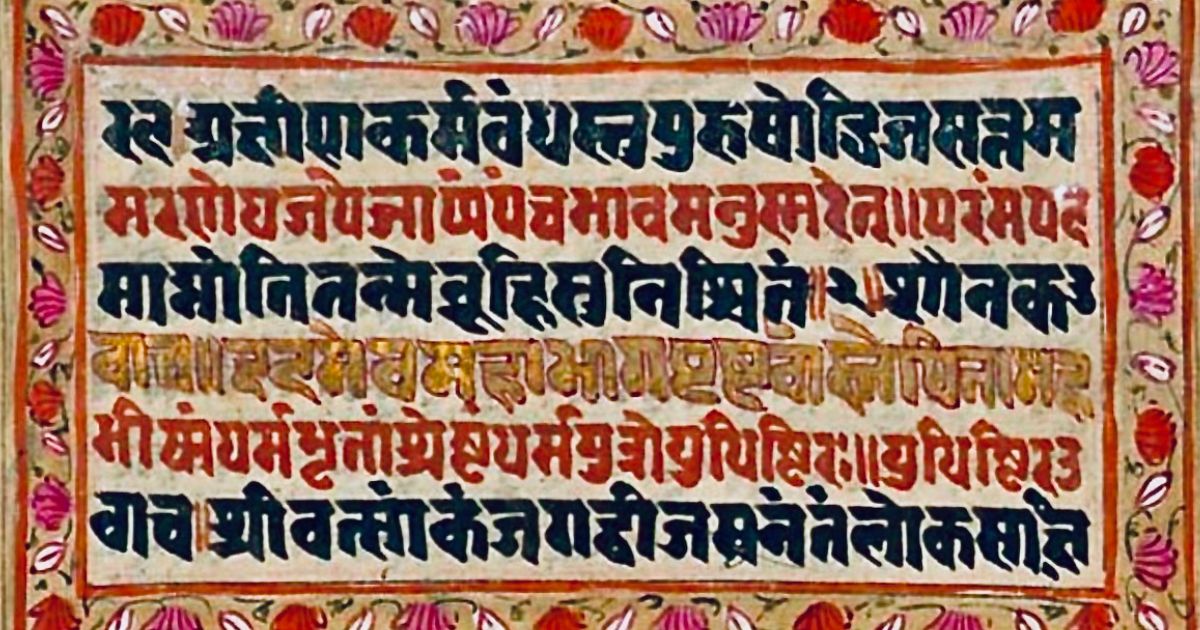
Who is that BRAHMA? What that Soul of Souls,
The ADHYATMAN? What, Thou Best of All!
Thy work, the KARMA? Tell me what it is
Thou namest ADHIBHUTA? What again
Means ADHIDAIVA? Yea, and how it comes
Thou canst be ADHIYAJNA in thy flesh?
Slayer of Madhu! Further, make me know
How good men find thee in the hour of death?

Krishna.
I BRAHMA am! the One Eternal GOD,
And ADHYATMAN is My Being's name,
The Soul of Souls! What goeth forth from Me,
Causing all life to live, is KARMA called:
And, Manifested in divided forms,
I am the ADHIBHUTA, Lord of Lives;
And ADHIDAIVA, Lord of all the Gods,
Because I am PURUSHA, who begets.
And ADHIYAJNA, Lord of Sacrifice,
I--speaking with thee in this body here--
Am, thou embodied one! (for all the shrines
Flame unto Me!)
And, at the hour of death,
He that hath meditated Me alone,
In putting off his flesh, comes forth to Me,
Enters into My Being--doubt thou not!
But, if he meditated otherwise
At hour of death, in putting off the flesh,
He goes to what he looked for, Kunti's Son!
Because the Soul is fashioned to its like.

1 / 5

Master this chapter. Complete your experience

Purchase the complete book to access all chapters and support classic literature

Read Free on GutenbergBuy at Powell'sBuy on Amazon

As an Amazon Associate, we earn a small commission from qualifying purchases at no additional cost to you.

Available in paperback, hardcover, and e-book formats

GO ADS FREE — JOIN US

Why This Matters

Connect literature to life

Skill: Attention Auditing

This chapter teaches how to track and redirect mental habits before they become destructive patterns.

Practice This Today

This week, notice what thoughts dominate your drive home from work—if it's mostly complaints or problems, practice naming one thing that went right before listing what went wrong.

GO ADS FREE — JOIN US

Now let's explore the literary elements.

Key Quotes & Analysis

"And, at the hour of death, He that hath meditated Me alone, In putting off his flesh, comes forth to Me, Enters into My Being--doubt thou not!"

— Krishna

Context: Krishna explains what happens to those who consistently focus on the divine throughout their lives

This isn't about religion but about the power of consistent mental training. Whatever you practice thinking about becomes your default mode, especially under pressure. If you train your mind to find peace and connection, that's where you'll go when life gets difficult.

In Today's Words:

Whatever you consistently focus on throughout your life becomes your automatic response when the pressure's on.

"But, if he meditated otherwise At hour of death, in putting off the flesh, He goes to what he looked for"

— Krishna

Context: Krishna explains that people end up experiencing whatever they've been mentally rehearsing

This reveals a fundamental truth about consciousness - we move toward what we consistently think about. If someone spends their life focused on fear, anger, or material concerns, those patterns dominate their experience even in crisis moments.

In Today's Words:

You end up where your mind has been practicing to go - if you're always thinking about problems, that's what you'll find.

"Because the Soul is fashioned to its like"

— Krishna

Context: Krishna explains why our mental habits determine our destination

This is a profound insight about how identity works. We literally become like what we consistently contemplate. Our souls, our essential selves, are shaped by our repeated thoughts and focuses.

In Today's Words:

You become what you think about most - your mind shapes who you actually are.

"Have Me, then, in thy heart always! and fight!"

— Krishna

Context: Krishna tells Arjuna to maintain spiritual connection while still engaging fully with life's challenges

This perfectly captures the balance between inner peace and outer action. You don't have to withdraw from life to find meaning - you can stay connected to what matters most while still showing up for your responsibilities and battles.

In Today's Words:

Keep what matters most in your heart, but don't use spirituality as an excuse to avoid your real-world responsibilities.

Thematic Threads

Personal Growth

In This Chapter

Krishna teaches that spiritual development happens through consistent daily practice, not dramatic transformation

Development

Builds on earlier chapters about duty and action—now focusing on the internal work that sustains external action

In Your Life:

Your character is built through small daily choices about where you direct your attention and energy

Identity

In This Chapter

The chapter explores what remains constant through all the changes and cycles of existence

Development

Deepens from Arjuna's identity crisis to understanding there's something beyond all social roles and circumstances

In Your Life:

Beneath your job title, family role, and circumstances lies something unchanging that you can access for stability

Class

In This Chapter

Krishna emphasizes that access to ultimate reality isn't limited by social position or education

Development

Continues the theme that wisdom and spiritual growth are available regardless of birth circumstances

In Your Life:

Your background doesn't determine your capacity for growth, wisdom, or connection to something meaningful

Human Relationships

In This Chapter

The focus on what you cultivate mentally directly impacts how you relate to others and the world

Development

Extends relationship wisdom from earlier chapters to show how internal work affects all external connections

In Your Life:

The quality of your relationships reflects the quality of your inner life and what you practice mentally

You now have the context. Time to form your own thoughts.

Discussion Questions

  1. 1

    Krishna says whatever you focus on consistently becomes your reality. What examples does he give of how this works in life and death?

    analysis • surface
  2. 2

    Why does Krishna emphasize that your final moments reveal what you've been practicing all along? What's the connection between daily habits and ultimate outcomes?

    analysis • medium
  3. 3

    Where do you see this pattern of 'attention becomes destination' playing out in your workplace, family, or community?

    application • medium
  4. 4

    If you audited your daily attention like you audit your finances, what would you discover you're 'practicing' mentally? How would you redirect your focus?

    application • deep
  5. 5

    Krishna promises that seeking ultimate reality with dedication leads to freedom from cycles of suffering. What does this teach us about the power of consistent small choices?

    reflection • deep

Critical Thinking Exercise

10 minutes

Audit Your Attention Patterns

Track your mental focus for one day. Every few hours, ask: 'What am I practicing right now?' Notice whether you're rehearsing problems or possibilities, complaints or gratitude, fear or growth. Don't judge—just observe. Then identify one specific area where you want to redirect your attention and plan one small daily action to practice that new focus.

Consider:

  • •Your brain doesn't distinguish between what you practice intentionally and what you practice by default
  • •Complaining about something you can't change is practicing helplessness
  • •Small, consistent redirects of attention create bigger shifts than dramatic one-time efforts

Journaling Prompt

Write about a time when focusing on something negative (a grudge, fear, or problem) actually made your situation worse. Then describe what you want to be 'practicing' mentally going forward and why.

Coming Up Next...

Chapter 9: The Royal Secret of Divine Love

Krishna promises to reveal his deepest secrets—knowledge so powerful it can free you from all suffering. He's about to share the most practical spiritual wisdom of all, something that shines light on every dark corner of human experience.

Continue to Chapter 9
Previous
The Divine in Everything
Contents
Next
The Royal Secret of Divine Love

Continue Exploring

The Bhagavad Gita Study GuideTeaching ResourcesEssential Life IndexBrowse by ThemeAll Books

You Might Also Like

The Book of Job cover

The Book of Job

Anonymous

Explores morality & ethics

The Dhammapada cover

The Dhammapada

Buddha

Explores morality & ethics

Ecclesiastes cover

Ecclesiastes

Anonymous

Explores morality & ethics

The Essays of Montaigne cover

The Essays of Montaigne

Michel de Montaigne

Explores morality & ethics

Browse all 47+ books

Share This Chapter

Know someone who'd enjoy this? Spread the wisdom!

TwitterFacebookLinkedInEmail

Read ad-free with Prestige

Get rid of ads, unlock study guides and downloads, and support free access for everyone.

Subscribe to PrestigeCreate free account
Intelligence Amplifier
Intelligence Amplifier™Powering Wide Reads

Exploring human-AI collaboration through books, essays, and philosophical dialogues. Classic literature transformed into navigational maps for modern life.

2025 Books

→ The Amplified Human Spirit→ The Alarming Rise of Stupidity Amplified→ San Francisco: The AI Capital of the World
Visit intelligenceamplifier.org
hello@widereads.com

WideReads Originals

→ You Are Not Lost→ The Last Chapter First→ The Lit of Love→ Wealth and Poverty→ 10 Paradoxes in the Classics · coming soon
Arvintech
arvintechAmplify your Mind
Visit at arvintech.com

Navigate

  • Home
  • Library
  • Essential Life Index
  • How It Works
  • Subscribe
  • Account
  • About
  • Contact
  • Authors
  • Suggest a Book
  • Landings

Made For You

  • Students
  • Educators
  • Families
  • Readers
  • Literary Analysis
  • Finding Purpose
  • Letting Go
  • Recovering from a Breakup
  • Corruption
  • Gaslighting in the Classics

Newsletter

Weekly insights from the classics. Amplify Your Mind.

Legal

  • Privacy Policy
  • Terms of Service
  • Cookie Policy
  • Accessibility

Why Public Domain?

We focus on public domain classics because these timeless works belong to everyone. No paywalls, no restrictions—just wisdom that has stood the test of centuries, freely accessible to all readers.

Public domain books have shaped humanity's understanding of love, justice, ambition, and the human condition. By amplifying these works, we help preserve and share literature that truly belongs to the world.

A Pilgrimage

Powell's City of Books

Portland, Oregon

If you ever find yourself in Portland, walk to the corner of Burnside and 10th. The building takes up an entire city block. Inside is over a million books, new and used on the same shelf, organized by color-coded rooms with names like the Rose Room and the Pearl Room. You can lose an afternoon. You can lose a weekend. You will find a book you have been looking for your whole life, and three you did not know existed.

It is a pilgrimage. We cannot find a bookstore like it anywhere on earth. If you read the classics, and you ever get the chance, go. It belongs on every reader's bucket list.

Visit powells.com

We are not in any way affiliated with Powell's. We are just a very big fan.

© 2026 Wide Reads™. All Rights Reserved.

Intelligence Amplifier™ and Wide Reads™ are proprietary trademarks of Arvin Lioanag.

Copyright Protection: All original content, analyses, discussion questions, pedagogical frameworks, and methodology are protected by U.S. and international copyright law. Unauthorized reproduction, distribution, web scraping, or use for AI training is strictly prohibited. See our Copyright Notice for details.

Disclaimer: The information provided on this website is for general informational and educational purposes only and does not constitute professional, legal, financial, or technical advice. While we strive to ensure accuracy and relevance, we make no warranties regarding completeness, reliability, or suitability. Any reliance on such information is at your own risk. We are not liable for any losses or damages arising from use of this site. By using this site, you agree to these terms.