Chapter 62
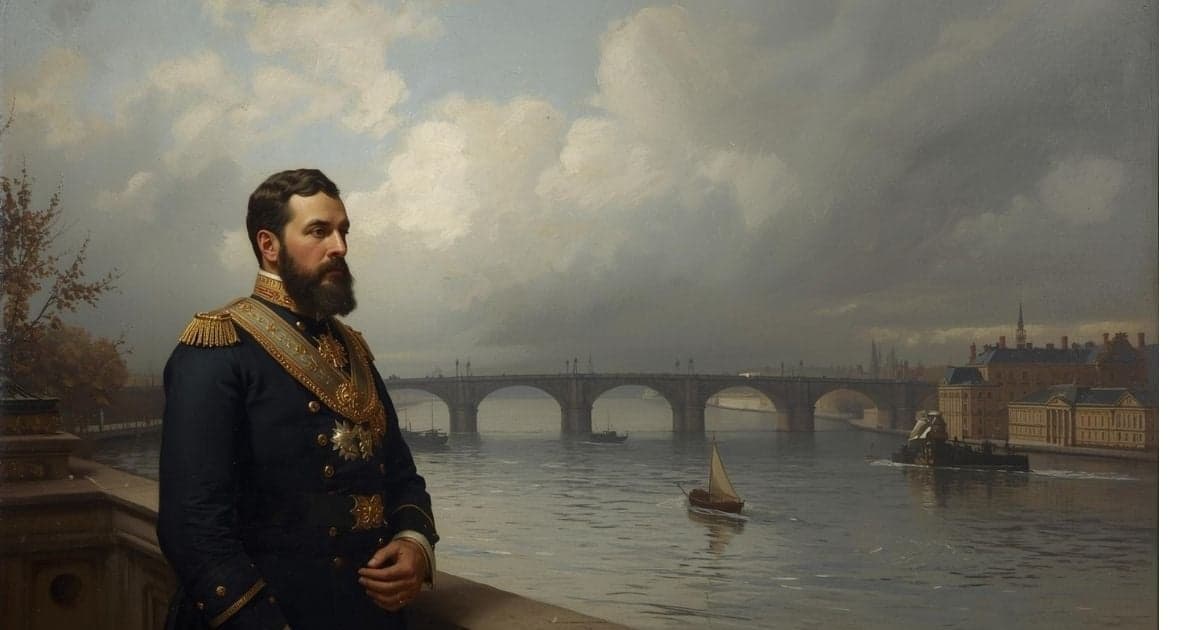
At the pavilion, Anna sees Karenin approaching through the crowd wh...
When Alexey Alexandrovitch reached the race-course, Anna was already sitting in the pavilion beside Betsy, in that pavilion where all the highest society had gathered. She caught sight of her husband in the distance. Two men, her husband and her lover, were the two centers of her existence, and unaided by her external senses she was aware of their nearness. She was aware of her husband approaching a long way off, and she could not help following him in the surging crowd in the midst of which he was moving. She watched his progress towards the pavilion, saw him now…
Public-domain chapter text, formatted for reading.
Master this chapter. Complete your experience
Purchase the complete book to access all chapters and support classic literature
Available in paperback, hardcover, and e-book formats
Now let's explore the literary elements.
Key Quotes & Analysis
"Two men, her husband and her lover, were the two centers of her existence,"
Context: Anna spots Karenin while Vronsky is also present at the race grounds.
The line defines the chapter's geometry: one body in one social place, pulled by two emotional gravities that cannot be reconciled.
In Today's Words:
Her attention is split between two people who each define a different life she cannot merge. Many people know this pressure in smaller forms, such as career versus family loyalty, but here it is literal and embodied. She feels both presences before words begin, which makes every social gesture newly loaded.
"He smiled his chilly smile."
Context: Karenin reaches the pavilion after Betsy calls him to Anna.
A tiny social gesture carries emotional distance. The smile performs correctness while withholding warmth.
In Today's Words:
People can fulfill every social requirement while signaling nothing relationally safe. This small line shows technical politeness without intimacy, a familiar dynamic in strained marriages and leadership cultures. The face gives a compliant cue, but everyone nearby still feels the temperature drop in the room.
"Her face was white and set."
Context: Karenin studies Anna during the active race.
The public crowd falls away and the narrative isolates Anna's fixation, making her emotional allegiance visible without a spoken declaration.
In Today's Words:
Her expression gives away what etiquette is trying to hide. In packed public settings, people still leak commitment through gaze and posture before they say anything explicit. Karenin can ignore rumors, but he cannot ignore where her whole attention lands when fear and desire strip away social control.
"with horror read on it what he did not want to know."
Context: Karenin keeps reexamining Anna's face while falls and injuries mount on the track.
Recognition arrives as involuntary reading: he is not persuaded by argument, he is compelled by evidence he keeps trying to dismiss.
In Today's Words:
He keeps searching for an innocent explanation, then finds the same answer each time. This is a familiar modern pattern in denial: you revisit data hoping it changed, but repeated observation narrows your options. His horror comes from certainty, not from gossip, because he reads it directly in her face.
Thematic Threads
Divided attention as confession
In This Chapter
Anna's gaze and bodily focus remain fixed on Vronsky even while she sits beside her husband in public.
Development
The affair moves from rumor to observable behavioral pattern.
In Your Life:
What you repeatedly monitor under stress often reveals your real allegiance.
Speech as self defense
In This Chapter
Karenin's measured argument about races fills the air while he fights inward distress.
Development
Intellectual control is shown as coping strategy rather than pure conviction.
In Your Life:
You may overexplain policy or facts when naming personal fear feels impossible.
Public space as truth amplifier
In This Chapter
In a crowded pavilion, private emotion becomes readable through facial stillness, breath, and refusal to look away.
Development
External propriety survives, but interpretation by others becomes unavoidable.
In Your Life:
Team rooms and family gatherings can expose tensions that seem manageable in one on one settings.
You now have the context. Time to form your own thoughts.
Discussion Questions
This is not a test. Five prompts guide you through the chapter, from how it opens to how it closes, so you notice context and rhythm rather than facts to memorize. Sit with each question in your own words. When you see "One way to read it," treat it as a starting point, not the only answer.
- 1
What does the line about two centers of Anna's existence establish at the start of the chapter?
analysis • surfaceOne way to read it
It establishes the core tension immediately: Anna is emotionally organized around both husband and lover at once, so every public movement at the races carries relational meaning.
- 2
Why does Karenin keep talking at length about the value of races?
analysis • mediumOne way to read it
His speech functions as control and distraction. The chapter suggests he uses fluent argument to hold himself together while anxiety about Anna and Vronsky rises.
- 3
When have you seen repeated attention patterns reveal more than formal words in a workplace or family setting?
application • mediumOne way to read it
One way to apply this is to watch behavior loops, not claims. People often reveal priorities by what they check, protect, or return to when pressure increases.
- 4
What finally pushes Karenin closer to recognition despite his attempts to explain Anna's reactions away?
application • deepOne way to read it
Repeated visual evidence does. He keeps rereading her white, fixed face and eventually cannot sustain the innocent interpretation he prefers.
- 5
How can someone respond constructively when they realize their public composure and private loyalty are no longer aligned?
reflection • deepOne way to read it
Name the split early and choose one boundary you will enforce before a crisis scene forces disclosure. Deliberate honesty usually gives more dignity than accidental exposure.
Critical Thinking Exercise
Track Your Attention Map
Recall one recent high pressure public setting. Write down where your attention went first, where it kept returning, and what you said your priorities were.
Consider:
- •Compare your stated priorities with your repeated focus points
- •Identify one place where talking more replaced making a concrete decision
- •Draft one boundary that would align future behavior with declared values
Journaling Prompt
Describe a moment when someone understood your real state from your face or focus rather than your words. What made that reading accurate?
Coming Up Next...
Chapter 63
When Vronsky falls, the emotional balance that barely held in the pavilion will break in full public view. After Vronsky falls, the crowd is already horrified, so Anna's first cry does not stand out, but her next movements do. She becomes visibly frantic, asks to leave, ignores Karenin's first offers of his arm, and searches desperately for news..