Chapter 58
After leaving Anna, Vronsky is so agitated he cannot read the time ...
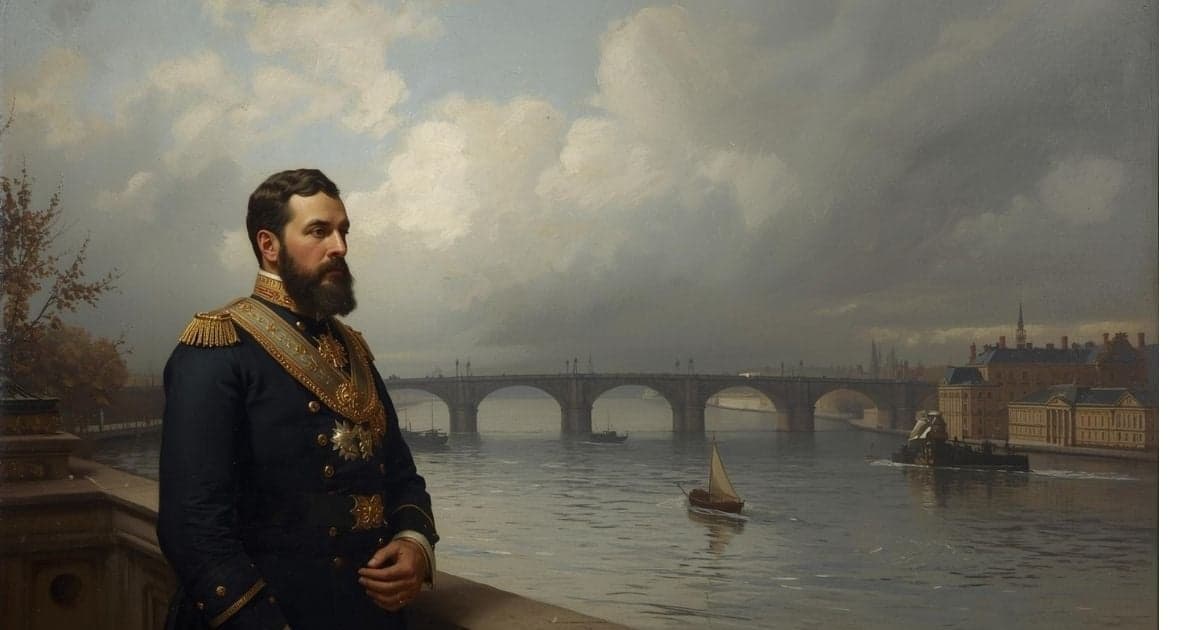
When Vronsky looked at his watch on the Karenins’ balcony, he was so greatly agitated and lost in his thoughts that he saw the figures on the watch’s face, but could not take in what time it was. He came out on to the highroad and walked, picking his way carefully through the mud, to his carriage. He was so completely absorbed in his feeling for Anna, that he did not even think what o’clock it was, and whether he had time to go to Bryansky’s. He had left him, as often happens, only the external faculty of memory, that…
Public-domain chapter text, formatted for reading.
Master this chapter. Complete your experience
Purchase the complete book to access all chapters and support classic literature
Available in paperback, hardcover, and e-book formats
Now let's explore the literary elements.
Key Quotes & Analysis
"It was only after driving nearly five miles that he had sufficiently recovered himself to look at his watch, and realize that it was half-past five, and he was late."
Context: Vronsky stands on the Karenins' balcony immediately after seeing Anna.
Perception functions, interpretation fails; emotion outruns cognition.
In Today's Words:
He can visually register the data point but cannot process it into action, which is a classic overload moment before a major task. Today this is the professional who stares at a dashboard or calendar and still misses timing because private emotional voltage has consumed working attention.
"I beg you not to meddle, and that’s all I have to say."
Context: He replies to Alexander's warning about gossip and service consequences.
Boundary setting becomes a flash of rage under public scrutiny.
In Today's Words:
He treats advice as intrusion because admitting the risk would force him to rebalance priorities before the race. In modern terms, this is the moment a pressured colleague snaps at useful feedback, not because the feedback is wrong, but because accepting it would expose how thin his control currently is.
"Vronsky drew the number seven."
Context: The officers gather in the pavilion for official race assignment.
Formal procedure narrows chaos into fixed sequence and role.
In Today's Words:
The draw pins him to a concrete competitive position, forcing attention back to execution after social and emotional noise. In present-day settings, this resembles receiving your speaking order, exam slot, or launch window: once assigned, fantasy and panic must yield to disciplined preparation and timing.
"He was angry with him for galloping past and exciting his mare."
Context: Mahotin overtakes Vronsky on Gladiator near the starting point.
A rival's move triggers both tactical concern and emotional reactivity.
In Today's Words:
A competitor's aggressive pass does more than threaten rank; it destabilizes your instrument and tests your emotional control in front of everyone. The line captures pre-failure conditions: irritation, divided focus, and an increasingly sensitive system that now responds to every external provocation at exactly the wrong time.
Thematic Threads
Cognitive overload
In This Chapter
Vronsky executes routines while repeatedly losing temporal and emotional clarity.
Development
The narrative shifts from romance secrecy to measurable performance risk.
In Your Life:
You can complete tasks on autopilot and still be less safe when your mind is split across crises.
Public stage pressure
In This Chapter
Every interaction at the pavilion carries rank, gossip, and institutional consequences.
Development
Private choices begin producing official vulnerability in visible spaces.
In Your Life:
High-status environments amplify small missteps because everyone is both observer and messenger.
Human-animal feedback loop
In This Chapter
Frou-Frou trembles, surges, and reacts to rival movement as Vronsky's tension increases.
Development
Horse and rider mirror each other's instability before the race begins.
In Your Life:
Teams and tools often reflect the operator's stress before the operator admits it.
You now have the context. Time to form your own thoughts.
Discussion Questions
This is not a test. Five prompts guide you through the chapter, from how it opens to how it closes, so you notice context and rhythm rather than facts to memorize. Sit with each question in your own words. When you see "One way to read it," treat it as a starting point, not the only answer.
- 1
What early sign shows that Vronsky's mind is not fully available for race-day decisions?
analysis • surfaceOne way to read it
He looks at his watch but cannot understand the time, showing immediate cognitive overload after seeing Anna.
- 2
How does the race environment increase pressure even before Vronsky mounts Frou-Frou?
analysis • mediumOne way to read it
The crowded pavilions, constant acquaintances, and visible court hierarchy keep interrupting him. He cannot isolate himself from social scrutiny long enough to reset.
- 3
Where do you see a modern equivalent of Vronsky's outward composure masking split attention?
application • mediumOne way to read it
One example is a manager who runs a polished meeting while privately handling family crisis and reputational stress. The checklist gets done, but judgment quality can still drop.
- 4
Why is Alexander's warning important, even if Vronsky experiences it as interference?
application • deepOne way to read it
It names institutional consequences at the exact moment Vronsky is treating everything as personal. Ignoring such warnings can convert private risk into career damage.
- 5
What does Mahotin passing on Gladiator reveal about Vronsky's readiness seconds before the start?
reflection • deepOne way to read it
His anger and Frou-Frou's agitation suggest readiness is fragile, not stable. The moment exposes how little reserve he has left for unexpected disruption.
Critical Thinking Exercise
Pre-Performance Signal Check
Think of one upcoming high-stakes event. List five early warning signs that your attention is splitting, then design a 3-step reset you can run in under three minutes before you begin.
Consider:
- •Include one cognitive sign, one emotional sign, and one body sign
- •Define what gets deferred until after the event and where you will park it
- •Choose one phrase you can repeat to return to the primary channel
Journaling Prompt
Recall a time you made a preventable mistake while appearing calm. Which pre-failure signal did you ignore, and what would your reset protocol be now?
Coming Up Next...
Chapter 59
Seventeen riders launch onto a brutal course of fences, ditches, and water, where one mistake in timing or control turns rivalry into disaster. Seventeen officers line up for a brutal steeplechase over stream, barrier, ditch, slope, and Irish barricade while the court watches from the pavilion. Frou-Frou loses the first instant from nerves, then Vronsky settles her, threads past early danger at the stream..