Wide Reads
Literature MattersLife IndexEducators
Sign in
Where to Begin
Anna Karenina - Chapter 133

Leo Tolstoy

Anna Karenina

Chapter 133

Home›Books›Anna Karenina›Chapter 133
Previous
133 of 239
Next

Summary

Chapter 133

Anna Karenina by Leo Tolstoy

0:000:00
Listen to Next Chapter

The old palazzo - carved ceilings, frescoes, mosaic floors, yellow curtains, vases, fireplaces, gloomy rooms hung with pictures - confirms Vronsky's 'agreeable illusion that he was not so much a Russian country gentleman, a retired army officer, as an enlightened amateur and patron of the arts, himself a modest artist who had renounced the world for the woman he loved.' The pose is successful. Through Golenishtchev he meets interesting people. He paints with an Italian professor, studies medieval life, even wears medieval hat and cloak 'which was extremely becoming to him.' Golenishtchev visits. Vronsky shows him a gazette about Mihailov, a Russian artist in town, finishing a talked-about picture just bought. Golenishtchev's seen it: 'He's not without talent, but it's all in a wrong direction' - the Ivanov-Strauss-Renan attitude to Christ. The subject is Christ before Pilate, 'Christ represented as a Jew with all the realism of the new school.' Golenishtchev launches into theory. Vronsky asks if Mihailov is in poverty. Golenishtchev says he's a remarkable portrait-painter but doesn't care about portraits anymore. Vronsky suggests commissioning Anna's portrait. 'Why mine?' Anna says. 'After yours I don't want another. Better have Annie's.' She looks at the handsome Italian nurse carrying the baby. This nurse, whom Vronsky paints, is 'the one hidden grief in Anna's life' - she fears jealousy. Golenishtchev describes Mihailov as 'queer,' uncouth, atheist, self-educated from magazines. Anna interrupts his long discourse: 'Let's go and see him!' They decide to visit his studio in the remote suburb.

Coming Up in Chapter 134

Levin's desperate attempts to find peace through work are about to be interrupted by an unexpected visitor who will force him to confront the very questions he's been trying to escape. Sometimes the answers we seek find us when we least expect them.

Share it with friends

Previous ChapterNext Chapter
GO ADS FREE — JOIN US
Original text
complete·1,175 words
T

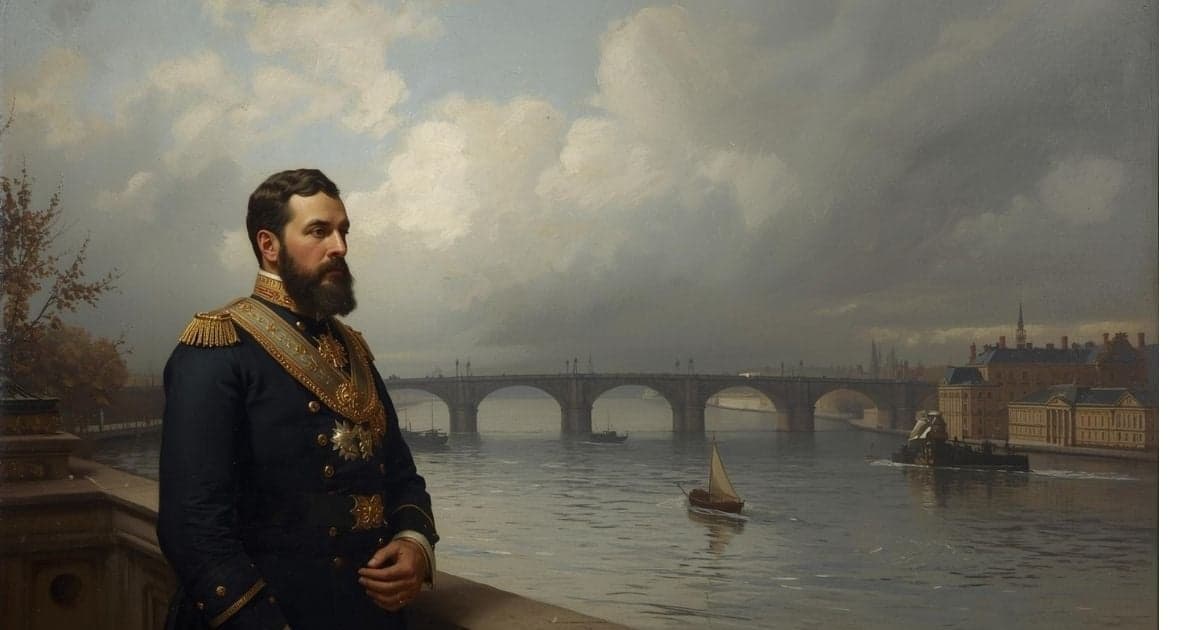
he old neglected palazzo, with its lofty carved ceilings and frescoes on the walls, with its floors of mosaic, with its heavy yellow stuff curtains on the windows, with its vases on pedestals, and its open fireplaces, its carved doors and gloomy reception rooms, hung with pictures—this palazzo did much, by its very appearance after they had moved into it, to confirm in Vronsky the agreeable illusion that he was not so much a Russian country gentleman, a retired army officer, as an enlightened amateur and patron of the arts, himself a modest artist who had renounced the world, his connections, and his ambition for the sake of the woman he loved.

The pose chosen by Vronsky with their removal into the palazzo was completely successful, and having, through Golenishtchev, made acquaintance with a few interesting people, for a time he was satisfied. He painted studies from nature under the guidance of an Italian professor of painting, and studied mediæval Italian life. Mediæval Italian life so fascinated Vronsky that he even wore a hat and flung a cloak over his shoulder in the mediæval style, which, indeed, was extremely becoming to him.

1 / 6

Master this chapter. Complete your experience

Purchase the complete book to access all chapters and support classic literature

Read Free on GutenbergBuy at Powell'sBuy on Amazon

As an Amazon Associate, we earn a small commission from qualifying purchases at no additional cost to you.

Available in paperback, hardcover, and e-book formats

GO ADS FREE — JOIN US

Why This Matters

Connect literature to life

Skill: Distinguishing Motion from Progress

This chapter teaches how to recognize when we're using activity to avoid dealing with deeper problems that require reflection.

Practice This Today

This week, notice when you feel compelled to stay busy during emotional stress - ask yourself what you might be avoiding.

GO ADS FREE — JOIN US

Now let's explore the literary elements.

Key Quotes & Analysis

"The harder he worked, the more he felt that his soul was growing lighter"

— Narrator

Context: As Levin pushes himself through grueling farm work

This shows the temporary relief that physical exhaustion can provide from mental anguish. However, the word 'felt' suggests this lightness might be an illusion rather than genuine healing.

In Today's Words:

The more he wore himself out, the better he felt - at least for a while.

"But why live? What was the point of all this effort?"

— Levin's internal thoughts

Context: Even while engaged in satisfying physical work, these questions persist

This reveals that no amount of busyness can silence fundamental existential questions. The contrast between meaningful work and meaningless existence creates Levin's central conflict.

In Today's Words:

But seriously, what's the point of any of this?

"His body moved through the familiar motions while his mind raced in circles"

— Narrator

Context: Describing Levin's state during the farm work

This captures the disconnect between physical activity and mental peace. It shows how we can be productive on the outside while struggling internally.

In Today's Words:

He went through the motions, but his brain wouldn't shut up.

Thematic Threads

Avoidance

In This Chapter

Levin uses physical labor to escape his spiritual crisis and existential questioning

Development

Evolution from earlier internal struggles - now he's actively trying to outrun his thoughts

In Your Life:

You might recognize this when you stay busy to avoid difficult conversations or decisions

Class

In This Chapter

Levin works alongside peasants, temporarily collapsing class distinctions through shared labor

Development

Continues his pattern of seeking authenticity through connection with working people

In Your Life:

You might find that crisis strips away social pretenses and reveals what really matters

Identity

In This Chapter

Levin's identity crisis deepens as physical work fails to provide the meaning he seeks

Development

His search for purpose becomes more desperate and unfocused

In Your Life:

You might experience this when external achievements don't fill internal emptiness

Personal Growth

In This Chapter

Levin learns that growth can't be forced through willpower and activity alone

Development

A crucial realization that his spiritual journey requires different tools

In Your Life:

You might discover that some problems need patience and reflection, not just effort

Desperation

In This Chapter

Levin's increasingly frantic work pace reveals his growing desperation for answers

Development

His crisis intensifies as surface solutions fail to address root causes

In Your Life:

You might notice this pattern when quick fixes stop working and problems feel overwhelming

You now have the context. Time to form your own thoughts.

Discussion Questions

  1. 1

    What does Levin do to try to escape his mental torment, and does it work?

    analysis • surface
  2. 2

    Why do you think Levin believes physical labor will solve his spiritual crisis?

    analysis • medium
  3. 3

    When have you seen someone (or yourself) try to work through emotional problems by staying extremely busy?

    application • medium
  4. 4

    If you were Levin's friend, what advice would you give him about dealing with his existential questions?

    application • deep
  5. 5

    What does this chapter reveal about the difference between physical problems and spiritual or emotional ones?

    reflection • deep

Critical Thinking Exercise

10 minutes

Map Your Own Exhaustion Traps

Think about the last time you felt overwhelmed or emotionally stuck. Write down what you did to cope - did you work longer hours, clean obsessively, binge-watch shows, or throw yourself into projects? Then identify what deeper issue you might have been avoiding. This isn't about judgment, but about recognizing patterns.

Consider:

  • •Notice activities that feel productive but leave you emotionally drained
  • •Consider whether your 'solutions' actually address the root problem
  • •Think about what would happen if you stopped the busy work for a day

Journaling Prompt

Write about a time when you realized that staying busy was actually preventing you from solving a real problem. What was the deeper issue you were avoiding, and what helped you finally face it?

Coming Up Next...

Chapter 134

Levin's desperate attempts to find peace through work are about to be interrupted by an unexpected visitor who will force him to confront the very questions he's been trying to escape. Sometimes the answers we seek find us when we least expect them.

Continue to Chapter 134
Previous
Chapter 132
Contents
Next
Chapter 134

Continue Exploring

Anna Karenina Study GuideTeaching ResourcesEssential Life IndexBrowse by ThemeAll Books
Love & RelationshipsSocial Class & StatusMoral Dilemmas & Ethics

You Might Also Like

War and Peace cover

War and Peace

Leo Tolstoy

Also by Leo Tolstoy

The Idiot cover

The Idiot

Fyodor Dostoevsky

Explores love & romance

Wuthering Heights cover

Wuthering Heights

Emily Brontë

Explores love & romance

Les Misérables: Essential Edition cover

Les Misérables: Essential Edition

Victor Hugo

Explores morality & ethics

Browse all 47+ books

Share This Chapter

Know someone who'd enjoy this? Spread the wisdom!

TwitterFacebookLinkedInEmail

Read ad-free with Prestige

Get rid of ads, unlock study guides and downloads, and support free access for everyone.

Subscribe to PrestigeCreate free account
Intelligence Amplifier
Intelligence Amplifier™Powering Wide Reads

Exploring human-AI collaboration through books, essays, and philosophical dialogues. Classic literature transformed into navigational maps for modern life.

2025 Books

→ The Amplified Human Spirit→ The Alarming Rise of Stupidity Amplified→ San Francisco: The AI Capital of the World
Visit intelligenceamplifier.org
hello@widereads.com

WideReads Originals

→ You Are Not Lost→ The Last Chapter First→ The Lit of Love→ Wealth and Poverty→ 10 Paradoxes in the Classics · coming soon
Arvintech
arvintechAmplify your Mind
Visit at arvintech.com

Navigate

  • Home
  • Library
  • Essential Life Index
  • How It Works
  • Subscribe
  • Account
  • About
  • Contact
  • Authors
  • Suggest a Book
  • Landings

Made For You

  • Students
  • Educators
  • Families
  • Readers
  • Literary Analysis
  • Finding Purpose
  • Letting Go
  • Recovering from a Breakup
  • Corruption
  • Gaslighting in the Classics

Newsletter

Weekly insights from the classics. Amplify Your Mind.

Legal

  • Privacy Policy
  • Terms of Service
  • Cookie Policy
  • Accessibility

Why Public Domain?

We focus on public domain classics because these timeless works belong to everyone. No paywalls, no restrictions—just wisdom that has stood the test of centuries, freely accessible to all readers.

Public domain books have shaped humanity's understanding of love, justice, ambition, and the human condition. By amplifying these works, we help preserve and share literature that truly belongs to the world.

A Pilgrimage

Powell's City of Books

Portland, Oregon

If you ever find yourself in Portland, walk to the corner of Burnside and 10th. The building takes up an entire city block. Inside is over a million books, new and used on the same shelf, organized by color-coded rooms with names like the Rose Room and the Pearl Room. You can lose an afternoon. You can lose a weekend. You will find a book you have been looking for your whole life, and three you did not know existed.

It is a pilgrimage. We cannot find a bookstore like it anywhere on earth. If you read the classics, and you ever get the chance, go. It belongs on every reader's bucket list.

Visit powells.com

We are not in any way affiliated with Powell's. We are just a very big fan.

© 2026 Wide Reads™. All Rights Reserved.

Intelligence Amplifier™ and Wide Reads™ are proprietary trademarks of Arvin Lioanag.

Copyright Protection: All original content, analyses, discussion questions, pedagogical frameworks, and methodology are protected by U.S. and international copyright law. Unauthorized reproduction, distribution, web scraping, or use for AI training is strictly prohibited. See our Copyright Notice for details.

Disclaimer: The information provided on this website is for general informational and educational purposes only and does not constitute professional, legal, financial, or technical advice. While we strive to ensure accuracy and relevance, we make no warranties regarding completeness, reliability, or suitability. Any reliance on such information is at your own risk. We are not liable for any losses or damages arising from use of this site. By using this site, you agree to these terms.