
The Reframe · No. 31
Hamlet is not a story about delay. Shakespeare never wrote one.
Most readers arrive with the delay already diagnosed: a prince who thinks instead of acts, and a speech that makes indecision the theme. That is the cliché. It is not what William Shakespeare put on the stage.
Shakespeare staged Hamlet around 1601, after Julius Caesar and before Othello. He took an old revenge plot and refused the clean strike. The ghost says remember me. The prince tests the charge with a play, leaves a kneeling king alive, and stabs the listener behind the curtain.
The reframe is not that Hamlet never hesitates. He does. The reframe is that hesitation is not the verdict the play hands you.
What most readers assume
“A tragedy of indecision: the prince cannot make up his mind, the famous speech is the theme, and delay is the flaw the play exists to diagnose.”
The speech · the pause · “I know this one”
What Shakespeare actually stages
Not a diagnosis of delay. A play that makes the king rise. A prayer he will not cut short. A curtain. A story left with Horatio. A prince who marched for almost nothing, and inherits the room.
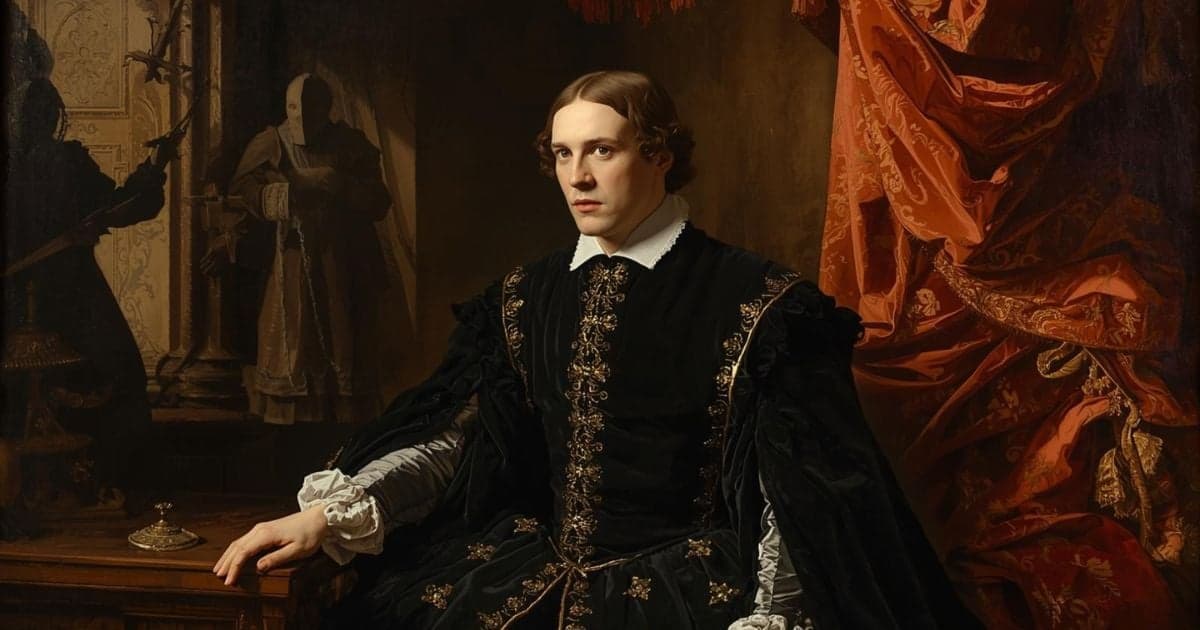
Hamlet · William Shakespeare · c. 1601
The popular summary sells a prince who cannot decide. The play sells a kneeling king, a curtain, and a survivor told to tell the story.
The speech is a trap
In the ghost's charge, poison went in the sleeping king's ear. The court was told a serpent did it. The ghost forbids harm to Gertrude and says remember me. Hamlet puts on an antic disposition so he can test the court. That is not a man who has no plan. It is a man who will not strike on one witness.
The famous speech comes later, in a room already set. Claudius and Polonius are hidden. Ophelia is there to return his gifts. Hamlet weighs suffering against the fear of what comes after death. When he sees the setup, he turns on her and tells her to get to a nunnery. The popular summary lifts the speech out of the trap and calls it the theme.
 Read the speech
The guide · Chapter 9, Hamlet
The lines about being and not being are spoken where the king can hear. Ophelia is the bait. The speech is not a private lecture on indecision.
Wide Reads chapter guide. Shakespeare's verse stays in the book.The play proves the king
In The Mousetrap, Hamlet asks Horatio to watch the king's face. The scene mirrors a murder in a garden. When the poison goes in the sleeper's ear, Claudius rises. The test worked. A prince who cannot decide does not build a trap and then read the result.
The prayer is a refusal
Claudius is alone in the next scene. He admits the offence smells to heaven. He tries to pray and finds he cannot repent while he still holds the crown, the queen, and the fruits of the murder. Hamlet enters, sees him kneeling, and will not strike. A death at prayer might send the murderer to heaven. He wants a worse moment.
After Hamlet leaves, Claudius says his words flew up and his thoughts stayed below. The popular summary calls this the perfect moment that a hesitant man misses. The play gives the pause a reason, and then shows the king was not repenting.
Read the prayerThe guide · Chapter 11, Hamlet
A kneeling king who cannot let go of what the murder bought. A prince who will not send that soul to heaven. The pause has a sentence attached to it.
Wide Reads chapter guide. No long quotation from the play is reproduced here.The curtain is the blow
Polonius hides behind the arras to hear Hamlet with Gertrude. She cries out. The listener stirs. In the chamber Hamlet stabs through the tapestry, hoping the man is the king. The strike the prayer postponed arrives, and it hits the wrong body. That is not more thinking. That is a blow.
The eggshell and the room
In the march to Poland, Hamlet learns the army will fight for ground that would not rent for five ducats. He shames his own scruple and says his thoughts will be bloody. The popular summary stops there and files the whole play under that shame. The play does not stop.
In the last scene the duel is already poisoned: the cup, the unbated foil. Gertrude drinks what was meant for Hamlet. Laertes wounds him. They swap rapiers. Hamlet stabs Claudius and forces the drink on him. Dying, he asks Horatio to stay and tell the story. Fortinbras, the prince who could march for an eggshell of honour, orders Hamlet borne like a soldier and takes a kingdom of corpses.
That is the reframe. Same ghost, same speech, same twenty-one scenes. Different verdict. Shakespeare is not asking you to diagnose a man who could not choose. He is counting what a revenge charge costs once conscience multiplies every strike, and leaving the story with the one friend who was never recruited as a spy.
Bring this to the table
The popular summary ends on a prince who cannot decide. If he leaves the kneeling king alive and kills the man behind the curtain, what did the delay actually protect?
Common Questions
Search questions this reframe answers: the delay summary, the prayer, the speech, and the man behind the curtain.
Is Hamlet actually a story about delay?
No. Hamlet does hesitate, and beside Fortinbras's army he accuses his own scruple of thinking too long. That is not the verdict. He has already tested the ghost with a play, left Claudius kneeling because a prayer might send the murderer to heaven, and stabbed Polonius through the curtain while hoping it was the king. The last scene is a rigged duel, and a story handed to Horatio. Delay is in the play. It is not the play.
Why doesn't Hamlet kill Claudius when he is praying?
Claudius admits his offence smells to heaven and tries to pray, then finds he cannot repent while he still holds the crown, the queen, and the fruits of the murder. Hamlet sees him kneeling and will not strike, because killing him at prayer might send his soul to heaven. After Hamlet leaves, Claudius says his words flew up and his thoughts stayed below. The moment the popular summary calls indecision is a refusal with a stated reason, and the king was not repenting.
What does "To be, or not to be" do in Hamlet?
Hamlet weighs suffering against the fear of what comes after death, while Claudius and Polonius are hidden so they can hear him. Ophelia is there to return his gifts. The speech is not a private diagnosis of a man who cannot choose. It is spoken inside a trap. When he sees the setup, he turns on Ophelia and tells her to get to a nunnery.
Why does Hamlet kill Polonius?
Polonius hides behind the arras to listen while Hamlet speaks with Gertrude. Gertrude cries out. Polonius stirs. Hamlet stabs through the tapestry, hoping the man behind it is the king. It is the blow the prayer scene postponed, and it hits the listener. The popular summary files this as more wreckage from delay. The scene is a strike that finally comes, aimed at the wrong body.
What is Hamlet really about?
An old revenge charge that will not stay clean. The ghost says remember me and forbids harm to Gertrude. Hamlet puts on an antic disposition, stages a play that makes Claudius rise, then will not kill a kneeling man. Friends are recruited as spies. Ophelia sings and drowns. The last request is the same charge, given to Horatio, while Fortinbras, who marched for ground that would not rent for five ducats, inherits the room.
Why do people think Hamlet cannot decide?
The speech about being and not being, and the soliloquy in which he shames himself beside Fortinbras's army, are easy to lift out of the traps around them. The popular summary stops on the thinking and calls it the theme. The play keeps the thinking. It also keeps the play within the play, the prayer, the curtain, and the poisoned duel.
Read what Shakespeare actually staged.
Hamlet is twenty-one scenes on a ghost's charge, a play within the play, and a duel already poisoned. We guide it scene by scene in plain language. The original verse stays in the book you buy. The first scene's audio is free. The rest is $2.99 a month, every book on the shelf.