
The Reframe · No. 23
Gulliver's Travels is not a children's adventure. Swift wrote what sovereignty sounds like when someone larger holds the pen.
Most readers arrive remembering Lilliput: tiny people, tall jokes, a story trimmed for school editions. That is the cliché. It is not what Jonathan Swift put on the page.
Swift published Gulliver's Travels in 1726 as four voyages, each one a mirror held up to a different lie empires tell about themselves. The first mirror is not whimsy. It is a man waking tied to the ground, fed by a court that calls him guest and weapon in the same fortnight.
The reframe is not that Lilliput is funny. It is that Swift treats scale as politics. When you are the giant, their wars look petty until someone asks you to end them by force — and still calls the result peace.
What most readers assume
“A whimsical adventure about a sailor who meets tiny people and giants — a funny satire for children and light reading.”
Abridged editions · film posters · “travel fantasy” shelves
What Swift actually stages
A foreign giant wakes chained, offered liberty if he serves one emperor's wars, while ministers explain egg edicts, heel factions, and why the written treaty still says liberty.
Gulliver's Travels · Jonathan Swift · 1726
The popular summary keeps the tiny people. Swift keeps the treaty language — liberty on the page, a giant in the harbour asked to finish someone else's war.
The beach is a negotiation, not a fairy tale
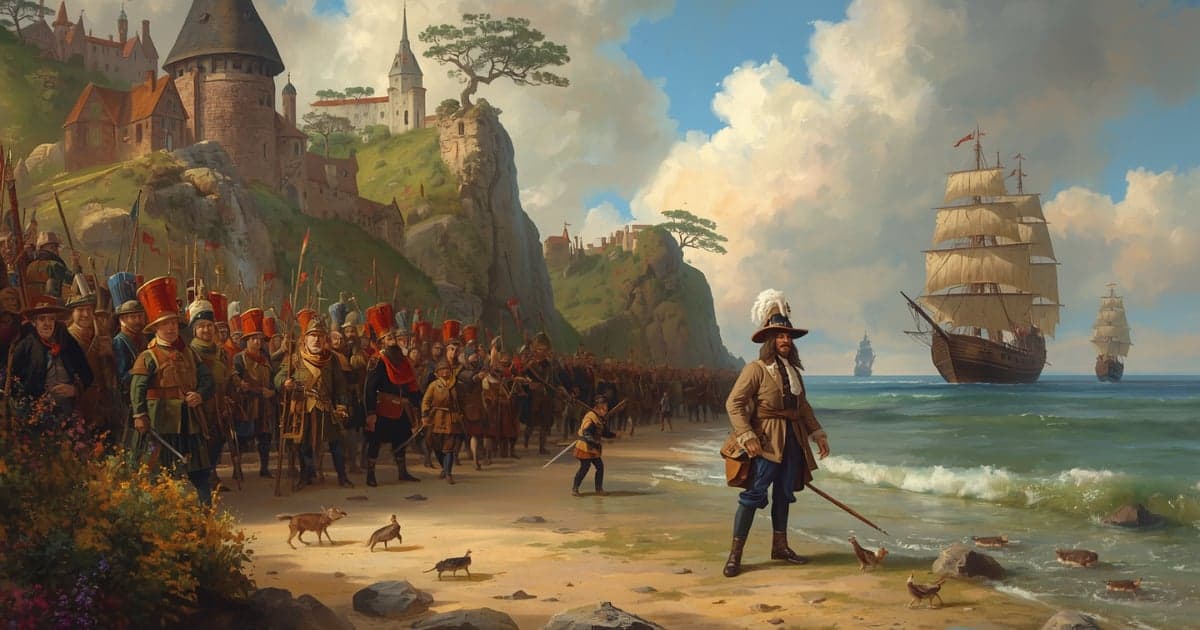
Gulliver does not stroll into Lilliput as a tourist. He wakes with his arms and legs pinned, hair-thin ropes across his body, hundreds of tiny soldiers marching on his chest. The emperor feeds him, teaches him the language, and grants conditional liberty: stay inside certain bounds, help when asked, do not trample the capital. In Chapter I, hospitality and captivity arrive in the same breath. Swift is already asking who sets the terms when one party can crush the other and chooses not to, yet.
 Read the chapter
The source · Chapter I, Gulliver's Travels
“I attempted to rise, but was not able to stir: for as I happened to lie on my back, I found my arms and legs were strongly fastened on each side to the ground; and my hair, which was long and thick, tied down in the same manner.”Jonathan Swift, Gulliver's Travels, Chapter I
Reldresal explains the war; Gulliver supplies the navy
Once Gulliver can walk Mildendo, the court sends Reldresal, principal secretary for private affairs, to sit in his palm and deliver state news. The empire is split between high-heel and low-heel factions; the heir's mismatched heels make both sides nervous. Blefuscu is arming a fleet. And the casus belli, in Chapter IV, is which end of an egg may be broken: six rebellions, eleven thousand dead rather than comply, whole libraries of pamphlets, exiles sheltered by the rival emperor. Swift does not ask you to laugh and move on. He asks you to notice how quickly a domestic injury becomes doctrine, and how quickly doctrine becomes someone else's fleet problem.
Gulliver answers as every useful foreign asset answers: he will not take sides in heel politics, but he will defend the emperor's person and state. Days later he wades into the channel, attaches a cable to Blefuscu's ships, and drags the entire enemy fleet home through the harbour mouth in Chapter V. The court celebrates. The emperor signs decrees of gratitude. Nobody rewrites the edict about eggs. The giant has done what the navy could not, and the story still calls itself liberty.
The flag stays up; the harbour learns who commands
That sentence is why this book keeps showing up when diplomats argue in one language and strategists argue in another. Lilliput never sells itself to Gulliver. It hires him. The treaty vocabulary stays local; the force that ends the war is imported. Swift will run the same joke through Brobdingnag, Laputa, and the Houyhnhnms, but Lilliput is the clearest lesson: read the agreement for who may move the fleet after the signing, not only for who keeps the title on the palace wall.
Later, in the third voyage, Gulliver meets the dead and learns how public chronicles crown cowards. That turn belongs to the Recognition pillar on Wide Reads (Chapter XXIV). This installment stays with the first voyage because the misread is still the travel story: tiny people, harmless fun. Swift wrote the room where sovereignty is spoken by ministers and enforced by a guest who cannot fit through the city gate without taking the roof off.
Bring this to the table
When a deal keeps the sovereignty line and adds a security line, ask who just became the giant in the harbour — and whether the written treaty describes what they are allowed to drag home.
Common Questions
Search questions about Gulliver's Travels — children's adventure vs Swift's treaty politics.
Is Gulliver's Travels actually a children's book?
Adaptations sell it that way; Swift did not write it for that shelf. The first voyage alone includes a man drugged and chained, court factions measured by shoe heels, a war over egg-breaking that killed thousands, and a foreign visitor asked to seize an enemy fleet by main force. The humour is real. So is the political anatomy underneath it.
What is the war between Lilliput and Blefuscu really about?
On the surface, which end of an egg may be broken — an edict issued after a prince cut his finger. In practice, a thirty-six-month naval war, exiles, religious pamphlets, and Blefuscu arming a fleet to invade. Swift is not mocking eggs. He is mocking how states turn a private injury into public doctrine and then ask everyone else to die for the wording.
Why does Gulliver help Lilliput against Blefuscu?
Reldresal asks him to defend the emperor's person and state while refusing to take sides in domestic heel factions. Gulliver agrees, then wades into the channel and drags Blefuscu's entire fleet home with a cable. He is offered liberty and treated as a national asset. Swift stages the gap between guest language and weapon work in the same fortnight.
What is Gulliver's Travels really about?
Scale as moral test. Each voyage makes Gulliver the wrong size for the society he enters, so their proudest customs look absurd from his angle — and his look absurd from theirs. Lilliput teaches treaty language and borrowed force. Later books turn the mirror: Brobdingnag's king judges European war, the Academy of Lagado worships useless projects, the Houyhnhnms reject human vanity. The reframe is not one joke repeated. It is four lessons on who gets to name what is civilised.
Why do the Reframe and Recognition hubs cite chapter 24?
In the third voyage Gulliver meets spirits of the dead and hears how public chronicles crown cowards and bury the officers history forgot. That is a different Reframe (official history) from Lilliput's treaties, but the same Swift move: the document everyone quotes is not the account that matches the room. Wide Reads links chapter 24 on the pillar pages; this installment centres the first voyage's politics of scale and alliance.
Read what Swift actually staged.
Gulliver's Travels is thirty-nine chapters across four voyages — scale as moral test, not a single joke about height. We narrate it chapter by chapter in plain language so the turn lands. First chapter's audio is free. The rest is $2.99 a month, every book on the shelf.