
The Recognition · No. 6
Aeneas got the founding. Dido already had a city.
Most readers arrive naming Aeneas as the founder of Rome, and mean it as the man the gods chose. That is the cliché. It is not who Virgil put on the page.
Dido has already built Carthage when he washes ashore. A helmsman dies on a coast that will keep his name. The last name spoken over the killing is not Rome. It is Pallas.
The recognition is not that Aeneas refused the task. He did not. The recognition is that we named the founder and forgot who the city cost.
Who the summary names
“A founding epic about the dutiful hero the gods chose, and a name, Aeneas, that needs no footnotes.”
Aeneas · the gods · the founding
Who the poem names
A queen who already had a city. A helmsman whose cape keeps his name. A shade that will not speak. A boy whose belt is the last name spoken.
The Aeneid · Virgil · 19 BC
The popular summary names the founder. The poem names the queen who already had a city, and the boy whose belt ends the pause.
She already had the city
In Book 4, Dido is not waiting to be founded. She has raised Carthage from exile. She shows Aeneas the walls, the wealth, the rising town. Then a storm on the hunt puts them in one cave. She calls it marriage. He does not. The walls slow while she loves him. Jupiter sends Mercury because a city that already works is keeping him from a city that does not exist yet.
He fits the ships in secret and says he never claimed a husband's name. She dies on a pyre she told her sister was a spell. The founding story files her as the delay. The poem files her as the person who had already done the thing he is still being sent to do.
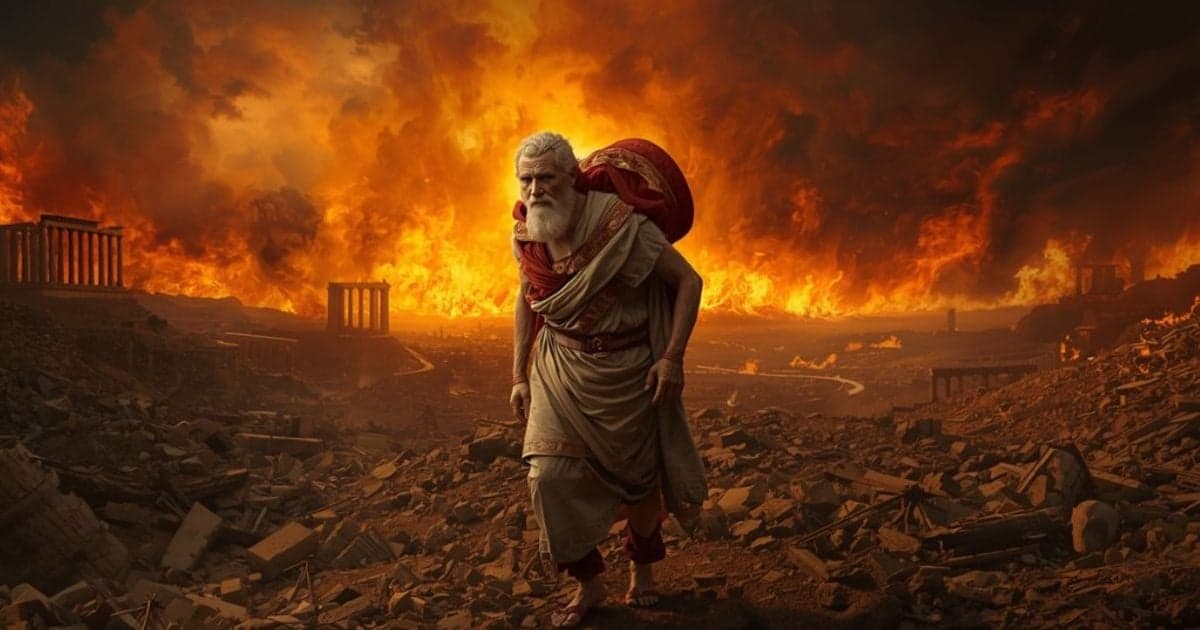 Read who built the city
The guide · Book 4, The Aeneid
Carthage is already standing. The name the ages keep is the guest who leaves it.
Wide Reads chapter guide. Virgil's verse stays in the book.The cape keeps his name
In the underworld, Palinurus tells how he fell from the helm and was killed on a coast. The Sibyl will not ferry him. She tells him the place will bear his name. That is the poem's own theory of credit: a man can be left unburied, and the map can still be forced to say who he was.
A little further on, Dido stands among lovers, fresh from the wound. Aeneas weeps and says the gods forced him. She will not look at him. She turns to Sichaeus. The explanation is offered. The person who built the city does not accept the founder's account of her.
The last name is the boy
In the last duel, Turnus is on the ground. He asks Aeneas to remember he once had a father, to pity old Daunus, or at least to send the body home. Aeneas holds the blow. Then he sees the golden belt Turnus took from Pallas. He names Pallas as the one who gives the stroke. The poem stops on that name. Not on a finished city. Not on the man the ages will call the founder.
That is the recognition. Same twelve books, same assigned task. Different ledger. Virgil is not asking you to forget Aeneas. He is asking you to see who the founding name leaves off the plaque.
Bring this to the table
The popular summary ends on the man who founds Rome. If the queen already had a city, and the last name spoken is a dead boy's, who did the founding actually credit?
Common Questions
Search questions this recognition answers: who gets named, why Dido is filed as a love story, and who the founding leaves off.
Who does The Aeneid want named?
Not only Aeneas. Dido has already raised Carthage from exile when he washes onto her shore, and she calls the cave a marriage he will not claim. Palinurus falls from the helm, is killed on a coast, and the Sibyl says the place will keep his name. Pallas is given by Evander and dies in another man's war. The last name Aeneas speaks over the killing is Pallas, not Rome.
Why does recognition matter in The Aeneid?
Because the poem distinguishes the name that gets the founding from the people who paid for it. Aeneas does the assigned task. Dido's city was already standing. Turnus asks that his body be sent home to his father. The popular summary keeps Aeneas and files the others as delay, obstacle, or price. Recognition arrives when you see that the founder is the last name the poem is willing to leave unquestioned.
Why is Dido remembered as a love story?
The cave, the hunt, and the pyre compress faster than the city she had already built. She saved the shipwrecked Trojans, slowed the walls while she loved him, and died on a pyre she told her sister was a spell. In the underworld she will not hear his explanation. She turns to Sichaeus. The love is in the poem. The credit for a working city is what the founding story leaves off her name.
Why do people name Aeneas and skip who paid?
Augustus wanted an origin to set beside Homer, and a single dutiful hero is easy to lift out of twelve books. Anchises shows Romans who are not born yet, and that parade is easy to call the point. The poem keeps the parade. It also keeps Dido's silence, a cape named for a drowned helmsman, and a belt taken from a boy. The culture learned the founder. It did not learn the ledger.
Read who Virgil actually named.
The Aeneid is twelve books on a queen who already had a city, a cape that keeps a helmsman's name, and a belt. We guide it book by book in plain language. The original verse stays in the book you buy. The first book's audio is free. The rest is $2.99 a month, every book on the shelf.