
The Enchiridion

The Enchiridion
A Brief Description
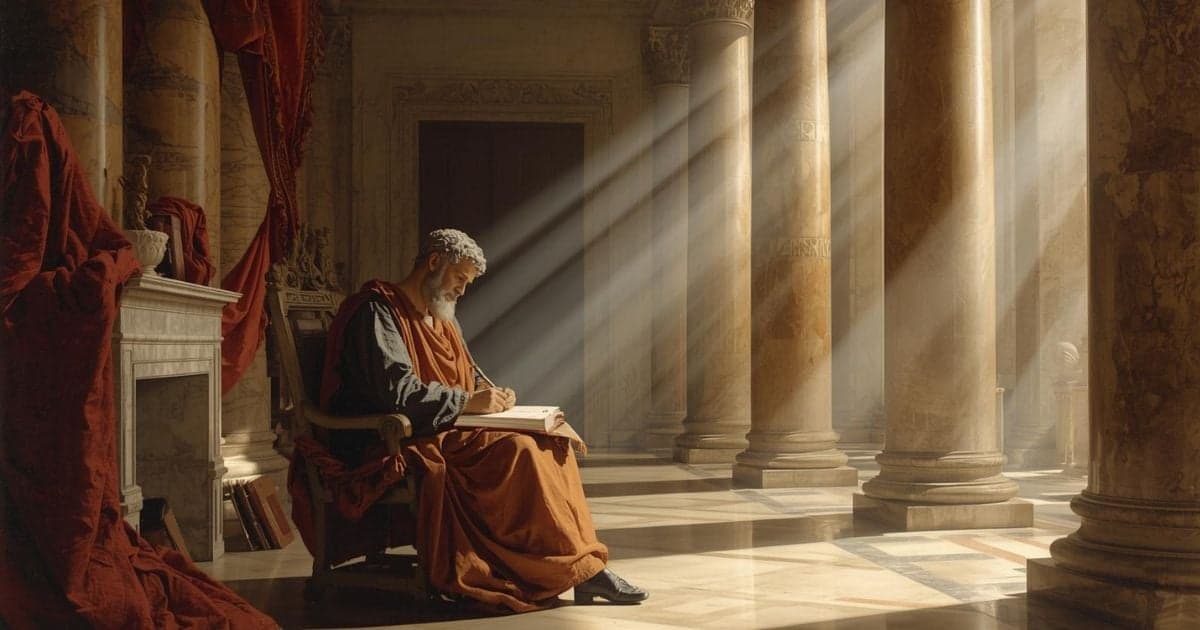
Epictetus was a slave. He had no rights, no property, no freedom of movement, and yet he became one of the most psychologically free men in history. His secret was a single distinction that most people never fully grasp: the difference between what is up to you and what is not.
The Enchiridion, which means handbook, is the distilled essence of his teaching. Compiled by his student Arrian, it is not a long book. It is a short, sharp manual for living, the kind you could carry into battle, into grief, into failure, and find something useful on every page. Roman emperors and generals kept it close. Marcus Aurelius absorbed it into his bones.
The core idea is radical in its simplicity: your opinions, your impulses, your desires, your reactions, these are yours. Everything else, your reputation, your body, other people's behavior, the outcomes of your efforts, is not. Most human suffering, Epictetus argued, comes from confusing the two. We rage against things we cannot change and neglect the one thing we actually control: how we respond.
This isn't passive resignation. It's the most demanding form of discipline imaginable. To stop blaming circumstances and start owning your inner life completely requires more courage than any external achievement.
The Enchiridion reveals why so much modern anxiety is self-inflicted, and exactly how to stop. You'll learn to distinguish between the battles worth fighting and the ones draining your energy for nothing, how to maintain your composure when the world refuses to cooperate, and what it actually means to be free in a world you cannot control.
Essential Life Skills Deep Dive
Explore chapter-by-chapter breakdowns of the essential skills taught in this classic work.
What Is and Isn't Up to You
Epictetus's foundational distinction — the most important sorting exercise in Stoic philosophy. How to tell the two categories apart and why getting them confused is the source of nearly all suffering.
Events Don't Upset You — Your Judgments Do
You are never disturbed by what happens, only by what you think about what happens. How to find the judgment behind the feeling, change it, and take back the power you gave to circumstances.
How to Love Without Losing Yourself
Premeditation of loss, the ship voyage metaphor, and the demand that things stay as they are — how to hold what you love without the grip that turns love into chronic anxiety.
What Other People Think Cannot Hurt You
Reputation, social exclusion, and external validation — none of which are up to you. The cost of abandoning your principles for applause, and why social exclusion is a trade you made, not a wrong done to you.
Table of Contents
What You Can and Cannot Control
Most human misery tracks one mistake: treating what depends on luck, other people, or your body as i...
The Art of Strategic Wanting
Desire and aversion are not moods; they are contracts. Epictetus opens by stating the terms plainly....
Preparing for Loss Before It Happens
Anything that delights you, helps you, or sits close to your heart can become a future wound if you ...
Preparing for Life's Daily Chaos
Before you walk into anything, Epictetus says, name what kind of thing you are entering. The test ca...
It's Not What Happens, It's How You See It
Disturbance does not arrive with the event. Epictetus opens with the claim that men are troubled not...
Don't Take Credit for Things You Don't Control
Pride attaches easily to the wrong owner. Epictetus opens bluntly: do not be elated at any excellenc...
Stay Ready to Let Go
Life is a voyage, Epictetus says, and you are never fully off the ship. When it anchors, you may go ...
Accept What You Cannot Control
Epictetus compresses a lifetime of peace work into one line. Do not demand that events happen as you...
Your Mind vs Your Circumstances
Epictetus draws a line between what limits the body and what limits the will. Sickness is an impedim...
Building Your Emotional Toolkit
Every accident, Epictetus says, should send you inward first. Turn toward yourself and ask what facu...
Nothing Is Really Yours
Epictetus opens with a language rule: never say of anything, "I have lost it," but, "I have restored...
The Price of Inner Peace
If you would improve, Epictetus says, lay aside reasonings like these: if I neglect my affairs I sha...
The Price of Looking Smart
If you would improve, Epictetus says, be content to be thought foolish and dull with regard to exter...
The Freedom of Letting Go
Wish your children, wife, and friends to live forever, Epictetus says, and you are foolish. You are ...
The Banquet of Life
Behave as at a banquet, Epictetus says. That is the posture for all of life, not only dinner. When ...
About Epictetus
Published 125
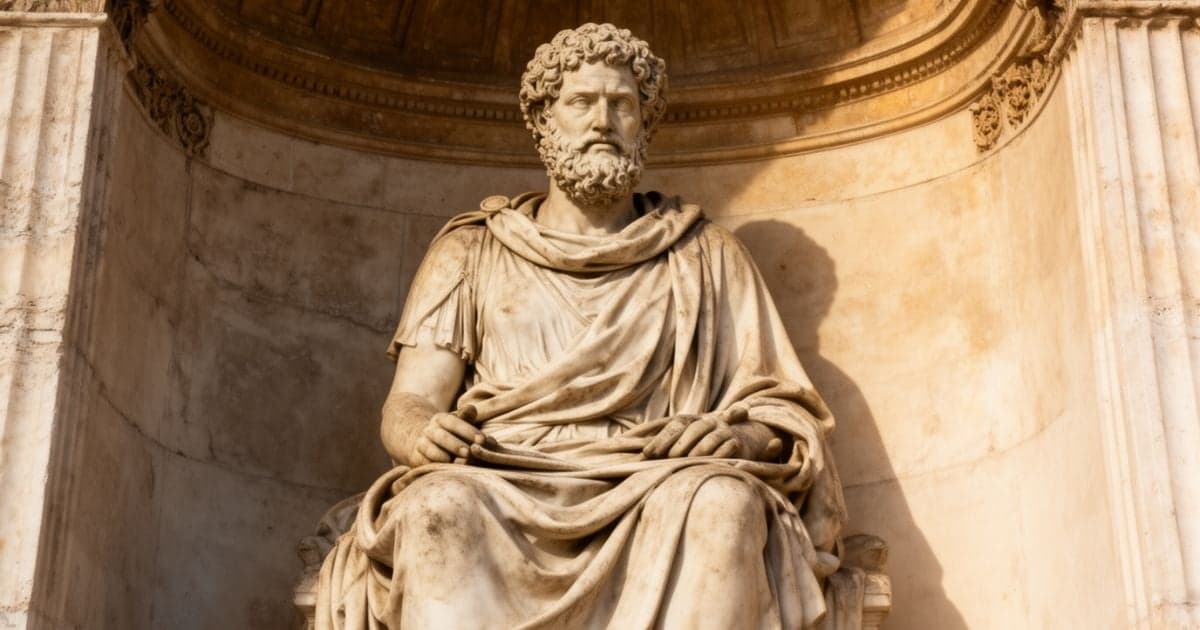
Epictetus (c. 50-135 AD) was born enslaved in Hierapolis, in what is now Turkey, and came to Rome in the household of Epaphroditus, a powerful freedman who served the emperor Nero. He studied Stoic philosophy under Musonius Rufus and eventually gained his freedom. Ancient sources say a master once broke his leg; whether that story is exact or symbolic, his teaching never treated the body as the seat of a person's worth.
When Domitian expelled philosophers from Rome around 93 AD, Epictetus withdrew to Nicopolis in northwest Greece and taught there for decades. He wrote nothing himself. His student Arrian recorded the Discourses and the Enchiridion, a short handbook of practical exercises. Unlike philosophers who debated abstractions in the academy, Epictetus taught at the level of the bathhouse, the dinner table, the crowded street, and the family quarrel. His recurring question was simple and brutal: what is up to you, and what is not?
His influence outlived the Roman Empire. Marcus Aurelius carried Epictetus into the imperial tent on the Danube. The Enchiridion circulated through the Renaissance and Enlightenment in translation after translation. Modern cognitive therapy, resilience training, and leadership literature keep rediscovering what he already said: most suffering comes from confusing what we control with what we do not, and philosophy is daily practice, not decoration.
Why Epictetus Matters Today
Epictetus speaks to the moment when you are doing everything right and the world still will not cooperate: the grant denied, the reputation attacked, the body failing, the person you love behaving badly. His answer is not positive thinking. It is a sorting exercise. Some things are yours. Most things are not. Nearly every modern anxiety spike comes from treating the second category as if it were the first.
What makes him indispensable is that he was never writing for students with leisure. He was a former slave teaching people under pressure how to keep their footing. The Enchiridion is not a treatise to admire. It is a handbook to carry into the lobby, the hearing, the family argument, the bad diagnosis, the ordinary Tuesday when everything feels personal. Each chapter is a drill: guard your assent, release what is not yours, act on principle before you can explain it elegantly.
Stoicism is often mistaken for emotional shutdown. Epictetus is the correction. He demands more discipline, not less feeling: own your judgments, tell the truth, stay in your role, prepare for loss without becoming cold. Roman emperors kept this manual close. Cognitive therapists still borrow its moves. If you have ever known exactly what you should do and still lost yourself in the reaction, Epictetus is the teacher who starts where you actually live.
Wide Reads is different.
not a sparknotes, nor a cliffnotes
Two ways in
Read & listen to the summary
Walk with the characters. Hear the story told completely — chapter by chapter, with audio. Feel what they feel. The meaning arrives because you experienced it, not because someone listed bullet points. Every chapter has a summary that speaks.
Start with this.
Read the original text
The manuscript. The actual words the author wrote. Every book on Wide Reads includes the original text alongside the summary — so you can read Austen as Austen wrote her, Dostoevsky as he wrote his. Use the summary as a guide, then step into the source.
Then step into the source.
Either way, the door opens inward.
As you enter the realm — each chapter goes deeper
— and most of all, Why does this matter?
Get the Full Book
Purchase the complete book to access all chapters and support classic literature
Available in paperback, hardcover, and e-book formats
You Might Also Like


Free to read • No account required