Wide Reads
Literature MattersLife IndexEducators
Sign in
Where to Begin
The Enchiridion - The Price of Inner Peace

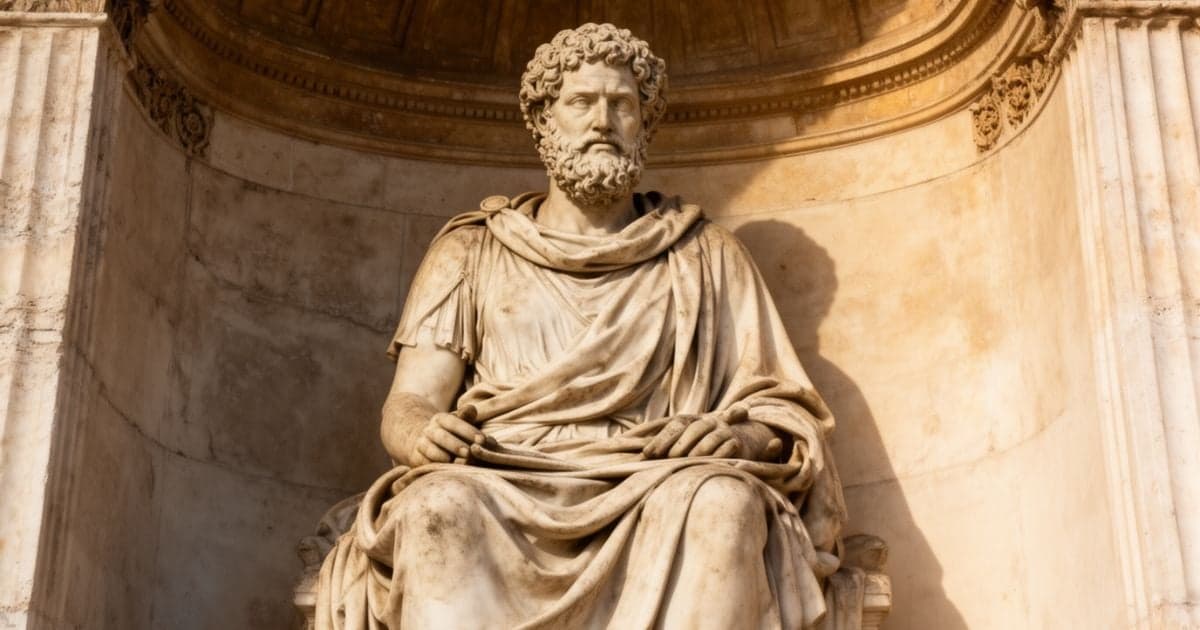
Epictetus

The Enchiridion

The Price of Inner Peace

Home›Books›The Enchiridion›Chapter 12
Previous
12 of 51
Next

Summary

The Price of Inner Peace

The Enchiridion by Epictetus

0:000:00
Listen to Next Chapter

Epictetus cuts straight to the heart of a universal workplace dilemma: the exhausting cycle of trying to control everything around us. He presents a radical proposition - that our peace of mind is worth more than perfect control over our circumstances. Using the example of a disobedient servant, he illustrates how our attempts to manage other people's behavior often create more stress for us than the original problem. The philosopher suggests we reframe small frustrations - spilled oil, stolen wine, unresponsive employees - as tuition payments for learning emotional resilience. Instead of seeing these incidents as personal affronts that demand our reaction, we can view them as the natural cost of living in an imperfect world with imperfect people. This shift in perspective transforms us from victims of circumstance into students of life. Epictetus emphasizes starting with minor irritations because they're low-stakes training grounds. When your coworker doesn't return your call or your teenager ignores your request, these moments become opportunities to practice acceptance rather than battles you must win. The chapter reveals a profound truth about power dynamics: the person who needs to control others is actually the one being controlled - by their own expectations and reactions. True freedom comes from releasing our grip on outcomes we can't guarantee. This doesn't mean becoming passive or lowering standards, but rather choosing our battles wisely and protecting our inner tranquility as our most valuable asset.

Coming Up in Chapter 13

Next, Epictetus tackles another workplace challenge: the pressure to appear knowledgeable and impressive to others. He'll reveal why the smartest people often choose to look foolish, and how this counterintuitive strategy actually leads to greater wisdom and success.

Share it with friends

Previous ChapterNext Chapter
GO ADS FREE — JOIN US
Original text
complete·158 words
F

you would improve, lay aside such reasonings as these: “If I neglect my affairs, I shall not have a maintenance; if I do not punish my servant, he will be good for nothing.” For it were better to die of hunger, exempt from grief and fear, than to live in affluence with perturbation; and it is better that your servant should be bad than you unhappy.

Begin therefore with little things. Is a little oil spilled or a little wine stolen? Say to yourself, “This is the price paid for peace and tranquillity; and nothing is to be had for nothing.” And when you call your servant, consider that it is possible he may not come at your call; or, if he does, that he may not do what you wish. But it is not at all desirable for him, and very undesirable for you, that it should be in his power to cause you any disturbance.

1 / 1

Master this chapter. Complete your experience

Purchase the complete book to access all chapters and support classic literature

Read Free on GutenbergBuy at Powell'sBuy on Amazon

As an Amazon Associate, we earn a small commission from qualifying purchases at no additional cost to you.

Available in paperback, hardcover, and e-book formats

GO ADS FREE — JOIN US

Why This Matters

Connect literature to life

Skill: Emotional Resource Management

This chapter teaches how to budget your emotional energy like money - spending it intentionally rather than reactively on every workplace frustration.

Practice This Today

This week, notice when you feel personally attacked by someone's indifference or poor performance, then ask: 'Is my peace of mind worth more than winning this battle?'

Now let's explore the literary elements.

Key Quotes & Analysis

"It were better to die of hunger, exempt from grief and fear, than to live in affluence with perturbation"

— Epictetus

Context: Teaching that peace of mind is more valuable than material security

This challenges our assumption that financial security automatically leads to happiness. Epictetus argues that a stressed-out rich person is worse off than a calm poor person.

In Today's Words:

It's better to be broke and peaceful than wealthy and constantly stressed out

"This is the price paid for peace and tranquillity; and nothing is to be had for nothing"

— Epictetus

Context: Explaining how to reframe minor frustrations like spilled oil or stolen wine

He's teaching us to see annoyances as tuition for learning emotional resilience. Every frustration becomes a lesson in letting go rather than a personal attack.

In Today's Words:

Think of these irritations as paying for your peace of mind - everything costs something

"But it is not at all desirable for him, and very undesirable for you, that it should be in his power to cause you any disturbance"

— Epictetus

Context: Explaining why we shouldn't let other people's behavior control our emotions

This reveals the hidden power dynamic in relationships. When we let others upset us, we're actually giving them control over our emotional state.

In Today's Words:

Don't give other people the power to ruin your day - that's not good for anyone

Thematic Threads

Personal Agency

In This Chapter

Epictetus distinguishes between what we can control (our reactions) versus what we cannot (other people's choices)

Development

Building on earlier chapters about focusing energy on what's within our power

In Your Life:

You might waste energy trying to change your partner's habits instead of deciding how you'll respond to them.

Emotional Labor

In This Chapter

The chapter reveals how trying to manage others creates invisible work that drains our mental resources

Development

Introduced here as a cost-benefit analysis of where we invest our emotional energy

In Your Life:

You might realize you're doing more emotional work trying to fix your workplace culture than focusing on your own job performance.

Power Dynamics

In This Chapter

Shows how the person trying to control others is actually the one being controlled by their need for specific outcomes

Development

Introduced here as a paradox of perceived versus actual power

In Your Life:

You might recognize that your need to have the last word in arguments actually gives others power over your peace of mind.

Expectations

In This Chapter

Presents unrealistic expectations as sources of suffering rather than reasonable standards

Development

Introduced here as the gap between what we demand and what reality delivers

In Your Life:

You might see how expecting your family to appreciate your sacrifices creates resentment when they don't express gratitude the way you want.

Practical Wisdom

In This Chapter

Offers concrete strategies for reframing frustrations as learning opportunities rather than personal attacks

Development

Building on earlier themes of philosophical practice in daily life

In Your Life:

You might start treating difficult customers or patients as training for patience rather than obstacles to your good day.

You now have the context. Time to form your own thoughts.

Discussion Questions

  1. 1

    Epictetus says we should treat other people's behavior like 'tuition' for learning emotional resilience. What does he mean by this, and how does this reframe everyday frustrations?

    analysis • surface
  2. 2

    Why does trying to control other people's behavior often make us feel more out of control ourselves? What's the psychological mechanism at work here?

    analysis • medium
  3. 3

    Think about your workplace or family. Where do you see people exhausting themselves trying to control others' actions? What patterns do you notice?

    application • medium
  4. 4

    When someone doesn't meet your expectations - a coworker, family member, or friend - how do you decide whether to address it directly or practice acceptance? What's your decision-making process?

    application • deep
  5. 5

    Epictetus suggests that the person who needs to control others is actually being controlled by their own expectations. What does this reveal about where real power comes from?

    reflection • deep

Critical Thinking Exercise

10 minutes

Map Your Control Addiction Pattern

Think of a recent situation where someone's behavior frustrated you - a coworker who didn't respond to emails, a family member who ignored your request, or a friend who was consistently late. Write down exactly what you did to try to 'fix' their behavior and how it made you feel. Then rewrite the same situation as if their behavior was just weather - something to prepare for, not control.

Consider:

  • •Notice how much mental energy you spent trying to change their behavior versus protecting your own peace of mind
  • •Consider whether your attempts to control actually made the situation better or worse
  • •Think about what you would do differently if you treated their behavior as predictable rather than personal

Journaling Prompt

Write about a relationship where you've been trying to control someone's behavior. What would change if you focused entirely on managing your own response instead? What boundaries would you set, and what expectations would you release?

Coming Up Next...

Chapter 13: The Price of Looking Smart

Next, Epictetus tackles another workplace challenge: the pressure to appear knowledgeable and impressive to others. He'll reveal why the smartest people often choose to look foolish, and how this counterintuitive strategy actually leads to greater wisdom and success.

Continue to Chapter 13
Previous
Nothing Is Really Yours
Contents
Next
The Price of Looking Smart

Continue Exploring

The Enchiridion Study GuideTeaching ResourcesEssential Life IndexBrowse by ThemeAll Books

You Might Also Like

The Dhammapada cover

The Dhammapada

Buddha

Explores suffering & resilience

Letters from a Stoic cover

Letters from a Stoic

Seneca

Explores suffering & resilience

On the Shortness of Life cover

On the Shortness of Life

Lucius Annaeus Seneca

Explores personal growth

Meditations cover

Meditations

Marcus Aurelius

Explores personal growth

Browse all 47+ books

Share This Chapter

Know someone who'd enjoy this? Spread the wisdom!

TwitterFacebookLinkedInEmail

Read ad-free with Prestige

Get rid of ads, unlock study guides and downloads, and support free access for everyone.

Subscribe to PrestigeCreate free account
Intelligence Amplifier
Intelligence Amplifier™Powering Wide Reads

Exploring human-AI collaboration through books, essays, and philosophical dialogues. Classic literature transformed into navigational maps for modern life.

2025 Books

→ The Amplified Human Spirit→ The Alarming Rise of Stupidity Amplified→ San Francisco: The AI Capital of the World
Visit intelligenceamplifier.org
hello@widereads.com

WideReads Originals

→ You Are Not Lost→ The Last Chapter First→ The Lit of Love→ Wealth and Poverty→ 10 Paradoxes in the Classics · coming soon
Arvintech
arvintechAmplify your Mind
Visit at arvintech.com

Navigate

  • Home
  • Library
  • Essential Life Index
  • How It Works
  • Subscribe
  • Account
  • About
  • Contact
  • Authors
  • Suggest a Book
  • Landings

Made For You

  • Students
  • Educators
  • Families
  • Readers
  • Literary Analysis
  • Finding Purpose
  • Letting Go
  • Recovering from a Breakup
  • Corruption
  • Gaslighting in the Classics

Newsletter

Weekly insights from the classics. Amplify Your Mind.

Legal

  • Privacy Policy
  • Terms of Service
  • Cookie Policy
  • Accessibility

Why Public Domain?

We focus on public domain classics because these timeless works belong to everyone. No paywalls, no restrictions—just wisdom that has stood the test of centuries, freely accessible to all readers.

Public domain books have shaped humanity's understanding of love, justice, ambition, and the human condition. By amplifying these works, we help preserve and share literature that truly belongs to the world.

A Pilgrimage

Powell's City of Books

Portland, Oregon

If you ever find yourself in Portland, walk to the corner of Burnside and 10th. The building takes up an entire city block. Inside is over a million books, new and used on the same shelf, organized by color-coded rooms with names like the Rose Room and the Pearl Room. You can lose an afternoon. You can lose a weekend. You will find a book you have been looking for your whole life, and three you did not know existed.

It is a pilgrimage. We cannot find a bookstore like it anywhere on earth. If you read the classics, and you ever get the chance, go. It belongs on every reader's bucket list.

Visit powells.com

We are not in any way affiliated with Powell's. We are just a very big fan.

© 2026 Wide Reads™. All Rights Reserved.

Intelligence Amplifier™ and Wide Reads™ are proprietary trademarks of Arvin Lioanag.

Copyright Protection: All original content, analyses, discussion questions, pedagogical frameworks, and methodology are protected by U.S. and international copyright law. Unauthorized reproduction, distribution, web scraping, or use for AI training is strictly prohibited. See our Copyright Notice for details.

Disclaimer: The information provided on this website is for general informational and educational purposes only and does not constitute professional, legal, financial, or technical advice. While we strive to ensure accuracy and relevance, we make no warranties regarding completeness, reliability, or suitability. Any reliance on such information is at your own risk. We are not liable for any losses or damages arising from use of this site. By using this site, you agree to these terms.