Wide Reads
Literature MattersLife IndexEducators
Sign in
Where to Begin

The Night Before Battle — War and Peace

War and Peace - The Night Before Battle

Leo Tolstoy

War and Peace

The Night Before Battle

Home›Books›War and Peace›Chapter 215: The Night Before Battle
Previous
215 of 361
Next

Analysis by the Wide Reads editorial team·Reviewed against the source text·Updated December 11, 2025

Summary

The Night Before Battle

War and Peace by Leo Tolstoy

0:000:00
Listen to Next Chapter

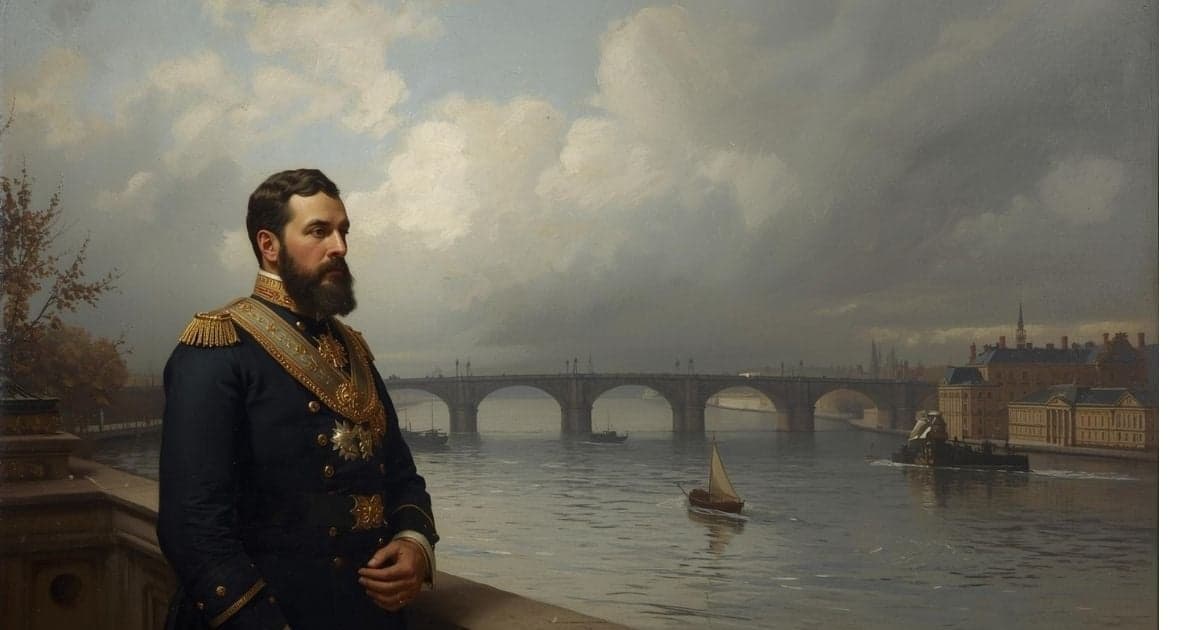
Pierre shares tea with Andrew's officers, claiming he understands the army position Andrew mocks.

Andrew erupts: Barclay was a skilled servant, not kin; war is not chess; tomorrow's hundred million chances beat staff maps; German theorists ride past dismissing private loss.

He vows no prisoners, calls war murder, kisses Pierre good-bye, then lies awake remembering Natasha's soul while another man lives. Conviction and grief fuse on the eve of Borodino. Timokhin's men will not drink today; Andrew sends Pierre away and cannot sleep for Natasha.

In this chapter: Terms Characters Key Quotes Themes Modern Story

Why This Matters

Connect literature to life

Skill: Reading Fighting Spirit

Andrew says tomorrow depends on soldiers who refuse to run, not staff diagrams. When stakes are existential, measure will before measuring position. Invest in will and meaning when charts cannot predict the instant.

Coming Up in Chapter 216

As dawn approaches, the massive armies prepare for the bloodiest day on Russian soil. Moscow's fate, and perhaps Russia's, will be decided by ordinary soldiers carrying fear, duty, and private longing onto the field at Borodino.

Share it with friends

PreviousPrevious ChapterNextNext Chapter
Original text
2,957 wordscomplete

Chapter 215

The Night Before Battle

The officers were about to take leave, but Prince Andrew, apparently reluctant to be left alone with his friend, asked them to stay and have tea. Seats were brought in and so was the tea. The officers gazed with surprise at Pierre’s huge stout figure and listened to his talk of Moscow and the position of our army, round which he had ridden. Prince Andrew remained silent, and his expression was so forbidding that Pierre addressed his remarks chiefly to the good-natured battalion commander. “So you understand the whole position of our troops?” Prince Andrew interrupted him. “Yes—that is, how…

Public-domain chapter text, formatted for reading.

Master this chapter. Complete your experience

Purchase the complete book to access all chapters and support classic literature

Buy at Powell'sBuy on Amazon

Available in paperback, hardcover, and e-book formats

Now let's explore the literary elements.

Key Quotes & Analysis

"Well, then, you know more than anyone else, be it who it may,” said Prince Andrew."

— Prince Andrew

Context: Mocking Pierre's battlefield tour

Sarcastic edge.

In Today's Words:

Andrew sarcastically says Pierre knows the position better than anyone after riding with staff officers. Tours can breed false expertise. Do not confuse access with understanding before slaughter. Name who gains leverage and who bears the private cost once the room empties. Track who benefits from the story told afterward.

"Success never depends, and never will depend, on position, or equipment, or even on numbers, and least of all on position.”"

— Prince Andrew

Context: Rejecting chess-like war theory

Spirit over maps.

In Today's Words:

Andrew says victory never truly depends on position, gear, or numbers. Maps seduce planners; morale decides the instant men run or stand. Trust the feeling in the ranks over the diagram. Name who gains leverage and who bears the private cost once the room empties.

"To them it is only a moment affording opportunities to undermine a rival and obtain an extra cross or ribbon."

— Prince Andrew

Context: Condemning staff officers Pierre rode with

Petty stakes.

In Today's Words:

Andrew says staff tours are chances to undercut rivals for medals, not to save Russia. Petty ambition thrives inside historic hours. Ask who treats crisis as career chess. Name who gains leverage and who bears the private cost once the room empties. Track who benefits from the story told afterward.

"The aim of war is murder; the methods of war are spying, treachery, and their encouragement, the ruin of a country’s inhabitants, robbing them or stealing to provision the army, and fraud and falsehood termed military craft."

— Prince Andrew

Context: Defining war without chivalry

Stripped illusion.

In Today's Words:

Andrew lists war's aim as murder and its methods as spying, ruin, theft, and lies called craft. He rejects polite games around slaughter. Name war plainly when honor talk hides theft. Name who gains leverage and who bears the private cost once the room empties.

Thematic Threads

War Not Chess

In This Chapter

Andrew rejects timed, balanced war models

Development

Chaos beats diagrams

In Your Life:

You might see plans fail when will differs.

Natasha After Rage

In This Chapter

Andrew remembers then revolts at Anatole's gain

Development

Patriotism meets private loss

In Your Life:

You might fuse public fury with private grief.

You now have the context. Time to form your own thoughts.

Discussion Questions

This is not a test. Five prompts guide you through the chapter, from how it opens to how it closes, so you notice context and rhythm rather than facts to memorize. Sit with each question in your own words. When you see "One way to read it," treat it as a starting point, not the only answer.

  1. 1

    Why does Andrew mock Pierre's knowledge of the position?

    ▶One way to read it

    Pierre rode with staff officers Andrew despises as self-serving tour guides.

    analysis • surface
  2. 2

    How does Andrew compare Barclay to a German valet?

    ▶One way to read it

    Barclay served well in calm times but lacked kinship stakes when Russia faced mortal danger.

    analysis • medium
  3. 3

    Why is war not like chess for Andrew?

    ▶One way to read it

    There is no unlimited time and relative strength of units cannot truly be known.

    application • medium
  4. 4

    What do the passing German officers say?

    ▶One way to read it

    They discuss extending war widely without regard for private individuals' loss.

    application • deep
  5. 5

    When have you seen spirit outweigh a better plan?

    ▶One way to read it

    Name the will that changed the outcome. Andrew maps tea at Knyazkovo.

    reflection • deep

Critical Thinking Exercise

10 minutes

Track Your Displaced Anger

Think of a time when you felt unusually angry or passionate about something at work, in your community, or in politics. Write down what the surface issue was, then dig deeper: what was happening in your personal life around that same time? Look for patterns between your private struggles and your public frustrations.

Consider:

  • •Sometimes righteous anger about real issues can still be fueled by personal pain
  • •It's easier to fight external enemies than face internal wounds
  • •Recognizing the pattern doesn't invalidate your concerns - it just helps you address both levels

Journaling Prompt

Write about a current frustration in your life. Ask yourself: Am I fighting the real problem here, or is there a deeper hurt I'm avoiding? What would change if I addressed both the surface issue and the underlying pain?

Coming Up Next...

Chapter 216: The Emperor's Morning Ritual

As dawn approaches, the massive armies prepare for the bloodiest day on Russian soil. Moscow's fate, and perhaps Russia's, will be decided by ordinary soldiers carrying fear, duty, and private longing onto the field at Borodino.

Continue to Chapter 216
Previous
The Cold White Light of Truth
Contents
Next
The Emperor's Morning Ritual
Keep exploring

Continue Exploring

Study guides, teaching tools, themes, and the full library.More ways to read War and Peace: study guides, teaching tools, and the wider library.

  • War and Peace Study Guide
  • Teaching Resources
  • Essential Life Index
  • Browse by Theme
  • All Books

Life-skill deep dives in War and Peace

  • Building Authentic RelationshipsForm genuine connections that transcend social expectations in Tolstoy
  • Embracing SimplicityFind meaning in ordinary life rather than grand ambitions in Tolstoy
  • Facing MortalityConfront death and let it inform how you live in Tolstoy
  • Finding Meaning in ChaosDiscover purpose when historical forces seem overwhelming in Tolstoy
  • Questioning SuccessExamine whether achievement brings fulfillment in Tolstoy
  • Understanding Free Will vs FateNavigate the tension between individual choice and historical forces in Tolstoy
Power & CorruptionLove & RelationshipsIdentity & Self-Discovery

You Might Also Like

Anna Karenina cover

Anna Karenina

Leo Tolstoy

Also by Leo Tolstoy

The Idiot cover

The Idiot

Fyodor Dostoevsky

Explores love & romance

Moby-Dick cover

Moby-Dick

Herman Melville

Explores mortality & legacy

Noli Me Tángere cover

Noli Me Tángere

José Rizal

Explores systems thinking

Browse all 106+ books

Share This Chapter

Know someone who'd enjoy this? Spread the wisdom!

TwitterFacebookLinkedInEmail

Go further with Prestige

Unlock study guides and downloads, early access, and exclusive content — and support free access for everyone.

Subscribe to PrestigeCreate free account
Intelligence Amplifier
Intelligence Amplifier™Powering Wide Reads

Exploring human-AI collaboration through books, essays, and philosophical dialogues. Classic literature transformed into navigational maps for modern life.

2025 Books

→ The Amplified Human Spirit→ The Alarming Rise of Stupidity Amplified→ San Francisco: The AI Capital of the World
Visit intelligenceamplifier.org
hello@widereads.com

WideReads Originals

→ You Are Not Lost→ The Last Chapter First→ The Lit of Love→ Wealth and Poverty→ Wisdom for the Wounded
Arvintech
arvintechAmplify your Mind
Visit at arvintech.com

Navigate

  • Home
  • Library
  • Essential Life Index
  • How It Works
  • Subscribe
  • Account
  • About
  • Contact
  • Authors
  • Suggest a Book
  • Landings

Made For You

  • Trending
  • Students
  • Educators
  • Families
  • Readers
  • Literary Analysis
  • Finding Purpose
  • Letting Go
  • Recovering from a Breakup
  • Corruption
  • Gaslighting in the Classics

Newsletter

Weekly insights from the classics. Amplify Your Mind.

Legal

  • Privacy Policy
  • Terms of Service
  • Editorial Standards
  • Cookie Policy
  • Accessibility

Why Public Domain?

We focus on public domain classics because these timeless works belong to everyone. No paywalls, no restrictions—just wisdom that has stood the test of centuries, freely accessible to all readers.

Public domain books have shaped humanity's understanding of love, justice, ambition, and the human condition. By amplifying these works, we help preserve and share literature that truly belongs to the world.

A Pilgrimage

Powell's City of Books

Portland, Oregon

If you ever find yourself in Portland, walk to the corner of Burnside and 10th. The building takes up an entire city block. Inside is over a million books, new and used on the same shelf, organized by color-coded rooms with names like the Rose Room and the Pearl Room. You can lose an afternoon. You can lose a weekend. You will find a book you have been looking for your whole life, and three you did not know existed.

It is a pilgrimage. We cannot find a bookstore like it anywhere on earth. If you read the classics, and you ever get the chance, go. It belongs on every reader's bucket list.

Visit powells.com

We are not in any way affiliated with Powell's. We are just a very big fan.

© 2026 Wide Reads™. All Rights Reserved.

Intelligence Amplifier™ and Wide Reads™ are proprietary trademarks of Arvin Lioanag.

Copyright Protection: All original content, analyses, discussion questions, pedagogical frameworks, and methodology are protected by U.S. and international copyright law. Unauthorized reproduction, distribution, web scraping, or use for AI training is strictly prohibited. See our Copyright Notice for details.

Disclaimer: The information provided on this website is for general informational and educational purposes only and does not constitute professional, legal, financial, or technical advice. While we strive to ensure accuracy and relevance, we make no warranties regarding completeness, reliability, or suitability. Any reliance on such information is at your own risk. We are not liable for any losses or damages arising from use of this site. By using this site, you agree to these terms.