
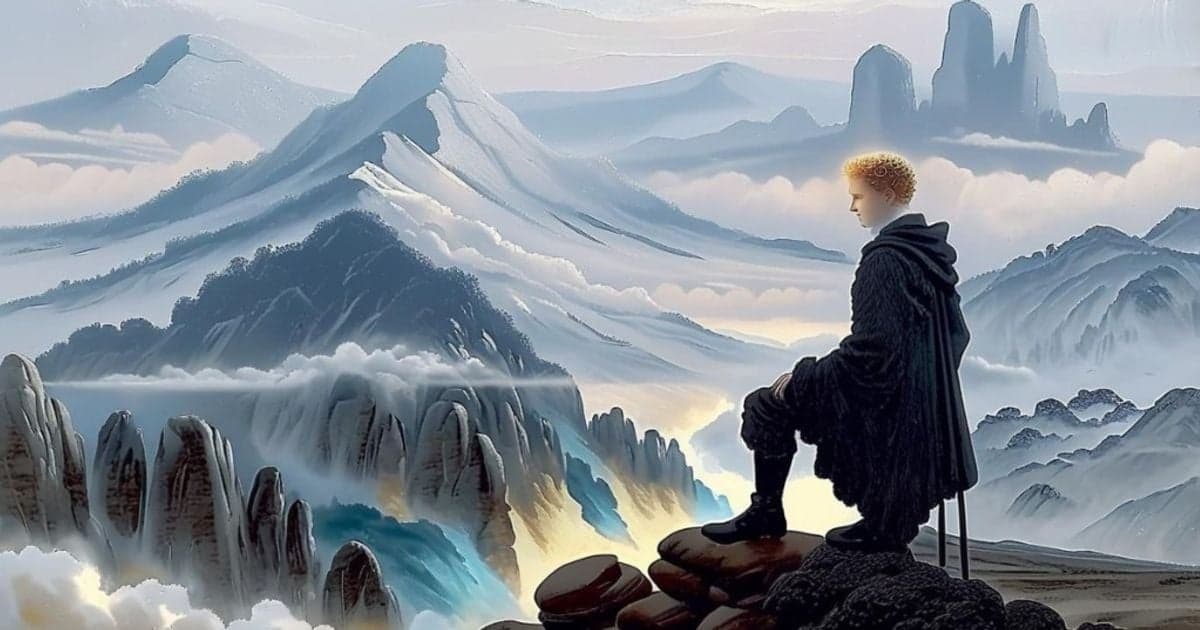
Most people want the last form first. They want the holy yes, the game, the self-rolling wheel, without ever having been faithful to a load they did not choose. Zarathustra's parable is cruel on that point. The spirit that has never carried has nothing to refuse. The spirit that has never refused has nothing of its own to begin. Sequence is not a metaphor. It is the bill.
The camel is easy to moralize and easy to pity. It looks like virtue because it is. It is also a stall if you stay there. You can spend a decade proving you can bear contempt, overtime, other people's tables of Thou shalt, and still have no law that is yours. The lion is not an improvement of manners. It is the moment the dragon's scales stop sounding like wisdom and start sounding like a voice that was never asked. Saying no is expensive. It is still not creating.
The child is the part self-help posters steal and ruin. Play, in this book, is not lightness as vacation. It is the capacity to start after the wreck without needing the wreck as an identity. A lion without a child becomes a professional opponent. A child without a camel and a lion is a mood. Nietzsche's claim is practical: name the stage you are actually in, then do the work that stage requires, not the work that would look better on you.
The Central Lesson
A spirit becomes able to play only after it has been faithful and after it has been dangerous. Carry first, so you know what weight is. Refuse second, so you know which voices were never yours. Begin third, without an audience and without an enemy. Skip a stage and you get a counterfeit: the dutiful person who calls exhaustion meaning, the rebel who needs the dragon to feel real, or the performer of innocence who never paid for a self. The three transformations are not mascots. They are a sequence you either complete or fake.
Applying This to Your Life
Name the Stage Without Flattery
Ask which animal you are this year, not which one you admire. If you are still collecting proof that you can endure, you are a camel. If you are still organized around what you refuse, you are a lion. If you can begin a day that has no enemy in it, you may be ready for the third form.
Do Not Confuse the No with a Life
Quitting, deconstructing, burning a credential: those can be the lion's honest work. They are not a destination. If your conversation still needs the old master in the room, you have not yet begun. Creation starts when the opponent is gone and the page is still blank.
Pay for the Yes with a Way
Zarathustra will not walk your path. After the no, you have to say where you are going in language that would embarrass a committee. A way you cannot stammer is probably still borrowed. Write one sentence that is yours, then live under it long enough to see if it holds.
Other lessons in this book
More life-skill deep dives from the same classic.
Amor Fati
Bless the Mixture, Not the Edit
Stay for the seven seals: I love thee, O Eternity, then the midnight bell that wants the pain back too.
9 chapters·Explore AnalysisCreating Your Own Values
Authorship Is Not a Mood After Belief Collapses
Sit with the thousand tables in chapter 15, then the broken ones in chapter 56. No people found their good. They made it.
15 chapters·Explore AnalysisSelf-Overcoming
The Self Is Not a Place to Stay
Hear Life in chapter 34: whatever she creates she must soon turn against, and the hammer on the stone is the same command.
18 chapters·Explore AnalysisSpotting Herd Thinking
The Herd Is a Room Before It Is an Opinion
Hear the cold monster claim it is the people, then stoop through the low doorways of chapter 49.
25 chapters·Explore AnalysisThe Eternal Recurrence Test
The Thought That Will Not Let Someday Remain
Stand in the gateway named This Moment, then watch the shepherd bite. Would this life be chosen if it returned without remainder?
7 chapters·Explore Analysis
Continue exploring
The same lessons in other books
See how other books teach the same life skills.

The Essays of Montaigne
Choosing Real FriendshipHear essay 27 answer La Boétie: because it was he, because it was I.
The Idiot
Maintaining Goodness Without NaivetySit with Myshkin on the train in chapter 1: honesty with no angle, and a city that can only call it idiocy.
Jude the Obscure
When Desire Becomes a TrapTrack the pig, the dimple, the false pregnancy, and the second marriage arranged over gin.
Where the lesson lives in the book
The Spirit That Asks for Weight
Zarathustra does not open with liberation. He opens with a kneeling animal that wants the heaviest load it can find: to humble itself, to love those who despise it, to take what duty hands over and still rejoice in its strength. That is the camel. Strength here is not yet authorship. It is the capacity to bear what you did not invent.
Key Insight:
If you are still proving you can take it, you are not yet free. You are in training. The load is real work. It is not the last form of a spirit.
“Three metamorphoses of the spirit have I designated to you: how the spirit became a camel, the camel a lion, and the lion at last a child.”
Ashes Carried to the Mountain
After the first descent, Zarathustra carries his own ashes upward. The God he made was human work and human madness. He does not replace one master with a prettier one. He burns what he had worshipped and waits for a brighter flame he will have to kindle himself. The wilderness is where the camel's load becomes fuel.
Key Insight:
Leaving a belief is not the same as becoming new. You can walk into solitude still dragging the old altar. The second stage starts when you stop asking the ashes to bless you.
“I carried mine own ashes to the mountain; a brighter flame I contrived for myself.”
When the Rider Ignores the Animal
The conscious mind sits like a small rider on a much larger body. Zarathustra says the body already knows what the intellect still calls duty. People stay camels because the story of responsibility sounds nobler than the fatigue in their limbs. Inherited ideas survive by talking over the animal that has to live them.
Key Insight:
Bodily resistance is often the first honest no. If you keep overruling it with a prettier sentence, you are not loyal. You are stalling the lion.
The Wreath the Sheep Eats
A sheep eats Zarathustra's scholar's wreath. The emblem of being approved by a table of peers becomes ordinary food. He is no longer a scholar. He wants air over fresh soil, not another hungry sitting at their table. The lion is not anti-learning. It is the refusal to let a credential stand in for a self.
Key Insight:
Rebellion starts when the prize that used to feed you begins to taste like a cage. Titles are a camel's honour. The lion needs land, not a wreath.
“Too long did my soul sit hungry at their table”
Midnight Crossing to the Sea
Zarathustra begins his final ascent, crossing a ridge at midnight toward the sea and the last adventure. He reflects on being a wanderer who cannot settle, a teacher who must climb again because descent alone is not the whole metamorphosis.
Key Insight:
The lion who only refuses never finishes the journey. There is a third movement: walk toward the work even when no crowd follows.
This Is Now My Way
After the no, Zarathustra will not hand you a map. He scrawls on tables and walls like a fool, then asks where yours is. The child is not chaos. It is the person who can love himself enough to stay with himself, and who will not borrow a saint's path because the saint already walked it.
Key Insight:
Destruction that never names a way becomes a career. The child stage is the embarrassing moment when you have to walk somewhere that has no audience and no enemy.
“This—is now MY way,—where is yours?”
White Hair, Waiting for a Sign
Zarathustra sits outside his cave with white hair, no longer chasing happiness but watching for what must come. The camel season of bearing and the lion season of refusal have both been paid. He waits for the sign that will let the child walk out.
Key Insight:
Transformation is not complete because you are tired of fighting. It completes when you can begin a morning that belongs to you alone.
Higher Men Who Cannot Wake
Zarathustra returns to find kings, scholars, and outcasts filling his cave, all crying in distress. They are higher than the herd but still not awake. The gathering proves the lion can attract suffering without producing the child.
Key Insight:
You can surround yourself with impressive refusers and still miss the third form. Metamorphosis is not a club. It is a walk out the door.
Morning Without Disciples
The sign arrives as a laughing lion and a flock of doves, not as converts. The higher men still sleep in the cave. Zarathustra will not wait for them to wake. This is his morning. The child does not found a church. It leaves the sleepers and goes to work in its own day.
Key Insight:
If your transformation still needs an audience to ratify it, you are still a lion performing a no. The last form walks out whether anyone follows.
“This is MY morning, MY day beginneth: ARISE NOW, ARISE, THOU GREAT NOONTIDE!”