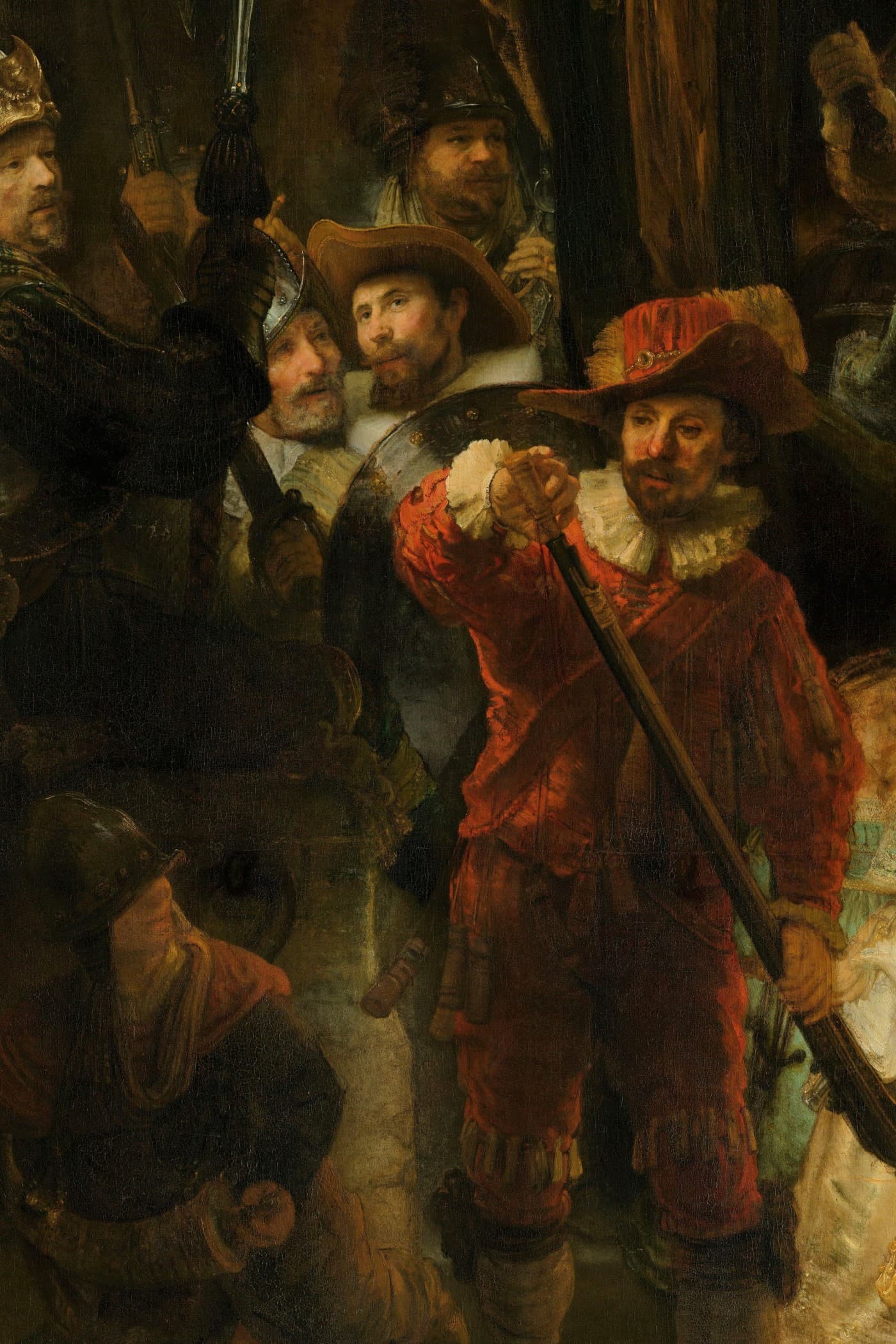
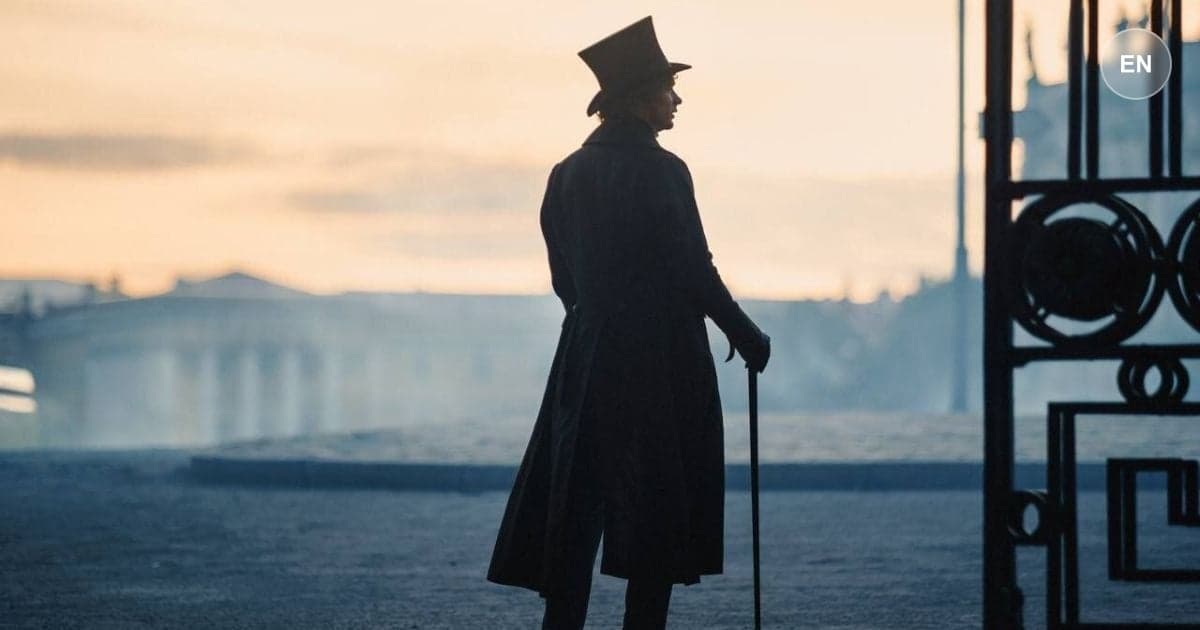
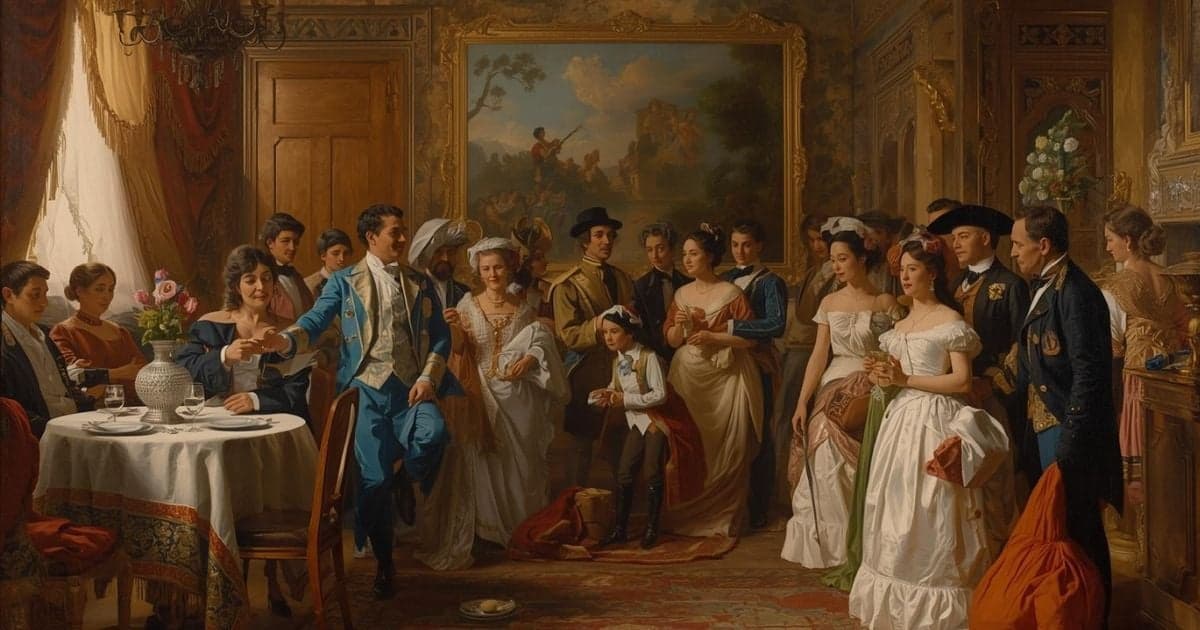
In April 1625 the market town of Meung looks like a town under attack. Citizens grab muskets and run to the Jolly Miller. The cause is not Huguenots or the cardinal's men. It is an eighteen-year-old Gascon on a yellow Béarn pony that makes people laugh. D'Artagnan knows the horse looks foolish. He accepted it anyway, because his father gave it with words he values more than money. The old gentleman sent him to Paris with three gifts: fifteen crowns, the pony, and a letter to M. de Tréville, once a neighbour and now captain of the king's Musketeers. The father also taught him a hard rule. Endure nothing from anyone except the king and the cardinal. Fight even when duels are forbidden. Take Tréville as the model. His mother added a balsam for wounds that do not reach the heart. From Tarbes to Meung, D'Artagnan treats every smile as an insult. The pony draws smiles. The long sword keeps most people quiet.
At the inn gate no one holds his stirrup. Through a ground-floor window he sees a pale gentleman in a violet doublet joking about the horse to two listeners. D'Artagnan decides he is insulted. He challenges the man. The stranger answers with cool scorn and will not treat the quarrel as serious. When D'Artagnan draws, the host and the two listeners fall on him with sticks, shovels, and tongs. His sword breaks. A blow to the forehead drops him, bleeding. The household carries him to the kitchen. The stranger stays calm and asks what the madman said. The host reports a letter to Tréville in the young man's pocket. That name changes the stranger's face. He mutters that a weak obstacle can overthrow a great design. He will not kill the boy, but he wants him gone. He also wants the letter, and he does not want a woman called Milady seen by this fellow.
While D'Artagnan is still weak, the host pushes him downstairs. In the yard the same gentleman stands at a heavy carriage. A fair Englishwoman of about twenty-two talks with him. She says his Eminence has given orders. He tells her to return to England at once and to report when the duke leaves London. Her other instructions sit in a box she must not open until she is across the Channel. He will go back to Paris. D'Artagnan, who has heard it all, rushes out and calls the man a coward. Milady warns that the least delay may ruin everything. Both ride off in opposite directions. D'Artagnan takes ten steps, faints in the street, and still names her beauty as he falls. The host counts on eleven crowns of lodging. The next morning D'Artagnan mixes his mother's balsam, walks the same evening, and is almost well by the next day.
When he goes to pay, the letter is gone. He threatens the household with a broken stump of a sword. The host, scared by Tréville's name, helps search, then decides the gentleman stole it from the kitchen doublet. D'Artagnan believes him, pays two crowns, and rides the yellow pony to the gate of St. Antoine. He sells the horse for three crowns and walks into Paris with a small packet under his arm. He rents a cheap garret in the Rue des Fossoyeurs, near the Luxembourg. He sews leftover braiding onto his clothes, has a new blade fitted to his sword, and learns that Tréville's hôtel stands close by in the Rue du Vieux-Colombier. Satisfied with Meung and sure of the morning, he sleeps the sleep of the brave. At nine he rises to present himself to the man his father called the third personage in the kingdom.
Coming Up in Chapter 2
M. de Tréville's hôtel in the Rue du Vieux-Colombier already looks like a camp by morning. D'Artagnan steps through a nailed door into swordsmen who cross, quarrel, and stare, and for the first time in his life he feels ridiculous.