Wide Reads
Literature MattersLife IndexEducators
Sign in
Where to Begin

Chapter 16 — The Picture of Dorian Gray

The Picture of Dorian Gray - Chapter 16

Oscar Wilde

The Picture of Dorian Gray

Chapter 16

Home›Books›The Picture of Dorian Gray›Chapter 16
Previous
16 of 20
Next

Analysis by the Wide Reads editorial team·Reviewed against the source text·Updated November 29, 2025

Summary

Chapter 16

The Picture of Dorian Gray by Oscar Wilde

0:000:00
Listen to Next Chapter

A cold rain falls as Dorian's hansom crawls toward the East End, and he repeats Lord Henry's old motto about curing the soul by means of the senses and the senses by means of the soul. Innocent blood has been spilled, forgiveness seems impossible, but forgetfulness still might be bought in dens where new sins erase old memory. Hunger for opium gnaws at him until the driver leaves him at a shabby house near the quay.

Inside the lamplit den Dorian finds Adrian Singleton, one of the young men ruined by his influence, and learns that friendship has collapsed while the drug remains. A woman sneers that there goes the devil's bargain when Dorian pays her to be silent, then hiccoughs that Prince Charming is what he likes to be called. The phrase will matter before the night ends.

Leaving the den, Dorian is seized by James Vane, Sibyl's brother, who swears revenge for his sister's death and forces him under a lamp. Dorian's unchanged face saves him: the avenger sees a boy of twenty, not the man of nearly forty he hunts. Vane releases him in horror, but a woman by the river confirms the truth: Prince Charming made her what she is eighteen years ago, and he has not aged since.

In this chapter: Terms Characters Key Quotes Themes Modern Story

Why This Matters

Connect literature to life

Skill: Hearing Victims You Forgot

Harm you exported years ago can return as a name, a face, or a stranger with a revolver. In one night Dorian meets Adrian Singleton ruined by his example and James Vane hunting the man who destroyed Sibyl. When you flee toward numbness, notice whether the road passes through the people your choices already broke.

Coming Up in Chapter 17

A week later at Selby Royal, Dorian flirts with the Duchess of Monmouth at tea under Lord Henry's epigrams until he sees James Vane's face at the conservatory glass like a white handkerchief and nearly faints.

Share it with friends

PreviousPrevious ChapterNextNext Chapter
Original text
3,105 wordscomplete

Chapter 16

A cold rain falls as Dorian's hansom crawls toward the East End, an...

A cold rain began to fall, and the blurred street-lamps looked ghastly in the dripping mist. The public-houses were just closing, and dim men and women were clustering in broken groups round their doors. From some of the bars came the sound of horrible laughter. In others, drunkards brawled and screamed. Lying back in the hansom, with his hat pulled over his forehead, Dorian Gray watched with listless eyes the sordid shame of the great city, and now and then he repeated to himself the words that Lord Henry had said to him on the first day they had met,…

Public-domain chapter text, formatted for reading.

Master this chapter. Complete your experience

Purchase the complete book to access all chapters and support classic literature

Buy at Powell'sBuy on Amazon

Available in paperback, hardcover, and e-book formats

Now let's explore the literary elements.

Key Quotes & Analysis

"To cure the soul by means of the senses, and the senses by means of the soul."

— Lord Henry Wotton

Context: Dorian repeats Henry's motto while riding toward the opium dens

The epigram becomes anesthesia theory: sensation as substitute for repentance.

In Today's Words:

When a slogan meant for art becomes a license for numbness, ask whether it is curing anything or only postponing reckoning. Pretty phrases can anesthetize conscience if you repeat them often enough on the way to trouble. The motto is not medicine if it leads you back to the den.

"There goes the devil's bargain!"

— Woman in the opium den

Context: She mocks Dorian after he pays her to stop talking to him

The underworld names what polite society will not: youth bought at a moral price.

In Today's Words:

People excluded from respectability sometimes see the transaction clearly. When someone outside your class names the price of your charm, do not dismiss it as squalor talking. It may be the truest accounting in the room that night. Listen when the underworld names what your drawing room will not admit.

"You wrecked the life of Sibyl Vane,"

— James Vane

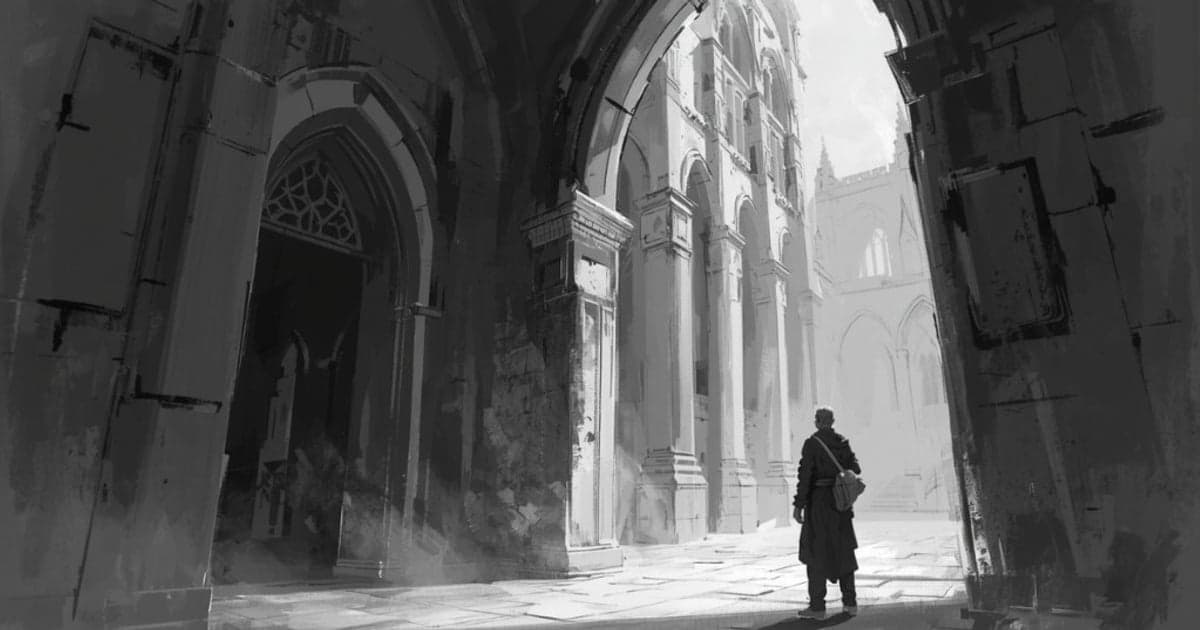
Context: James confronts Dorian in the archway and names his sister

Past harm returns as embodied vengeance rather than rumor.

In Today's Words:

The victims you forget do not always stay forgotten. Someone may be carrying your old damage in their body and waiting for a chance word in a den to turn it back toward you with a revolver. James Vane's gun is what forgetting Sibyl finally costs.

"Prince Charming is what you like to be called, ain't it?"

— Woman in the opium den

Context: She yells after Dorian and later confirms his identity to James Vane

The pet name links Sibyl's brother to an older ruin and proves the supernatural youth is itself evidence.

In Today's Words:

Nicknames outlive the relationships that coined them. When a name from your past surfaces in the wrong mouth, treat it as a record keeping score, not as a joke. The calendar can lie even when the face does not. James learns that for one terrifying minute.

Thematic Threads

Consequences

In This Chapter

Sibyl's brother and Adrian Singleton embody delayed returns

Development

Dorian learns ruin has addresses in the East End

In Your Life:

You might notice how old harm can find you when you thought distance was safety

Escape

In This Chapter

Opium is sought to forget Basil's murder

Development

Numbness fails when witnesses appear inside the den

In Your Life:

You might see how anesthesia routes often lead back to the wound

Identity

In This Chapter

Prince Charming links past and present selves

Development

Unchanged beauty becomes proof of guilt as well as alibi

In Your Life:

You might ask which old names still identify you better than your current role

Human Relationships

In This Chapter

Dorian pays a woman to stop talking and loses Adrian to the drug

Development

Corruption replaces friendship with transaction

In Your Life:

You might recognize when connection has thinned to cash and chemicals

Class

In This Chapter

He leaves the West End drawing-room for the quay's squalor

Development

Privilege lets him buy silence with coin and flee the archway on foot

In Your Life:

You might see how money changes which dangers feel escapable

You now have the context. Time to form your own thoughts.

Discussion Questions

This is not a test. Five prompts guide you through the chapter, from how it opens to how it closes, so you notice context and rhythm rather than facts to memorize. Sit with each question in your own words. When you see "One way to read it," treat it as a starting point, not the only answer.

  1. 1

    Why does Dorian repeat Henry's motto on the way to the opium den?

    ▶One way to read it

    He is trying to turn a philosophy of sensation into permission for numbness after murder.

    analysis • surface
  2. 2

    What does Adrian Singleton represent in the den?

    ▶One way to read it

    He is living proof that Dorian's influence ruins others while Dorian still looks untouched.

    analysis • medium
  3. 3

    How does James Vane's mistake under the lamp intensify the horror?

    ▶One way to read it

    Youth saves Dorian momentarily while the woman outside proves the face itself is the accusation.

    application • medium
  4. 4

    Why is Prince Charming a dangerous name in this chapter?

    ▶One way to read it

    It links Sibyl, the den woman, and Dorian across eighteen years and shows his bargain has witnesses below stairs.

    application • deep
  5. 5

    When have you seen someone flee guilt only to meet evidence of their old harm?

    ▶One way to read it

    Escape routes often pass through the people we thought we left behind.

    reflection • deep

Critical Thinking Exercise

10 minutes

Map Who Waits in the Den

Recall a time you fled toward numbness after something you could not face. List who was already in that world when you arrived: the ruined friend, the stranger with a grudge, the witness who knew an old name. Map Dorian's night the same way: Adrian in the den, James in the archway, Prince Charming yelled then sworn true.

Consider:

  • •Notice whether escape routed you through people your choices already broke
  • •Ask when a youthful surface temporarily blocked justice
  • •Consider which witness knew the calendar better than the avenger did

Journaling Prompt

Write about a pet name or old label that surfaced where you least wanted it heard. What did it prove?

Coming Up Next...

Chapter 17

A week later at Selby Royal, Dorian flirts with the Duchess of Monmouth at tea under Lord Henry's epigrams until he sees James Vane's face at the conservatory glass like a white handkerchief and nearly faints.

Continue to Chapter 17
Previous
Chapter 15
Contents
Next
Chapter 17
Keep exploring

Continue Exploring

Study guides, teaching tools, themes, and the full library.More ways to read The Picture of Dorian Gray: study guides, teaching tools, and the wider library.

  • The Picture of Dorian Gray Study Guide
  • Teaching Resources
  • Essential Life Index
  • Browse by Theme
  • All Books

Life-skill deep dives in The Picture of Dorian Gray

  • Recognizing Toxic InfluenceExplore recognizing toxic influence through The Picture of Dorian Gray by Oscar Wilde. Timeless wisdom for modern life.
  • The Cost of Living a Double LifeUnderstand the psychological toll of maintaining a perfect public image while hiding your true self—and when this divide becomes unsustainable.
  • When Vanity Becomes DestructiveLearn to recognize when concern about appearance transforms into soul-destroying obsession through Dorian Gray\
Moral Dilemmas & EthicsIdentity & Self-DiscoveryPower & Corruption

You Might Also Like

The Idiot cover

The Idiot

Fyodor Dostoevsky

Explores identity & self

Jude the Obscure cover

Jude the Obscure

Thomas Hardy

Explores identity & self

The Scarlet Letter cover

The Scarlet Letter

Nathaniel Hawthorne

Explores identity & self

Frankenstein cover

Frankenstein

Mary Shelley

Explores identity & self

Browse all 106+ books

Share This Chapter

Know someone who'd enjoy this? Spread the wisdom!

TwitterFacebookLinkedInEmail

Go further with Prestige

Unlock study guides and downloads, early access, and exclusive content — and support free access for everyone.

Subscribe to PrestigeCreate free account
Intelligence Amplifier
Intelligence Amplifier™Powering Wide Reads

Exploring human-AI collaboration through books, essays, and philosophical dialogues. Classic literature transformed into navigational maps for modern life.

2025 Books

→ The Amplified Human Spirit→ The Alarming Rise of Stupidity Amplified→ San Francisco: The AI Capital of the World
Visit intelligenceamplifier.org
hello@widereads.com

WideReads Originals

→ You Are Not Lost→ The Last Chapter First→ The Lit of Love→ Wealth and Poverty→ Wisdom for the Wounded
Arvintech
arvintechAmplify your Mind
Visit at arvintech.com

Navigate

  • Home
  • Library
  • Essential Life Index
  • How It Works
  • Subscribe
  • Account
  • About
  • Contact
  • Authors
  • Suggest a Book
  • Landings

Made For You

  • Trending
  • Students
  • Educators
  • Families
  • Readers
  • Literary Analysis
  • Finding Purpose
  • Letting Go
  • Recovering from a Breakup
  • Corruption
  • Gaslighting in the Classics

Newsletter

Weekly insights from the classics. Amplify Your Mind.

Legal

  • Privacy Policy
  • Terms of Service
  • Editorial Standards
  • Cookie Policy
  • Accessibility

Why Public Domain?

We focus on public domain classics because these timeless works belong to everyone. No paywalls, no restrictions—just wisdom that has stood the test of centuries, freely accessible to all readers.

Public domain books have shaped humanity's understanding of love, justice, ambition, and the human condition. By amplifying these works, we help preserve and share literature that truly belongs to the world.

A Pilgrimage

Powell's City of Books

Portland, Oregon

If you ever find yourself in Portland, walk to the corner of Burnside and 10th. The building takes up an entire city block. Inside is over a million books, new and used on the same shelf, organized by color-coded rooms with names like the Rose Room and the Pearl Room. You can lose an afternoon. You can lose a weekend. You will find a book you have been looking for your whole life, and three you did not know existed.

It is a pilgrimage. We cannot find a bookstore like it anywhere on earth. If you read the classics, and you ever get the chance, go. It belongs on every reader's bucket list.

Visit powells.com

We are not in any way affiliated with Powell's. We are just a very big fan.

© 2026 Wide Reads™. All Rights Reserved.

Intelligence Amplifier™ and Wide Reads™ are proprietary trademarks of Arvin Lioanag.

Copyright Protection: All original content, analyses, discussion questions, pedagogical frameworks, and methodology are protected by U.S. and international copyright law. Unauthorized reproduction, distribution, web scraping, or use for AI training is strictly prohibited. See our Copyright Notice for details.

Disclaimer: The information provided on this website is for general informational and educational purposes only and does not constitute professional, legal, financial, or technical advice. While we strive to ensure accuracy and relevance, we make no warranties regarding completeness, reliability, or suitability. Any reliance on such information is at your own risk. We are not liable for any losses or damages arising from use of this site. By using this site, you agree to these terms.