Wide Reads
Literature MattersLife IndexEducators
Sign in
Where to Begin

When Childhood's Golden Gates Close Forever — The Mill on the Floss

The Mill on the Floss - When Childhood's Golden Gates Close Forever

George Eliot

The Mill on the Floss

When Childhood's Golden Gates Close Forever

Home›Books›The Mill on the Floss›Chapter 20: When Childhood's Golden Gates Close Forever
Previous
20 of 58
Next

Analysis by the Wide Reads editorial team·Reviewed against the source text·Updated December 4, 2025

Summary

Tom and Maggie's childhood officially ends as devastating news arrives at school. Maggie travels alone to tell Tom that their father has lost his lawsuit against Wakem, losing not just money but everything, the mill, the land, their entire livelihood. What makes it worse is that their father has suffered what appears to be a stroke or mental breakdown after falling from his horse, leaving him unable to recognize anyone but Maggie.

Tom's reaction reveals how sheltered he's been from real hardship. He's never imagined his family could face financial ruin, something he associates with disgrace and social shame. The news hits him like a physical blow, he goes pale and trembles, suddenly understanding that all his dreams of becoming a gentleman are crashing down.

The siblings cling to each other as they prepare to return home, their roles shifting as Maggie becomes the strong one guiding Tom through this crisis. Even their unsympathetic schoolmaster Mr. Stelling shows unexpected kindness, and his wife's simple gesture of packing food touches Maggie deeply. Eliot uses the metaphor of 'golden gates' closing to mark this transition from innocence to harsh reality.

The chapter captures how quickly life can change and how financial disaster affects not just bank accounts but identity, relationships, and future possibilities. Tom and Maggie are no longer children dreaming of bright futures, they're young people facing an uncertain world where their family's reputation and security have vanished overnight.

In this chapter: Terms Characters Key Quotes Themes Modern Story

Why This Matters

Connect literature to life

Skill: Recognizing the Difference Between Setbacks and Identity

People often discover how narrow social rules can be only when passion, intelligence, or family duty pull them in directions the town has already condemned. Maggie travels alone to tell Tom that their father has lost his lawsuit against Wakem, losing not just money but everything, the mill, the land, their entire livelihood. This week, notice when loyalty to family or reputation makes you silence a truth you still need to speak.

Coming Up in Chapter 21

Tom and Maggie return to a transformed household where nothing will ever be the same. The full extent of their family's ruin becomes clear, and they must face what their father's breakdown really means for their future.

Share it with friends

PreviousPrevious ChapterNextNext Chapter
Original text
2,607 wordscomplete

Chapter 20

When Childhood's Golden Gates Close Forever

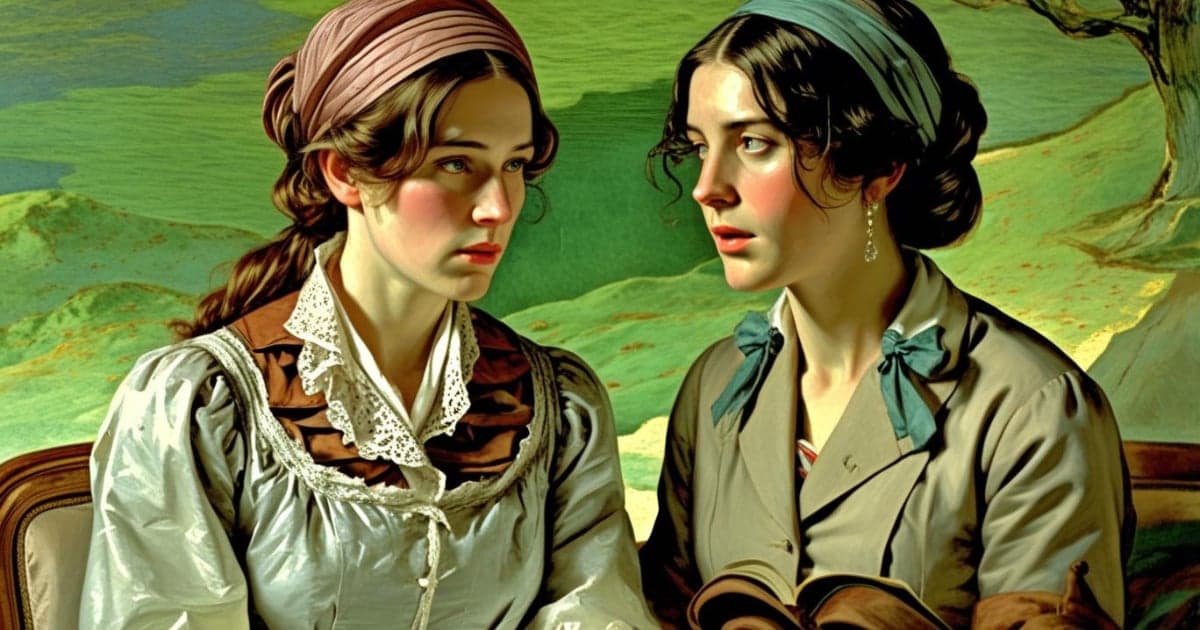
The Golden Gates Are Passed So Tom went on even to the fifth half-year—till he was turned sixteen—at King’s Lorton, while Maggie was growing with a rapidity which her aunts considered highly reprehensible, at Miss Firniss’s boarding-school in the ancient town of Laceham on the Floss, with cousin Lucy for her companion. In her early letters to Tom she had always sent her love to Philip, and asked many questions about him, which were answered by brief sentences about Tom’s toothache, and a turf-house which he was helping to build in the garden, with other items of that kind. She…

Public-domain chapter text, formatted for reading.

Master this chapter. Complete your experience

Purchase the complete book to access all chapters and support classic literature

Buy at Powell'sBuy on Amazon

Available in paperback, hardcover, and e-book formats

Now let's explore the literary elements.

Key Quotes & Analysis

"Miss Firniss’s boarding-school in the ancient town of Laceham on the Floss, with cousin Lucy for her companion."

— Narrator

Context: From the opening of the chapter

This line anchors the scene's pressure and shows how provincial judgment, family debt, or forbidden feeling can harden before anyone offers mercy.

In Today's Words:

In plain terms, the passage says: Miss Firniss’s boarding-school in the ancient town of Laceham on the Floss, with cousin Lucy for her companion. Readers still recognize the same dynamic when society punishes feeling in women while excusing the men who shape their choices. The same pressure shows up today when family duty, gossip, or

"Tom’s toothache, and a turf-house which he was helping to build in the garden, with other items of that kind."

— Narrator

Context: From the opening of the chapter

This line anchors the scene's pressure and shows how provincial judgment, family debt, or forbidden feeling can harden before anyone offers mercy.

In Today's Words:

In plain terms, the passage says: Tom’s toothache, and a turf-house which he was helping to build in the garden, with other items of that kind. Readers still recognize the same dynamic when society punishes feeling in women while excusing the men who shape their choices.

"She was pained to hear Tom say in the holidays that Philip was as queer as ever again, and often cross."

— Narrator

Context: From the opening of the chapter

This line anchors the scene's pressure and shows how provincial judgment, family debt, or forbidden feeling can harden before anyone offers mercy.

In Today's Words:

In plain terms, the passage says: She was pained to hear Tom say in the holidays that Philip was as queer as ever again, and often cross. Readers still recognize the same dynamic when society punishes feeling in women while excusing the men who shape their choices.

"Tom that he ought always to love Philip for being so good to him when his foot was bad, he answered: “Well, it isn’t my fault; _I_ don’t do anything to him."

— Narrator

Context: From the opening of the chapter

This line anchors the scene's pressure and shows how provincial judgment, family debt, or forbidden feeling can harden before anyone offers mercy.

In Today's Words:

In plain terms, the passage says: Tom that he ought always to love Philip for being so good to him when his foot was bad, he answered: “Well, it isn’t my fault; _I_ don’t do Readers still recognize the same dynamic when society punishes feeling in women while excusing the men who shape their choices.

Thematic Threads

Class

In This Chapter

Tom's horror at losing gentleman status reveals how deeply class identity shapes self-worth and future dreams

Development

Evolved from earlier subtle class distinctions to now showing the brutal reality of class mobility working in reverse

In Your Life:

You might feel this when job loss threatens not just income but your social standing in your community.

Identity

In This Chapter

Both siblings must suddenly redefine who they are when their family's social position and financial security disappear

Development

Built on earlier identity formation to now show how external circumstances can shatter self-concept

In Your Life:

You might experience this during major life transitions like divorce, retirement, or children leaving home.

Social Expectations

In This Chapter

The shame Tom feels isn't just about money but about failing to meet society's expectations of success and respectability

Development

Intensified from earlier pressure to succeed to now facing complete social failure

In Your Life:

You might feel this pressure when unable to provide for family in ways society expects.

Resilience

In This Chapter

Maggie emerges as the stronger sibling, showing how crisis can reveal hidden strengths and shift family dynamics

Development

Introduced here as Maggie's character begins showing leadership under pressure

In Your Life:

You might discover unexpected strength when family members need you to step up during emergencies.

Compassion

In This Chapter

Even unsympathetic Mr. Stelling shows kindness, and his wife's simple gesture of packing food deeply moves Maggie

Development

Introduced here showing how crisis can bring out unexpected humanity in others

In Your Life:

You might be surprised by kindness from unexpected sources during your own difficult times.

You now have the context. Time to form your own thoughts.

Discussion Questions

This is not a test. Five prompts guide you through the chapter, from how it opens to how it closes, so you notice context and rhythm rather than facts to memorize. Sit with each question in your own words. When you see "One way to read it," treat it as a starting point, not the only answer.

  1. 1

    What situation opens "When Childhood's Golden Gates Close Forever", and what is at stake for Maggie or the people around her?

    ▶One way to read it

    Tom and Maggie's childhood officially ends as devastating news arrives at school.

    analysis • surface
  2. 2

    How does the middle of "When Childhood's Golden Gates Close Forever" test loyalty, pride, or survival under provincial judgment?

    ▶One way to read it

    The siblings cling to each other as they prepare to return home, their roles shifting as Maggie becomes the strong one guiding Tom through this crisis.

    analysis • medium
  3. 3

    Where in "When Childhood's Golden Gates Close Forever" do family obligation and personal desire pull in opposite directions?

    ▶One way to read it

    The siblings cling to each other as they prepare to return home, their roles shifting as Maggie becomes the strong one guiding Tom through this crisis.

    application • medium
  4. 4

    What does the closing movement of "When Childhood's Golden Gates Close Forever" suggest about love, reputation, or self-knowledge?

    ▶One way to read it

    Tom and Maggie are no longer children dreaming of bright futures, they're young people facing an uncertain world where their family's reputation and security have vanished overnight.

    application • deep
  5. 5

    After "When Childhood's Golden Gates Close Forever", what would you do differently if you were trying to honor family without surrendering your values?

    ▶One way to read it

    Tom and Maggie are no longer children dreaming of bright futures, they're young people facing an uncertain world where their family's reputation and security have vanished overnight.

    reflection • deep

Critical Thinking Exercise

10 minutes

Build Your Identity Safety Net

Create a list of everything that currently defines who you are - your job, roles, relationships, possessions, plans. Then identify which of these could disappear suddenly through circumstances beyond your control. Finally, list the parts of yourself that would survive any external loss - your values, skills, personality traits, or ways of helping others.

Consider:

  • •Notice which identity markers feel most fragile versus most permanent
  • •Consider how much of your self-worth depends on things you can't fully control
  • •Think about which personal qualities have stayed consistent throughout changes in your life

Journaling Prompt

Write about a time when you lost something important to your identity - a job, relationship, or role. What did you discover about yourself that you hadn't realized was there? How did that experience change how you think about security?

Coming Up Next...

Chapter 21: When Pride Meets Reality

Tom and Maggie return to a transformed household where nothing will ever be the same. The full extent of their family's ruin becomes clear, and they must face what their father's breakdown really means for their future.

Continue to Chapter 21
Previous
When Pain Breaks Down Walls
Contents
Next
When Pride Meets Reality
Keep exploring

Continue Exploring

Study guides, teaching tools, themes, and the full library.More ways to read The Mill on the Floss: study guides, teaching tools, and the wider library.

  • The Mill on the Floss Study Guide
  • Teaching Resources
  • Essential Life Index
  • Browse by Theme
  • All Books

Life-skill deep dives in The Mill on the Floss

  • Reading Emotional IntelligenceDevelop empathy for Maggie
  • Recognizing Systemic ConstraintSee how provincial society limits Maggie Tulliver through gossip, gender rules, and class expectation.
  • Understanding LoyaltyGrapple with what Maggie owes Tom, her parents, and herself when duty and desire collide.

You Might Also Like

Middlemarch cover

Middlemarch

George Eliot

Also by George Eliot

Jude the Obscure cover

Jude the Obscure

Thomas Hardy

Explores identity & self

Madame Bovary cover

Madame Bovary

Gustave Flaubert

Explores identity & self

The Scarlet Letter cover

The Scarlet Letter

Nathaniel Hawthorne

Explores identity & self

Browse all 106+ books

Share This Chapter

Know someone who'd enjoy this? Spread the wisdom!

TwitterFacebookLinkedInEmail

Go further with Prestige

Unlock study guides and downloads, early access, and exclusive content — and support free access for everyone.

Subscribe to PrestigeCreate free account
Intelligence Amplifier
Intelligence Amplifier™Powering Wide Reads

Exploring human-AI collaboration through books, essays, and philosophical dialogues. Classic literature transformed into navigational maps for modern life.

2025 Books

→ The Amplified Human Spirit→ The Alarming Rise of Stupidity Amplified→ San Francisco: The AI Capital of the World
Visit intelligenceamplifier.org
hello@widereads.com

WideReads Originals

→ You Are Not Lost→ The Last Chapter First→ The Lit of Love→ Wealth and Poverty→ Wisdom for the Wounded
Arvintech
arvintechAmplify your Mind
Visit at arvintech.com

Navigate

  • Home
  • Library
  • Essential Life Index
  • How It Works
  • Subscribe
  • Account
  • About
  • Contact
  • Authors
  • Suggest a Book
  • Landings

Made For You

  • Trending
  • Students
  • Educators
  • Families
  • Readers
  • Literary Analysis
  • Finding Purpose
  • Letting Go
  • Recovering from a Breakup
  • Corruption
  • Gaslighting in the Classics

Newsletter

Weekly insights from the classics. Amplify Your Mind.

Legal

  • Privacy Policy
  • Terms of Service
  • Editorial Standards
  • Cookie Policy
  • Accessibility

Why Public Domain?

We focus on public domain classics because these timeless works belong to everyone. No paywalls, no restrictions—just wisdom that has stood the test of centuries, freely accessible to all readers.

Public domain books have shaped humanity's understanding of love, justice, ambition, and the human condition. By amplifying these works, we help preserve and share literature that truly belongs to the world.

A Pilgrimage

Powell's City of Books

Portland, Oregon

If you ever find yourself in Portland, walk to the corner of Burnside and 10th. The building takes up an entire city block. Inside is over a million books, new and used on the same shelf, organized by color-coded rooms with names like the Rose Room and the Pearl Room. You can lose an afternoon. You can lose a weekend. You will find a book you have been looking for your whole life, and three you did not know existed.

It is a pilgrimage. We cannot find a bookstore like it anywhere on earth. If you read the classics, and you ever get the chance, go. It belongs on every reader's bucket list.

Visit powells.com

We are not in any way affiliated with Powell's. We are just a very big fan.

© 2026 Wide Reads™. All Rights Reserved.

Intelligence Amplifier™ and Wide Reads™ are proprietary trademarks of Arvin Lioanag.

Copyright Protection: All original content, analyses, discussion questions, pedagogical frameworks, and methodology are protected by U.S. and international copyright law. Unauthorized reproduction, distribution, web scraping, or use for AI training is strictly prohibited. See our Copyright Notice for details.

Disclaimer: The information provided on this website is for general informational and educational purposes only and does not constitute professional, legal, financial, or technical advice. While we strive to ensure accuracy and relevance, we make no warranties regarding completeness, reliability, or suitability. Any reliance on such information is at your own risk. We are not liable for any losses or damages arising from use of this site. By using this site, you agree to these terms.