Wide Reads
Literature MattersLife IndexEducators
Sign in
Where to Begin
The Mill on the Floss - When Childhood Games Turn Dangerous

George Eliot

The Mill on the Floss

When Childhood Games Turn Dangerous

Home›Books›The Mill on the Floss›Chapter 18
Previous
18 of 58
Next

Summary

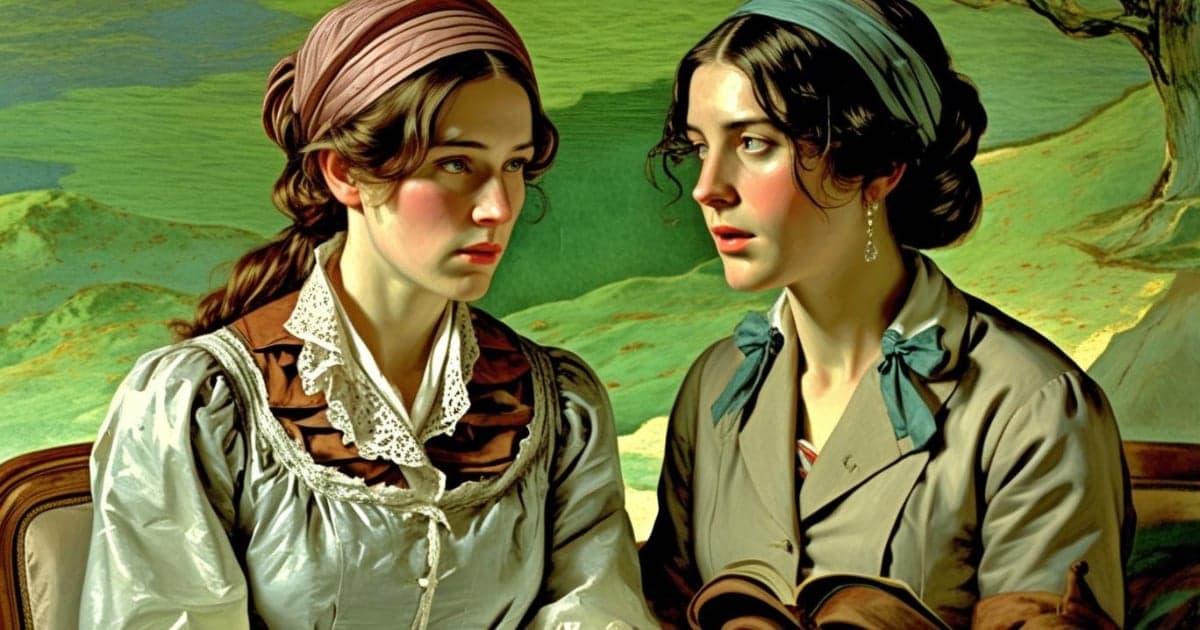
The feud between Tom and Philip deepens after their fight about Philip's father. Tom sees their conflict as just another quarrel to forget, but Philip feels the wound more deeply—Tom hit his most sensitive spot without even realizing it. When Maggie arrives for her visit, she immediately notices Philip and feels drawn to him, partly because she has a tender heart for anyone who seems different or vulnerable. She tries to defend Philip to Tom, arguing that children shouldn't be blamed for their parents' actions, but Tom brushes off her concerns. Later, while the boys study, Tom decides to show Maggie his secret—he's been playing dress-up as a warrior, complete with costume and sword. What starts as innocent fun turns terrifying when Tom, dressed as the Duke of Wellington, begins sword-fighting demonstrations. Despite Maggie's pleas to stop, Tom continues his performance until disaster strikes: the sword falls and cuts his foot, causing him to faint. Maggie's terror that her beloved brother might be dead reveals the depth of their bond, even as their different temperaments create friction. The chapter shows how childhood conflicts can have lasting effects, how empathy works differently in different people, and how the games we play often mask deeper emotional needs—Tom's need to feel powerful and important, Maggie's need to feel loved and included, Philip's need to be accepted despite his differences.

Coming Up in Chapter 19

With Tom injured and emotions running high, the stage is set for deeper connections to form. The next chapter promises revelations about love and relationships that will reshape the dynamics between all three young people.

Share it with friends

Previous ChapterNext Chapter
GO ADS FREE — JOIN US
Original text
complete·1,838 words
M

aggie’s Second Visit

1 / 11

Master this chapter. Complete your experience

Purchase the complete book to access all chapters and support classic literature

Read Free on GutenbergBuy at Powell'sBuy on Amazon

As an Amazon Associate, we earn a small commission from qualifying purchases at no additional cost to you.

Available in paperback, hardcover, and e-book formats

GO ADS FREE — JOIN US

Why This Matters

Connect literature to life

Skill: Reading Protective Behaviors

This chapter teaches how to distinguish between necessary boundaries and defensive walls that hurt everyone involved.

Practice This Today

This week, notice when someone's coldness or aggression might actually be fear—ask yourself what they're trying to protect before responding.

GO ADS FREE — JOIN US

Now let's explore the literary elements.

Key Quotes & Analysis

"The ox is not given to use his teeth as an instrument of attack, and Tom was an excellent bovine lad, who ran at questionable objects in a truly ingenious bovine manner"

— Narrator

Context: Describing how Tom handles conflicts with Philip

Eliot compares Tom to a bull to show he's not malicious, just blunt and direct. He charges at problems without subtlety, hurting people without meaning to through sheer force rather than calculated cruelty.

In Today's Words:

Tom wasn't mean-spirited, just the type who bulldozes through situations without thinking about the damage he causes

"He had blundered on Philip's tenderest point, and had caused him as much acute pain as if he had studied the means with the nicest precision"

— Narrator

Context: Explaining how Tom's thoughtless comment about Philip's father wounded Philip deeply

This shows how accidental cruelty can be just as devastating as intentional cruelty. Tom hit Philip's biggest insecurity without even trying, which almost makes it worse because it shows how little Tom thinks about Philip's feelings.

In Today's Words:

He accidentally hit Philip's biggest sore spot and hurt him as badly as if he'd planned it that way

"Tom saw no reason why they should not make up this quarrel as they had done many others, by behaving as if nothing had happened"

— Narrator

Context: Describing Tom's attitude toward their fight

This reveals Tom's emotional limitations - he thinks you can just ignore serious hurts and move on. He doesn't understand that some wounds need acknowledgment and healing, not just time.

In Today's Words:

Tom figured they'd just pretend nothing happened and everything would go back to normal, like always

Thematic Threads

Loyalty

In This Chapter

Tom's loyalty to his family prevents him from seeing Philip as an individual, while Maggie's broader loyalty to humanity creates conflict with family expectations

Development

Building from earlier chapters where family loyalty was protective, now showing how it can become limiting

In Your Life:

You might find yourself dismissing coworkers' ideas because they're from a different department or 'opposing' team.

Power

In This Chapter

Tom uses his warrior costume and sword-play to practice feeling powerful and in control, but the sword ultimately wounds him

Development

Expanding from Tom's need to be right to his need to feel physically and socially dominant

In Your Life:

You might recognize times when you've used your expertise or position to shut down conversations that make you uncomfortable.

Empathy

In This Chapter

Maggie instinctively understands Philip's vulnerability while Tom cannot allow himself to see it

Development

Deepening the contrast between Maggie's expansive emotional intelligence and Tom's protective narrowness

In Your Life:

You might notice how your capacity for empathy changes based on whether someone is 'your people' or not.

Identity

In This Chapter

Tom needs to be the heroic protector, Philip struggles with being seen beyond his disability, Maggie wants to be the peacemaker

Development

Each character's identity becomes more defined through conflict and social pressure

In Your Life:

You might find yourself playing familiar roles even when they no longer serve you or the situation.

Consequences

In This Chapter

Tom's need to demonstrate power through sword-play literally backfires, injuring him in front of those he wanted to impress

Development

Introduced here as a theme about how our protective mechanisms can become self-destructive

In Your Life:

You might recognize how your attempts to appear strong or in control sometimes create the very problems you're trying to avoid.

GO ADS FREE — JOIN US

You now have the context. Time to form your own thoughts.

Discussion Questions

  1. 1

    Why does Tom dismiss Philip's hurt feelings after their fight, while Philip feels wounded much more deeply?

    analysis • surface
  2. 2

    What's really happening when Tom shuts down Maggie's attempt to defend Philip? What is Tom protecting?

    analysis • medium
  3. 3

    Where do you see this pattern of 'protecting ourselves by not seeing others fully' in your workplace, family, or community?

    application • medium
  4. 4

    How could Tom have acknowledged Philip's humanity while still maintaining his loyalty to his family?

    application • deep
  5. 5

    What does Tom's warrior costume reveal about how people use displays of power when they feel emotionally threatened?

    reflection • deep

Critical Thinking Exercise

10 minutes

Map Your Protection Patterns

Think of someone you've dismissed or kept at distance (coworker, neighbor, family member of someone who hurt you). Write down what you're protecting by not seeing them fully. Then identify one human detail about them you could acknowledge without abandoning your boundaries.

Consider:

  • •Protection can be necessary and healthy - the goal isn't to be vulnerable to everyone
  • •Notice the difference between conscious boundaries and unconscious dismissal
  • •Small acknowledgments of humanity don't require friendship or trust

Journaling Prompt

Write about a time when someone dismissed you to protect themselves or their group. How did it feel? What would you have wanted them to see about you as an individual?

GO ADS FREE — JOIN US

Coming Up Next...

Chapter 19: When Pain Breaks Down Walls

With Tom injured and emotions running high, the stage is set for deeper connections to form. The next chapter promises revelations about love and relationships that will reshape the dynamics between all three young people.

Continue to Chapter 19
Previous
The Complicated Dance of Friendship
Contents
Next
When Pain Breaks Down Walls

Continue Exploring

The Mill on the Floss Study GuideTeaching ResourcesEssential Life IndexBrowse by ThemeAll Books

You Might Also Like

Jane Eyre cover

Jane Eyre

Charlotte Brontë

Explores personal growth

Great Expectations cover

Great Expectations

Charles Dickens

Explores personal growth

The Strange Case of Dr Jekyll and Mr Hyde cover

The Strange Case of Dr Jekyll and Mr Hyde

Robert Louis Stevenson

Explores personal growth

Don Quixote cover

Don Quixote

Miguel de Cervantes Saavedra

Explores personal growth

Browse all 47+ books

Share This Chapter

Know someone who'd enjoy this? Spread the wisdom!

TwitterFacebookLinkedInEmail

Read ad-free with Prestige

Get rid of ads, unlock study guides and downloads, and support free access for everyone.

Subscribe to PrestigeCreate free account
Intelligence Amplifier
Intelligence Amplifier™Powering Wide Reads

Exploring human-AI collaboration through books, essays, and philosophical dialogues. Classic literature transformed into navigational maps for modern life.

2025 Books

→ The Amplified Human Spirit→ The Alarming Rise of Stupidity Amplified→ San Francisco: The AI Capital of the World
Visit intelligenceamplifier.org
hello@widereads.com

WideReads Originals

→ You Are Not Lost→ The Last Chapter First→ The Lit of Love→ Wealth and Poverty→ 10 Paradoxes in the Classics · coming soon
Arvintech
arvintechAmplify your Mind
Visit at arvintech.com

Navigate

  • Home
  • Library
  • Essential Life Index
  • How It Works
  • Subscribe
  • Account
  • About
  • Contact
  • Authors
  • Suggest a Book
  • Landings

Made For You

  • Students
  • Educators
  • Families
  • Readers
  • Literary Analysis
  • Finding Purpose
  • Letting Go
  • Recovering from a Breakup
  • Corruption
  • Gaslighting in the Classics

Newsletter

Weekly insights from the classics. Amplify Your Mind.

Legal

  • Privacy Policy
  • Terms of Service
  • Cookie Policy
  • Accessibility

Why Public Domain?

We focus on public domain classics because these timeless works belong to everyone. No paywalls, no restrictions—just wisdom that has stood the test of centuries, freely accessible to all readers.

Public domain books have shaped humanity's understanding of love, justice, ambition, and the human condition. By amplifying these works, we help preserve and share literature that truly belongs to the world.

A Pilgrimage

Powell's City of Books

Portland, Oregon

If you ever find yourself in Portland, walk to the corner of Burnside and 10th. The building takes up an entire city block. Inside is over a million books, new and used on the same shelf, organized by color-coded rooms with names like the Rose Room and the Pearl Room. You can lose an afternoon. You can lose a weekend. You will find a book you have been looking for your whole life, and three you did not know existed.

It is a pilgrimage. We cannot find a bookstore like it anywhere on earth. If you read the classics, and you ever get the chance, go. It belongs on every reader's bucket list.

Visit powells.com

We are not in any way affiliated with Powell's. We are just a very big fan.

© 2026 Wide Reads™. All Rights Reserved.

Intelligence Amplifier™ and Wide Reads™ are proprietary trademarks of Arvin Lioanag.

Copyright Protection: All original content, analyses, discussion questions, pedagogical frameworks, and methodology are protected by U.S. and international copyright law. Unauthorized reproduction, distribution, web scraping, or use for AI training is strictly prohibited. See our Copyright Notice for details.

Disclaimer: The information provided on this website is for general informational and educational purposes only and does not constitute professional, legal, financial, or technical advice. While we strive to ensure accuracy and relevance, we make no warranties regarding completeness, reliability, or suitability. Any reliance on such information is at your own risk. We are not liable for any losses or damages arising from use of this site. By using this site, you agree to these terms.