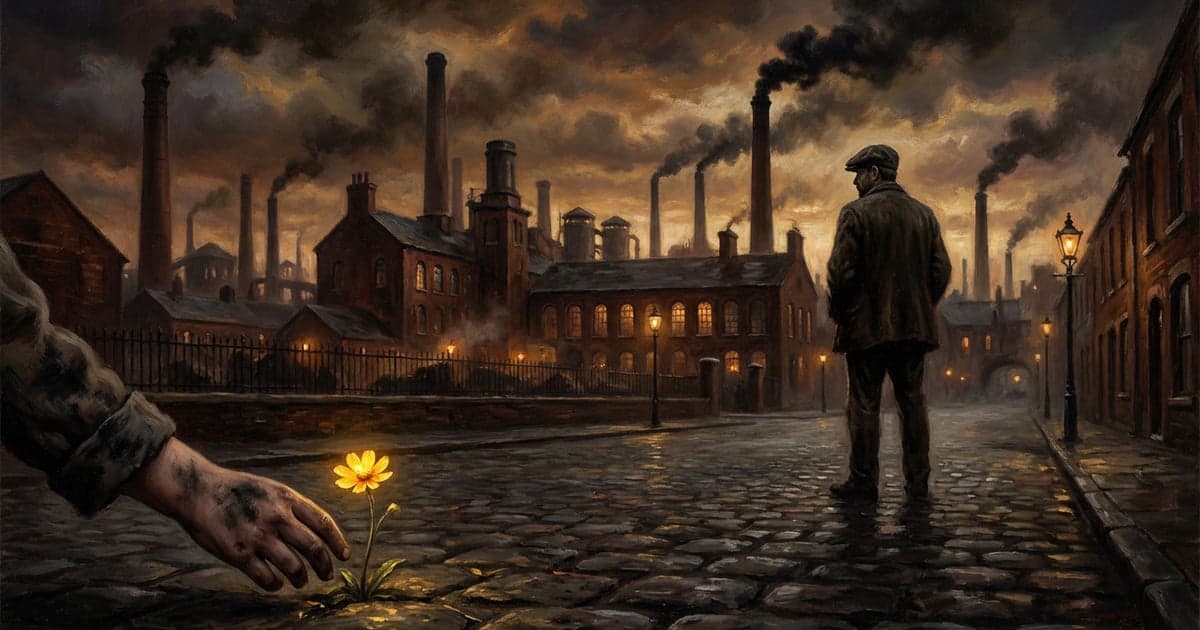
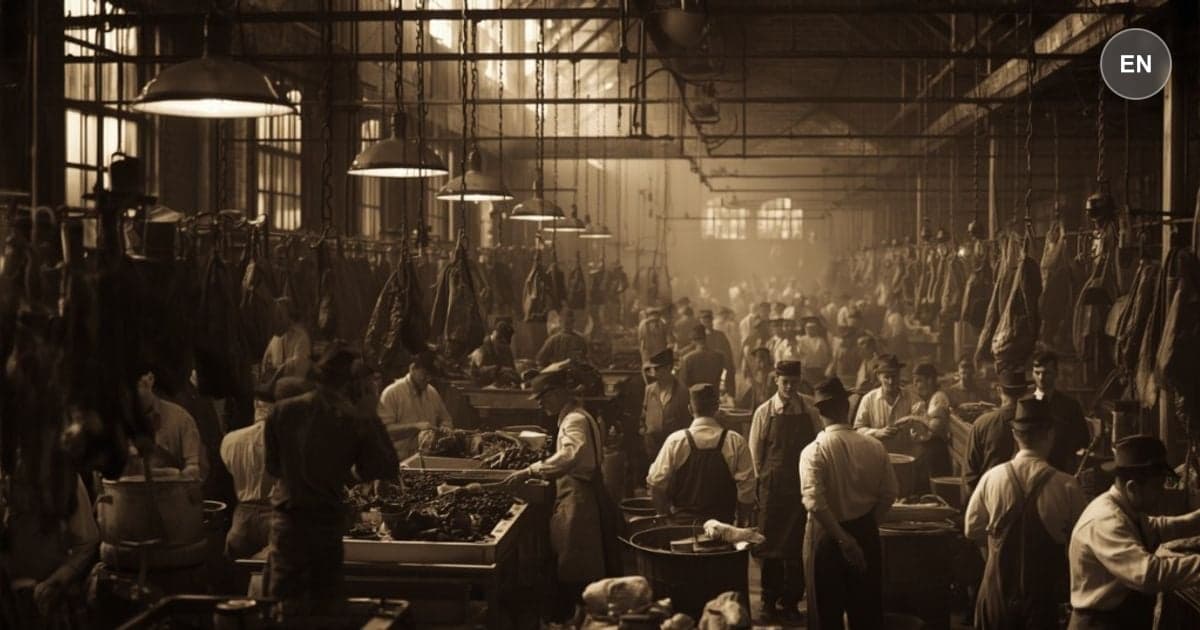
Ernest speaks at the elite Philomath Club, where the wealthiest and most powerful people gather monthly. What starts as a seemingly gentle talk becomes a devastating attack on the ruling class. Ernest describes his journey from working-class origins to meeting the upper classes, only to discover they're not the noble, intelligent people he'd imagined from books. Instead, he found them morally corrupt, intellectually lazy, and obsessed with money despite their religious pretensions.
He challenges them directly: capitalism has failed because despite humanity's thousand-fold increase in productive power, millions still live in poverty while children work in factories. The audience grows increasingly agitated as Ernest demands they answer his charges of mismanagement. Colonel Van Gilbert, a top corporate lawyer, tries to dismiss Ernest with condescending remarks about fallacies and youth, but Ernest systematically destroys his arguments, exposing the lawyer's ignorance outside his specialty.
The evening climaxes when Mr. Wickson, the coolest head among them, finally responds honestly: they won't debate or justify themselves, they'll simply use force to maintain power. When Ernest warns that workers will also use force if denied democratic victory, both sides acknowledge the coming conflict. The chapter reveals how power structures really work: when moral arguments fail, the powerful fall back on violence to protect their position.
London exposes a psychological mechanism that transcends his era: when people benefit from a broken system, they develop elaborate mental frameworks to avoid confronting their role in perpetuating harm.
Ernest's wealthy audience can't engage with his economic arguments because doing so would require admitting their comfortable lives depend on others' suffering.
Ernest exposes the moral bankruptcy of the wealthy elite who justify their privilege through religious rhetoric while perpetuating poverty
Wickson's honest admission that they'll use force rather than moral arguments to maintain control reveals power's true nature
The elite's self-image as noble, intelligent leaders crumbles when confronted with evidence of their actual impact
Both sides acknowledge that democratic debate has failed and physical force will determine the outcome
London exposes a psychological mechanism that transcends his era: when people benefit from a broken system, they develop elaborate mental frameworks to avoid confronting their role in perpetuating harm.
Ernest's wealthy audience can't engage with his economic arguments because doing so would require admitting their comfortable lives depend on others' suffering.
Ernest exposes the moral bankruptcy of the wealthy elite who justify their privilege through religious rhetoric while perpetuating poverty
Wickson's honest admission that they'll use force rather than moral arguments to maintain control reveals power's true nature
The elite's self-image as noble, intelligent leaders crumbles when confronted with evidence of their actual impact
Both sides acknowledge that democratic debate has failed and physical force will determine the outcome