Wide Reads
Literature MattersLife IndexEducators
Sign in
Where to Begin
The Iron Heel - The End of Open Warfare

Jack London

The Iron Heel

The End of Open Warfare

Home›Books›The Iron Heel›Chapter 16
Previous
16 of 25
Next

Summary

As Avis's father embraces proletarian life through various working-class jobs, finding joy in direct investigation of social conditions, the political situation deteriorates rapidly. The socialist congressmen take their seats without incident, but this apparent victory masks a trap. When Granger politicians are prevented from taking office in states they won, violence erupts—but it's orchestrated violence. The Iron Heel uses agents-provocateurs to incite the Peasant Revolt, then crushes it brutally. Eleven thousand people are massacred in Sacramento alone. Similar bloodbaths occur across Granger states, with farmers shot, hanged, and their communities destroyed. The militia law forces workers to kill their fellow workers in other states, while deserters who flee to the mountains are hunted down and executed without trial. The Kansas militia mutiny results in six thousand deaths when the Iron Heel traps and annihilates the entire unit. Simultaneously, three-quarters of a million coal miners strike but are crushed in the first great 'slave-drive' under the brutal Pocock. Through all this carnage, the socialists hold firm, avoiding the trap of premature uprising. Instead, they develop a sophisticated underground network: weeding out enemy agents, organizing Fighting Groups for targeted resistance, and infiltrating the Iron Heel's own organization. This shadow war becomes a deadly game of espionage where trust is impossible but essential, and betrayal means death. The Revolution transforms into something resembling a religion, with absolute devotion to the cause of human liberty.

Coming Up in Chapter 17

The Iron Heel's victory in open warfare forces the revolutionaries deeper underground, where new forms of resistance and survival will emerge. Avis will witness how the oligarchy's control reshapes society itself.

Share it with friends

Previous ChapterNext Chapter
GO ADS FREE — JOIN US
Original text
complete·3,487 words

THE END

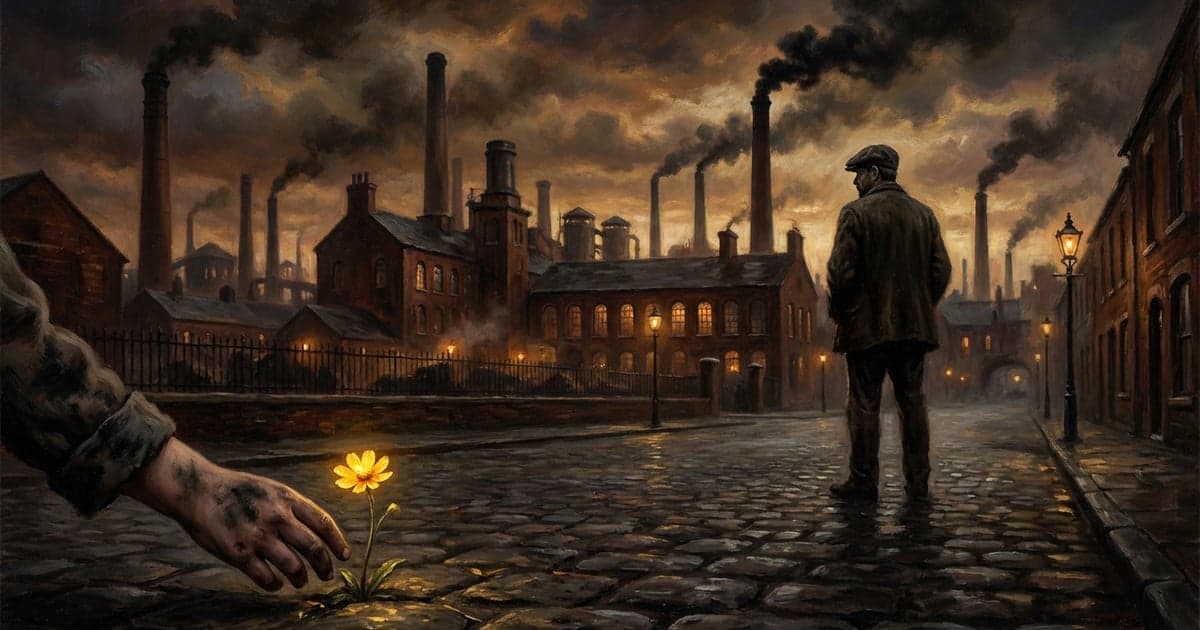
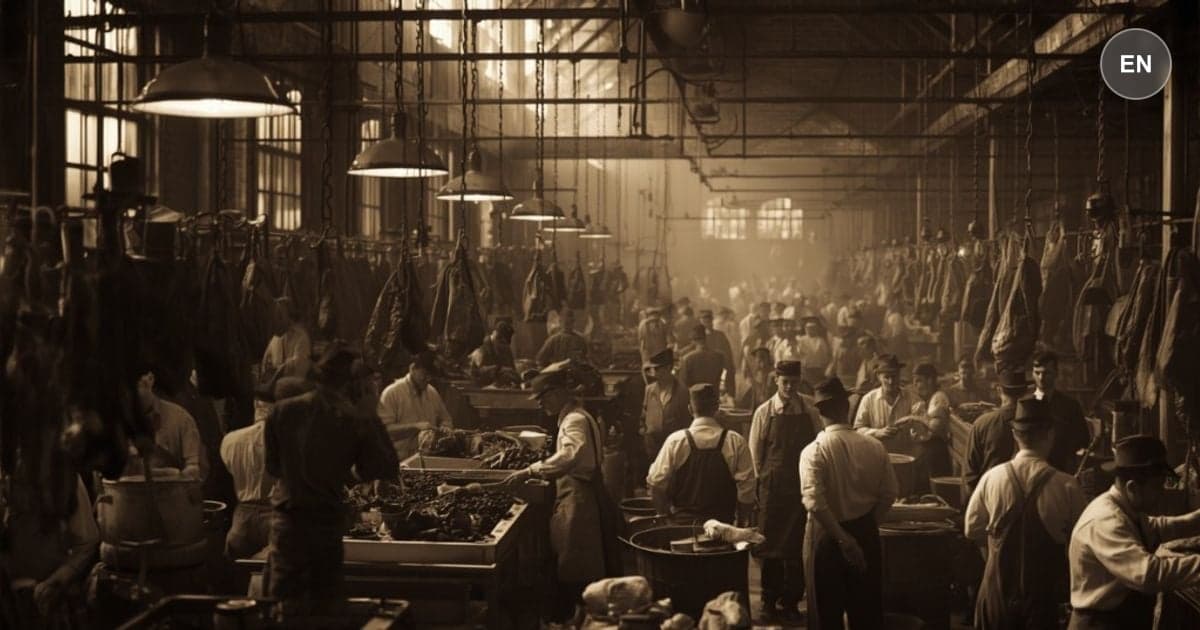
When it came time for Ernest and me to go to Washington, father did not accompany us. He had become enamoured of proletarian life. He looked upon our slum neighborhood as a great sociological laboratory, and he had embarked upon an apparently endless orgy of investigation. He chummed with the laborers, and was an intimate in scores of homes. Also, he worked at odd jobs, and the work was play as well as learned investigation, for he delighted in it and was always returning home with copious notes and bubbling over with new adventures. He was the perfect scientist.

1 / 20

Master this chapter. Complete your experience

Purchase the complete book to access all chapters and support classic literature

Read Free on GutenbergBuy at Powell'sBuy on Amazon

As an Amazon Associate, we earn a small commission from qualifying purchases at no additional cost to you.

Available in paperback, hardcover, and e-book formats

GO ADS FREE — JOIN US

Why This Matters

Connect literature to life

Skill: Detecting Manufactured Urgency

This chapter teaches how to recognize when crises are artificially created to justify predetermined actions that benefit those in power.

Practice This Today

This week, notice when someone creates a deadline or emergency that conveniently requires you to accept something you normally wouldn't—then ask who benefits from the urgency.

GO ADS FREE — JOIN US

Now let's explore the literary elements.

Key Quotes & Analysis

"He looked upon our slum neighborhood as a great sociological laboratory, and he had embarked upon an apparently endless orgy of investigation."

— Narrator

Context: Avis describes her father's fascination with studying working-class life firsthand

This reveals both the father's genuine intellectual curiosity and the privilege that allows him to treat poverty as an interesting experiment. The word 'orgy' suggests excessive indulgence in something that for others is simply survival.

In Today's Words:

He treated our poor neighborhood like his personal research project and couldn't get enough of studying how the other half lives.

"The Iron Heel had prepared for the Peasant Revolt, had prepared for it so well that it was a trap."

— Narrator

Context: Explaining how the ruling class orchestrated the very uprising they claimed to be fighting

This shows the sophisticated manipulation tactics of those in power - they don't just react to threats, they create them to justify their responses. It reveals how 'law and order' can be weaponized against legitimate grievances.

In Today's Words:

The people in charge didn't just expect the uprising - they set it up so they'd have an excuse to crack down hard.

"The Revolution took on largely the character of religion. We worshipped at the shrine of the Revolution, which was the shrine of liberty."

— Narrator

Context: Describing how the underground movement became a sacred cause for its members

This shows how political movements can become deeply spiritual experiences when people are fighting for their basic humanity. The religious language suggests total commitment and willingness to sacrifice everything for the cause.

In Today's Words:

Fighting for freedom became like a religion to us - we were willing to die for it because it was bigger than our individual lives.

Thematic Threads

Manufactured Consent

In This Chapter

The Iron Heel uses agent-provocateurs to create violence they can then crush, manufacturing public support for their brutal methods

Development

Builds on earlier themes of deception, showing how manipulation operates at the systemic level

In Your Life:

You might see this when your workplace creates artificial crises to justify unpopular changes.

Strategic Patience

In This Chapter

The socialists resist the temptation to strike prematurely, instead building underground networks and avoiding traps

Development

Contrasts with earlier impulsive actions, showing the evolution toward disciplined resistance

In Your Life:

You might need this when facing workplace bullying—sometimes the winning move is not to react immediately.

Trust Networks

In This Chapter

Survival depends on building reliable networks while weeding out infiltrators and agents

Development

Deepens the relationship theme by showing how trust becomes literally life-or-death

In Your Life:

You might recognize this in building your support system—knowing who you can really count on matters.

Moral Transformation

In This Chapter

The Revolution becomes like a religion, demanding absolute devotion to the cause of human liberty

Development

Shows how extreme circumstances can transform ordinary people into something approaching fanatics

In Your Life:

You might see this in how crisis situations reveal what you're truly willing to sacrifice for.

Systemic Violence

In This Chapter

The Iron Heel forces workers to kill other workers through the militia system, turning the oppressed against each other

Development

Escalates from earlier individual violence to show how systems can corrupt even decent people

In Your Life:

You might recognize this when you're pressured to compete against coworkers instead of addressing management problems.

GO ADS FREE — JOIN US

You now have the context. Time to form your own thoughts.

Discussion Questions

  1. 1

    How did the Iron Heel use the Peasant Revolt to their advantage, even though they didn't start it naturally?

    analysis • surface
  2. 2

    Why did the socialists refuse to join the uprising when their allies were being massacred?

    analysis • medium
  3. 3

    Where have you seen someone create a problem just so they could offer to fix it?

    application • medium
  4. 4

    When facing manufactured urgency in your own life, what questions should you ask before reacting?

    application • deep
  5. 5

    What does this chapter reveal about the difference between being right and being effective?

    reflection • deep

Critical Thinking Exercise

10 minutes

Spot the Setup

Think of a recent situation where you felt pressured to make a quick decision or take immediate action. Write down what happened, who was pushing for urgency, and what they stood to gain from your quick response. Then rewrite the scenario as if you had taken time to think it through first.

Consider:

  • •Who benefits most from you acting quickly without thinking?
  • •What would happen if you waited 24 hours before responding?
  • •Are there patterns you can identify in how this person or organization creates urgency?

Journaling Prompt

Write about a time when you refused to be rushed into a decision. What did you learn about yourself and the situation by taking time to think?

GO ADS FREE — JOIN US

Coming Up Next...

Chapter 17: The Scarlet Livery

The Iron Heel's victory in open warfare forces the revolutionaries deeper underground, where new forms of resistance and survival will emerge. Avis will witness how the oligarchy's control reshapes society itself.

Continue to Chapter 17
Previous
The Last Days
Contents
Next
The Scarlet Livery

Continue Exploring

The Iron Heel Study GuideTeaching ResourcesEssential Life IndexBrowse by ThemeAll Books

You Might Also Like

Jane Eyre cover

Jane Eyre

Charlotte Brontë

Explores personal growth

Great Expectations cover

Great Expectations

Charles Dickens

Explores personal growth

The Strange Case of Dr Jekyll and Mr Hyde cover

The Strange Case of Dr Jekyll and Mr Hyde

Robert Louis Stevenson

Explores personal growth

Don Quixote cover

Don Quixote

Miguel de Cervantes Saavedra

Explores personal growth

Browse all 47+ books
GO ADS FREE — JOIN US

Share This Chapter

Know someone who'd enjoy this? Spread the wisdom!

TwitterFacebookLinkedInEmail

Read ad-free with Prestige

Get rid of ads, unlock study guides and downloads, and support free access for everyone.

Subscribe to PrestigeCreate free account
Intelligence Amplifier
Intelligence Amplifier™Powering Wide Reads

Exploring human-AI collaboration through books, essays, and philosophical dialogues. Classic literature transformed into navigational maps for modern life.

2025 Books

→ The Amplified Human Spirit→ The Alarming Rise of Stupidity Amplified→ San Francisco: The AI Capital of the World
Visit intelligenceamplifier.org
hello@widereads.com

WideReads Originals

→ You Are Not Lost→ The Last Chapter First→ The Lit of Love→ Wealth and Poverty→ 10 Paradoxes in the Classics · coming soon
Arvintech
arvintechAmplify your Mind
Visit at arvintech.com

Navigate

  • Home
  • Library
  • Essential Life Index
  • How It Works
  • Subscribe
  • Account
  • About
  • Contact
  • Authors
  • Suggest a Book
  • Landings

Made For You

  • Students
  • Educators
  • Families
  • Readers
  • Literary Analysis
  • Finding Purpose
  • Letting Go
  • Recovering from a Breakup
  • Corruption
  • Gaslighting in the Classics

Newsletter

Weekly insights from the classics. Amplify Your Mind.

Legal

  • Privacy Policy
  • Terms of Service
  • Cookie Policy
  • Accessibility

Why Public Domain?

We focus on public domain classics because these timeless works belong to everyone. No paywalls, no restrictions—just wisdom that has stood the test of centuries, freely accessible to all readers.

Public domain books have shaped humanity's understanding of love, justice, ambition, and the human condition. By amplifying these works, we help preserve and share literature that truly belongs to the world.

A Pilgrimage

Powell's City of Books

Portland, Oregon

If you ever find yourself in Portland, walk to the corner of Burnside and 10th. The building takes up an entire city block. Inside is over a million books, new and used on the same shelf, organized by color-coded rooms with names like the Rose Room and the Pearl Room. You can lose an afternoon. You can lose a weekend. You will find a book you have been looking for your whole life, and three you did not know existed.

It is a pilgrimage. We cannot find a bookstore like it anywhere on earth. If you read the classics, and you ever get the chance, go. It belongs on every reader's bucket list.

Visit powells.com

We are not in any way affiliated with Powell's. We are just a very big fan.

© 2026 Wide Reads™. All Rights Reserved.

Intelligence Amplifier™ and Wide Reads™ are proprietary trademarks of Arvin Lioanag.

Copyright Protection: All original content, analyses, discussion questions, pedagogical frameworks, and methodology are protected by U.S. and international copyright law. Unauthorized reproduction, distribution, web scraping, or use for AI training is strictly prohibited. See our Copyright Notice for details.

Disclaimer: The information provided on this website is for general informational and educational purposes only and does not constitute professional, legal, financial, or technical advice. While we strive to ensure accuracy and relevance, we make no warranties regarding completeness, reliability, or suitability. Any reliance on such information is at your own risk. We are not liable for any losses or damages arising from use of this site. By using this site, you agree to these terms.