Wide Reads
Literature MattersLife IndexEducators
Sign in
Where to Begin

The Price of Speaking Truth — The Iron Heel

The Iron Heel - The Price of Speaking Truth

Jack London

The Iron Heel

The Price of Speaking Truth

Home›Books›The Iron Heel›Chapter 12: The Price of Speaking Truth
Previous
12 of 25
Next

Analysis by the Wide Reads editorial team·Reviewed against the source text·Updated September 1, 2024

Summary

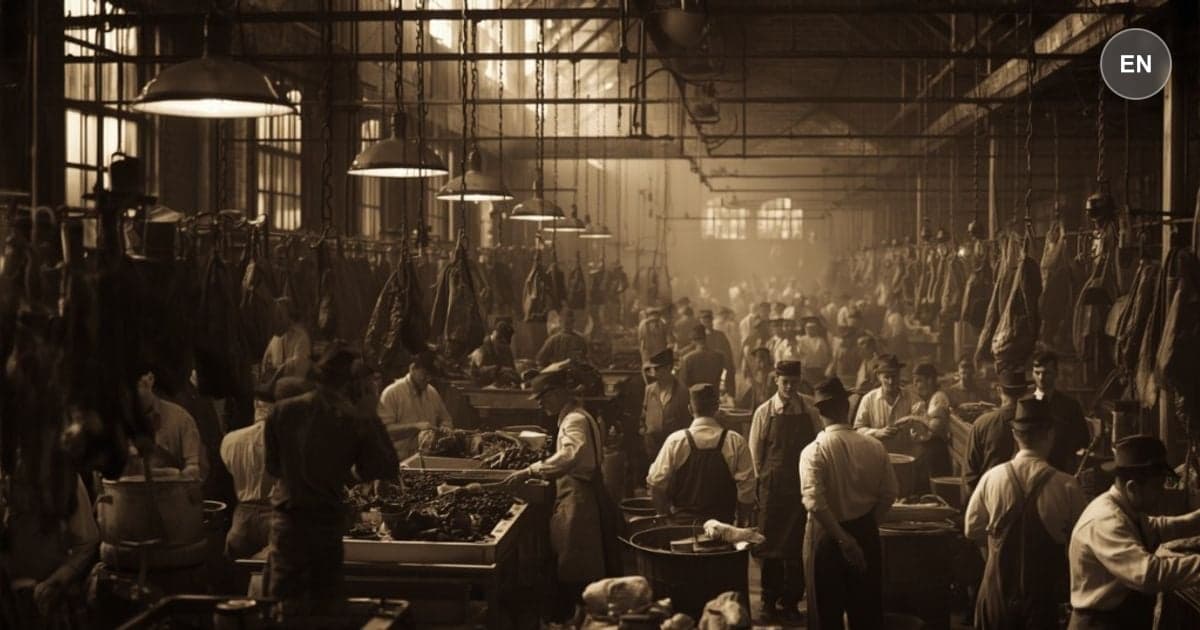
Avis encounters Bishop Morehouse after his mysterious disappearance, finding him transformed from wealthy clergyman to common laborer living among the poor. The Bishop had been institutionalized in a mental asylum after preaching that the Church had abandoned Christ's teachings for material wealth. Though he appeared to recant and was released, he secretly sold all his possessions and now lives in hiding, using his fortune to directly help the destitute. Avis follows him to a tenement where they meet an elderly German seamstress who works brutal hours for six cents per finished pair of pants, barely surviving on one meal a day.

The woman's daughter died from factory work at forty, a tragedy that haunts her daily. The Bishop, now dressed in overalls and carrying coal, has found his true calling feeding 'Christ's lambs' with actual food before spiritual nourishment. He lives in constant fear of being recommitted to the asylum, knowing that society considers anyone who gives away wealth to help the poor to be insane.

Despite his terror of the madhouse, he continues his work, having learned that labor is criminally underpaid while he had lived off others' work his entire life. The chapter ends with the Bishop being recaptured and committed to Napa Asylum, illustrating how the system destroys those who threaten it by actually following Christian principles. Ernest bitterly notes that while Christ told the rich to give to the poor, modern society declares such people crazy.

In this chapter: Terms Characters Key Quotes Themes Modern Story

Why This Matters

Connect literature to life

Skill: Detecting Virtue Punishment

Institutions look neutral until someone honest tests whether truth still has a price. The Bishop had been institutionalized in a mental asylum after preaching that the Church had abandoned Christ's teachings for material wealth. This week, notice when someone gets criticized not for being wrong, but for taking their values too seriously - the nurse who reports understaffing, the teacher who spends their own money on supplies, the neighbor who actually helps homeless people.

Coming Up in Chapter 13

The oligarchy's stranglehold tightens as the working class prepares for their ultimate weapon - a general strike that could bring the entire system to its knees. But the Iron Heel has been preparing for this moment too.

Share it with friends

PreviousPrevious ChapterNextNext Chapter
Original text
3,784 wordscomplete

Chapter 12

The Price of Speaking Truth

THE BISHOP It was after my marriage that I chanced upon Bishop Morehouse. But I must give the events in their proper sequence. After his outbreak at the I. P. H. Convention, the Bishop, being a gentle soul, had yielded to the friendly pressure brought to bear upon him, and had gone away on a vacation. But he returned more fixed than ever in his determination to preach the message of the Church. To the consternation of his congregation, his first sermon was quite similar to the address he had given before the Convention. Again he said, and at length…

Public-domain chapter text, formatted for reading.

Master this chapter. Complete your experience

Purchase the complete book to access all chapters and support classic literature

Buy at Powell's

Available in paperback, hardcover, and e-book formats

Now let's explore the literary elements.

Key Quotes & Analysis

"THE BISHOP It was after my marriage that I chanced upon Bishop Morehouse."

— Narrator

Context: From The Price of Speaking Truth

This line marks where private conscience collides with public power, and shows how quickly comfort turns into complicity.

In Today's Words:

When media owners and politicians share the same donors, This line marks where private conscience collides with public power, and shows how quickly comfort turns into complicity. Notice who controls narrative, enforcement, and the paycheck before you call it democracy. Ask who benefits when workers are told to trust the process instead of the facts.

"But I must give the events in their proper sequence."

— Narrator

Context: From The Price of Speaking Truth

This line marks where private conscience collides with public power, and shows how quickly comfort turns into complicity.

In Today's Words:

After a reform speech changes nothing about who holds the guns, This line marks where private conscience collides with public power, and shows how quickly comfort turns into complicity. Collective memory is infrastructure; without it, each generation relearns the trap alone. Ask who benefits when workers are told to trust the process instead of the.

"I called repeatedly, but was denied access to him; and I was terribly impressed by the tragedy of a sane, normal, saintly man being crushed by the brutal will of society."

— Narrator

Context: From The Price of Speaking Truth

This line marks where private conscience collides with public power, and shows how quickly comfort turns into complicity.

In Today's Words:

When solidarity fractures because one tier got a raise and a title, This line marks where private conscience collides with public power, and shows how quickly comfort turns into complicity. The line still explains why truth-tellers are treated as threats before they are treated as citizens.

"His views were perilous to society, and society could not conceive that such perilous views could be the product of a sane mind."

— Narrator

Context: From The Price of Speaking Truth

This line marks where private conscience collides with public power, and shows how quickly comfort turns into complicity.

In Today's Words:

When executives call a meeting about values while cutting wages, This line marks where private conscience collides with public power, and shows how quickly comfort turns into complicity. Document the mechanism early; oligarchies prefer their victims surprised and isolated. Ask who benefits when workers are told to trust the process instead of the facts.

Thematic Threads

Class

In This Chapter

The Bishop discovers the brutal reality of working poverty through the seamstress who earns six cents per pair of pants

Development

Evolving from abstract class theory to visceral understanding of economic exploitation

In Your Life:

You might recognize this when you realize how disconnected your assumptions about poverty are from the actual experience of financial desperation.

Identity

In This Chapter

Bishop Morehouse completely transforms his identity from wealthy clergyman to working-class laborer

Development

Building on earlier themes of characters discovering their authentic selves through crisis

In Your Life:

You might face this when a major life change forces you to question who you really are versus who you've been pretending to be.

Social Expectations

In This Chapter

Society expects religious leaders to preach charity but considers them insane when they actually practice radical generosity

Development

Deepening the exploration of how society punishes authentic virtue while rewarding performative morality

In Your Life:

You might encounter this when you realize that people want you to talk about doing the right thing, not actually do it.

Personal Growth

In This Chapter

The Bishop's growth comes through direct contact with suffering rather than theoretical knowledge

Development

Continuing the theme that real understanding requires lived experience, not just intellectual awareness

In Your Life:

You might experience this when book learning fails you and you realize you need to actually live through something to understand it.

Human Relationships

In This Chapter

The relationship between Avis and the transformed Bishop shows how authentic connection requires seeing people as they really are

Development

Building on earlier explorations of how genuine relationships survive radical personal transformation

In Your Life:

You might recognize this in relationships that deepen when someone shows you their authentic self rather than their public persona.

You now have the context. Time to form your own thoughts.

Discussion Questions

This is not a test. Five prompts guide you through the chapter, from how it opens to how it closes, so you notice context and rhythm rather than facts to memorize. Sit with each question in your own words. When you see "One way to read it," treat it as a starting point, not the only answer.

  1. 1

    What situation opens "The Price of Speaking Truth" for Avis and Ernest, and what is immediately at stake?

    ▶One way to read it

    Avis encounters Bishop Morehouse after his mysterious disappearance, finding him transformed from wealthy clergyman to common laborer living among the poor.

    analysis • surface
  2. 2

    How does the middle of "The Price of Speaking Truth" show who controls institutions, narrative, or force?

    ▶One way to read it

    The Bishop, now dressed in overalls and carrying coal, has found his true calling feeding 'Christ's lambs' with actual food before spiritual nourishment.

    analysis • medium
  3. 3

    Where do you see the authentic virtue trap in modern politics, workplaces, or media today?

    ▶One way to read it

    One reading: the same pattern appears when wealth captures regulators, platforms, and the story of what happened.

    application • medium
  4. 4

    What does the closing movement of "The Price of Speaking Truth" suggest about the cost of seeing clearly?

    ▶One way to read it

    Ernest bitterly notes that while Christ told the rich to give to the poor, modern society declares such people crazy.

    application • deep
  5. 5

    After "The Price of Speaking Truth", what would you document or organize differently before the next crackdown?

    ▶One way to read it

    A practical response is to build trusted networks, keep records, and separate hope from preparation.

    reflection • deep

Critical Thinking Exercise

10 minutes

Map the Punishment Pattern

Think of three examples from your own life or community where someone got in trouble for doing the 'right thing' everyone says they support. Write down what they did, how they were punished, and what message this sent to others. Look for the pattern: when does society punish the very behavior it claims to value?

Consider:

  • •Consider workplace situations where honesty or ethics created problems
  • •Think about family or community situations where someone was criticized for helping 'too much'
  • •Notice how the punishment often comes disguised as concern for the person's wellbeing

Journaling Prompt

Write about a time when you held back from doing what you thought was right because you feared the consequences. What would it take for you to act despite potential backlash?

Coming Up Next...

Chapter 13: The Power of Collective Action

The oligarchy's stranglehold tightens as the working class prepares for their ultimate weapon - a general strike that could bring the entire system to its knees. But the Iron Heel has been preparing for this moment too.

Continue to Chapter 13
Previous
Love in the Time of Oppression
Contents
Next
The Power of Collective Action
Keep exploring

Continue Exploring

Study guides, teaching tools, themes, and the full library.More ways to read The Iron Heel: study guides, teaching tools, and the wider library.

  • The Iron Heel Study Guide
  • Teaching Resources
  • Essential Life Index
  • Browse by Theme
  • All Books

What this chapter teaches

Theme analyses that draw on this chapter and apply it to modern life.

  • Speaking Truth to PowerErnest refuses polite abstraction at the ministers

You Might Also Like

Hard Times cover

Hard Times

Charles Dickens

Explores society & class

Heart of Darkness cover

Heart of Darkness

Joseph Conrad

Explores power & authority

Noli Me Tángere cover

Noli Me Tángere

José Rizal

Explores power & authority

The Jungle cover

The Jungle

Upton Sinclair

Explores society & class

Browse all 106+ books

Share This Chapter

Know someone who'd enjoy this? Spread the wisdom!

TwitterFacebookLinkedInEmail

Go further with Prestige

Unlock study guides and downloads, early access, and exclusive content — and support free access for everyone.

Subscribe to PrestigeCreate free account
Intelligence Amplifier
Intelligence Amplifier™Powering Wide Reads

Exploring human-AI collaboration through books, essays, and philosophical dialogues. Classic literature transformed into navigational maps for modern life.

2025 Books

→ The Amplified Human Spirit→ The Alarming Rise of Stupidity Amplified→ San Francisco: The AI Capital of the World
Visit intelligenceamplifier.org
hello@widereads.com

WideReads Originals

→ You Are Not Lost→ The Last Chapter First→ The Lit of Love→ Wealth and Poverty→ Wisdom for the Wounded
Arvintech
arvintechAmplify your Mind
Visit at arvintech.com

Navigate

  • Home
  • Library
  • Essential Life Index
  • How It Works
  • Subscribe
  • Account
  • About
  • Contact
  • Authors
  • Suggest a Book
  • Landings

Made For You

  • Trending
  • Students
  • Educators
  • Families
  • Readers
  • Literary Analysis
  • Finding Purpose
  • Letting Go
  • Recovering from a Breakup
  • Corruption
  • Gaslighting in the Classics

Newsletter

Weekly insights from the classics. Amplify Your Mind.

Legal

  • Privacy Policy
  • Terms of Service
  • Editorial Standards
  • Cookie Policy
  • Accessibility

Why Public Domain?

We focus on public domain classics because these timeless works belong to everyone. No paywalls, no restrictions—just wisdom that has stood the test of centuries, freely accessible to all readers.

Public domain books have shaped humanity's understanding of love, justice, ambition, and the human condition. By amplifying these works, we help preserve and share literature that truly belongs to the world.

A Pilgrimage

Powell's City of Books

Portland, Oregon

If you ever find yourself in Portland, walk to the corner of Burnside and 10th. The building takes up an entire city block. Inside is over a million books, new and used on the same shelf, organized by color-coded rooms with names like the Rose Room and the Pearl Room. You can lose an afternoon. You can lose a weekend. You will find a book you have been looking for your whole life, and three you did not know existed.

It is a pilgrimage. We cannot find a bookstore like it anywhere on earth. If you read the classics, and you ever get the chance, go. It belongs on every reader's bucket list.

Visit powells.com

We are not in any way affiliated with Powell's. We are just a very big fan.

© 2026 Wide Reads™. All Rights Reserved.

Intelligence Amplifier™ and Wide Reads™ are proprietary trademarks of Arvin Lioanag.

Copyright Protection: All original content, analyses, discussion questions, pedagogical frameworks, and methodology are protected by U.S. and international copyright law. Unauthorized reproduction, distribution, web scraping, or use for AI training is strictly prohibited. See our Copyright Notice for details.

Disclaimer: The information provided on this website is for general informational and educational purposes only and does not constitute professional, legal, financial, or technical advice. While we strive to ensure accuracy and relevance, we make no warranties regarding completeness, reliability, or suitability. Any reliance on such information is at your own risk. We are not liable for any losses or damages arising from use of this site. By using this site, you agree to these terms.