
Free study guide · no paywall
The Importance of Being EarnestStudy Guide
by Oscar Wilde (1895)
Names, handbags, and Bunbury, mapped across nine scenes and six lessons in Wilde's 1895 farce.
Start here
Plot, characters & chapter jump
9 chapter summaries · 7 key figures · quotes · free
Plot summary
Jack Worthing is Ernest in London and a careful guardian in Hertfordshire, while Algernon keeps an invalid called Bunbury so dull dinners can be skipped. Gwendolen will marry only a man named Ernest; Cecily has already engaged that name in her diary. Lady Bracknell's list passes polish and fails a handbag at Victoria Station until Miss Prism, an Army List, and a black leather bag make the performance official.
Key characters
Jump to chapter
What readers search for
Common questions about The Importance of Being Earnest
What is The Importance of Being Earnest about?
Wilde's 1895 comedy follows Jack Worthing, who is Ernest in London and a grave guardian in Hertfordshire, and Algernon Moncrieff, who escapes dinners through an invalid friend called Bunbury. Gwendolen will marry only Ernest. Cecily has already engaged Ernest in her diary. Lady Bracknell audits suitors with a notebook. Miss Prism's lost handbag ties the farce to Victoria Station and an Army List that finally makes the joke a fact.
Recognising Performed IdentityWhat is Bunburying in The Importance of Being Earnest?
Algernon invented an invaluable permanent invalid called Bunbury so he can leave town whenever society bores him. Jack keeps a parallel fiction: a wicked brother Ernest who explains his town absences. Bunburying is Wilde's label for polite double life: telegrams, relapses, and moral alibis that work until two plots share one garden.
Spotting Bunburying and the Double LifeWhy is the name Ernest important in The Importance of Being Earnest?
Gwendolen and Cecily both claim the name inspires absolute confidence. Jack proposes as Ernest though he is Jack in the country. Algernon races to be christened Ernest when Cecily refuses Algernon as a husband. The title pun lands when the Army List reveals Jack's father was Ernest John Moncrieff, so years of performance accidentally become truth.
Seeing Earnestness as a MaskWho is Lady Bracknell in The Importance of Being Earnest?
Augusta Bracknell is Gwendolen's mother and Algernon's aunt, the play's supreme gatekeeper. She interviews Jack on smoke, income, town house, politics, and parents, then rejects him for being found in a handbag at Victoria Station. She blocks Algernon's match until fortunes and profiles satisfy her. Her epigrams turn marriage into a balance sheet with pedigree as the veto line.
Surviving Lady Bracknell-Style InterrogationWhat is the handbag in The Importance of Being Earnest?
Jack tells Lady Bracknell he was discovered as a baby in a black leather handbag in the cloakroom at Victoria on the Brighton line. The origin sounds like scandal, so she forbids the engagement. At the end Miss Prism confesses she confused her three-volume manuscript with an infant and left Jack in the bag. The handbag is Wilde's joke about respectable origins and paperwork replacing confession.
Weighing Truth Against RespectabilityFast track
Short on time? Start here
You do not have to read all 9 chapters in one sprint. These 5 beats hold the book's argument together.
Full coverage
Everything in this study guide
The same surfaces readers expect from a traditional study guide — plot, characters, themes, quotes, and homework help — grouped across 3 parts, with audio and the source text on every chapter. Free, no paywall.
Plot overview
Summary, context, and why the book still matters
9 chapter summaries
Every chapter with audio narration
7 key figures
Who drives the plot and what each one does
6 lessons
Themes traced to scenes, not generic labels
Important quotes
Verified lines with chapter links and analysis
Original text
Author's words beside every summary
This is not a plot cheat sheet. Wide Reads walks The Importance of Being Earnest as a comedy of manners where wit, names, and respectability decide who may stay in the room. Use the three-act path below, follow the six lesson deep dives when a theme hooks you, and open individual sections for summaries, quotes, and audio.
For plot and theme questions about The Importance of Being Earnest, see Common Questions on the book page.
How to use this guide
How to Read This Book with Wide Reads
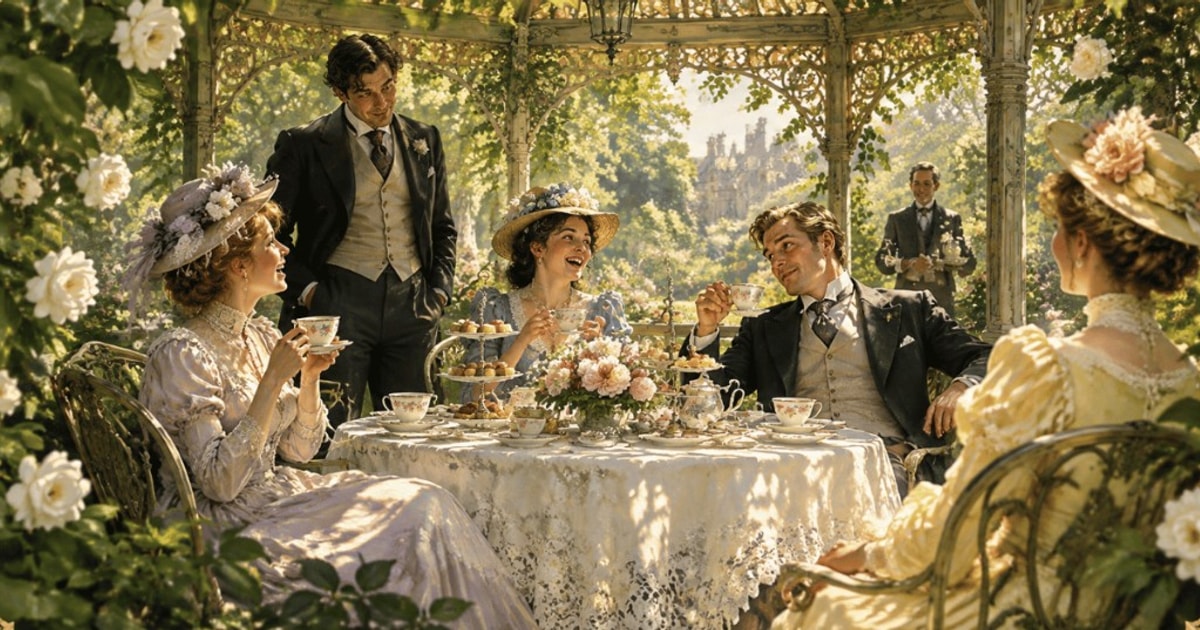
Start at the tea table
Read sections 1–3 for cucumber sandwiches, the cigarette case, Bunbury named, and Lady Bracknell's interview that fails on a cloakroom. You need both doubles before the garden collapses.
Watch the doubles collide
Sections 4–6 bring Algernon to the Manor House as Ernest, black mourning for a brother who still arrives, and Gwendolen meeting Cecily over sugar and cake.
Let the lessons carry you
When a section raises a question you cannot shake, whether Bunburying, a name you married before you met the person, or a list that moves when fortune arrives, jump to the matching lesson page, then return to the chapter list.
Plot & context
Book Overview
Lane lays tea in Algernon's morning-room while the piano sounds next door. Jack Worthing has come up from Hertfordshire to propose, but he will need to be Ernest to do it, and Algernon has already eaten the cucumber sandwiches meant for Lady Bracknell. Wilde's 1895 comedy turns on that gap between what a room expects and what it is handed: names swapped, invalids invented, and manners so polished that the lie reads as respectability.
Jack keeps a grave country life at the Manor House in Woolton and visits London as Ernest, blaming a wicked younger brother so his ward can excuse his trips. Algernon keeps a permanent invalid called Bunbury for the same polite exit. Lady Bracknell audits suitors with a notebook. Gwendolen will marry only a man named Ernest. Cecily has already fallen in love with Ernest in her diary before he arrives with luggage. Miss Prism once wrote a three-volume novel and still talks as if fiction were moral arithmetic. Dr Chasuble pairs sermons with walks. The pressure is not whether anyone is witty. It is whether the right performance will be believed long enough to reach an altar.
The cigarette case exposes Jack's double life to Algernon. Bunbury's relapse clears the room for a proposal. Gwendolen accepts Jack for a name, not a man, and Lady Bracknell refuses him for a handbag found at Victoria on the Brighton line. Algernon drives to Woolton as Ernest with trunks. Cecily writes their engagement at tea while Gwendolen proves a rival claim with her own diary. Sugar, cake, and muffins become weapons until both women discover they mean different Ernests. Jack returns in mourning for the brother he invented. The women forgive the stories if the men will be christened at once. Lady Bracknell blocks Cecily on fortune without pedigree. Miss Prism confesses she put the baby in the bag and the manuscript in the pram. The handbag returns, an Army List names Jack Ernest after all, and the comedy ends where respectability began: at a railway station nobody wishes to claim as family.
Wilde is not writing a sermon against lying. He is staging how late Victorian England rewards the correct tone, the correct income, and the correct origin story even when everyone in the room knows the story is absurd. The epigrams sound light because the stakes are real: who may marry, who may inherit, who may stay in the drawing room. The ending does not punish the liars so much as baptise them. Earnestness becomes a legal name, and the audience is left laughing at a society that cared more about the christening than the years of fraud.
Read the full summary on the book page →
Why this book now
People still keep a work self and a private self, invent crises to skip obligations, and fall in love with a label on a profile before they meet the person. Wilde does not preach against lying. He shows how a room that rewards the right performance will bless a register mistake. This guide keeps the cigarette case, the diary, and the Army List tied to manners you can still name.
About Oscar Wilde
Oscar Wilde (1854-1900) was an Irish poet, playwright, and critic who became one of London's most celebrated wits in the early 1890s. Born in Dublin and educated at Trinity College and Oxford, he rose through the Aesthetic Movement's belief that art should exist for beauty's sake, not moral instruction. His plays, including The Importance of Being Earnest and An Ideal Husband, made him famous for epigrams that sounded light and cut deep. The Importance of Being Earnest opened in 1895, the same year Wilde's private life became public courtroom material. The play's doubles, town and country names, Bunbury and Ernest, read differently after scandal, but on stage they were already a joke about how society rewards the right performance. He died in exile in Paris in 1900.
Themes with proof
Lessons from The Importance of Being Earnest
Six mechanisms Wilde tests from Half-Moon Street to the Army List: social performance as power at the tea table, Bunburying as a polite exit, performed identity across two postcodes, earnestness as a mask people marry, Lady Bracknell-style lists that fail on origin, and truth filed only when respectability can display it. Each spoke ties named scenes to chapter proof.
Deep dives
Chapter-by-chapter breakdowns
Reading Social Performance as Power
See tea, sandwiches, and wit used to manage who may stay in the room.
Seeing Earnestness as a Mask
Notice who looks most serious while shifting names, deaths, and engagements.
Character guide
Key Figures
Who drives the plot, what each one wants, and why they matter to the argument of the book.
Jack Worthing
Foundling guardian who is Ernest in town, Jack in the country, until a handbag and Army List make the mask legally true.
Algernon Moncrieff
Wit who eats the reserved sandwiches, invents Bunbury, and arrives as Ernest with luggage Cecily already dated.
Gwendolen Fairfax
Lady Bracknell's daughter who will marry only a man named Ernest because the name inspires absolute confidence.
Cecily Cardew
Jack's ward who engaged herself to Ernest in a diary before any wicked brother walked in from the station.
Lady Bracknell
Examiner whose list passes smoking and income but vetoes a handbag at Victoria Station until fortune softens the gate.
Miss Prism
Governess who once put a novel in the pram and a baby in the bag, supplying the origin the room can finally file.
Lane
Algernon's servant who keeps the champagne ledger and refuses to listen to the piano because it would be impolite.
Memorable lines
Key Quotes
Verified passages with chapter links — the lines teachers and essays keep returning to.
Key quotes with analysis are available in each chapter's detailed view.
Chapter by chapter
All Chapters
Grouped by 3 sections — the same structure as the book hub.
Act I
Chapters 1–3 · Sandwiches, Bunbury, and Lady Bracknell's list
Ch. 1 · Cucumber SandwichesCucumber sandwiches and moral cover
The person who sounds most stylish can skip the rule and still lecture everyone else. Algernon Moncrieff makes that bargain before anyone named Ernest...
Ch. 2 · Bunbury and the Cigarette CaseBunbury and the cigarette case
Two names can live in two rooms until one object holds both labels. Jack Worthing arrives as Ernest, claiming pleasure as the only reason to travel, t...
Ch. 3 · Lady Bracknell's ListLady Bracknell's list
A list can take every polished answer and still fail you on origin. Lady Bracknell arrives hoping Algernon is behaving well. Feeling well, he says, is...
Act II
Chapters 4–6 · Cecily, mourning, and tea for two Ernests
Ch. 4 · Cecily and the Invalid Friend
A story written in advance will treat the next matching card as proof. In the Manor House garden, that story is Uncle Jack's unfortunate brother. Miss...
Ch. 5 · Brothers in Mourning
You can bury a name in one room and still find it dining in another. Jack Worthing comes back to the Manor House before Monday, in deepest mourning, w...
Ch. 6 · Tea with Two Misses FairfaxesTea with two Misses Fairfaxes
A prior claim on a name is not a prior claim on a person. Gwendolen walks into the Manor House garden already sure her first impressions are never wro...
Act III
Chapters 7–9 · Christenings, the handbag, and the vital name
Ch. 7 · Christenings and Interviews
Forgiving a well-told story is not the same as signing the match. Gwendolen and Cecily watch from the morning-room window. Muffin-eating looks like re...
Ch. 8 · The Handbag at Victoria
A filing error can become a person's origin. Miss Prism hurries in from the vestry, an hour and three-quarters late for the Canon, then goes pale unde...
Ch. 9 · The Vital Importance of Being EarnestThe vital Importance of Being Earnest
A performed name can become official the moment a record agrees. Gwendolen hopes the suspense will last. Jack rushes in with a black leather handbag a...
Using this guide
Study Guide FAQ
How to use Wide Reads for class, essays, and revision — and how this guide compares to traditional study sites.
Why Wide ReadsWhat makes this different from SparkNotes or CliffsNotes?
Traditional study guides summarise Wilde's plot and epigrams. This guide gives you that coverage: all nine sections, seven key figures, quotes, and discussion questions with suggested answers. Wide Reads adds Spotting Bunburying and Seeing Earnestness as a Mask traced through scenes like the cigarette case and Gwendolen's name test. Summaries include audio; the original text sits beside every section. Free, no paywall.
Is The Importance of Being Earnest hard to read?
The Importance of Being Earnest is rated intermediate difficulty. Our chapter-by-chapter analysis breaks down complex passages, explains historical context, and highlights key themes to make the text more accessible. Each chapter includes summaries, character analysis, and discussion questions to deepen your understanding.
Can I use this study guide for essays and homework?
Yes. Use this reading guide beside Wilde's play, not instead of it. The summaries and discussion questions help you track Jack's doubles, Lady Bracknell's list, and the handbag before you write. Return to Wilde's dialogue for essays and citations. The guide is the path; the play is still the point.
Begin with the reserved sandwiches
Section 1 opens on Half-Moon Street where Algernon eats Lady Bracknell's cucumbers and lectures Lane on morals. Each section adds summaries, quotes, audio, and the life-skill thread that turns Wilde's farce into patterns you can still spot.
Wide Reads is different.
Plot, characters, and themes — plus audio, source text, and patterns you can use after class
Two ways in
Read & listen to the summary
Chapter by chapter, with audio. The meaning arrives because you experienced it — not because someone listed bullet points.
Start with this.
Read the original text
The actual words the author wrote, alongside every summary. Use the guide, then step into the source.
Then step into the source.
Either way, the door opens inward.
— and most of all, Why does this matter?
Continue Exploring
Guides, life skills, and the full library.More ways to read The Importance of Being Earnest: guides, life skills, and the wider library.


