Chapter 30
Public Meltdown and Unexpected Defenders
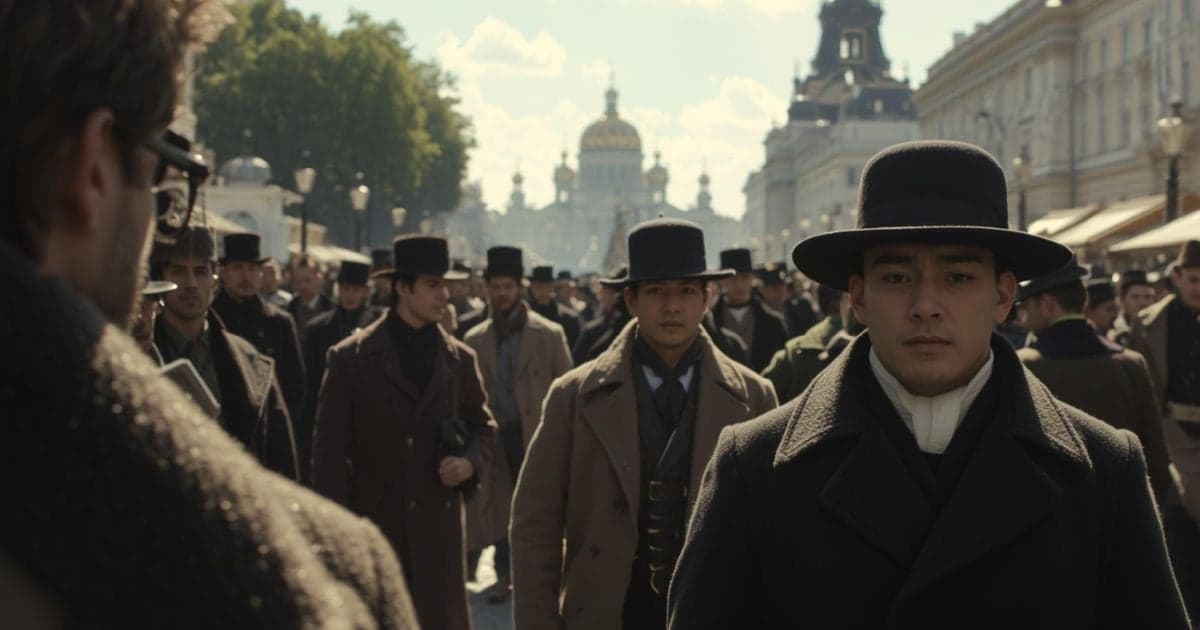
The prince suddenly approached Evgenie Pavlovitch. “Evgenie Pavlovitch,” he said, with strange excitement and seizing the latter’s hand in his own, “be assured that I esteem you as a generous and honourable man, in spite of everything. Be assured of that.” Evgenie Pavlovitch fell back a step in astonishment. For one moment it was all he could do to restrain himself from bursting out laughing; but, looking closer, he observed that the prince did not seem to be quite himself; at all events, he was in a very curious state. “I wouldn’t mind betting, prince,” he cried, “that you did…
Public-domain chapter text, formatted for reading.
Master this chapter. Complete your experience
Purchase the complete book to access all chapters and support classic literature
Available in paperback, hardcover, and e-book formats
Now let's explore the literary elements.
Key Quotes & Analysis
"esteem you as a generous and honourable man"
Context: Seizing Evgenie's hand with sudden emotion before his public breakdown
The prince's earnest praise lands wrong because sincerity without timing reads like instability.
In Today's Words:
He grabs Evgenie's hand and speaks loyalty like a vow, though the room is already tense from days of rumor. The words are generous; the timing makes everyone stare. When you offer wholehearted praise in a charged room, people may hear confession of crisis instead of compliment.
"I will never, never marry him!"
Context: Breaking down after the prince humiliates himself before her family
Her denial is so violent it reveals how much marriage talk has been forced on her in private.
In Today's Words:
She shouts never twice while crying, as if the room has been bullying her with a wedding for days. The prince has not even asked. That gap between public rumor and private pressure is the wound. When someone explodes over a proposal that never happened, listen for the chorus they have been hearing alone.
"She is mad, insane"
Context: Telling the officer that Nastasia is not responsible after the park scandal
Myshkin protects Nastasia with a medical verdict born of pity and horror, not clinical distance.
In Today's Words:
He stretches out his hands and says she is mad because he cannot name what else would explain her public ruin-bringing entrance. It is compassion and evasion in one sentence. When you call someone's chaos insanity to stop violence, you may be saving them and refusing the harder truth.
"I wanted to see how the farce would end"
Context: After the concert scandal, explaining why she watched instead of leaving immediately
Aglaya frames catastrophe as theater, distancing herself from feelings the evening clearly stirred.
In Today's Words:
She says she stayed to watch the farce finish, cool as if the cane strike and fleeing crowd were a play. That line protects her pride after an evening that terrified and fascinated her. When someone calls a meltdown a show, check what they were afraid to feel while the curtain was up.
Thematic Threads
Authentic Identity
In This Chapter
The Prince's public breakdown reveals his genuine humility and goodness beneath social awkwardness
Development
Evolved from earlier social fumbling to moments of authentic character revelation
In Your Life:
You might discover your true priorities when facing a major life crisis or unexpected challenge.
Protective Instincts
In This Chapter
Both Aglaya defending the Prince and the Prince defending Nastasia show instinctive protection of the vulnerable
Development
Introduced here as a key character trait that emerges under pressure
In Your Life:
You might find yourself unexpectedly standing up for someone being treated unfairly, even when it costs you.
Social Performance
In This Chapter
The contrast between polite social gathering and chaotic street scene strips away pretense
Development
Continued exploration of how social expectations mask authentic behavior
In Your Life:
You might notice how differently people behave in formal settings versus unguarded moments.
Moral Courage
In This Chapter
The Prince acts to defend Nastasia despite fear and social consequences
Development
Building on earlier themes of doing right despite personal cost
In Your Life:
You might face moments where doing the right thing requires risking your own comfort or safety.
Unexpected Allies
In This Chapter
Aglaya fiercely defends the Prince when others mock him, revealing hidden loyalty
Development
Introduced here as recognition that support can come from surprising sources
In Your Life:
You might find that people you least expect become your strongest defenders in difficult times.
You now have the context. Time to form your own thoughts.
Discussion Questions
This is not a test. Five prompts guide you through the chapter, from how it opens to how it closes, so you notice context and rhythm rather than facts to memorize. Sit with each question in your own words. When you see "One way to read it," treat it as a starting point, not the only answer.
- 1
Myshkin apologizes profusely at a gathering, declaring himself unfit for society. What triggers that public collapse?
analysis • surfaceOne way to read it
Accumulated humiliation, misunderstanding, and pressure to be a suitor he cannot perform. Shame floods out as confession, which others mock until the room turns cruel.
- 2
Aglaya defends him fiercely, then relief spreads when he says he never proposed marriage. What does that sequence reveal about her feelings?
analysis • mediumOne way to read it
She will fight for his honor but panics at the thought of him as an announced fiancé. Passion and fear coexist: she protects the man while resisting the social form that would make the bond official.
- 3
At the concert Nastasia exposes Evgenie's uncle's suicide and financial scandal, then strikes an officer with a cane. Why does she attack in public?
analysis • mediumOne way to read it
She weaponizes truth and spectacle to dominate Pavlofsk. Humiliating Evgenie and defying an insulting officer keeps her the center of moral chaos while testing who will stand beside her.
- 4
Myshkin defends Nastasia though he is afraid and is pushed down. When is instinctive loyalty wise or self-destructive?
application • deepOne way to read it
He acts from conscience, not calculation, which is noble and costly. Useful questions: Is anyone safer because he intervened? Could allies have been enlisted first? His purity protects her momentarily, not the larger spiral.
- 5
Crisis often reveals who defends whom without rehearsing. Who has defended you publicly, and what did it cost them?
reflection • deepOne way to read it
Aglaya's eruption is the chapter's emotional anchor. Readers remember defenders who risked social heat, and ask whether they have returned that courage when masks drop.
Critical Thinking Exercise
Crisis Character Assessment
Think of three people in your life - a coworker, family member, and friend. For each person, recall a moment when they were under pressure or stress. Write down what their actions revealed about their true character, both positive and concerning traits. Then consider: what do your own crisis moments reveal about you to others?
Consider:
- •Look for patterns in how each person handles conflict, criticism, or unexpected challenges
- •Consider both their immediate reactions and how they behaved after the initial crisis passed
- •Think about whether their crisis behavior aligns with or contradicts their everyday personality
Journaling Prompt
Write about a time when you acted instinctively to help or defend someone, even when it wasn't convenient or safe. What core values drove that action, and how can you strengthen those values for future challenges?
Coming Up Next...
Chapter 31: Secrets and Midnight Confessions
The aftermath of the public scandal will force difficult conversations and revelations. Aglaya's unexpected defense of the Prince has changed something fundamental between them, while Nastasia's dramatic reappearance threatens to upend everyone's carefully maintained social order.