The Hunchback of Notre-Dame
by Victor Hugo (1831)
📚 Quick Summary
Main Themes
Best For
High school and college students studying classic fiction, book clubs, and readers interested in justice & fairness and society & class
Complete Guide: 59 chapter summaries • Character analysis • Key quotes • Discussion questions • Modern applications • 100% free
How to Use This Study Guide
Review themes and key characters to know what to watch for
Follow along chapter-by-chapter with summaries and analysis
Use discussion questions and quotes for essays and deeper understanding
Book Overview
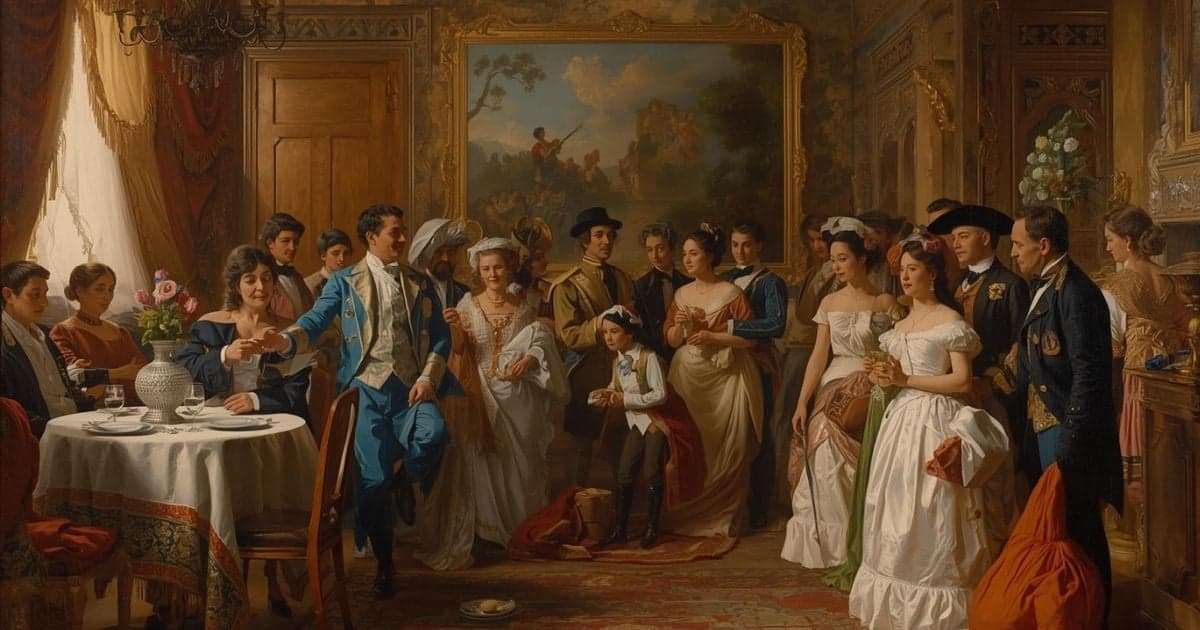
On 6 January 1482, Paris packs the Palace of Justice for a mystery and a Pope of Fools. The face they crown is Quasimodo, bell-ringer of Notre-Dame. The dancer they follow into the dark is called La Esmeralda. Victor Hugo published Notre-Dame de Paris in 1831. Later ages remember a romance. The book opens on a crowd that has already chosen whom to laugh at.
Quasimodo is deaf, shut in the towers, and bound to the archdeacon who raised him. Claude Frollo wants the dancer and gives the want a Greek name, fate. Captain Phoebus is the man she trusts. The poet Gringoire is married to her with a broken jug in the Court of Miracles, then left behind. A woman walled into the Place de Grève hates the Egyptians for a shoe and a lost child. Louis XI, at the Bastille, decides what church sanctuary is still worth.
Everyone knows the hunchback and the cathedral. Almost nobody finishes the chapters in which the crowd makes the monster, the priest calls desire damnation, and the king cancels the refuge. Hugo wrote the book to keep the Gothic church from being scraped into something smoother. The life inside it is the same argument: a city that stares, and does not take the person in.
Why Read The Hunchback of Notre-Dame Today?
Classic literature like The Hunchback of Notre-Dame offers more than historical insight. It provides roadmaps for navigating modern challenges. In plain terms, each chapter reveals practical wisdom applicable to contemporary life, from career decisions to personal relationships.
Skills You'll Develop Reading This Book
Beyond literary analysis, The Hunchback of Notre-Dame helps readers develop critical real-world skills:
Critical Thinking
Analyze complex characters, motivations, and moral dilemmas that mirror real-life decisions.
Emotional Intelligence
Understand human behavior, relationships, and the consequences of choices through character studies.
Cultural Literacy
Gain historical context and understand timeless themes that shaped and continue to influence society.
Communication Skills
Articulate complex ideas and engage in meaningful discussions about themes, ethics, and human nature.
Major Themes
Key Characters
Character analysis is available in individual chapter summaries.Start with Chapter 1
Key Quotes
"The sixth of January, 1482, is not, however, a day of which history has preserved the memory."
"It was upon the marble table that the mystery was to be enacted, as usual."
"“Begin at once,” went on the other."
"My name is Pierre Gringoire."
"“The cardinal! The cardinal!” repeated all mouths."
"Few persons were then aware who Guillaume Rym was."
"“Hold, my friend, you cannot pass!”"
"“Jacques Coppenole.”"
"In the twinkling of an eye, all was ready to execute Coppenole’s idea."
"But it was then that surprise and admiration attained their highest pitch; the grimace was his face."
"In the twinkling of an eye, the grand hall was empty."
"“Skip it,” said he, stoically."
"Night comes on early in January."
"The streets were already dark when Gringoire issued forth from the Courts."
"For the last two centuries the houses have been turned round."
Discussion Questions
1. What starts the action, or the argument, in The Grand Hall?
From Chapter 1 →2. Who acts, and what do they want in this chapter only?
From Chapter 1 →3. What starts the action, or the argument, in Pierre Gringoire?
From Chapter 2 →4. Who acts, and what do they want in this chapter only?
From Chapter 2 →5. What starts the action, or the argument, in Monsieur the Cardinal?
From Chapter 3 →6. Who acts, and what do they want in this chapter only?
From Chapter 3 →7. What starts the action, or the argument, in Master Jacques Coppenole?
From Chapter 4 →8. Who acts, and what do they want in this chapter only?
From Chapter 4 →9. What starts the action, or the argument, in Quasimodo?
From Chapter 5 →10. Who acts, and what do they want in this chapter only?
From Chapter 5 →11. What starts the action, or the argument, in Esmeralda?
From Chapter 6 →12. Who acts, and what do they want in this chapter only?
From Chapter 6 →13. What starts the action, or the argument, in From Charybdis to Scylla?
From Chapter 7 →14. Who acts, and what do they want in this chapter only?
From Chapter 7 →15. What starts the action, or the argument, in The Place de Grève?
From Chapter 8 →All Chapters
Chapter 1: The Grand Hall
On the sixth of January, 1482, the bells of Paris ring for a day history will not remember. Epiphany and the Feast of Fools share the date. There is t...
Chapter 2: Pierre Gringoire
The crowd hoots Jupiter down. He drops his thunderbolt and stammers, afraid of hanging whether he waits for the cardinal or not. A tall, pale young ma...
Chapter 3: Monsieur the Cardinal
Gringoire had wanted the praise of the dauphin heard by the finest ear in the hall. Instead every head turns. Charles, Cardinal de Bourbon, Archbishop...
Chapter 4: Master Jacques Coppenole
Jacques Coppenole, hosier at the sign of the Three Little Chains in Ghent, will not let the usher hide his trade. Guillaume Rym and the cardinal offer...
Chapter 5: Quasimodo
Heads come through the broken rose window, one grimace after another, and the hall becomes a single shout. The cardinal leaves with his suite. Only Gu...
Chapter 6: Esmeralda
Gringoire hopes again when Quasimodo, Coppenole, and the procession leave, and the crowd follows. The hope dies at once: they were the whole audience....
Chapter 7: From Charybdis to Scylla
Night has already darkened the streets when Gringoire leaves the Courts. He dare not return to the Rue Grenier-sur-l'Eau. The provost's pay for his we...
Chapter 8: The Place de Grève
Little of the fifteenth-century Place de Grève remains except a small turret at the north angle, its carving choked with plaster. The place was an irr...
Chapter 9: Kisses for Blows
On the Place de Grève a wide ring of people watches a young girl dance on a Persian rug to a Basque tambourine. She is slight and dark, and a copper p...
Chapter 10: The Inconveniences of Following a Pretty Woman through the Streets in the Evening
Gringoire follows the gypsy and her goat into the Rue de la Coutellerie, with nowhere to sleep and a liking for walking behind a pretty woman. She hur...
Chapter 11: Result of the Dangers
Pierre Gringoire lies stunned on the pavement before the Holy Virgin. Cold in the gutter wakes him. He curses the hunchback who struck him, then remem...
Chapter 12: The Broken Jug
Gringoire turns back for the pallet, loses himself among the crossings, and follows a red glow down a steep muddy lane. Shapes crawl ahead of him, beg...
Chapter 13: A Bridal Night
Alone with Esmeralda, Gringoire decides the broken crock has made him her husband, and he clasps her waist. She slips free, a little poniard in her ha...
Chapter 14: Notre-Dame
Notre-Dame, the narrator says, is still majestic, but time and men have scarred it, and men have done the worse. The façade is a symphony in stone, ye...
Chapter 15: A Bird's-Eye View of Paris
Looking from the towers, the narrator rebuilds the Paris of 1482. It was already huge, and since Louis XI it has grown by only about a third, losing m...
Chapter 16: Good Souls
On Quasimodo Sunday in 1467, sixteen years before the story, a deformed child is laid on the foundling bed in Notre-Dame, opposite Saint Christopher, ...
Chapter 17: Claude Frollo
Claude Frollo, holder of the fief of Tirechappe, is destined from childhood for the Church. Shut in the college of Torchi, he studies hungrily, and by...
Chapter 18: Immanis Pecoris Custos, Immanior Ipse
In 1482 Quasimodo is bellringer, and Notre-Dame is his whole world, from egg and nest to house, country, and universe. Unknown birth and deformity shu...
Chapter 19: The Dog and His Master
Quasimodo excepts one man from his hatred, and loves him even more, perhaps, than the cathedral. That man is Claude Frollo, who took him in, fed him, ...
Chapter 20: More about Claude Frollo
In 1482 Claude Frollo is about thirty-six, austere archdeacon of Josas, and no longer the young scholar. Choirboys tremble as he passes. Learning and ...
Chapter 21: Unpopularity
The people who live near the cathedral have little love for Archdeacon Claude Frollo or for Quasimodo, the bellringer. When the two walk out together,...
Chapter 22: Abbas Beati Martini
One evening Dom Claude sits in his canon's cell, a printed book open before him, when Jacques Coictier, the king's physician, arrives with a stranger....
Chapter 23: This Will Kill That
The narrator stops to explain the archdeacon's words: this will kill that, and the book will kill the building. The saying has two faces. First it is ...
Chapter 24: An Impartial Glance at the Ancient Magistracy
Since 1465 Robert d'Estouteville has held the rich provostship of Paris, with sergeants under his command and high justice in his hands. Even so, he w...
Chapter 25: The Rat-Hole
It is ten in the morning on the Place de Grève, the day after the festival. Ribbons, rags, spilt wax, and crumbs of the public feast cover the pavemen...
Chapter 26: History of a Leavened Cake of Maize
Oudarde and Gervaise walk with Mahiette of Reims towards the Grève. Mahiette's boy, Eustache, carries a maize cake for the recluse. A tambourine sound...
Chapter 27: A Tear for a Drop of Water
A crowd fills the Place de Grève around the pillory, hoping for a whipping. Quasimodo arrives tied to a cart, and the square hoots when it knows him. ...
Chapter 28: End of the Story of the Cake
La Esmeralda turns pale and comes down from the pillory, staggering as she goes. The recluse calls after her. She is a thief of Egypt, the voice says,...
Chapter 29: The Danger of Confiding One's Secret to a Goat
On the first of March, after many weeks, spring sun lights the face of Notre-Dame. On a balcony opposite, Fleur-de-Lys de Gondelaurier and her noble c...
Chapter 30: A Priest and a Philosopher are Two Different Things
The watcher on the north tower is Claude Frollo. The tambourine has drawn him out, and in all Paris he sees only the dancing gypsy. A man in red and y...
Chapter 31: The Bells
After the morning on the pillory, the neighbours of Notre-Dame notice that Quasimodo's eagerness for ringing has cooled. The church that once pealed f...
Chapter 32: Ananke
On Saint Eustache's day in that same March, Jehan Frollo du Moulin finds his purse empty. Dice, beer, and Venus have taken the last black liard. He go...
Chapter 33: The Two Men Clothed in Black
The newcomer is grey, near sixty, with a sweetness like a cat or a judge. Dom Claude stays seated and greets Master Jacques. Jacques Charmolue, answer...
Chapter 34: The Effect which Seven Oaths in the Open Air can Produce
Jehan takes a glass charm for Isabeau la Thierrye, leaves the cell door open out of spite, and skips downstairs. In the dark he elbows a growling shap...
Chapter 35: The Mysterious Monk
Eve's Apple burns like a forge in the dark square. A man in a mantle, bought from an old-clothes man, waits outside and will not leave. Phœbus and a d...
Chapter 36: The Utility of Windows which Open on the River
Claude crouches in the windowless kennel, broken glass pressed to his brow. Through a crack he sees la Falourdel, then Phœbus, then la Esmeralda, the ...
Chapter 37: The Crown Changed into a Dry Leaf
For a month Gringoire has had no news of la Esmeralda or the goat. Passing the Tournelle, he follows a crowd into the Palais de Justice. A young schol...
Chapter 38: Continuation of the Crown which was Changed into a Dry Leaf
In the Question Chamber a furnace lights tongs, pincers, and a leather bed under a hanging strap. Pierrat Torterue, the torturer, waits with two assis...
Chapter 39: End of the Crown which was Turned into a Dry Leaf
Charmolue tells the dim hall that she has confessed all. Asked whether she avows magic, prostitution, and the killing of Phœbus, she says they may do ...
Chapter 40: Lasciate Ogni Speranza
La Esmeralda lies chained in the inpace of the Tournelle, on wet straw beside a jug and a loaf. She cannot tell day from night, or waking from sleep. ...
Chapter 41: The Mother
A child’s festival shoe is sweet to a mother, and terrible once the child is lost. For fifteen years the recluse of the Tour-Roland has knelt before a...
Chapter 42: Three Human Hearts Differently Constructed
Phœbus is not dead. The wound was grave, yet he recovers, pays the physician with his spurs, and rejoins his company at Queue-en-Brie. Two months late...
Chapter 43: Delirium
Claude Frollo is already gone when his adopted son cuts the fatal web. He tears off his vestments, crosses by boat to the left bank, and runs through ...
Chapter 44: Hunchbacked, One Eyed, Lame
Medieval France kept places of asylum, where a criminal inside a church or palace was sacred, though one step outside returned him to the gibbet. At N...
Chapter 45: Deaf
Next morning la Esmeralda is astonished that she has slept. Sunlight touches her face, and with it Quasimodo’s face at the window. She shuts her eyes....
Chapter 46: Earthenware and Crystal
Calm returns to la Esmeralda. Torterue, Charmolue, even the priest, fade. Phœbus is alive, and her love for him is the one feeling still whole. She te...
Chapter 47: The Key to the Red Door
Public rumour tells the archdeacon that the gypsy has been saved. He had accepted her death, his despair already full, like a sponge that the sea cann...
Chapter 48: Continuation of the Key to the Red Door
La Esmeralda sleeps, dreaming of Phœbus, until a figure with a lamp looks in. She knows the priest. He puts out the light, slips beside her, and close...
Chapter 49: Gringoire has Many Good Ideas in Succession
Once the affair turns towards the rope, Pierre Gringoire steps clear of it. He is glad the wife of his broken-crock marriage is safe in Notre-Dame, th...
Chapter 50: Turn Vagabond
Re-entering the cloister, Dom Claude finds Jehan du Moulin at the cell door, drawing in charcoal a profile of his brother with a monstrous nose. Claud...
Chapter 51: Long Live Mirth
One evening, as curfew rings over Paris, the vagabonds' tavern in a ruined tower of the Court of Miracles is packed and loud. Wine, dice, and a fire t...
Chapter 52: An Awkward Friend
That night Quasimodo does not sleep. From the northern tower he sees a dark crowd leave the quay and fill the square before Notre-Dame. He hears nothi...
Chapter 53: The Retreat in which Monsieur Louis of France says his Prayers
King Louis XI sleeps in a small round room high in a Bastille turret. He sits alone in the only chair, greasy hat on his head, while Olivier le Daim r...
Chapter 54: Little Sword in Pocket
Pierre Gringoire runs from the Bastille down the Rue Saint-Antoine to the stone cross at the Baudoyer gate. A man in a black cloak sits on the steps. ...
Chapter 55: Chateaupers to the Rescue
Quasimodo is still on the gallery, almost without hope of saving the gypsy. A gallop fills the streets. Horsemen with torches and lances burst onto th...
Chapter 56: The Little Shoe
La Esmeralda wakes to the assault. Torches and a leaping crowd look at first like a witches' sabbath. Pierre Gringoire enters with a silent man in bla...
Chapter 57: The Beautiful Creature Clad in White
Quasimodo finds the cell empty and searches Notre-Dame, howling. The king's archers are entering to hunt the gypsy as well. He does not know they mean...
Chapter 58: The Marriage of Phoebus
Towards evening, officers of the bishop come to the Parvis to pick up the archdeacon's dislocated body from the pavement. Quasimodo has disappeared. M...
Chapter 59: The Marriage of Quasimodo
Quasimodo disappears from Notre-Dame on the day the gypsy and the archdeacon die, and no one sees him again. That night the night men take la Esmerald...
Study Guide FAQ
Questions about using this guide. For plot, character, and theme questions about The Hunchback of Notre-Dame, see Common Questions on the book page.
Is The Hunchback of Notre-Dame hard to read?
The Hunchback of Notre-Dame is rated intermediate difficulty. Our chapter-by-chapter analysis breaks down complex passages, explains historical context, and highlights key themes to make the text more accessible. Each chapter includes summaries, character analysis, and discussion questions to deepen your understanding.
Can I use this study guide for essays and homework?
Yes — use this reading guide alongside The Hunchback of Notre-Dame, not instead of it. Wide Reads exists to show you why the book still matters: lessons, chapter summaries with audio, and life skills you can carry into real life. That context can sharpen essays on themes, characters, and quotes. Always read Victor Hugo's original text, though. We are the guide at the trailhead; the classic is still the point.
What makes this different from SparkNotes or CliffsNotes?
Traditional study guides list what happened in The Hunchback of Notre-Dame. This guide maps the book chapter by chapter: summaries, key quotes, themes traced to scenes, and discussion questions — with links into every chapter. Wide Reads adds six lessons, summary audio, and the original text alongside the summaries. It is free with no paywall.
Ready to Dive Deeper?
Each chapter includes our guided chapter notes, showing how The Hunchback of Notre-Dame's insights apply to modern challenges in career, relationships, and personal growth.
Start Reading Chapter 1Explore Life Skills in This Book
Discover the essential life skills readers develop through The Hunchback of Notre-Damein our Essential Life Index.
View in Essential Life Index