Wide Reads
Literature MattersLife IndexEducators
Sign in
Where to Begin
The Count of Monte Cristo - The Ball

Alexandre Dumas

The Count of Monte Cristo

The Ball

Home›Books›The Count of Monte Cristo›Chapter 70
Previous
70 of 117
Next

Summary

The Ball

The Count of Monte Cristo by Alexandre Dumas

0:000:00
Listen to Next Chapter

The Count finally reveals his true identity to Mercédès, the woman who was once his fiancée when he was Edmond Dantès. This moment has been building for the entire novel - the recognition scene between two people whose lives were shattered by the same conspiracy twenty-four years ago. Mercédès has suspected the truth for some time, noticing familiar gestures and expressions beneath the Count's carefully constructed persona. When she confronts him directly, he can no longer maintain the pretense. The revelation is both a relief and a tragedy. Mercédès sees the man she once loved, but also recognizes how completely revenge has transformed him. She pleads with him to show mercy, particularly toward her son Albert, who has unknowingly challenged the Count to a duel over his father Fernand's honor. This scene is crucial because it's the first crack in the Count's armor of cold vengeance. Mercédès represents his past self - the innocent, hopeful young man he was before his imprisonment. Her presence forces him to confront what his quest for revenge has cost him, not just in terms of his humanity, but in terms of the love and connection he once valued above all else. The chapter explores the tension between justice and mercy, and whether a person can ever truly return from a path of vengeance. For Rosie, this resonates with anyone who's had to choose between holding onto anger and choosing forgiveness - and the recognition that sometimes the person we hurt most with our anger is ourselves.

Coming Up in Chapter 71

With his identity exposed, the Count must decide whether Mercédès's pleas for mercy will change his plans for revenge. Meanwhile, the duel between Albert and the Count looms closer, threatening to destroy the last connection to his former life.

Share it with friends

Previous ChapterNext Chapter
GO ADS FREE — JOIN US
Original text
complete·3,033 words
T

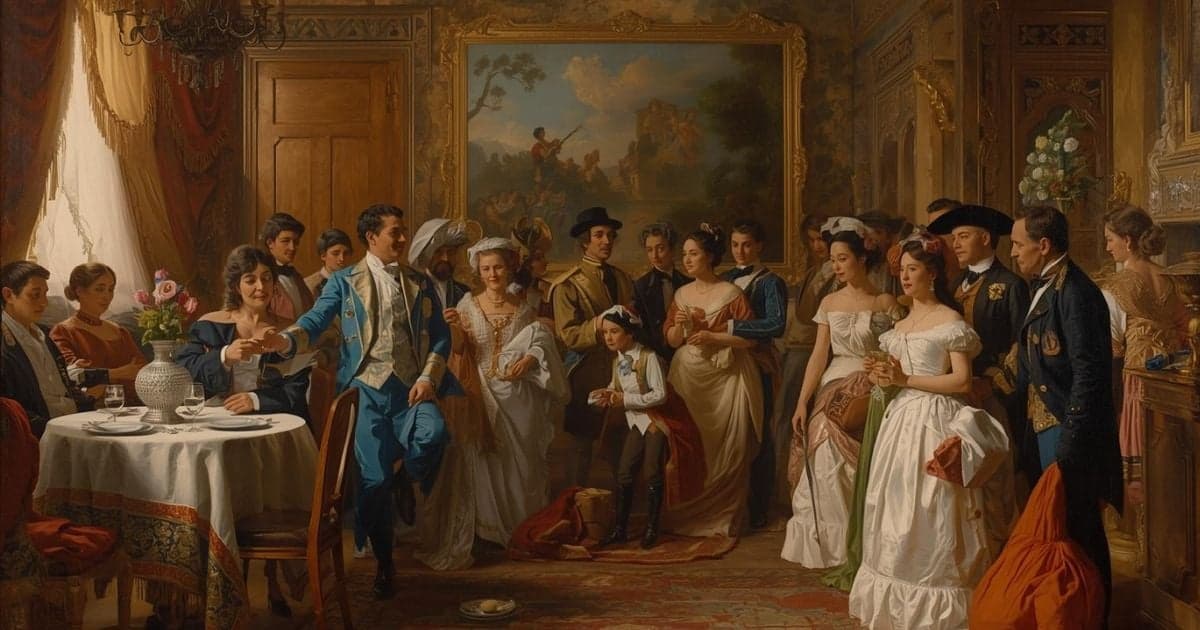
was in the warmest days of July, when in due course of time the Saturday arrived upon which the ball was to take place at M. de Morcerf’s. It was ten o’clock at night; the branches of the great trees in the garden of the count’s house stood out boldly against the azure canopy of heaven, which was studded with golden stars, but where the last fleeting clouds of a vanishing storm yet lingered.

From the apartments on the ground floor might be heard the sound of music, with the whirl of the waltz and galop, while brilliant streams of light shone through the openings of the Venetian blinds. At this moment the garden was only occupied by about ten servants, who had just received orders from their mistress to prepare the supper, the serenity of the weather continuing to increase. Until now, it had been undecided whether the supper should take place in the dining-room, or under a long tent erected on the lawn, but the beautiful blue sky, studded with stars, had settled the question in favor of the lawn.

1 / 17

Master this chapter. Complete your experience

Purchase the complete book to access all chapters and support classic literature

Read Free on GutenbergBuy at Powell'sBuy on Amazon

As an Amazon Associate, we earn a small commission from qualifying purchases at no additional cost to you.

Available in paperback, hardcover, and e-book formats

GO ADS FREE — JOIN US

Why This Matters

Connect literature to life

Skill: Recognizing When We've Lost Ourselves

This chapter teaches us to notice when someone from our past reflects back who we used to be, revealing how much we've changed.

Practice This Today

This week, notice when old friends or family comment on how you've changed—pay attention to whether their observations reveal losses you hadn't recognized in yourself.

GO ADS FREE — JOIN US

Now let's explore the literary elements.

Key Quotes & Analysis

"I am Edmond Dantès!"

— The Count

Context: The moment he finally reveals his true identity to Mercédès

This is the climactic revelation the entire novel has been building toward. It's both a relief and a tragedy - he's finally himself again, but also showing how completely he's been consumed by his false identity.

In Today's Words:

I'm still the person you used to know, underneath all this anger and planning.

"You have indeed changed, Edmond. You are no longer the same man."

— Mercédès

Context: Her response upon recognizing him, seeing how revenge has transformed him

She sees that while he's physically the same person, his soul has been warped by years of plotting revenge. It's a heartbreaking recognition that the man she loved is both there and gone.

In Today's Words:

You're still you, but you're not. What happened to the person I used to know?

"Have mercy on my son!"

— Mercédès

Context: Pleading with the Count not to harm Albert in the upcoming duel

This plea cuts to the heart of the moral dilemma - is revenge worth destroying innocent people? She's asking him to choose love over hatred, to remember his humanity.

In Today's Words:

Don't let your anger hurt people who didn't do anything to you.

"I have suffered so much that I have the right to inflict suffering in return."

— The Count

Context: Justifying his actions when confronted with the human cost

This reveals his twisted logic - that his pain gives him permission to cause pain. It's the dangerous thinking that keeps cycles of revenge going.

In Today's Words:

I've been hurt so badly that I deserve to hurt other people back.

Thematic Threads

Identity

In This Chapter

The Count must face that his revenge persona has consumed Edmond Dantès, the man Mercédès once loved

Development

Evolved from early chapters where identity seemed fluid and controllable to this moment where it becomes a prison

In Your Life:

You might recognize this when someone from your past points out how much you've changed, forcing you to examine whether that change serves you.

Human Relationships

In This Chapter

Mercédès represents authentic connection that cuts through all pretense and social positioning

Development

Developed from the Count's manipulation of relationships to this moment where genuine love demands truth

In Your Life:

You see this in relationships where someone loves you enough to call out your destructive patterns instead of enabling them.

Personal Growth

In This Chapter

The Count faces the choice between continuing his path of vengeance or reclaiming his capacity for mercy

Development

Built from his methodical revenge plan to this crossroads where growth requires letting go

In Your Life:

This appears when you must choose between the familiar comfort of anger and the vulnerable work of healing.

Class

In This Chapter

Despite his wealth and title, the Count's true worth is measured by Mercédès through his character, not his status

Development

Contrasts with earlier chapters where social position seemed to determine value and power

In Your Life:

You experience this when someone judges you by your actions and heart rather than your job title or possessions.

Social Expectations

In This Chapter

Mercédès defies social norms by directly confronting a powerful man, prioritizing truth over propriety

Development

Shows how authentic relationships transcend social conventions that dominated earlier interactions

In Your Life:

This shows up when you must choose between saying what's expected and saying what's true, especially to someone with power over you.

GO ADS FREE — JOIN US

You now have the context. Time to form your own thoughts.

Discussion Questions

  1. 1

    What specific details finally convinced Mercédès that the Count was really Edmond Dantès? Why couldn't he keep hiding his identity from her?

    analysis • surface
  2. 2

    Why does Mercédès plead for mercy rather than celebrate finding her lost love? What does her reaction tell us about how revenge has changed Edmond?

    analysis • medium
  3. 3

    Think about someone in your life who knew you 'before' - before a major change, loss, or hardship. How might they see you differently now than you see yourself?

    application • medium
  4. 4

    When someone from your past calls out how you've changed, how do you typically respond? Do you get defensive, deny it, or actually consider what they're seeing?

    application • deep
  5. 5

    What does this scene suggest about whether we can ever truly hide our authentic selves, even when we're trying to protect ourselves or pursue a goal?

    reflection • deep

Critical Thinking Exercise

10 minutes

Map Your Recognition Moments

Think of a time when someone who knew you 'before' pointed out how you'd changed - maybe after a job, relationship, loss, or major life event. Write down what they saw, how you reacted, and what truth they might have been recognizing. Then consider: was their observation accurate? If so, was the change necessary protection or had you lost something worth reclaiming?

Consider:

  • •Sometimes people change us in ways we don't realize until someone points it out
  • •The people who knew us 'before' can see both our growth and our losses
  • •Being recognized can feel threatening when we've built walls for protection

Journaling Prompt

Write about a persona or mask you've developed to protect yourself. What would happen if you let someone see through it? What are you afraid they'd find, and what might you discover about yourself?

GO ADS FREE — JOIN US

Coming Up Next...

Chapter 71: Bread and Salt

With his identity exposed, the Count must decide whether Mercédès's pleas for mercy will change his plans for revenge. Meanwhile, the duel between Albert and the Count looms closer, threatening to destroy the last connection to his former life.

Continue to Chapter 71
Previous
The Inquiry
Contents
Next
Bread and Salt

Continue Exploring

The Count of Monte Cristo Study GuideTeaching ResourcesEssential Life IndexBrowse by ThemeAll Books
Moral Dilemmas & EthicsPower & CorruptionIdentity & Self-Discovery

You Might Also Like

Les Misérables: Essential Edition cover

Les Misérables: Essential Edition

Victor Hugo

Explores justice & fairness

The Strange Case of Dr Jekyll and Mr Hyde cover

The Strange Case of Dr Jekyll and Mr Hyde

Robert Louis Stevenson

Explores power & authority

Crime and Punishment cover

Crime and Punishment

Fyodor Dostoevsky

Explores suffering & resilience

Moby-Dick cover

Moby-Dick

Herman Melville

Explores suffering & resilience

Browse all 47+ books
GO ADS FREE — JOIN US

Share This Chapter

Know someone who'd enjoy this? Spread the wisdom!

TwitterFacebookLinkedInEmail

Read ad-free with Prestige

Get rid of ads, unlock study guides and downloads, and support free access for everyone.

Subscribe to PrestigeCreate free account
Intelligence Amplifier
Intelligence Amplifier™Powering Wide Reads

Exploring human-AI collaboration through books, essays, and philosophical dialogues. Classic literature transformed into navigational maps for modern life.

2025 Books

→ The Amplified Human Spirit→ The Alarming Rise of Stupidity Amplified→ San Francisco: The AI Capital of the World
Visit intelligenceamplifier.org
hello@widereads.com

WideReads Originals

→ You Are Not Lost→ The Last Chapter First→ The Lit of Love→ Wealth and Poverty→ 10 Paradoxes in the Classics · coming soon
Arvintech
arvintechAmplify your Mind
Visit at arvintech.com

Navigate

  • Home
  • Library
  • Essential Life Index
  • How It Works
  • Subscribe
  • Account
  • About
  • Contact
  • Authors
  • Suggest a Book
  • Landings

Made For You

  • Students
  • Educators
  • Families
  • Readers
  • Literary Analysis
  • Finding Purpose
  • Letting Go
  • Recovering from a Breakup
  • Corruption
  • Gaslighting in the Classics

Newsletter

Weekly insights from the classics. Amplify Your Mind.

Legal

  • Privacy Policy
  • Terms of Service
  • Cookie Policy
  • Accessibility

Why Public Domain?

We focus on public domain classics because these timeless works belong to everyone. No paywalls, no restrictions—just wisdom that has stood the test of centuries, freely accessible to all readers.

Public domain books have shaped humanity's understanding of love, justice, ambition, and the human condition. By amplifying these works, we help preserve and share literature that truly belongs to the world.

A Pilgrimage

Powell's City of Books

Portland, Oregon

If you ever find yourself in Portland, walk to the corner of Burnside and 10th. The building takes up an entire city block. Inside is over a million books, new and used on the same shelf, organized by color-coded rooms with names like the Rose Room and the Pearl Room. You can lose an afternoon. You can lose a weekend. You will find a book you have been looking for your whole life, and three you did not know existed.

It is a pilgrimage. We cannot find a bookstore like it anywhere on earth. If you read the classics, and you ever get the chance, go. It belongs on every reader's bucket list.

Visit powells.com

We are not in any way affiliated with Powell's. We are just a very big fan.

© 2026 Wide Reads™. All Rights Reserved.

Intelligence Amplifier™ and Wide Reads™ are proprietary trademarks of Arvin Lioanag.

Copyright Protection: All original content, analyses, discussion questions, pedagogical frameworks, and methodology are protected by U.S. and international copyright law. Unauthorized reproduction, distribution, web scraping, or use for AI training is strictly prohibited. See our Copyright Notice for details.

Disclaimer: The information provided on this website is for general informational and educational purposes only and does not constitute professional, legal, financial, or technical advice. While we strive to ensure accuracy and relevance, we make no warranties regarding completeness, reliability, or suitability. Any reliance on such information is at your own risk. We are not liable for any losses or damages arising from use of this site. By using this site, you agree to these terms.