Chapter 17
The Perfect Prison
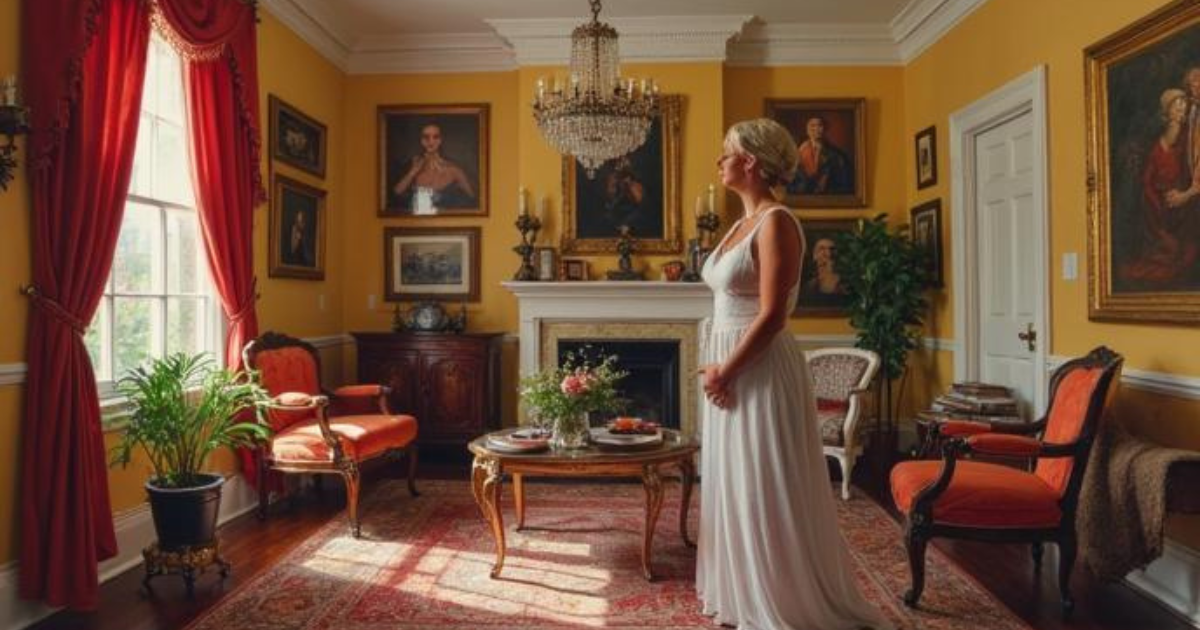
XVII The Pontelliers possessed a very charming home on Esplanade Street in New Orleans. It was a large, double cottage, with a broad front veranda, whose round, fluted columns supported the sloping roof. The house was painted a dazzling white; the outside shutters, or jalousies, were green. In the yard, which was kept scrupulously neat, were flowers and plants of every description which flourishes in South Louisiana. Within doors the appointments were perfect after the conventional type. The softest carpets and rugs covered the floors; rich and tasteful draperies hung at doors and windows. There were paintings, selected with judgment…
Public-domain chapter text, formatted for reading.
Master this chapter. Complete your experience
Purchase the complete book to access all chapters and support classic literature
Available in paperback, hardcover, and e-book formats
Now let's explore the literary elements.
Key Quotes & Analysis
"placed it among his household gods."
Context: Describing Léonce's relationship to the Esplanade Street house
Ownership defines his pleasure. Edna belongs to the same catalog of beautiful objects.
In Today's Words:
He loved things because they were his and arranged them like idols. When a partner treats home as display case, you may feel like another curated object. At work, in caregiving, or in close relationships, the same pressure appears when duty outruns choice and someone finally names what they will no longer pretend is inevitable.
"I simply felt like going out, and I went out."
Context: Answering why she missed Tuesday receptions
She claims impulse as sufficient reason. No fabricated excuse protects social ritual.
In Today's Words:
She said she went out because she wanted to. In status systems built on attendance, wanting can be the most disruptive explanation. At work, in caregiving, or in close relationships, the same pressure appears when duty outruns choice and someone finally names what they will no longer pretend is inevitable.
"observe _les convenances_ if we ever expect to get on and keep up with the procession."
Context: Scolding Edna for missing callers
He names society as a procession you march or fall behind. Comfort requires performance.
In Today's Words:
He said respectable people follow conventions to keep up with the parade. Many careers and marriages run on fear of falling behind the procession. At work, in caregiving, or in close relationships, the same pressure appears when duty outruns choice and someone finally names what they will no longer pretend is inevitable.
"She wanted to destroy something. The crash and clatter were what she wanted to hear."
Context: After Léonce leaves for his club
Violence targets objects because people and rules feel untouchable. Sound proves something can break.
In Today's Words:
She smashed a vase to hear crash. When you cannot alter a life, breaking an object can feel like proof that not everything is permanent. At work, in caregiving, or in close relationships, the same pressure appears when duty outruns choice and someone finally names what they will no longer pretend is inevitable.
Thematic Threads
Class
In This Chapter
Edna's wealth creates elaborate social obligations that consume her identity—Tuesday receptions, perfect appearances, constant performance
Development
Evolved from Grand Isle's informal luxury to New Orleans' rigid social machinery
In Your Life:
You might recognize this when your job title or neighborhood becomes more important than your actual happiness
Identity
In This Chapter
Edna discovers her true self conflicts directly with her assigned role as wealthy society wife and hostess
Development
Her awakening now creates active rebellion against expected behaviors
In Your Life:
This appears when you catch yourself acting like someone else to meet others' expectations
Social Expectations
In This Chapter
Léonce's fury over missed social duties reveals how completely their world depends on everyone following the script
Development
The expectations have become more explicit and punitive than earlier subtle pressures
In Your Life:
You see this when small deviations from normal behavior trigger disproportionate reactions from others
Personal Growth
In This Chapter
Edna's violent outburst in private shows the internal pressure building from suppressing her authentic self
Development
Her growth now requires active resistance rather than just internal questioning
In Your Life:
This manifests when you find yourself having explosive reactions to seemingly minor frustrations
Human Relationships
In This Chapter
The marriage operates like a business partnership focused on maintaining social standing rather than emotional connection
Development
The relationship's transactional nature becomes more obvious as Edna changes
In Your Life:
You might notice this when conversations with loved ones focus more on logistics and appearances than feelings
You now have the context. Time to form your own thoughts.
Discussion Questions
This is not a test. Five prompts guide you through the chapter, from how it opens to how it closes, so you notice context and rhythm rather than facts to memorize. Sit with each question in your own words. When you see "One way to read it," treat it as a starting point, not the only answer.
- 1
What does Tuesday reception day require of Edna?
analysis • surfaceOne way to read it
She must stay home in formal dress, receive callers, and maintain the social credit her husband's business relies on.
- 2
Why does Léonce leave dinner for the club?
analysis • mediumOne way to read it
The meal displeases him and Edna's defiance angers him; the club restores control and comfort.
- 3
How do objects absorb Edna's rage?
application • mediumOne way to read it
Ring and vase stand in for marriage and domestic perfection; destroying them tests whether anything will break.
- 4
Why does she put the ring back on after the maid finds it?
application • deepOne way to read it
Habit and social reality reassert themselves even after symbolic rejection; outrage has not yet become exit.
- 5
When has comfort made leaving harder than suffering?
reflection • deepOne way to read it
Like Edna's beautiful house, many stay in golden cages because the visible cost of freedom feels too high.
Critical Thinking Exercise
Map Your Golden Cage
Think about a situation in your own life where comfort or benefits keep you in a role that doesn't fit. Draw two columns: 'What I'm Afraid to Lose' and 'What I'm Actually Losing by Staying.' Be brutally honest about both sides. Then identify one small boundary you could test without risking everything.
Consider:
- •Consider both obvious costs (money, status) and hidden costs (time, energy, authenticity)
- •Think about whether your fears about leaving are realistic or exaggerated
- •Look for ways to build independence gradually rather than making dramatic changes
Journaling Prompt
Write about a time when you stayed in a situation longer than you should have because leaving felt too risky. What would you do differently now with what you know about building your own foundation first?
Coming Up Next...
Chapter 18: The Weight of Ordinary Life
The morning after her outburst Edna refuses new library fixtures, stands on the veranda feeling the street has turned hostile, and walks to Madame Ratignolle's with old sketches while Robert's absence dominates her thoughts Léonce invites Edna to shop for library fixtures; she refuses new spending and wanders the city self-absorbed, everything familiar feeling hostile. Adele flatters the drawings as immense talent; Edna enjoys.