Wide Reads
Literature MattersLife IndexEducators
Sign in
Where to Begin
Pride and Prejudice - Chapter 61

Jane Austen

Pride and Prejudice

Chapter 61

Home›Books›Pride and Prejudice›Chapter 61
Previous
61 of 61

Summary

Chapter 61

Pride and Prejudice by Jane Austen

0:000:00

The epilogue wraps up everyone's story with Austen's trademark wit. Mrs. Bennet is thrilled with her two grandest daughters married, though she remains 'occasionally nervous and invariably silly' - some things never change. Mr. Bennet misses Elizabeth terribly and visits Pemberley constantly, especially when unexpected. Jane and Bingley move to Derbyshire after a year because even Bingley's easy temper couldn't handle living near Mrs. Bennet permanently. This puts Jane within thirty miles of Elizabeth, which delights both sisters. Kitty blossoms away from Lydia's bad influence, spending time with her elder sisters and becoming 'less irritable, less ignorant, and less insipid.' Mary stays home to keep Mrs. Bennet company, no longer suffering by comparison to her beautiful sisters. Wickham and Lydia remain a disaster - always in debt, constantly moving, with Wickham's affection quickly fading to indifference. Lydia actually writes asking Elizabeth to get Wickham a government position, which Elizabeth flatly refuses. Though Darcy never receives Wickham at Pemberley, he helps him professionally for Elizabeth's sake. Georgiana and Elizabeth become close sisters, with Georgiana learning from Elizabeth that you can tease your husband with affection. Even Lady Catherine eventually reconciles, her curiosity overcoming her resentment. The Gardiners remain close friends. It's a realistic happy ending - the good people thrive, the foolish ones don't change much, and love makes the difference where it can.

Share it with friends

Previous Chapter
GO ADS FREE — JOIN US
Original text
complete·1,245 words
C

HAPTER LXI.

[Illustration]

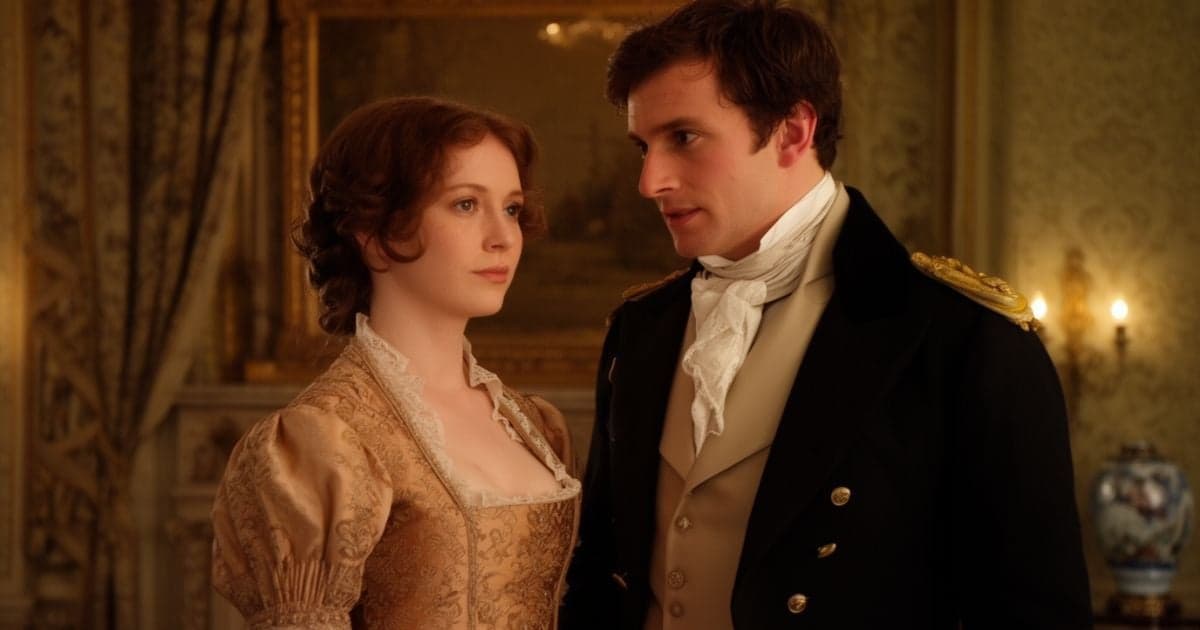
Happy for all her maternal feelings was the day on which Mrs. Bennet got rid of her two most deserving daughters. With what delighted pride she afterwards visited Mrs. Bingley, and talked of Mrs. Darcy, may be guessed. I wish I could say, for the sake of her family, that the accomplishment of her earnest desire in the establishment of so many of her children produced so happy an effect as to make her a sensible, amiable, well-informed woman for the rest of her life; though, perhaps, it was lucky for her husband, who might not have relished domestic felicity in so unusual a form, that she still was occasionally nervous and invariably silly.

Mr. Bennet missed his second daughter exceedingly; his affection for her drew him oftener from home than anything else could do. He delighted in going to Pemberley, especially when he was least expected.

1 / 7

Master this chapter. Complete your experience

Purchase the complete book to access all chapters and support classic literature

Read Free on GutenbergBuy at Powell'sBuy on Amazon

As an Amazon Associate, we earn a small commission from qualifying purchases at no additional cost to you.

Available in paperback, hardcover, and e-book formats

GO ADS FREE — JOIN US

Why This Matters

Connect literature to life

Skill: Recognizing Realistic Endings

This chapter teaches how to accept that some people change and others don't—and to build contentment without expecting everyone to transform.

GO ADS FREE — JOIN US

Now let's explore the literary elements.

Key Quotes & Analysis

"Happy for all her maternal feelings was the day on which Mrs. Bennet got rid of her two most deserving daughters."

— Narrator

Context: Opening of the epilogue

Austen's ironic wit frames the conclusion: Mrs. Bennet achieves her goal of marrying off her daughters, but the narrator suggests her character remains unchanged.

"I wish you joy. If you love Mr. Darcy half so well as I do my dear Wickham, you must be very happy. It is a great comfort to have you so rich."

— Lydia Wickham

Context: Lydia's congratulatory letter to Elizabeth after her marriage

Lydia's letter reveals her unchanged character—she immediately asks for financial help and assumes Elizabeth will use her wealth to benefit the Wickhams, showing she learned nothing from her elopement.

"By Elizabeth's instructions she began to comprehend that a woman may take liberties with her husband, which a brother will not always allow in a sister more than ten years younger than himself."

— Narrator

Context: Describing Georgiana's observation of Elizabeth and Darcy's relationship

This shows how Georgiana learns about marriage and affectionate partnership through Elizabeth's example—a contrast to the formal reserve she knew with Darcy as her guardian.

Thematic Threads

Stasis vs. change

In This Chapter

Mrs. Bennet remains silly; Wickham and Lydia stay troubled; Kitty blossoms away from Lydia

Development

Epilogue reveals who changes and who doesn't—a realistic view of human nature

In Your Life:

Looking at your family or friends, who has genuinely changed over time and who has stayed essentially the same?

Environment shapes growth

In This Chapter

Kitty improves with her elder sisters; Mary is drawn into the world; Lydia's influence is kept at bay

Development

Proximity to better models enables growth; distance from bad influences helps

In Your Life:

How has your environment—who you spend time with—affected your own growth or stagnation?

Boundaries with difficult people

In This Chapter

Darcy never receives Wickham at Pemberley but helps him professionally; Elizabeth refuses Lydia's requests

Development

Love doesn't mean enabling; you can assist without endorsing

In Your Life:

When have you had to help someone you don't fully respect, or set boundaries with family who won't change?

Reconciliation and curiosity

In This Chapter

Lady Catherine eventually visits Pemberley—her curiosity overcomes her resentment

Development

Even entrenched opposition can soften when curiosity outweighs pride

In Your Life:

Have you seen a long-standing feud ease when someone's curiosity about the other party outweighed their hurt?

Gratitude for catalysts

In This Chapter

Elizabeth and Darcy remain grateful to the Gardiners for bringing her to Derbyshire

Development

Recognizing who made your happiness possible—not taking it for granted

In Your Life:

Who played a small but crucial role in a good thing that happened to you? Have you thanked them?

You now have the context. Time to form your own thoughts.

Discussion Questions

  1. 1

    Who changes by the end of the novel and who stays the same? What does Austen suggest about human nature?

  2. 2

    How does Kitty's improvement differ from Lydia's continued troubles? What role does environment play?

  3. 3

    Why does Darcy help Wickham professionally but never receive him at Pemberley? What does this show about boundaries?

  4. 4

    How does Lady Catherine eventually reconcile with Darcy and Elizabeth? What overcomes her resentment?

  5. 5

    What is the significance of Elizabeth and Darcy's lasting gratitude to the Gardiners?

Critical Thinking Exercise

Map Your Epilogue

Think of a chapter that has closed in your life—a job, a school, a relationship, a phase. Who in that chapter genuinely changed? Who stayed the same? Who improved when their environment changed? Who continued patterns despite new circumstances? Write a brief 'epilogue' that, like Austen's, is honest about both transformation and stasis—and about how you've learned to invest and set boundaries accordingly.

Consider:

  • •Realistic closure acknowledges that good fortune doesn't fix everyone
  • •Environment often matters as much as character for who grows
  • •You can help people you don't fully respect without endorsing their behavior
Previous
Chapter 60
Contents

Continue Exploring

Pride and Prejudice Study GuideTeaching ResourcesEssential Life IndexBrowse by ThemeAll Books
Social Class & StatusLove & RelationshipsIdentity & Self-Discovery

You Might Also Like

Great Expectations cover

Great Expectations

Charles Dickens

Explores personal growth

Anna Karenina cover

Anna Karenina

Leo Tolstoy

Explores society & class

The Great Gatsby cover

The Great Gatsby

F. Scott Fitzgerald

Explores personal growth

Jane Eyre cover

Jane Eyre

Charlotte Brontë

Explores personal growth

Browse all 47+ books

Share This Chapter

Know someone who'd enjoy this? Spread the wisdom!

TwitterFacebookLinkedInEmail

Read ad-free with Prestige

Get rid of ads, unlock study guides and downloads, and support free access for everyone.

Subscribe to PrestigeCreate free account
Intelligence Amplifier
Intelligence Amplifier™Powering Wide Reads

Exploring human-AI collaboration through books, essays, and philosophical dialogues. Classic literature transformed into navigational maps for modern life.

2025 Books

→ The Amplified Human Spirit→ The Alarming Rise of Stupidity Amplified→ San Francisco: The AI Capital of the World
Visit intelligenceamplifier.org
hello@widereads.com

WideReads Originals

→ You Are Not Lost→ The Last Chapter First→ The Lit of Love→ Wealth and Poverty→ 10 Paradoxes in the Classics · coming soon
Arvintech
arvintechAmplify your Mind
Visit at arvintech.com

Navigate

  • Home
  • Library
  • Essential Life Index
  • How It Works
  • Subscribe
  • Account
  • About
  • Contact
  • Authors
  • Suggest a Book
  • Landings

Made For You

  • Students
  • Educators
  • Families
  • Readers
  • Literary Analysis
  • Finding Purpose
  • Letting Go
  • Recovering from a Breakup
  • Corruption
  • Gaslighting in the Classics

Newsletter

Weekly insights from the classics. Amplify Your Mind.

Legal

  • Privacy Policy
  • Terms of Service
  • Cookie Policy
  • Accessibility

Why Public Domain?

We focus on public domain classics because these timeless works belong to everyone. No paywalls, no restrictions—just wisdom that has stood the test of centuries, freely accessible to all readers.

Public domain books have shaped humanity's understanding of love, justice, ambition, and the human condition. By amplifying these works, we help preserve and share literature that truly belongs to the world.

A Pilgrimage

Powell's City of Books

Portland, Oregon

If you ever find yourself in Portland, walk to the corner of Burnside and 10th. The building takes up an entire city block. Inside is over a million books, new and used on the same shelf, organized by color-coded rooms with names like the Rose Room and the Pearl Room. You can lose an afternoon. You can lose a weekend. You will find a book you have been looking for your whole life, and three you did not know existed.

It is a pilgrimage. We cannot find a bookstore like it anywhere on earth. If you read the classics, and you ever get the chance, go. It belongs on every reader's bucket list.

Visit powells.com

We are not in any way affiliated with Powell's. We are just a very big fan.

© 2026 Wide Reads™. All Rights Reserved.

Intelligence Amplifier™ and Wide Reads™ are proprietary trademarks of Arvin Lioanag.

Copyright Protection: All original content, analyses, discussion questions, pedagogical frameworks, and methodology are protected by U.S. and international copyright law. Unauthorized reproduction, distribution, web scraping, or use for AI training is strictly prohibited. See our Copyright Notice for details.

Disclaimer: The information provided on this website is for general informational and educational purposes only and does not constitute professional, legal, financial, or technical advice. While we strive to ensure accuracy and relevance, we make no warranties regarding completeness, reliability, or suitability. Any reliance on such information is at your own risk. We are not liable for any losses or damages arising from use of this site. By using this site, you agree to these terms.