Chapter 43
Environment and credible witnesses can revise character before the ...
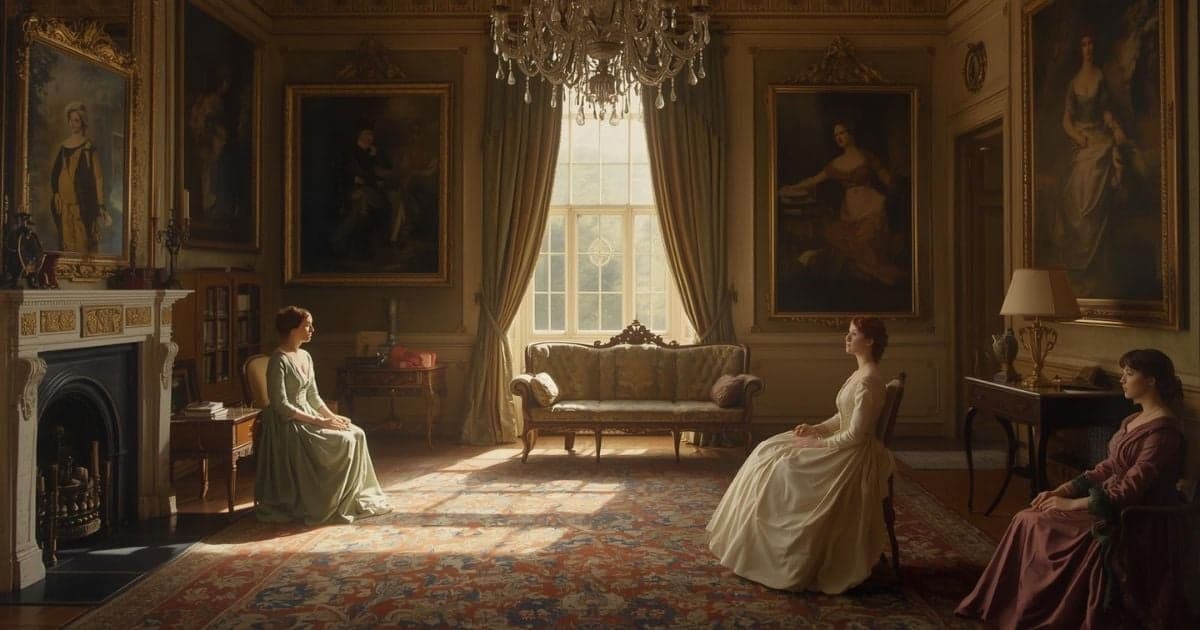
[Illustration] Elizabeth, as they drove along, watched for the first appearance of Pemberley Woods with some perturbation; and when at length they turned in at the lodge, her spirits were in a high flutter. The park was very large, and contained great variety of ground. They entered it in one of its lowest points, and drove for some time through a beautiful wood stretching over a wide extent. Elizabeth’s mind was too full for conversation, but she saw and admired every remarkable spot and point of view. They gradually ascended for half a mile, and then found themselves at the…
Public-domain chapter text, formatted for reading.
Master this chapter. Complete your experience
Purchase the complete book to access all chapters and support classic literature
Available in paperback, hardcover, and e-book formats
Now let's explore the literary elements.
Key Quotes & Analysis
"to be mistress of Pemberley might be something!"
Context: First view of Pemberley House from the eminence
Famous turning line—pride in place opens her heart before pride in person yields.
In Today's Words:
Seeing his stunning office headquarters, Elizabeth suddenly thought about the perks of being with someone this successful. Sometimes we dismiss people too quickly, but when you see their actual achievements and lifestyle, it makes you reconsider everything. Maybe there's more substance behind the success than you initially assumed.
"He is the best landlord, and the best master,” said she, “that ever lived. Not like the wild young men now-a-days, who think of nothing but themselves. There is not one of his tenants or servants but what will give him a good name. Some people call him proud; but I am sure I never saw anything of it. To my fancy, it is only because he does not rattle away like other young men."
Context: Praising her master on the staircase
Servants' unanimous good name forces Elizabeth to ask, Can this be Mr. Darcy?
In Today's Words:
The executive assistant raved about her boss, saying he's the most supportive leader she's worked for, genuinely cares about his team, and isn't like those self-centered startup bros. People mistake his quiet confidence for arrogance, but he just doesn't need to constantly prove himself like other tech executives do.
"Will you allow me, or do I ask too much, to introduce my sister to your acquaintance during your stay at Lambton?"
Context: Walking with Elizabeth after meeting the Gardiners
He seeks what he once scorned—connection to her family and sister for her sake.
In Today's Words:
He asked if he could introduce his sister to Elizabeth during her visit to town. This was huge because he'd previously acted like her family wasn't good enough for his social circle. Now he was actively trying to blend their worlds, showing he valued her enough to include her in his personal life.
"im proud, _I_ have seen nothing of it.” “I was never more surprised than by his behaviour to us"
Context: After Darcy hands the Gardiners into the carriage; her uncle and aunt begin their praise
Elizabeth hears outsiders confirm the revision Mrs. Reynolds began: civility to her family, not performance for her alone.
In Today's Words:
Elizabeth is stunned by how well he treated her relatives after she expected cold superiority. When someone you wrote off starts showing real respect to the people you care about, it forces you to question every story you believed about them and every insult you repeated in company.
Thematic Threads
Pemberley as argument
In This Chapter
Natural beauty, elegant rooms
Development
Might be mistress
In Your Life:
When has a place changed your view of a person?
Servants' testimony
In This Chapter
Mrs. Reynolds
Development
Prejudice crumbles
In Your Life:
When has someone else's reputation been confirmed by those who serve them?
Second meeting
In This Chapter
Lawn and walk
Development
Georgiana invited
In Your Life:
When has an awkward rerun become a new beginning?
Gardiners valued
In This Chapter
Introduction, fishing
Development
Class barrier crossed
In Your Life:
When has someone respected your family after you feared they would not?
Wickham rebalanced
In This Chapter
Miniature and guarded tale
Development
Partial public truth
In Your Life:
When have you shared only part of what you know?
You now have the context. Time to form your own thoughts.
Discussion Questions
This is not a test. Five prompts guide you through the chapter, from how it opens to how it closes, so you notice context and rhythm rather than facts to memorize. Sit with each question in your own words. When you see "One way to read it," treat it as a starting point, not the only answer.
- 1
How does Elizabeth first respond to the approach and view of Pemberley?
analysis • surfaceOne way to read it
She watches for Pemberley Woods with perturbation, then at the first view feels that to be mistress of Pemberley might be something. The house delights her: taste without gaudiness.
- 2
What does Mrs. Reynolds say about Mr. Darcy, and how does Elizabeth react?
analysis • mediumOne way to read it
The housekeeper praises his sweet temper as a boy, no cross word since he was four, and calls him the best landlord and best master. Elizabeth is astonished and feels a gentler sensation at his portrait in the gallery.
- 3
When have you revised your opinion of someone after hearing credible witnesses describe their character?
application • mediumOne way to read it
Think of employees praising a boss you disliked, neighbours describing someone differently from gossip, or Mrs. Reynolds's testimony contradicting Wickham's entire picture of Darcy.
- 4
Mr. Darcy appears a day early on the lawn. How has his manner changed toward Elizabeth and the Gardiners?
application • deepOne way to read it
They blush; he speaks with altered civility, asks to be introduced to her uncle and aunt, invites Mr. Gardiner to fish, and requests leave to introduce his sister. He courts their good opinion warmly.
- 5
Elizabeth vindicates Darcy's conduct toward Wickham in guarded terms and ends the day wondering at his civility. What has begun to change in her view of him?
reflection • deepOne way to read it
Place, servants, and humbled manners confirm the letter's revision. She can admire Pemberley and its master without yet admitting hope, but the old certainty of contempt is breaking.
Critical Thinking Exercise
When the Setting Changed Your Mind
Recall learning someone's character through their home, workplace, or the people who depend on them. Did it change your opinion? Did meeting them again confirm it?
Consider:
- •What evidence was most persuasive?
- •What did you still reserve judgment on?
- •How did they treat people you care about?
Coming Up Next...
Chapter 44: Chapter XLIV
Mr. Darcy will bring Miss Darcy to call at Lambton, with Bingley among them; Elizabeth's hope and dread will sharpen before Jane's letter shatters the day.